
Post Oak Ridge anglers have a new Texas state park to track, but the first phase is better understood as a day-use scouting opportunity than a full fishing destination with built-out angler infrastructure. As of September 21, 2026, Texas Parks and Wildlife Department information in the supplied research points to a September 24, 2026 day-use opening, reservations already required as of September 17, and a site that is still early in development. For fishing families, bass-minded bank anglers, and local outdoor groups, that means planning around trails, river frontage, creeks, limited amenities, and clear gaps such as no confirmed boat launch, fishing pier, or dock.
What Post Oak Ridge Anglers Can Use Now
TPWD lists Post Oak Ridge State Park as a 3,118-acre property in Lampasas and Burnet counties, with Colorado River frontage and spring-fed creeks including Yancy Creek on the park site TPWD park page. That combination gives anglers a reason to pay attention, even before the park has a dedicated fishing buildout.
The confirmed early-use amenities are modest but useful for a first wave of visitors: a vault toilet, an ADA-accessible trail, a picnic area, and about four miles of hiking trails. The research also notes improved gravel road access from the entrance toward the parking, restroom, and trailhead area. Those basics matter because fishing trips often fail before a line gets wet if parking, restrooms, shade breaks, and access routes are unclear.
Day-Use Rules For Post Oak Ridge Anglers
Post Oak Ridge anglers should treat the opening phase as structured access, not open-ended use. The supplied research says day-use hours are 8 a.m. to 4 p.m. Monday through Thursday and 8 a.m. to 8 p.m. Friday through Sunday. Access is through County Road 105 by way of Naruna, with the entrance about four miles down CR 105, and the gate code provided through reservation confirmations.
Those details shape the fishing plan. Early mornings are available, but the weekday 4 p.m. closing cuts off the late-evening window that many Texas anglers like during warm months. Weekend hours allow more daylight flexibility, but reservations and gate access mean visitors should not treat this like a casual roadside stop.
Fishing Access Questions For Post Oak Ridge Anglers
The most important fishing fact is what has not been built. The supplied research says no boat launches, fishing piers, or docks are yet constructed, and official water-access details remain limited. That does not erase the value of Colorado River frontage or spring-fed creek habitat, but it does set the right expectation for the first visits.
Bank access may depend on trail alignment, terrain, creek crossings, overlook areas, and posted park guidance. Anglers should avoid assuming every stretch of riverbank is safe, open, or suitable for casting. River frontage can look inviting on a map while still being limited by slope, vegetation, private boundary concerns nearby, or conservation restrictions within the park.
Bank Fishing Without A Built Pier
For now, the practical fishing approach is simple: pack light and scout first. A short rod, small tackle kit, pliers, measuring tool, water, sun protection, and footwear suited for uneven ground make more sense than hauling heavy gear for a long sit. If a safe bank location is not clearly available, the trip can still serve as a useful read on access points, trail distances, shade, and family logistics.
This is where community anglers can help each other without overclaiming the bite. Share confirmed access notes, parking observations, and safety tips, not rumors about unverified fishing holes. For local clubs or parents introducing kids to the sport, that kind of information is just as valuable as a catch photo. Readers planning beginner-friendly outings can compare the access mindset with our coverage of a Galveston beginner fishing event, where gear, cost, and safety planning were central to getting new anglers started.
Amenities That Matter Before The First Cast
Post Oak Ridge State Park’s early amenities are not flashy, but they answer some of the basic questions anglers ask before committing a morning. Is there a restroom? Yes, a vault toilet is listed. Is there a place to pause with family? Yes, a picnic area is part of the current setup. Is there a route for some visitors with mobility needs? The research notes an ADA-accessible trail. Is there drinking water? No. Visitors must bring their own.
No potable water is a major trip-planning point. Texas anglers already know heat can turn a short outing into a grind. With no drinking water on site, each person should bring more water than they expect to need, especially if walking trail miles before checking possible bank access. The lack of camping also matters. Overnight use is not part of this first phase, so anglers should plan the outing as a day trip and leave enough time to return to the vehicle before closing hours.
Self-Sufficient Gear For A Day-Use Visit
- Bring drinking water for every person in the group, with extra for warm afternoons.
- Use a compact tackle plan because fishing access may require walking.
- Carry a measuring tool and follow all state fishing rules.
- Plan around reservation confirmations, gate-code access, and posted hours.
- Do not count on a ramp, pier, dock, electricity, or camping services.
For anglers coordinating carpools, youth groups, or first visits, local resource directories like the Efficient Directory can be handy for finding nearby services before the drive. The park itself should be approached as a low-service outdoor site during this first access phase.
Rules And River Etiquette At A New State Park
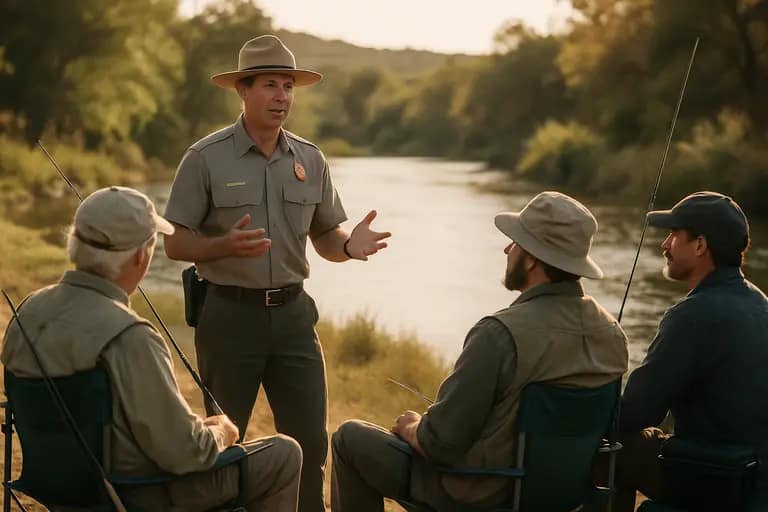
Fishing access at a new public site brings responsibility. Texas state park fishing rules include gear limits in certain park waters. The Legal Information Institute’s posting of 31 Tex. Admin. Code § 57.973 states that in state parks, when fishing in rivers fully within park boundaries, or from docks, piers, or other manmade structures, only pole-and-line devices may be used Texas fishing device rule. Anglers should pair that rule with current TPWD regulations for species, length, and bag limits before keeping fish.
The etiquette side is just as direct. Pack out line scraps, bait containers, food waste, and soft-plastic packaging. Give bank anglers room, especially if the accessible trail becomes a shared route for walkers, families, birders, and anglers. A new park can form habits quickly, and clean use in the first months helps protect access for the community that follows.
Why Early Behavior Matters
Post Oak Ridge anglers are not just testing water; they are helping set the tone for how fishing fits into the park. If visitors crowd sensitive creek edges, leave trash, or push into unclear access areas, fishing can become a management headache. If anglers keep trips clean, respect posted signs, and report only confirmed information, they give park staff and fellow visitors a better case for fishing as a positive part of the site’s identity.
That matters because the park is still being shaped. The supplied research notes that development is tied to the Centennial Parks Conservation Fund, with limited-use opening required after acquisition and broader public use, including overnight stays and utilities, expected under the longer development timeline. No specific angler infrastructure such as a boat ramp or fishing pier is confirmed in the supplied research, so expectations should stay grounded.
How Local Fishing Groups Can Use The Opening
The first phase gives local fishing groups a chance to organize smart scouting days rather than tournament-style pressure. A group could document trail distances, shade availability, restroom location, safe turnaround points, and whether any clearly permitted bank access is practical. That kind of trip report helps families, older anglers, and youth mentors decide whether the park fits their needs.
For bass clubs and bank-fishing regulars, restraint is the right approach. The research confirms aquatic habitat features, but it does not confirm species presence, stocking plans, catch rates, or dedicated launch access. Serious anglers should avoid making fishing claims that outpace what has been reported by TPWD or observed under legal public access.
A Community-First Scouting Plan
A good first visit starts at the reservation stage, continues with a check of hours and weather, and ends with notes that can help the next visitor. Record practical information: how long the entrance drive takes from Naruna, how far the trailhead is from parking, whether the picnic area works for a family break, and whether terrain near water appears safe and open under posted rules.
That approach keeps the focus on access, safety, and shared knowledge. It also gives anglers a constructive voice as the park grows. If future planning includes fishing-friendly amenities, local users who have offered clear, factual feedback will be better positioned to explain what would help: stable bank access, erosion-safe paths, fish-cleaning considerations if appropriate, and clear signage about legal fishing zones.
Post Oak Ridge Anglers And The Day-Use Reality
Post Oak Ridge anglers should be excited in a practical way: a new state park with Colorado River frontage is worth watching, but the confirmed amenities point to a light day-use launch rather than a finished fishing hub. The current draw is access to a developing public landscape, basic visitor support, trails, picnic space, and the chance to learn how fishing may fit into the site over time.
The best first trip is not built around a guaranteed catch. It is built around water, walking, legal gear, posted access, and respect for a park still under development. Bring what you need, leave no mess, keep expectations honest, and let confirmed TPWD updates guide future fishing plans at Post Oak Ridge State Park.