
Galveston Red Tide has forced anglers to rethink shoreline access, bait plans, fish handling, and family beach days after confirmed bloom activity was reported along the Galveston County coast in September 2026. The issue was not just a water-quality note on a government page. It touched the way people fish Galveston Island, Crystal Beach, Bolivar Peninsula, and nearby bay waters, especially where dead fish, coughing, and throat irritation were reported near affected beaches.
What Galveston Red Tide Changed For Fishing
Texas Parks and Wildlife Department reporting showed that by September 7-11, 2026, samples from Galveston Island, Crystal Beach, and Bolivar Peninsula had moderate to high concentrations of Karenia brevis cells, with associated fish kills and respiratory symptoms in humans, according to the agency’s red tide status. For anglers, that moved the story from a science alert into a practical fishing problem.
A bloom can change a fishing day before the first cast. Parking near a beach with dead fish may mean a tough smell, poor family comfort, and possible breathing irritation. Wading or surf fishing can become less appealing when wind pushes aerosols toward the shoreline. Even boat anglers who plan to fish away from the sand still have to think about launch sites, cleaning areas, and where bait or dead fish may collect with current and wind.
The research notes also show that TPWD began receiving reported bloom activity off the Galveston coast on September 8, 2026. By September 14, 2026, fish kills were described as primarily Gulf menhaden and striped mullet, with smaller numbers of other species affected. Those forage species matter to anglers because they help shape predator movement. When mullet and menhaden are stressed or dead in affected zones, game fish patterns can become harder to read from the bank.
Galveston Red Tide And Shoreline Access
Shoreline anglers often build trips around simple details: wind direction, water color, bait presence, access, and a safe place to fish with kids or friends. A bloom adds a health and comfort screen to that normal checklist. The Galveston-area reports included mild to severe respiratory irritation, including coughing and throat irritation, especially where wind pushed bloom effects toward shore around Galveston Island, Bolivar Peninsula, and Crystal Beach.
That does not mean every stretch of water fishes the same way. Red tide can be patchy, and conditions can shift with wind and currents. Still, the confirmed September reports gave anglers a clear reason to check official status pages before planning time on the sand, near passes, or around beach-adjacent fishing areas.
Fish Kills And The Bait Chain
For sportsmen, the dead fish count is not only a beach cleanup concern. Gulf menhaden and striped mullet are part of the feeding picture that coastal anglers watch closely. When those fish wash ashore, anglers lose one of the usual clues they use to locate trout, redfish, flounder, and other predators. Birds may work dead or dying bait instead of active schools. Slicks and nervous water can be harder to interpret in affected areas.
The supported reports did not establish a full sport-fish loss total for Galveston waters. That matters. Anglers should avoid turning a visible fish kill into claims about every species in the system. What is confirmed is enough to affect trip planning: forage fish were hit, dead fish reached shore, and human respiratory symptoms were reported near bloom areas.
Health, Harvest, And Community Choices
Fishing is a community activity on the upper Texas coast. One person may be chasing a limit, another may be teaching a child to cast, and another may be walking the beach after work with a rod in the truck. During a bloom, those plans need to account for people as much as fish.
Health officials in the research notes advised people with asthma or other respiratory conditions to avoid affected beaches and avoid handling dead fish. They also warned that fish and shellfish should come from inspected or licensed sources. That advice fits the practical side of fishing culture: no redfish, trout, or flounder is worth putting a family member into a coughing spell or taking a risk with unsafe seafood.
Shellfish access was also affected. The September 9, 2026 shellfish harvest closure information in the research notes showed broad closures affecting public oyster and clam harvest areas, with many areas tied to elevated Karenia brevis counts or precautionary status. That hit both commercial and recreational harvest planning. Rod-and-reel anglers may not think about oyster closures first, but shellfish rules are part of the same coastal system that supports fishing communities, seafood businesses, and weekend travel.
Why New Anglers Need Clear Safety Signals
Beginners are often the first people hurt by unclear conditions because they may not know which signs matter. A dead fish line, a scratchy throat near the beach, or a sudden lack of active bait can all seem like isolated issues. During a confirmed bloom period, those clues should carry more weight. For families still learning local water, past coverage of a Galveston beginner fishing event shows why simple planning details can make fishing safer and more welcoming.
Local communication helps here. Marina staff, bait camps, coastal agencies, park staff, and neighborhood groups all help anglers make better decisions. A great starting point for finding various fishing resources is using community listings and outdoor networks such as the efficient directory. However, official bloom and health updates should drive fishing decisions during an active event.
How Galveston Red Tide Affects Trip Decisions
For Galveston Red Tide planning, the first question is not which lure to throw. It is whether the chosen area is a smart place to spend time. NOAA’s coastal science information showed that water samples collected between September 12-19, 2026 indicated red tide along the Galveston County coast at levels sufficient to pose a respiratory irritation risk, according to the agency’s Texas satellite imagery page.
That kind of status changes how a serious angler builds a plan. Wind direction matters because onshore wind can push irritation toward the beach. A family trip should be judged differently than a solo scouting run. A wade-fishing plan may carry different exposure than a short boat trip away from the affected shoreline, though launch and return points still matter. A shore-based session near visible dead fish is a poor choice when cleaner options or a pause are available.
Practical Checks Before A Rod Comes Out
The best fishing decision may be made before the cooler is loaded. Anglers do not need to overcomplicate it, but they should use a short, repeatable checklist during bloom periods:
- Check official red tide and coastal water updates for the exact area being considered.
- Factor wind direction into beach, jetty, pier, and wade-fishing plans.
- Avoid handling dead fish and avoid areas where dead fish have collected.
- Give extra caution to children, older anglers, and anyone with asthma or respiratory trouble.
- Use inspected or licensed seafood sources and respect shellfish harvest closures.
The Galveston Red Tide pattern in September 2026 showed why this checklist matters. The impact was not limited to one kind of angler. Surf casters, pier anglers, families collecting bait, shellfish harvesters, and boaters all had reasons to adjust.
Fishing Tactics During A Bloom-Affected Period
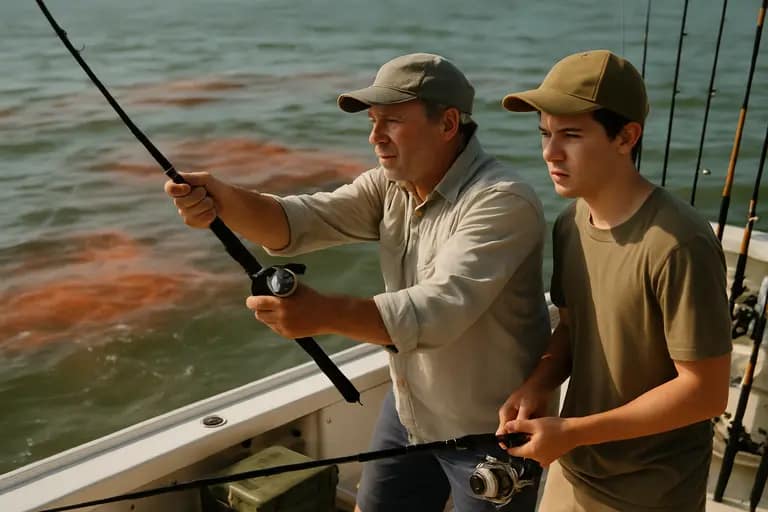
A bloom does not create a magic lure problem. It creates a conditions problem. If a shoreline has dead bait, irritating air, and poor signs of life, switching from a spoon to a soft plastic will not fix the larger issue. The better sports-first move is to change the plan, reduce exposure, or wait for confirmed conditions to improve.
For anglers who still evaluate nearby waters, the same fundamentals apply: look for clean water, active live bait, safe access, and current that supports feeding fish. Do not assume every nearby fish is unsafe to catch, but do follow health guidance about seafood sources, dead fish, and shellfish closures. If a trip turns into coughing, eye irritation, or a beach lined with dead fish, that is useful information, not a challenge to push through.
Guides, tournament anglers, weekend regulars, and parents all read water differently, but the best fishermen I know share one trait: they do not force a bite in bad conditions just to save a plan. They adjust before a rough day becomes a risky one.
Galveston Red Tide Takeaways For Local Anglers
The September 2026 bloom changed Galveston-area fishing by putting health, access, bait signals, and harvest rules at the front of trip planning. Confirmed moderate to high Karenia brevis readings, fish kills, respiratory reports, and shellfish closures gave anglers enough information to treat the event seriously without overstating what is known.
The practical takeaway is clear: follow official updates, read the wind, avoid dead fish, respect harvest closures, and choose fishing spots with people in mind as much as fish. Galveston Red Tide did not erase the fishing culture of the upper Texas coast. It reminded every angler that good local knowledge includes knowing when to change water, change plans, or stay off a shoreline until conditions support a safer day.