
The Bass Champs Championship at Lake Fork was held on October 10, 2026, so the best use of the pre-event plan now is a clear post-event preparation review. Final standings were not included in the research notes provided here, but the available tournament schedule, recent Lake Fork weight history, fall fishing conditions, and rule reminders still show what serious teams had to solve before launch. For anglers who fish Fork often, this was less about one magic bait and more about matching a low-water fall lake with slot-rule discipline, efficient practice, and smart community planning around a major East Texas bass stop.
Bass Champs Championship Context After Oct. 10
Bass Champs Championship Weight Targets
The 2026 event was listed for Lake Fork, Texas, on October 10, 2026, and recent Lake Fork tournament results offered a demanding benchmark: published 5-bass limits from three events averaged about 25.95 pounds per day, with a top listed one-day weight of 32.73 pounds, according to the Lake Fork tournament schedule and results page at State Fishing Spots. That kind of history changes how teams prepare. A safe limit can keep a team involved, but Fork often rewards anglers who can find one or two better bites without wasting the whole day chasing ghosts.
The Bass Champs Championship also sat in a tricky calendar window. October can bring bass toward points, timber, grass edges, creek channels, and shallow structure as shad movement becomes a larger driver. Yet late heat, low water, and bright conditions can keep some better fish near deeper access or shaded cover. That meant the strongest practice plan likely had two tracks: a shallow feeding pattern for windows of activity and a slower, deeper backup for fish that did not fully commit to the bank.
Why Past Tense Matters For This Event
Because October 10 had already passed by October 22, 2026, this is not a call to attend or a same-week preview. It is a review of the preparation factors that mattered. Without confirmed final results in the research package, it would not be accurate to name winners, margins, or exact winning patterns. What can be analyzed is the setup: Lake Fork’s weight potential, reported water level, water temperature, likely fall bass movement, lure categories, and the local effects of a high-profile tournament day.
That distinction matters for anglers and for the community around the lake. A tournament recap without verified results can still help future teams if it sticks to confirmed information and turns the pre-event plan into lessons that transfer to the next Fork date.
Lake Conditions That Shaped Practice
Low Water Changed The Map
By October 22, 2026, reported Lake Fork conditions showed water temperatures in the mid- to upper-70s, with the lake about 4.48 feet below conservation pool of 403.00 feet, near 398.52 feet elevation and roughly 81.6 percent of storage, according to the Lake Fork fishing report. Those readings came after the October 10 tournament date, so they should be treated as a mid- to late-October condition snapshot rather than an official tournament-day log. Even so, they show the kind of lake profile teams were working around in that part of the month.
Low water on Lake Fork can make old cover fish differently. Stumps, timber lines, grass edges, and points may still be productive, but the best targets are often the ones with quick access to deeper water or bait. A team that marked every visible piece of cover without checking nearby depth may have burned valuable time. The better question was not just, “Does this look good?” It was, “Can fish move here, feed here, and return to safety without traveling far?”
Temperature Kept Multiple Patterns Alive
Mid- to upper-70s water is warm enough to keep reaction baits in play, especially around baitfish, wind, and low-light windows. It is also warm enough that not every quality bass has to be shallow all day. That balance made practice more about sorting timing than collecting spots. A stretch that produced at daybreak might fade quickly. A deeper point, creek channel edge, or timber row might become better once sun angle, boat traffic, or wind changed.
For Lake Fork bass fishing, that means anglers should avoid treating fall as one simple move to the bank. Fall is a transition period, and transitions are rarely clean. The teams with the best plans usually have a way to rotate between water columns without losing the discipline needed to stay around better fish.
Tactics That Fit The Lake Fork Setup
Reaction Baits For Active Windows
The research notes identified topwater, squarebill crankbaits, swimbaits, chatterbaits, Carolina rigs, drop-shot rigs, deep-water presentations, and jigging spoons as useful fall categories for Lake Fork. In a championship setting, the reaction-bait group mattered most when wind, shad, and cover lined up. Topwater could help early or during low-light periods. Squarebills and chatterbaits could cover shallow grass, wood, and hard targets. Swimbaits gave teams a way to match bait movement without constantly changing zones.
Those choices were not interchangeable. A squarebill around isolated wood asks fish to react in a tight lane. A chatterbait through grass or stained water creates vibration and lets an angler cover more of a flat. A swimbait can track bait schools and tempt fish that are feeding but not pinned to a stump or edge. On Lake Fork, the best lure is often the one that fits the exact cover and angle rather than the one that produced somewhere else in practice.
Slower Presentations For Controlled Bites
Carolina rigs, drop-shots, and spoons made sense as backup tools because low water and warm conditions can keep bass positioned off the most obvious shoreline targets. A Carolina rig across a point or channel swing lets anglers feel bottom changes and cover. A drop-shot can slow the pace around fish seen on electronics or suspected near timber. A spoon can work when bass are deeper around bait.
The key was not to fish slowly all day. It was to know when a slower tool protected the day. If a team had a partial limit, missed a morning feeding window, or needed one quality keeper inside the legal measuring range, controlled presentations gave them a way to keep making high-percentage casts instead of running a full circuit of shallow memories.
| Preparation Factor | Why It Mattered | Best Response |
|---|---|---|
| Low Lake Level | Cover and access changed from normal pool | Prioritize structure with nearby deeper water |
| Warm Fall Water | Shallow and deeper patterns could both work | Build a timing plan, not just a spot list |
| Shad Movement | Bass feeding zones could shift during the day | Fish cover only when bait or timing supports it |
| Slot Awareness | Scale decisions had to match event rules | Measure carefully before making weigh decisions |
Rules, Timing, And Team Decisions
Measuring Fish Was Part Of The Strategy
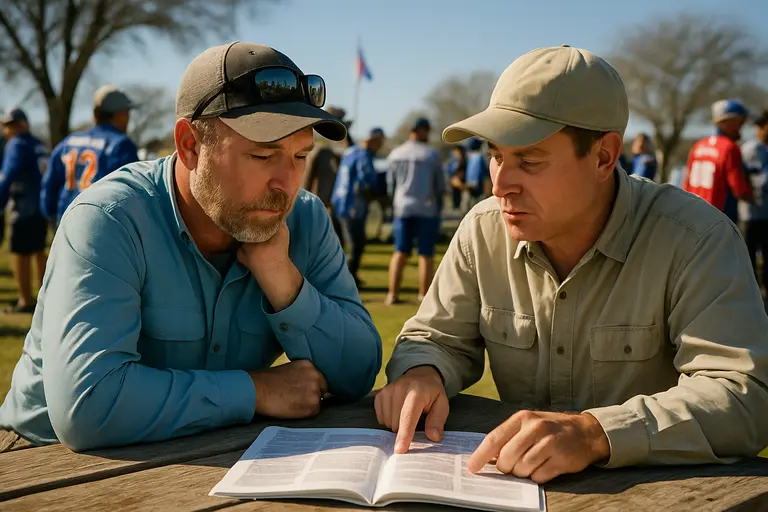
The research notes cited Bass Champs Big Bass rule language stating that no bass under 16 inches or over 24 inches may be presented to the scales in those events. For teams preparing around Lake Fork tournament formats, that kind of slot awareness is not paperwork; it affects the whole day. Anglers must know what can legally and properly be weighed under the event structure they are fishing, and they need measuring tools ready before emotions rise in the boat.
Lake Fork’s reputation for giant bass can tempt anglers to think only about size. Tournament execution asks for more control. A fish that cannot be presented does not help the score, and time spent debating a borderline fish can cost casts during a short feeding window. Good teams make measuring routine, calm, and quick.
Launch Windows And Local Movement
The research also noted that Bass Champs Big Bass events include specific launch-time controls and official start windows, with examples such as a 6:30 a.m. start, scales opening on top half hours, and final weigh-in usually in the mid-afternoon. Even where formats differ, the lesson holds: timing rules shape fishing decisions. Teams need a first stop that matches official start time, safe travel, and realistic boat traffic.
Community planning matters here, too. Major tournament traffic affects ramps, fuel stops, food stops, lodging, and local roads. Anglers who stayed near the lake, staged gear early, and supported local businesses likely reduced stress before safe light. For readers planning future East Texas trips, Bass Lake Roadhouse is a related site in the same network that fits the broader road-trip side of fishing culture.
Community Impact Around Lake Fork
Why Tournament Weekends Reach Beyond The Ramp
A Lake Fork tournament weekend is not just a weigh-in story. It brings trucks, boats, families, volunteers, and local spending into communities that serve anglers all year. Bait shops, convenience stores, restaurants, campgrounds, repair services, and lodging providers all feel the rhythm of a major bass event. That is why preparation should include courtesy as much as tackle: ramp patience, clean parking, safe boat operation, and respect for local residents.
Texas Sportsmen covered the same event window in a related Lake Fork championship recap, including the Oct. 10-11 event context and the importance of format, practice, and slot-rule awareness. That wider coverage reinforces a simple point: successful tournament fishing is built before the first cast, but it is also shaped by how anglers move through the host community.
What Local Anglers Can Carry Forward
For local anglers who were not in the field, the event still offered useful lessons. Watch where tournament pressure concentrates, but do not copy it blindly. Pay attention to how low water changes access. Track whether bait is holding on points, creek channels, grass, or timber. Note how boat pressure changes shallow fish. Lake Fork is famous because it keeps teaching anglers who are willing to adapt without forcing a pattern that no longer fits.
What Bass Champs Championship Prep Showed At Lake Fork
For future Bass Champs Championship teams and Lake Fork regulars, the October 10 setup pointed to a balanced plan: study recent winning-weight history, respect the slot and event timing rules, practice transition structure, and carry both fast and slow presentations. The lake’s low level and warm fall water made it risky to rely on one depth zone. The better plan was to connect bait, cover, timing, and legal fish management into one steady tournament approach.
The event has already passed, but the preparation lessons remain useful. Lake Fork rewards anglers who can think beyond a favorite stretch and make decisions based on conditions. That is the standard serious Texas bass anglers should take from this championship week: fish the lake in front of you, measure every decision, and treat the host community like part of the tournament day.