
Sherman youth angling is best viewed through a clear lens: Sherman High School’s new facilities are a major community investment, but the available public record does not show new fishing ponds or purpose-built angling amenities on campus. That matters for families, anglers, and school-sports supporters because it separates confirmed facility progress from wishful thinking. The sports story is still real. Sherman High School has a listed bass fishing team, the city sits near Lake Texoma, and local youth fishing events have shown that the area already has a working model for getting kids on the water.
Where Sherman youth angling Fits In The SHS Buildout
The confirmed facility work at Sherman High School starts with the May 2023 bond program. Sherman ISD voters approved a $540 million bond program that the district says funded major facility work without raising the property tax rate, according to the district’s bond program information. That is the foundation for any fair analysis of how the campus improvements affect student life, athletics, and after-school activity.
For Sherman youth angling, the direct benefit is not a new lake behind the school. The more realistic benefit is capacity. Research on the project shows two three-story additions totaling about 33,000 square feet were completed at Sherman High School in 2025. Those additions brought 20 new classrooms and expanded the school’s ability to serve roughly 525 more students, with total capacity around 3,213 students.
More students and more classroom space can matter for club-based sports, including bass fishing, because participation often depends on sponsor availability, meeting space, parent coordination, transportation planning, and a school culture that treats nontraditional sports as part of student life. None of that guarantees tournament success. It does create a stronger base for student organizations to function.
What The Facilities Confirm
Classroom Capacity Matters For Club Sports
Fishing teams are not built only at boat ramps. They are built through sign-up meetings, safety talks, conservation education, map study, tournament planning, and family communication. A campus with more classrooms and more student capacity can better support those everyday parts of school activity.
That connection is easy to overlook because bass fishing does not look like football, basketball, or track. Anglers compete on lakes, often through organizations outside the traditional UIL team structure, and they depend heavily on volunteer captains and family logistics. Still, a school’s facilities influence whether students can meet, plan, learn the rules, and stay connected to the activity.
The confirmed classroom expansion gives Sherman High School more room to serve students. Any claim beyond that needs proof. There is no confirmed public record in the research showing that the 2025 additions created fishing labs, casting ponds, boat-storage areas, or on-campus weigh-in facilities.
Stadium And Parking Change Event Flow
The broader bond work also includes an 8,000-seat multipurpose stadium and about 900 new parking spaces serving the high school and stadium area. The stadium began hosting varsity games on September 18, 2026, according to Grayson County Line’s Sherman development tracker, which noted the stadium and parking details in its city development update.
That is not a fishing facility, but it does matter to the wider sports community. Parking, access, and event flow shape how families experience school sports. For fishing families, the same lesson applies off campus: youth angling events need safe staging areas, clear arrival plans, space for volunteers, and easy pickup points. The SHS stadium project shows how infrastructure can change the rhythm of a school-sports calendar, even when the sport being discussed happens away from campus.
What The Facilities Do Not Confirm
Sherman youth angling Still Needs Water Access
The key caution is simple. The SHS bond and expansion projects include classroom, athletic, parking, safety, technology, renovation, and capacity improvements, but the research found no credible evidence that they include fishing ponds, fishing lakes, or recreational angling infrastructure. Some planning documents for related facilities mention detention ponds for stormwater management, but those are not described as recreational fishing ponds.
That means Sherman youth angling still depends on off-campus water access. For bass fishing, that is normal. Many successful high school fishing programs practice and compete on regional reservoirs rather than school property. The important piece is not whether a campus has water. It is whether the school community can connect students with safe, organized, rule-aware fishing opportunities.
Sherman High School has a bass fishing team listed under Sherman ISD athletics. The research showed no events scheduled in the published team schedule as of the most recent update. That is a scheduling fact, not a measure of student interest or program quality. Families should treat it as a reason to check official school channels before assuming a tournament calendar is active.
Lake Texoma Shows The Local Model
Lake Texoma remains the clearest regional asset for youth fishing near Sherman. Research notes a June 13, 2026 event in which a local nonprofit arranged a fishing day on Lake Texoma for dozens of children, with gear provided, life jackets supplied by game wardens, and hot dogs served. That type of event shows what youth angling can look like when volunteers, safety planning, and accessible water come together.
The lesson for Sherman is practical. A school facility upgrade does not have to include a pond to support anglers. A stronger campus can help students organize, while local lakes and community partners provide the water. That model respects the facts and keeps the sports focus on participation, safety, and skill-building.
How Community Fishing Can Connect To School Sports
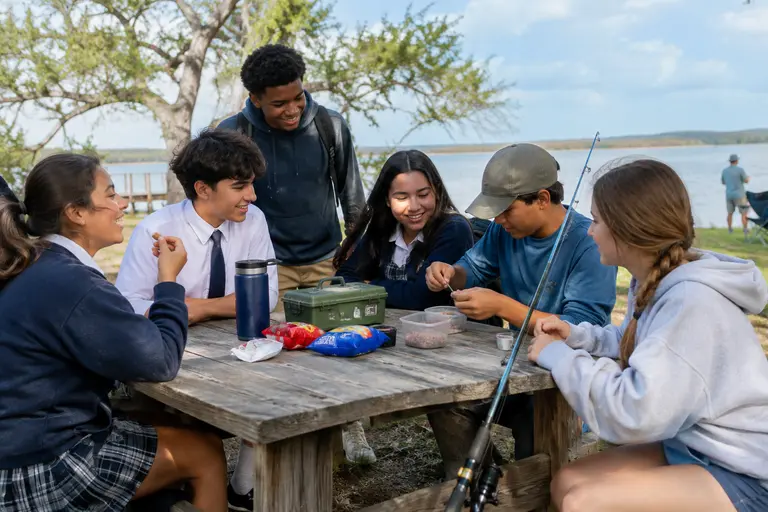
Community fishing works best when it is treated as more than a one-day outing. Young anglers need repeated chances to learn knot tying, casting control, fish handling, weather awareness, boat safety, bank-fishing etiquette, and tournament rules. Those skills can be taught in classrooms, parks, parking-lot casting stations, and lakeside clinics.
For Sherman families, the confirmed SHS improvements can support the first part of that chain: organization. The fishing still has to happen where legal and appropriate water access exists. That distinction keeps expectations honest and helps parents ask the right questions of schools, parks departments, nonprofits, and fishing clubs.
- Confirmed SHS improvements: classrooms, capacity, stadium, parking, safety, technology, and renovations.
- Not confirmed in the research: on-campus fishing ponds, angling docks, fish habitat projects, or boat-launch facilities.
- Existing local opportunity: Lake Texoma and community youth fishing events near Sherman.
- Practical next step for families: check official team schedules and local parks programming before planning participation.
That is also why local coverage of fishing events matters. Texas Sportsmen has covered how local fishing events build community, and the same idea fits Sherman: tournaments, youth days, and clinics can turn outdoor sports into shared civic activity. For readers who follow community sports across different games, our network’s baseball community coverage provides insights into how local athletic activities can engage families in meaningful ways beyond just winning games.
The strongest youth fishing programs tend to blend school identity with local access. A student may wear Sherman colors, attend meetings on campus, learn rules from a sponsor, and then compete or practice on public water. That setup is not lesser than an on-campus pond. In many cases, it is closer to the real sport because bass anglers must learn changing water, weather, pressure, and seasonal patterns.
What Sherman youth angling Can Take From SHS Investment
Sherman youth angling has a clear opportunity, but it should be described accurately. Sherman High School’s new facilities do not appear, based on the available research, to create direct fishing infrastructure. They do strengthen the school environment around students, athletics, and community events. That can help a bass fishing team or youth outdoor club if families, sponsors, and local partners turn that capacity into organized activity.
The community investment is still meaningful for anglers because youth fishing depends on more than water. It depends on adults who volunteer, schools that make room for student interests, safe transportation planning, and local lakes that can host learning days. Lake Texoma already gives Sherman-area families a nearby setting for that work. The SHS facilities give the school community a larger platform for student engagement.
The fairest read is this: Sherman High School’s facility growth supports the conditions around youth sports, while the fishing opportunity remains off campus unless future official plans say otherwise. For young anglers, that is enough to build from, as long as the conversation stays factual and centered on access, safety, and time on the water.