
The 2026 MLB postseason ran from September 29 to October 28, 2026, but for Texas Rangers fans, the defining moment came two days before the bracket began. Texas was eliminated on September 27, 2026, after a 6-4 loss to the Minnesota Twins in its regular-season finale, ending a tight AL West race that carried real weight across the state. What followed was not a Rangers playoff run, but a postseason viewed through division tension, Houston’s survival, and a fanbase measuring how close Texas came to extending its season.
What The MLB postseason Meant For Texas Fans
MLB postseason Context After Rangers Elimination
For Rangers fans, the MLB postseason felt less like a separate October event and more like the final chapter of a missed opportunity. Texas finished 80-82 and second in the AL West, one game behind Houston at 81-81. The standings made the final weekend matter, especially because the Rangers still had a path entering their last game. A Texas win, paired with help from Oakland against Houston, would have kept the door open. Instead, the Rangers’ loss in Minnesota closed it, with The Washington Post reporting the 6-4 defeat that eliminated Texas from postseason contention.
That ending created a clear emotional split for the state’s baseball audience. Houston moved on as the AL West winner, while Texas was left outside the field despite staying alive until the season’s final day. For Rangers supporters in Arlington, Fort Worth, Dallas, and across North Texas, the result sharpened the comparison between two clubs separated by one game and by Houston’s season-series tiebreaker over Texas.
How The Rangers Fell Out On September 27
The Final-Day Math Was Simple But Unforgiving
The Rangers entered September 27, 2026, with their postseason hopes reduced to one essential formula: win their own game and get the right result elsewhere. That is a difficult position for any club because it removes control. Texas still had to handle Minnesota first, and the 6-4 loss made every other scenario irrelevant. A final record of 80-82 placed the Rangers behind Houston and kept them from joining the American League postseason bracket.
The timing made the miss more painful for fans. This was not a club that had faded weeks earlier, leaving only scoreboard watching with no realistic hook. Texas remained part of the race through the final weekend. In event terms, that changed the way fans consumed the last series: every inning had playoff meaning, every run carried weight, and every Houston update affected the atmosphere around Rangers coverage.
There was also historical weight. The Rangers had won the World Series in 2023, and the franchise’s official postseason page lists that championship run among its playoff history on MLB.com. The 2026 miss meant Texas did not participate in the postseason for a third straight season after that title. That fact shaped the local conversation because fans were not just processing one lost race; they were measuring the distance from a championship peak to another October without Rangers games.
The Houston Matchup That Shaped The State Conversation
Astros-White Sox Drew Texas Attention
Once the Rangers were out, the most relevant matchup for many Texas baseball fans became Houston’s American League Wild Card Series assignment against the Chicago White Sox. The series was set in Houston, with games scheduled for September 29 and September 30, and October 1 available if the matchup required it. For neutral viewers in Texas, that gave the state a postseason host even without the Rangers in the bracket. For Rangers fans, it also extended the AL West storyline into October.
The Houston angle mattered because the Astros were not a distant playoff club. They were the team Texas chased until the last day, the club that held the tiebreaker, and the in-state rival whose season continued. That combination added edge to casual viewing across Texas. Some fans followed out of state pride, some watched to measure the division, and many viewed Houston’s series through the lens of what Texas had missed by the smallest regular-season margin.
From a sports-first view, that is the key matchup impact. The Rangers did not have an opponent in the bracket, so the most meaningful Texas postseason storyline shifted to how Houston’s presence reflected the AL West finish. It was not a direct Rangers series, but it was still a Rangers-relevant October because it carried the imprint of the division race.
Community And Travel Impact Across Texas
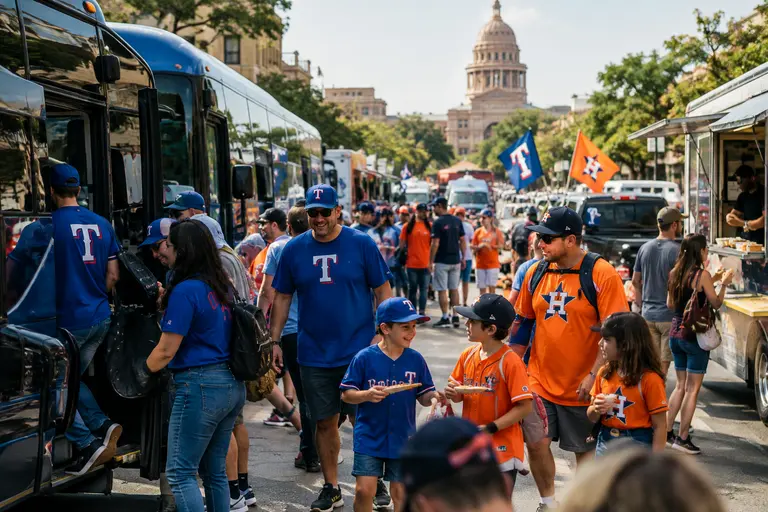
Arlington Lost Home-Date Energy
When a playoff race ends on the final day, the community effect is immediate. Arlington did not get Rangers postseason home dates, which meant no October gate built around Texas games, no local series rhythm around Globe Life Field, and no week-to-week planning for watch parties tied to the home club. The state still had baseball interest through Houston, but the North Texas event calendar changed the moment the Rangers were eliminated.
That matters for sports communities because playoff games pull together more than ticket buyers. Restaurants, youth teams, alumni groups, workplace pools, families, and fan clubs all tend to organize around postseason dates. Without Rangers games, North Texas baseball energy shifted from attendance planning to recap, roster evaluation, and scoreboard-driven interest in Houston and the wider bracket. For readers who follow Texas sports and outdoor community events across the same regional network, Triple T Powersports offers insights on local coverage, providing a perfect hub for weekend activities beyond the ballpark.
The travel piece also changed. Rangers fans did not need to plan Arlington playoff nights or consider road trips built around Texas matchups. Houston fans, by contrast, had a home Wild Card Series window. That difference showed how one game in the standings can redirect fan spending, community gatherings, and sports tourism inside the same state.
Why The 2026 MLB postseason Still Matters In Texas
A Close Race Left Useful Lessons
That is why the 2026 MLB postseason still mattered for Texas, even without the Rangers on the field. It gave fans a clean measure of how narrow the AL West margin became. Texas finished one game behind Houston, lost control on the final day, and watched its in-state rival take the division path into October. The result was a postseason shaped by absence as much as participation.
For the Rangers fanbase, the takeaway was not simply that Texas missed the bracket. It was that the club stayed close enough to make the final weekend meaningful, yet not sharp enough to claim the last result it needed. That difference will stay in the discussion because baseball seasons are often decided by small separations: one series, one tiebreaker, one late loss, one missed chance to force a different bracket conversation.
For Texas baseball as a whole, the 2026 postseason reinforced how divided and engaged the state’s fanbase remains. Houston carried the October banner, while Rangers fans were left with a hard final-day ending and the memory of a 2023 championship that still shapes expectations. The event is over as of October 31, 2026, but its impact remains clear: Texas baseball had drama until the last regular-season day, and the state’s postseason story was decided before the first playoff pitch was thrown.