
Spanning hundreds of miles of dynamic estuarine shorelines from Sabine Pass down to the Mexican border, the inshore fisheries of the Lone Star State offer world-class angling action. The core of this coastal heritage is the inshore Texas Grand Slam: red drum, spotted seatrout, and southern flounder. As chronicled by inshore specialists on Texas Sportsmen, mastering these productive bays demands an understanding of tidal dynamics, barometric pressure shifts, salinity balances, and habitat transition zones. Whether wading the crystal-clear grass flats of the Lower Laguna Madre or working shell reefs across the Galveston Bay complex, successful anglers adjust their approaches to seasonal and daily biological movements.
Inshore success starts with understanding coastal hydrology. Unlike coastal regions governed by deep lunar tides with massive vertical fluctuations, the Texas Gulf Coast features moderate tidal ranges influenced by prevailing wind directions and velocity. Prolonged southeast winds push deep water and marine forage into secondary bays and marsh drainages. Conversely, brisk post-frontal northers flush shallow estuaries, leaving mud flats exposed and concentrating predators along channel drop-offs and gut edges.
Hydrology, Tides, and Coastal Ecosystem Diversity
The geographic expanse of Texas encompasses two distinct estuarine systems. The Upper and Middle Coast—encompassing Sabine Lake, Galveston Bay, Matagorda Bay, San Antonio Bay, and Aransas Bay—relies on major freshwater inflows from river systems including the Trinity, Brazos, and Colorado. These river inputs create rich, brackish nursery zones loaded with oyster reefs, salt marsh cordgrass, and tidal bayous. Anglers in these zones navigate brackish river plumes, targeting structure-oriented predators that use shell pads as ambush cover.
Moving south past Corpus Christi into the Upper and Lower Laguna Madre, the ecology transitions into a hypersaline lagoon system separated from the Gulf of Mexico by Padre Island. Here, freshwater river inflows are sparse, water clarity increases dramatically, and extensive submerged seagrass meadows dominate the bottom structure. Coastal monitoring published by the Texas Parks and Wildlife Department highlights how seagrass coverage provides critical nursery habitat for juvenile baitfish and crustacean populations, creating prime terrain for sight-casting along shallow sand potholes.
| Coastal Region | Primary Bay Systems | Dominant Structure Type | Optimal Seasonal Tactics |
| Upper Coast | Sabine Lake, Galveston Bay Complex | Submerged oyster reefs, marsh drains, spoil banks | Drifting shell reefs with soft plastics; working marsh cuts on falling tides |
| Middle Coast | Matagorda, San Antonio, Aransas Bays | Oyster shell reefs, sand-mud bars, marsh bayous | Wade fishing shoreline shell; working topwater plugs along drop-offs |
| Lower Coast | Upper & Lower Laguna Madre, Baffin Bay | Seagrass flats, shallow sand potholes, serpulid worm rocks | Sight-casting shallow flats; working slow-sinking twitchbaits over deep rock |
Targeting Red Drum on the Flats and Shorelines
Red drum (Sciaenops ocellatus) rank among the hardiest inshore gamefish on the Gulf Coast. Highly adaptable to variable salinities, redfish move freely from freshwater river cuts down to ocean passes. In shallow bays, their signature feeding behavior creates “tailing” activity, where fish position their heads downward into the mud or turtle grass to root out mud crabs, mantis shrimp, and small burrowing mollusks, leaving their broad copper tails breaking the surface film.
When sight-fishing these shallow areas, stealth is essential. Wading anglers or boaters maneuvering quietly with a push pole hold a distinct tactical advantage over those using loud trolling motors. Gold spoons, weedless soft-plastic paddletails rigged on lightweight swimbait hooks, and unweighted jerkbaits draw sharp strikes when delivered past the fish and retrieved across its feeding zone. When dealing with murky water or heavy chop, noisy popping corks trailing live shrimp or scented shrimp imitations generate sonic vibrations that pull cruising reds out of thick grass lines.
Refining Speckled Trout Patterns Across Seasons
Spotted seatrout (Cynoscion nebulosus) demand a refined, structure-oriented presentation. Unlike redfish, speckled trout depend heavily on sight feeding, ambushing forage along deep channels, drop-offs, and current seams adjacent to live oyster reefs. According to oceanographic data from the National Oceanic and Atmospheric Administration, water temperature fluctuations directly dictate trout metabolic rates, driving them from exposed shallow flats into protected deep basins during severe cold fronts.
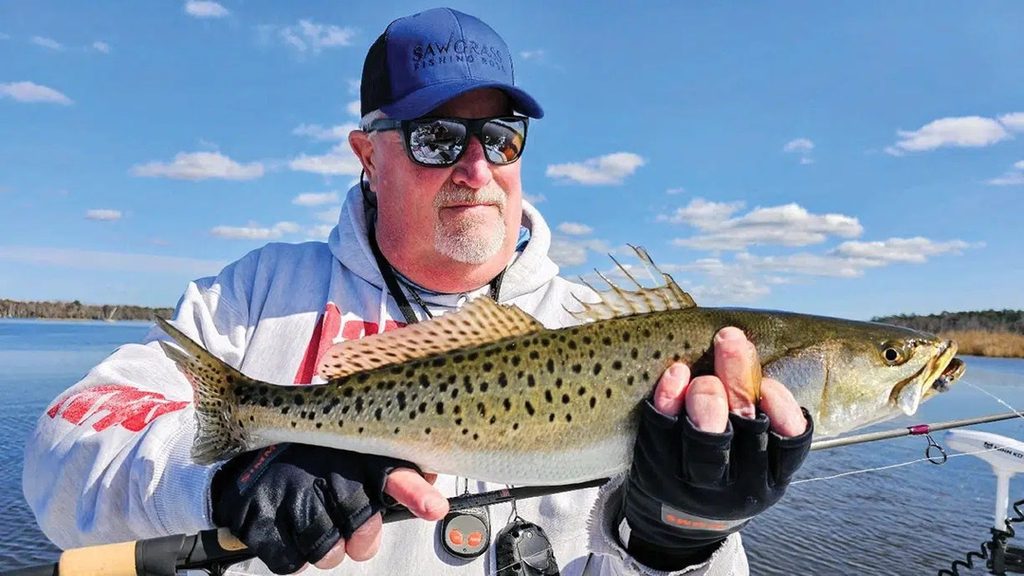
During the warm spring and summer months, big “gator” trout hunt over shallow flats at dawn, targeting finger mullet along windward shorelines. Walking-the-dog with surface topwaters generates reaction strikes from aggressive predators. As the sun climbs and water temperatures peak, trout move toward secondary drop-offs, suspended over 4 to 8 feet of water. Here, soft plastic jerkbaits rigged on lead jigheads, worked with a sharp twitch-and-pause cadence, consistently outproduce faster horizontal presentations.
The Southern Flounder Migration and Ambush Zones
Southern flounder (Paralichthys lethostigma) represent the third leg of the Texas inshore slam. Masters of camouflage, flounder bury themselves beneath thin layers of silt and sand adjacent to current-swept choke points, waiting for tidal currents to sweep brown shrimp, juvenile menhaden, and killifish past their ambush positions. Key structure includes marsh bayou mouths, culvert outflows, bridge bulkheads, and sandbars intersecting deep cuts.
Working flounder territory requires patience and tactile sensitivity. Slow-hopping a paddletail or curly-tail grub along the bottom ensures the bait stays within the fish’s tight strike zone. When a flounder strikes, it rarely hits with the jarring explosion of a redfish; instead, anglers feel a subtle sponge-like weight or tap. Delaying the hookset for a couple of seconds allows the fish to turn the bait toward its throat, ensuring the hook penetrates its bony jaw.
- Current Seams and Choke Points: Focus efforts around narrow bayou mouths where dropping water sweeps baitfish through consolidated bottlenecks.
- Bottom Composition Transitions: Look for edges where hard oyster shell transitions directly into soft sand or silt, creating natural hiding divots.
- Lure Selection: Scented soft plastics rigged on 1/8 to 1/4-ounce jigheads worked tight to the bottom yield consistent hookups.
- Seasonal Timing: Late autumn brings the annual migration toward Gulf spawning grounds, staging high numbers of feeding fish along major passes and channels.
Conservation Ethics and Sustainable Inshore Fisheries
The long-term resilience of the Texas inshore fishery relies on proactive conservation practices and habitat stewardship. Coastal fisheries regularly confront severe environmental pressures, including freeze events, industrial shipping traffic, and changing freshwater inflow balances. Managing these challenges requires continuous coordination between state biologists, environmental regulators, and angling organizations to maintain sustainable harvest limits and protect vulnerable broodstock.
Modern sportsmanship extends beyond simple compliance with catch limits. Implementing proper catch-and-release techniques—such as minimizing air exposure, handling fish with wet hands, using barbless inline hooks, and carrying release tools—ensures high survival rates for released gamefish. By respecting fragile seagrass flats and supporting coastal restoration initiatives, Texas sportsmen safeguard these productive bay systems for future generations of coastal anglers.