
Imagine the pinnacle of professional bass fishing. This is where dreams are weighed on a scale and fortunes are won on the water. The B.A.S.S. Elite Series is the highest level of tournament competition.
The stakes are huge. Anglers compete in a tough season-long battle across famous fishing spots. Every cast can decide between a paycheck and going home early.
What makes this tour special? Its structure is unlike any other. We’ll dive into the demanding format, the points race, and the life-changing payouts.
Get ready for a detailed look at how this championship circuit works. From the rules of each event to the unforgettable fan experience at Texas stops, we’ve got you covered.
Tournament week flow: practice → takeoff → check‑in → weigh‑in → cut days → Championship Sunday
Getting into the Elite Series tournament week is like diving into a world of professional bass fishing. Each part builds on the last, making a week full of strategy, adaptation, and intense competition.
The week starts with Official Practice. For three days, anglers explore the fishery. They look for good spots, find bass groups, and plan their strategies. This time is all about learning without the stress of scoring.
Takeoff is when the real action begins. Every morning, boats launch in order, creating excitement. Anglers then go out to put their plans into action, setting the stage for the day’s fishing.
Each day follows a key sequence. Anglers must check-in at set times. This step is important for safety and fair play. Missing it can lead to big penalties, adding a time management challenge.
The weigh-in is the day’s highlight. Anglers return with their catch. They show their five-fish limits to officials and fans. Each bass’s weight is added to their total, changing the leaderboard instantly.
Mid-tournament, the cut days are critical. After day two, the top 50 anglers stay in. After day three, it’s the top 10 who move on to Championship Sunday. The cut line is the weight that decides who stays and who goes.
The cut line is key for fans. It adds tension to weigh-ins. Anglers near it face huge pressure. Every ounce can be the difference between fishing again or going home.
Championship Sunday is for the top 10. They start fresh, competing for the day’s heaviest weight. This format ensures exciting, all-or-nothing fishing. The winner gets the trophy and a big prize.
The week’s flow creates natural storylines. Leaders must keep their position. Those below the cut line make big comebacks. Being consistent is as important as being a hero on any single day.
This structured week lets fans follow the tournament like a TV drama. Each part has its own drama and tension. From the secret practice to the glory of Championship Sunday, the Elite Series offers thrilling competition from start to finish.
Scoring/AOY math: daily limits, penalties, ties, points per finish; how AOY and Classic berths work
The Elite Series uses a points system to reward consistency and penalize mistakes. It turns daily catches into tournament results, shaping the season. Understanding this system is key to seeing the strategic depth of professional bass fishing.
Every tournament day has a five-fish limit. An angler’s weight comes from their five heaviest bass. Catching more than five doesn’t help, but catching fewer hurts a lot. This rule makes quality, not just quantity, important.
Penalties can change a scorecard a lot. A four-ounce deduction is applied for each dead fish. A late check-in gets a one-pound penalty. These rules highlight the importance of fish care and time management.
When two anglers tie, specific criteria are used to break the tie. The first tiebreaker is the heaviest single-day weight. If tied again, the next heaviest day is compared. This ensures a clear order for AOY points.
Points are given based on final standings in each tournament. The winner gets the most points. Each place gets fewer points, making every spot in the top tier valuable. Finishing near the top consistently is key to a high point total.
The Angler of the Year race is fueled by these points. After each event, anglers’ AOY points are updated. The angler with the most points at the end wins the AOY title. This title is a top honor, recognizing season-long excellence.
These AOY points also decide who gets into the Bassmaster Classic. Top finishers in the AOY standings get automatic spots. Doing well in the regular season is the main way to get into the Classic. This makes every tournament important for the ultimate goal.
In short, the points system connects daily performance to annual success. For anglers, understanding the math is as important as understanding the water.
Payout Structure and Contingencies (Big Bass, Bonuses)
The 2025 season brings a bigger payout pool, making the Elite Series more attractive to anglers. B.A.S.S. has increased its contribution to prize money by $200,000. Anglers also voted to add $10,000 each, raising the total to $4.1 million.
This amount is nearly $600,000 more than any other major bass fishing league. It makes the B.A.S.S. Elite Series format the most lucrative in the sport. Fans get to see the world’s best compete for the highest stakes.
The standard prize money for each Elite Series event is detailed below. It rewards consistency, with payouts going to 50th place.
| Place | Payout |
|---|---|
| 1 | $100,000 |
| 2 | $35,000 |
| 3 | $30,000 |
| 4 | $20,000 |
| 5 | $15,000 |
| 10 | $10,000 |
| 20 | $7,500 |
| 30 | $6,000 |
| 40 | $5,750 |
| 50 | $5,500 |
Anglers can also win extra “contingency” bonuses. These are sponsored awards for specific achievements during a tournament. They add a lot of extra income and strategic targets.
- Daily Big Bass: $1,000 for the heaviest bass each day.
- Big Bag Award: $2,000 for the heaviest single-day limit.
- Overall Big Bass: $2,000 for the biggest bass of the entire tournament.
- BassTrakk Award: $1,000 for the angler leading the unofficial live scoring.
These bonuses create many winning scenarios in one event. An angler could finish 15th but win thousands in contingency money. This makes every day and every fish financially critical.
The season-long Angler of the Year (AOY) race also has a big prize structure. The AOY champion gets a huge bonus, with payouts for the top five.
| AOY Finish | Payout |
|---|---|
| 1st | $100,000 |
| 2nd | $50,000 |
| 3rd | $25,000 |
| 4th | $12,500 |
| 5th | $6,250 |
There are also extra AOY awards. The Rookie of the Year (ROY) winner gets $10,000. There’s a $10,000 bonus for the angler with the season’s biggest bass. These rewards both consistent excellence and big moments.
Together, the base payouts and contingency bonuses are the financial heart of the B.A.S.S. Elite Series format. They make professional fishing a viable and exciting career. For anglers, every cast is for points and a real financial reward.
Texas stops primer: seasonal timing, launch sites, crowd tips, common hazards and regs
Texas waters like Sam Rayburn and Lake Fork are unique during the Elite Series season. They challenge the world’s best anglers and offer fans an unforgettable experience.
Knowing the local details makes your visit better. This guide covers the essential practical knowledge for any Texas tournament visit.
Seasonal Timing and Fish Behavior
Elite Series events in Texas usually happen in early spring. This time aligns with the bass pre-spawn and spawn phases. Water temperatures are rising, and fish are moving shallow.
This timing creates explosive fishing action. Anglers often target bedding fish or staging areas. But, spring weather in Texas can be unpredictable.
Sudden cold fronts can shut down bites. Rapid warming can push fish into a full spawn. Understanding this volatility is key to appreciating the strategies on display.
Prime Launch Sites for Spectator Viewing
Choosing the right launch site is key for a great view. Each venue has its own iconic starting point. These areas buzz with energy during tournament mornings.
At Sam Rayburn, the Rayburn Park near the dam is a fan favorite. It offers ample parking and a clear view of the massive field. For Lake Fork, the Lake Fork Marina is the historic hub.
The Sabine River event often launches from a public ramp in Orange. These sites fill up fast. Arriving at least 90 minutes before takeoff is a smart rule.
Texas fishing fans are passionate and numerous. Large crowds are a given at these premier events. A few simple tips can help you enjoy the day.
- Park Early: Official lots fill quickly. Look for designated overflow parking, which is often within walking distance.
- Pack for the Weather: Bring sunscreen, a hat, and rain gear. Texas spring can deliver sun and showers in the same day.
- Respect the Ropes: Observe all spectator boundaries at the launch and weigh-in. This keeps the event safe and smooth for everyone.
- Use Binoculars: A good pair lets you see the on-water action from the shore or a distant vantage point.
Common Hazards on Texas Waters
These fisheries are beautiful but demanding. Anglers must constantly manage underwater obstacles. Fans should understand these hazards to appreciate the skill involved.
Submerged timber and standing timber are everywhere on Sam Rayburn and Lake Fork. Hitting a hidden log can damage a boat’s lower unit. Changing water levels, such as on the Sabine River, constantly alter the landscape.
Stumps that were visible yesterday can be lurking just below the surface today. Thick hydrilla and other vegetation can choke out large areas. This creates fantastic habitat but can trap propellers.
Important Local Regulations
All anglers must adhere to Texas state and local rules. The Elite Series pros are experts in these details. Key regulations include:
- A valid Texas fishing license is mandatory for all competitors.
- Specific lake regulations may govern slot limits. For example, Lake Fork has special rules for largemouth bass over 24 inches.
- No-wake zones and idle-only areas are strictly enforced near marinas and certain shorelines.
- Always check for temporary rules or tournament-specific ordinances issued by local authorities.
For those inspired by the big leagues, exploring local Texas fishing tournaments is a great next step. These events offer a taste of the competition on these same waters.
Texas Tournament Venues at a Glance
| Venue | Typical Season | Primary Spectator Launch | Key Hazard | Notable Regulation |
|---|---|---|---|---|
| Sam Rayburn | Early Spring (Mar-Apr) | Rayburn Park (Dam Area) | Dense submerged timber | Standard state size limits apply |
| Lake Fork | Late Winter / Early Spring (Feb-Mar) | Lake Fork Marina | Standing timber & fluctuating water levels | Protected Slot Limit (16-24″ Largemouth) |
| Sabine River | Spring (Apr) | Public Ramps in Orange, TX | Tidal influence, shifting sandbars | Maritime navigation rules are critical |
Mastering these details enriches your time at any Elite Series stop in Texas. You’ll watch with a deeper understanding of the challenges each angler faces. You’ll also navigate the festival-like atmosphere like a seasoned pro.
How to Follow Live (BASSTrakk Equivalents, On‑Water Etiquette)
Watching a professional bass tournament live is exciting. It uses digital tools and respect. Whether at home or on the water, knowing the resources and rules helps you enjoy the event and support the anglers.
The live leaderboard is the heart of any major tournament. Like BASSTrakk, the Elite Series uses real-time scoring. You can watch weights, track anglers, and see standings change instantly on the official website and apps.
These platforms offer maps, catch logs, and check-in updates. Set up notifications for your favorite anglers. This turns your phone into a personal tournament center, keeping you in the loop.
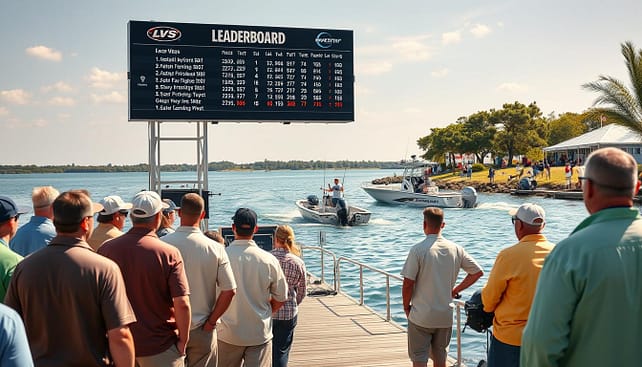
For those watching from the water, there are specific rules. On-water fan etiquette is key for fair play and safety. The main rule is to keep a 50-yard distance from competing anglers. This prevents fans from fishing in the wrong area or distracting anglers.
It’s also important to control noise. Loud engines, music, or shouting can scare fish and affect an angler’s day. Move slowly and quietly if you need to get close to a competitor.
Here are key etiquette points every fan should follow:
- Keep Your Distance: Always stay outside the marked or commonly understood buffer zones.
- Minimize Wake: Idle slowly when near tournament boats to avoid creating large waves.
- Stay Quiet: Keep conversations and engine noise to a minimum in fishing areas.
- Do Not Offer Advice: Never signal to anglers about fish or conditions; it’s against the rules.
- Respect All Directions: Follow instructions from tournament officials or marshals immediately.
Following these guidelines shows respect for the athletes and the sport. It ensures the competition is fair, based on skill alone. Good on-water fan etiquette makes the experience better for everyone on the lake.
Combining digital tracking with mindful behavior on the water makes for a great fan experience. You’re part of the event’s excitement without disrupting it. Use technology to follow scores and respect on the lake.
Fan checklist: best viewing spots, parking, expo tips
Plan your day around the main spectator hubs. The official weigh-in location is the prime spot to feel the tournament’s climax. For morning action, scout points near the boat launch. Arriving early secures the best sightlines and helps you avoid the largest crowds.
Check the event guide for official event parking details. Venues often charge a fee, but nearby public lots or street parking can be alternatives. Carpooling is smart for popular stops. An early arrival simplifies parking and gives you time to walk the venue.
Do not miss the Bassmaster Expo. It is your chance to see new gear, get pros’ autographs, and collect free swag. Engage with brand reps for expert tips. Remember, expo hours can vary; for example, the Classic Week experience includes a dedicated Expo day. Plan your visit according.
With your viewing plan set, parking sorted, and expo route mapped, you are ready to immerse yourself in the event. This preparation turns a simple trip into a full, seamless fan experience.