
South Padre Island’s new Marisol Laguna Madre Boat Ramp changes more than where boaters can launch. It gives anglers a new free public access point to one of Texas’ most important bay fishing systems after more than three decades without a new public bayside access development on the island. The City of South Padre Island scheduled the grand opening for July 21, 2026, at 1705 Laguna Boulevard, and local coverage described the $3.2 million project as the island’s first free public boat ramp with dedicated parking in more than 30 years. For Texas anglers, that matters because Laguna Madre access is not only about convenience. It shapes family fishing, tournament traffic, ADA access, fish-cleaning infrastructure, shallow-water planning, and how a destination fishing town handles growth.
Why The Marisol Boat Ramp Is A Major Access Story
The City of South Padre Island’s official Marisol Boat Ramp grand opening notice announced a July 21, 2026 ceremony at 9 a.m. for the Marisol Laguna Madre Boat Ramp at 1705 Laguna Boulevard. The city described the project as the first public bay access development constructed in 30 years.
That one sentence explains why the ramp matters. South Padre Island has long been associated with fishing, boating, beach travel, and access to the Laguna Madre, but public infrastructure does not automatically keep pace with demand. A new ramp is not just a slab of concrete. It is a decision about who can reach the water, how safely they can launch, where trucks and trailers go, and whether public access can serve both residents and visitors.
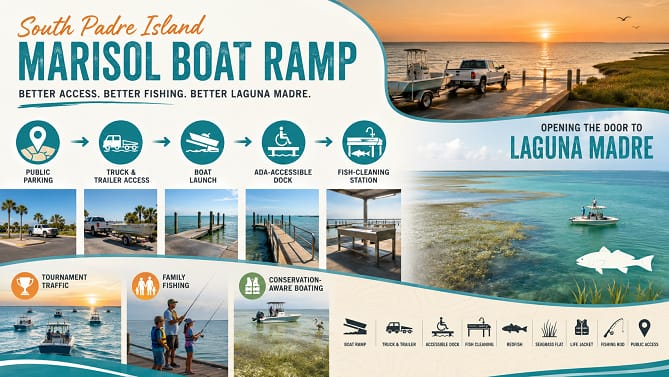
MySA reported that the project cost $3.2 million and includes truck-and-trailer parking, a fish-cleaning station, and an ADA-accessible dock. The report also said the project received more than $2.4 million in federal grants, including RESTORE Act disaster recovery funds and a Texas Parks and Wildlife Department Boating Access Grant, plus $770,000 from the city.
That funding mix matters because access projects are rarely simple. They require local money, state coordination, federal support, permitting, planning, and a clear public-use argument. The Marisol ramp is a fishing infrastructure story because it shows what happens when a coastal community invests in the everyday systems anglers need before and after they catch fish.
How Free Public Access Changes The Fishing Equation
A free public boat ramp changes the fishing equation because it lowers the friction between anglers and the water. For local residents, that can mean easier weekday trips, family outings, and short evening launches. For visiting anglers, it can mean one more practical option when planning South Padre and Laguna Madre trips.
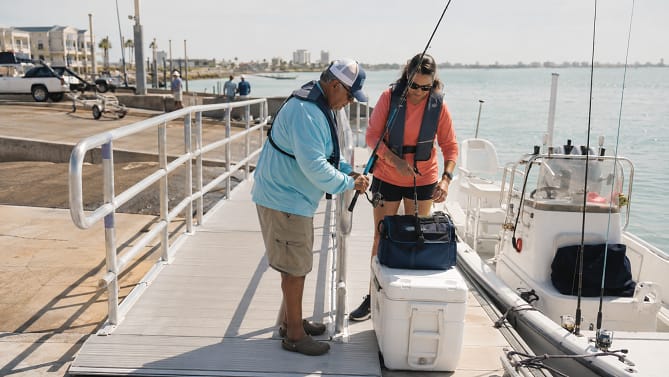
That is especially important in a destination where fishing demand is tied to both tourism and local culture. South Padre Island is not only a beach town. It is a gateway to protected bay water, flats fishing, redfish, trout, flounder, black drum, boat traffic, kayak routes, and major saltwater events. Every launch point affects how people spread across that system.
The Port Isabel-South Padre Press reported that boaters, anglers, city leaders, and community members gathered for the opening, calling the project the first new public bayside access point built on the island in more than three decades. Councilwoman Lisa Graves emphasized the community collaboration and planning behind the project, according to MySA.
That local support is important. Fishing access works best when it is treated as community infrastructure, not only a visitor amenity. A ramp serves guides, tournament anglers, families, weekend boaters, shoreline businesses, and residents who want a practical connection to the bay.
This connects naturally with recent Texas Sportsmen coverage of new angler access. Caddo Lake’s Fishin’ Fridays showed how state parks can help people fish without a boat. South Padre’s Marisol ramp shows the other side of the access ladder: once anglers do have boats, they still need fair, safe, public ways to reach the water.
Why The Laguna Madre Makes This Ramp More Important
The Lower Laguna Madre is one of Texas’ defining coastal fishing systems. Its shallow flats, seagrass beds, clear water, and protected bay structure make it a major destination for inshore anglers. Access to that water affects how people fish, where they launch, and how pressure moves through the area.
South Padre Island sits in a strategic position because it can serve both local anglers and visitors who want to fish the bay side without traveling deep into other launch areas. A public ramp on the island changes trip planning. It can shorten travel time, reduce dependence on private access, and make early starts more realistic for anglers staying nearby.
The new fish-cleaning station also matters. Cleaning facilities help keep fish handling organized and reduce the chance of scraps, mess, or informal cleaning in places not designed for it. For a high-use fishing destination, that is part of responsible infrastructure.
An ADA-accessible dock matters even more. Public fishing and boating infrastructure should not be built only for the able-bodied angler with a truck, trailer, and years of experience. Accessible docks can help families, older anglers, visitors with mobility limitations, and people who need safer boarding or unloading conditions.
| Ramp Feature | Why It Matters For Anglers | Broader Access Value |
|---|---|---|
| Free Public Launch | Lowers trip cost and access barriers | Helps residents and visitors reach the bay |
| Truck-And-Trailer Parking | Reduces launch-area congestion | Makes peak fishing days more manageable |
| Fish-Cleaning Station | Supports cleaner post-trip fish handling | Protects public spaces and improves convenience |
| ADA-Accessible Dock | Improves boarding and shoreline usability | Expands who can use the facility |
| Laguna Madre Location | Connects anglers to a premier bay system | Strengthens South Padre’s fishing identity |
That combination makes the Marisol project more than a local ribbon-cutting. It is a functional upgrade for the way South Padre connects anglers to the Laguna Madre.
How Tournament Culture Raises The Stakes
South Padre Island’s fishing calendar gives the ramp added importance. MySA noted that the region hosts several annual tournaments, including the Texas International Fishing Tournament and the Ladies Kingfish Tournament. The timing is especially relevant because the 86th Annual Texas International Fishing Tournament runs July 29 through August 2, 2026, around South Padre Island and Port Isabel.
The official Texas International Fishing Tournament schedule lists registration on July 29 and July 30, junior Playday on July 30, fishing days on July 31 and August 1, and awards on August 2. TIFT describes the event as Texas’ largest saltwater fishing tournament, with competition connected to the Laguna Madre Bay and Gulf of Mexico.
That context matters because tournament towns need more than fish. They need ramps, parking, docks, fuel, safe launch flow, fish-cleaning options, staging areas, and public infrastructure that can absorb seasonal pressure. A new ramp does not solve every traffic or access issue, but it gives the area another practical tool.
Tournament culture also affects young anglers. Junior divisions and family events depend on adults being able to get kids safely to and from the water. A well-planned public ramp can make those trips less intimidating.
That is why Marisol’s timing matters. Opening a new access point days before one of the region’s signature tournament weeks puts the project immediately inside the real rhythm of South Padre fishing.
Why Boat Ramp Design Is A Safety Issue
Boat ramps are safety infrastructure. Anglers often think about them only as launch points, but ramp design affects traffic, visibility, trailer movement, dock stability, boarding, unloading, and how people behave under pressure.
That matters even more in a busy coastal destination. Early-morning fishing traffic, tournament departures, family trips, and visitor boaters can all converge in tight windows. If a ramp lacks parking, dock space, or clear flow, frustration rises. Frustration at a ramp can lead to rushed decisions, unsafe loading, blocked lanes, or poor communication between drivers and boat operators.
The Marisol ramp’s truck-and-trailer parking and dock access are not minor amenities. They are part of making launches more predictable. Predictability is a safety tool.
Texas anglers were reminded of Laguna Madre boating risk just days after the ramp opening. Recent reports said a 16-year-old died after an early-morning boat collision near Bird Island Basin on July 25, 2026, with the Texas Game Warden Boat Accident Reconstruction Team investigating. That tragedy was not connected to the Marisol ramp, but it underscores why safe boating conversations belong anywhere new coastal access is being discussed.
Access expansion should always come with reminders about life jackets, navigation lights, safe speed, sober operation, ramp patience, and early-morning visibility.
How The Ramp Could Help Spread Access Pressure
One new ramp does not erase coastal congestion, but it can help distribute pressure. When access is limited, boaters concentrate around the same ramps, parking areas, and launch windows. That can create crowding, traffic backups, and frustration during peak fishing periods.
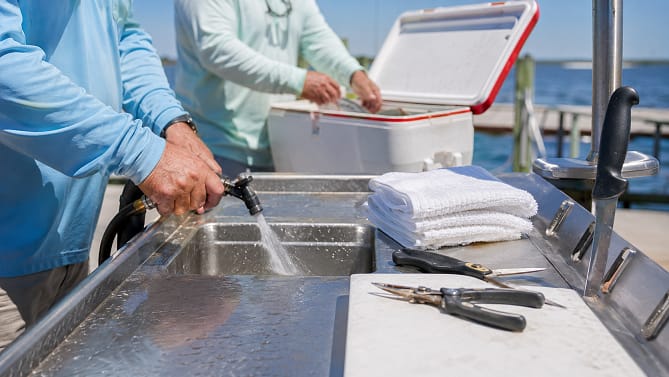
The Marisol ramp gives South Padre another public access point into the Laguna Madre. That can help anglers choose launches based on where they are staying, what part of the bay they want to fish, and how much time they have. It can also support shorter trips for residents who do not want every outing to become a full-day logistics project.
Better access distribution can also help businesses. Anglers who can launch more easily may spend more time in town, buy bait, fuel up, eat locally, book lodging, and return for future trips. That makes ramp infrastructure part of the local fishing economy.
However, access growth should be managed carefully. More launches can mean more boat traffic, more pressure on flats, more demand on fish-cleaning stations, and more need for etiquette. The best access projects do not just open the gate. They teach users how to move through it responsibly.
Why Public Access And Conservation Need To Move Together
Laguna Madre fishing access carries conservation responsibilities. The bay system is valuable because of its shallow habitat, grass flats, fish populations, and coastal ecology. More convenient access should not mean careless use.
Anglers launching from Marisol should understand seagrass awareness, shallow-water navigation, boating etiquette, fish handling, and bag-limit compliance. They should avoid prop scarring, respect other anglers, give wade fishermen space, and handle fish-cleaning waste properly. A free ramp is an invitation to the water, not permission to ignore the resource.
The Texas Parks and Wildlife Department’s general fishing regulations remind anglers that anyone who takes or attempts to take fish or other aquatic life in Texas public waters must have a current fishing license with the appropriate endorsement, unless exempt. Saltwater fishing requires a saltwater endorsement.
That rule belongs in the Marisol conversation because public access can attract new or occasional anglers who may not know the requirements. A new ramp should be paired with clear reminders about licenses, bag limits, protected species, safe fish handling, and boating rules.
The best coastal access is not simply open. It is informed.
How The Marisol Ramp Fits South Padre’s Long-Term Fishing Identity
South Padre Island’s fishing identity depends on both bay and Gulf access. Offshore trips, surf fishing, inshore flats, tournaments, family outings, and charter operations all contribute to the area’s reputation. The Marisol ramp strengthens the bay side of that identity by giving the public a dedicated, modern launch option.
That matters because tourism destinations can drift toward general recreation if they do not keep fishing infrastructure visible. A new ramp says fishing is still part of the island’s civic planning. It says anglers are not just visitors passing through; they are part of how the town understands itself.
The project also shows how coastal infrastructure can serve multiple groups at once. Tournament anglers may use it differently than families. Guides may view it differently than weekend residents. Visitors may appreciate it differently than locals. But all of them benefit from more organized access.
That is how a ramp becomes more than concrete and parking. It becomes a statement about the kind of coastal community South Padre wants to remain.
What Anglers Should Watch Next
The Marisol ramp’s real impact will show up over time. Anglers should watch how the facility performs during tournament weeks, holiday weekends, peak summer mornings, and windy fishing days. They should watch whether parking is enough, whether launch flow stays organized, whether fish-cleaning areas remain clean, and whether ADA access is maintained well.
They should also watch how the ramp affects nearby fishing pressure. If access makes certain flats or shorelines busier, etiquette will matter. Anglers should avoid crowding boats, cutting off drifts, running too shallow, or treating new access as a race to the same spots.
Local officials and anglers should also pay attention to education. Clear signage, license reminders, seagrass awareness, boating-safety messaging, and fish-cleaning rules can help the ramp serve its purpose without creating new problems.
A new access point is a beginning, not the end of the project.
Why Marisol Changes The Laguna Madre Access Conversation
South Padre Island’s Marisol Laguna Madre Boat Ramp changes the access conversation because it gives anglers a free, public, modern, bayside launch point in a place where fishing demand is already high. It brings together federal funding, city investment, ADA access, fish-cleaning infrastructure, trailer parking, and a location tied directly to one of Texas’ most important coastal fishing systems.
For local anglers, it creates opportunity. For visiting fishermen, it adds convenience. For tournament culture, it strengthens logistics. For families, it lowers the barrier to bay access. For South Padre Island, it reinforces fishing as part of the island’s long-term identity.
The ramp will not catch fish for anyone. Anglers still need weather judgment, boating skill, licenses, conservation habits, and respect for the Laguna Madre. But access is where every boat trip begins.
After more than 30 years without a new public bayside access development on South Padre Island, Marisol gives anglers a new place to start.