
July rains turned San Luis Pass redfish fishing into a salinity puzzle because runoff changed where fish, bait, and anglers could find the right water. Instead of spreading naturally across summer patterns in West Galveston, Bastrop, Christmas, and Chocolate bays, redfish near San Luis Pass became more concentrated around pockets of saltier water after heavy rains pushed freshwater into the system. For Texas anglers, that made the bite less about simply fishing a familiar shoreline and more about reading water movement, salinity edges, bait availability, surf conditions, and the places where redfish could settle while the bay recovered.
Why San Luis Pass Became A Salinity Story
San Luis Pass is always a dynamic fishing area because it connects the Gulf with the West Galveston Bay system and sits between Galveston Island and Follett’s Island. Water movement, wind, tide, surf color, and runoff can all change the bite quickly. In July 2026, rain made that puzzle sharper.

Texas Saltwater Fishing Magazine’s July 2026 West Galveston, Bastrop, Christmas, and Chocolate Bays report from Randall Groves of Groves Guide Service said heavy rains before the report had made redfish fishing around San Luis Pass best for anglers who could locate pockets of salty water. The report noted that freshwater runoff had moved redfish around and stacked them in areas holding more salt.
That is the key lesson. After rain, the best redfish water is not always the most familiar water. It may be the water with the right salinity, bait, clarity, current, and oxygen profile.
For anglers used to July producing saltier conditions across the bay, that required adjustment. The report specifically noted that by July, anglers would normally expect salty water “all over,” which would let redfish spread back out. But the rain temporarily changed the pattern.
How Freshwater Runoff Moves Redfish
Redfish can tolerate a broad range of salinity, but they still respond to changes in water conditions. When heavy rain pushes freshwater into bays, passes, drains, bayous, and back-lake systems, fish may shift toward areas where salinity remains more stable.
That does not mean every redfish leaves the bay. It means anglers have to stop thinking of the system as one uniform body of water. The water near a pass, shoreline drain, reef, gut, surf line, or bay mouth can behave differently after a rain event.
Around San Luis Pass, that makes the search more technical. Anglers may need to look for saltier pockets created by Gulf exchange, stronger tidal flow, deeper guts, or surf-side water. They may also need to pay attention to bait behavior. If shrimp, mullet, crabs, or small finfish shift, redfish will often follow the most useful food source rather than hold on a shoreline just because it looked good last week.
That is why salinity becomes a fishing clue. It tells anglers where life is likely to concentrate.
Why The Surf Became A Reliable Option
The July Texas Saltwater Fishing Magazine report made one practical point especially clear: one reliable salinity area after the rains was the surf. That makes sense because Gulf water can hold a steadier salt profile than parts of the bay receiving runoff.
For San Luis Pass anglers, the surf can become a reset button after heavy rain. If bay water is too fresh, scattered, or inconsistent, the beachfront may offer better conditions when green water reaches the beach and weather allows safe access.
The same July report described summer surf fishing opportunities, including live shrimp under popping corks, tequila gold Norton Sand Eels on 3/8-ounce heads, and early topwater action with chrome-sided plugs and darker backs. Although that section focused heavily on trout opportunity, the salinity lesson also matters for redfish because bait and predators can both use the surf when bay conditions change.
Surf fishing is not automatic. Wind, wave height, clarity, current, and safety matter. But when rainfall disrupts the bay, the surf gives anglers another way to find saltier water without abandoning the San Luis Pass area completely.
Why Bait Availability Became Part Of The Same Puzzle
Salinity changes do not only move redfish. They can also affect bait supply and bait-shop planning. That matters because many San Luis Pass and Galveston-area anglers rely on live shrimp, finger mullet, croaker, or other bait options during summer.
The Houston Chronicle reported on August 4, 2026, that recent rains had caused salinity levels in many parts of the Texas coast to plummet, making shrimp harder to find. The report included comments from Kelley Kowal, regional director of TPWD’s coastal fisheries division, noting that low bait shrimp abundance is fairly common at that point in the season and that low salinity can make shrimp even harder to find.
That reinforces what San Luis Pass anglers were seeing from the fishing side. If bait is harder to find, redfish may be less predictable. If live bait supply tightens, anglers may need to adjust with frozen bait, cut bait, soft plastics, topwaters, or paddle tails.
In other words, the rain changed more than where the fish were. It affected the whole fishing system: bait movement, bait supply, angler decisions, and where effort concentrated.
How Anglers Should Read Salinity Without A Lab Test
Most anglers are not measuring salinity with scientific equipment every trip. They read it through signs. After heavy rains, the best clues can come from water color, bait presence, tide flow, current seams, bird activity, and whether fish are holding tight to areas with better exchange.
San Luis Pass gives anglers several clues because it sits at the edge of bay and Gulf influence. If the surf is green and calm enough to fish, that can suggest more stable saltwater nearby. If bait is nervous along a gut, bar, or shoreline, redfish may be close. If a pocket of water has better clarity, active mullet, or a firmer bait presence than nearby muddy or freshened areas, it may be worth more time.
Texas Sportsmen readers who follow Texas redfish tournament culture know that summer success often comes from small decisions. Conditions decide whether a trip becomes productive. After rain, those small decisions become even more important because redfish may compress into fewer useful zones.
| Post-Rain Clue | What It May Suggest | How Redfish Anglers Can Respond |
|---|---|---|
| Better Water Color Near The Surf | More stable Gulf influence | Check safe beachfront windows and pass-adjacent water |
| Active Mullet Or Shrimp | Usable salinity and predator food | Slow down and work the area thoroughly |
| Fresh, Stained Bay Water | Runoff influence | Look for nearby saltier pockets or stronger tidal exchange |
| Strong Tidal Movement | Mixing and bait concentration | Fish current seams, guts, and edges |
| Limited Live Shrimp Supply | Bait stress or movement | Carry artificial options and backup bait plans |
The table matters because anglers need a practical system. A salinity puzzle is only useful if it changes decisions on the water.
Why Summer Timing Still Matters
Rain changed the San Luis Pass pattern, but July heat still shaped the day. Texas Saltwater Fishing Magazine’s broader July reporting noted that during the dog days of summer, anglers should expect some of the lowest tides of the year and rising water temperatures. It also emphasized the value of getting on the water before daylight or fishing late afternoons into sunset instead of relying on the middle of the day.
That applies directly to redfish. After runoff, anglers may already be searching for the right salinity pocket. If they wait until heat, boat traffic, and wind complicate the day, the puzzle gets harder.
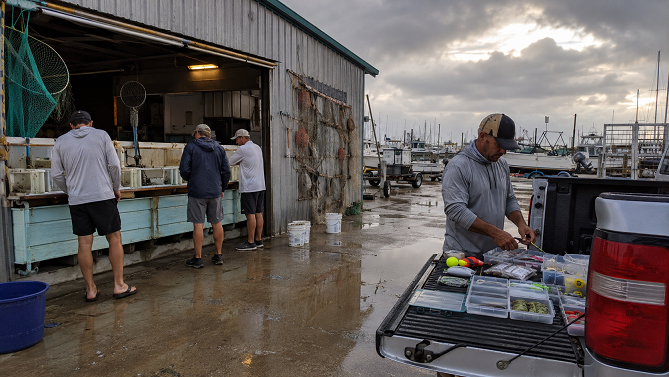
Early starts help anglers cover water before the sun gets high. Late-day sessions can also work if wind and tide cooperate. Midday fishing may still produce, but anglers often need to slow down, fish deeper edges, or target areas where bait and current create a reason for redfish to stay active.
The main point is that rainfall does not erase normal summer logic. It adds another layer.
How Lure Choice Changes When Redfish Are Concentrated
When redfish stack in saltier pockets, lure choice should match the situation. If fish are shallow and active early, small topwaters can help locate feeding fish. If they are sitting lower in guts, potholes, or deeper edges, soft plastics and paddle tails may be more efficient. If water is dirty or windblown, vibration, profile, and scent can matter more.
The July report’s San Luis Pass-adjacent advice included live shrimp under popping corks, Norton Sand Eels, and topwaters in low-light windows. Other July Texas coast reports also pointed to paddletails, weedless setups in thick grass, and slower presentations as fish moved off flats into deeper water.
For redfish anglers, the lure lesson is not about one magic bait. It is about matching the pocket. Saltier water may hold the fish, but the presentation still has to fit depth, visibility, current, and bait.
After rain, that may mean anglers should spend less time running and more time testing. A good pocket deserves multiple looks before being abandoned.
Why San Luis Pass Rewards Flexible Anglers
San Luis Pass is not a place where anglers can rely on one pattern for long. Weather, tides, and water quality can change the plan quickly. July rains simply made that more obvious.
Flexible anglers had an advantage because they could move between bay and surf thinking. They could shift from shorelines to guts, from stained water to cleaner water, from live bait to lures, and from a standard July pattern to a salinity-driven search.
That flexibility is especially important for redfish because the species often responds to opportunity. If bait is pushed to saltier edges, redfish may follow. If runoff pushes them out of a back area, they may stage on shell, grass, bars, or near better current. If surf conditions line up, they may become part of a beachfront plan.
A rigid plan can waste a day. A flexible plan can turn post-rain confusion into a useful pattern.
Why Red Drum Rules Still Matter During A Conditions Shift
When fishing gets difficult, anglers sometimes focus so much on finding fish that they forget the legal framework. That is a mistake. Redfish pressure can increase around the few areas holding better conditions after rain, so legal harvest and fish handling matter even more.
TPWD’s red drum rules list a daily bag of three red drum, a 20-inch minimum length, and a 28-inch maximum length. The page also explains that one red drum over the maximum length may be retained during a license year when properly tagged with a Red Drum Tag, and one additional over-slot fish may be retained with a Bonus Red Drum Tag. TPWD also states that recreational anglers must have a Texas fishing license with a saltwater endorsement to land fish in state or federal water.
That matters at San Luis Pass because the area can draw concentrated pressure when conditions improve. Legal slot discipline, careful measuring, and thoughtful release habits help protect the fishery when redfish are easier to locate.
Rain may move fish. It does not change the rules.
What Texas Anglers Should Watch After The Next Rain
The San Luis Pass July pattern gives anglers a useful playbook for the next heavy rain period. The first question should be where freshwater is entering and where saltier water is likely to remain. The second question should be where bait can survive and concentrate. The third question should be whether the surf is safe, green, and fishable.
Anglers should also call ahead on bait, especially if they rely on live shrimp. The August bait shortage reporting showed how quickly low salinity and heat can affect shrimp availability along parts of the coast. A backup lure plan is not optional during those stretches.
Finally, anglers should avoid assuming that the entire bay is bad just because one shoreline looks fresh. Post-rain fishing often creates smaller target zones. The challenge is finding the pocket that still has the right mix of salt, bait, flow, and cover.
Why The July Salinity Puzzle Matters Beyond San Luis Pass
The San Luis Pass redfish story matters because it shows how quickly Texas coastal fishing can change when rain interrupts normal summer patterns. July should be a time when salty water spreads across much of the system and redfish can distribute more widely. In 2026, runoff changed that expectation and rewarded anglers who understood salinity as part of the pattern.
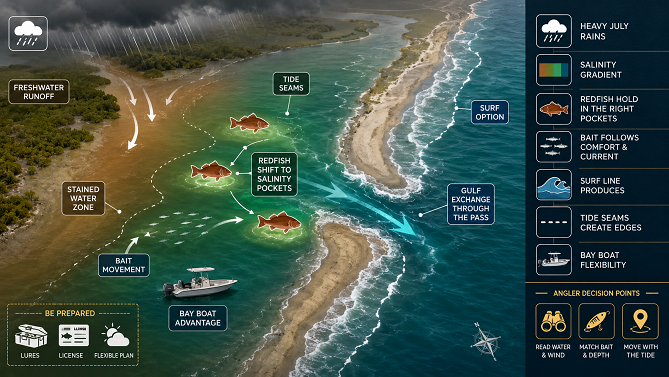
That is the larger lesson for Texas anglers. Redfish fishing is not only about spots. It is about conditions. A favorite shoreline, reef, gut, or pass can change when rain alters the water. The best anglers are the ones who understand why fish move, not just where they were caught last week.
San Luis Pass made that lesson clear. After July rains, the winning approach was not to fish harder in the wrong water. It was to find the salt.