
Winter changes everything along the Texas coast.
The boat traffic fades. The bait thins out. Cold fronts sweep through in steady cycles. And redfish — instead of disappearing — reposition with purpose.
For anglers who understand seasonal movement, winter redfish in Texas can offer some of the most consistent and technical fishing of the year. The explosive topwater strikes of summer give way to deliberate takes. Sight-casting windows narrow. Presentations must slow down.
But the fish are still there.
The difference is strategy.
How Cold Water Alters Redfish Behavior
When water temperatures dip into the 50s and low 60s, redfish metabolism slows. They feed less aggressively and conserve energy whenever possible.
Instead of roaming shallow flats at sunrise, winter redfish gravitate toward:
- Deeper bay channels
- Dark mud bottoms that retain heat
- Protected back lakes shielded from north winds
- Drop-offs adjacent to shallow feeding areas
The most important shift isn’t location alone — it’s movement timing.
Redfish in winter often feed during the warmest part of the day. Afternoon sun can raise water temperatures just enough to trigger activity. That subtle two- or three-degree increase can make the difference between inactive fish and steady action.
Unlike fall bull reds staging near passes — as discussed in our guide to fall bull reds in Texas — winter fish tend to remain within bay systems, focusing on thermal stability rather than migration.
Identifying Productive Winter Structure
Success in winter begins with understanding where heat concentrates.
Dark mud absorbs solar radiation more efficiently than sand. On sunny afternoons, shallow mud flats adjacent to deeper channels become prime feeding zones. Redfish slide up to take advantage of warming water before retreating when light fades.
Productive winter features include:
• Channel bends with reduced current
• Wind-protected shorelines after cold fronts
• Oyster reefs near deeper access points
• Shallow basins with muddy bottoms
Wind direction also plays a critical role. After a strong north wind, water is often pushed out of shallow flats. Targeting remaining troughs and depressions becomes essential.
Seasonal Location Breakdown Across the Texas Coast
Winter redfish patterns vary slightly by region, but the core principle — thermal stability — remains consistent.
| Region | Winter Focus Areas | Key Adjustment |
|---|---|---|
| Upper Coast | Deep marsh drains, ship channel edges | Fish midday warming trends |
| Central Coast | Mud flats near protected coves | Focus on slow retrieves |
| Lower Coast | Shallow sun-warmed basins | Sight cast during calm afternoons |
Lower Coast fisheries often maintain slightly warmer average water temperatures, allowing more consistent shallow-water opportunities. However, cold snaps still demand depth adjustments.
Current size and bag regulations are enforced by the Texas Parks & Wildlife Department, which manages coastal redfish populations statewide
Understanding regional nuance strengthens year-round strategy within the broader redfish fishing in Texas category.
Why Slow Presentations Outperform in Winter
Cold-water redfish rarely chase fast-moving lures. Their feeding response becomes calculated rather than reactionary.
This is where slow-presentation strategy dominates.
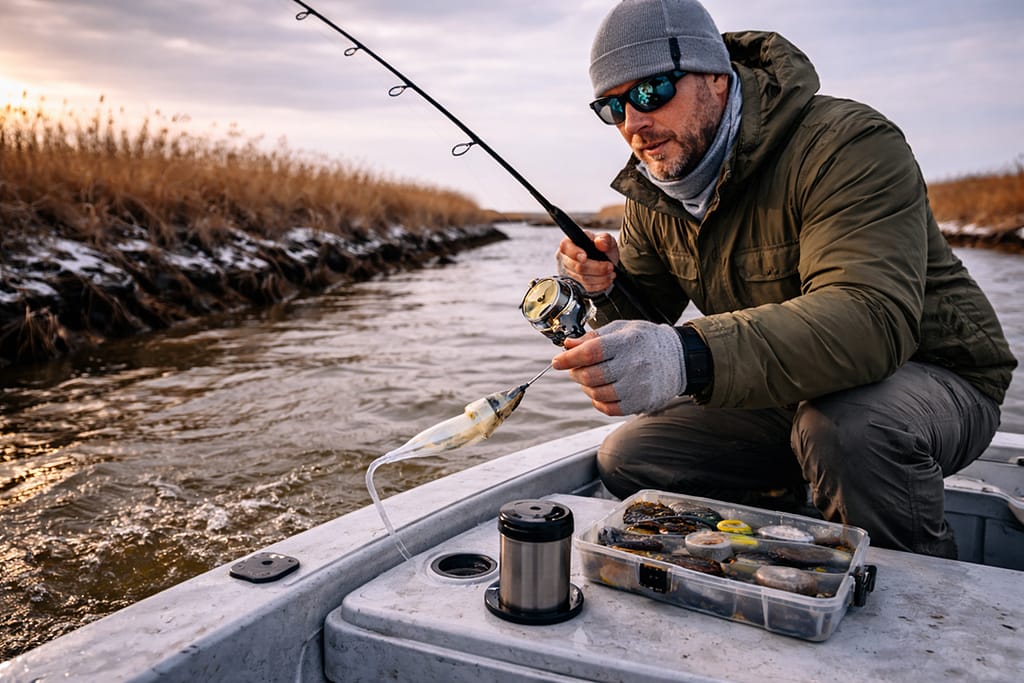
Instead of ripping paddle-tails across flats or walking topwaters aggressively, winter tactics emphasize:
• Dragging soft plastics along bottom
• Pausing longer between twitches
• Allowing baits to settle into strike zones
• Maintaining contact with structure
Jig heads in the 1/8 to 1/4 oz range paired with subtle paddle-tail plastics are highly effective. The key is maintaining bottom contact without excessive movement.
A slower cadence mimics lethargic baitfish — matching the reduced energy level of predators.
Sight Fishing in Winter Conditions
Clear winter water can create strong sight-fishing windows, especially during calm weather in the Lower Laguna Madre.
Unlike the aggressive tailing behavior often seen in warmer months, winter redfish move more deliberately. Their posture often appears neutral rather than actively feeding.
When sight casting:
- Lead fish further than usual
- Avoid sudden rod movements
- Let the lure rest within the strike zone
- Watch for subtle body language changes
A slow turn of the head or slight acceleration often signals commitment before the strike.
The patience required mirrors the discipline discussed in our coverage of trophy redfish strategy along the Texas coast — but winter magnifies the importance of precision.
Adjusting After a Cold Front
Texas winters are defined by frontal cycles. A strong blue norther can drop water temperatures dramatically in a matter of hours.
Immediately following a front:
- Fish deeper than usual
- Target areas protected from wind
- Fish slower than you think necessary
Two to three days after a front, as sun exposure increases, shallow mud flats can rebound quickly. This recovery window often produces some of the best winter action of the season.
Timing these cycles requires attention to weather patterns rather than calendar dates.
Tackle Considerations for Cold Water
Winter gear doesn’t require heavier tackle — but it does demand sensitivity.
Medium-power rods with fast tips help detect subtle winter strikes. Braided mainline with fluorocarbon leader maintains sensitivity while providing abrasion resistance around oysters.
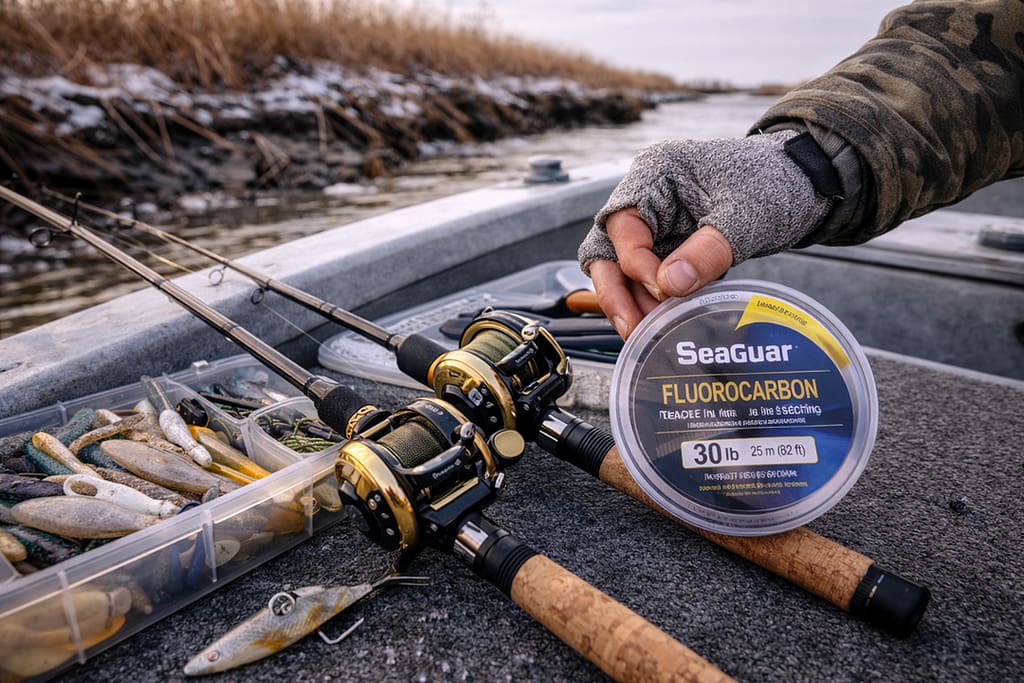
Winter bites are often soft. What feels like slight pressure may be a fish inhaling the bait.
Maintaining tight line control and resisting the urge to over-set the hook improves landing ratios significantly.
Why Winter Redfish Define Technical Angling
Summer fishing rewards aggression. Fall migration rewards timing. Winter rewards discipline.
There are fewer obvious visual cues. Fewer explosive surface strikes. Fewer aggressive schools pushing bait.
But for anglers willing to slow down, study structure, and adapt to cold-water behavior, winter redfish in Texas provide something different — consistency through understanding.
It’s not about covering water quickly.
It’s about reading subtle conditions, aligning with warming trends, and delivering a presentation that matches seasonal metabolism.
And when that slow, deliberate strike finally loads the rod in 58-degree water, it confirms what experienced Texas anglers already know:
Winter doesn’t end redfish season.
It refines it.