
Forget the algorithm. While your feed is filled with viral clips of kids glued to screens, a different leaderboard is being written in Texas. It’s in the mud and water.
This isn’t about likes. It’s about weights. The 2025 Texas B.A.S.S. Nation Youth State Championship was more than a fishing tournament. It was a cultural artifact.
Think of it as a snapshot of a generation learning grit, strategy, and stewardship. We’re talking about 112 teams of young anglers. There was a $23,400 payout on the line. Champions like Braden Norton & Caden Williamson and Rodee Owen & Case Thorn made their mark.
This is the raw data of the outdoors. The real “influencers” are those who can read a river and respect a limit.
Consider this your post-game analysis for a sport that rarely trends online. It builds character that lasts a lifetime.
Why youth divisions matter: safety, stewardship, skills
The mission of Texas B.A.S.S. Nation Youth is more than just getting kids outside. It’s about preparing them to be future conservationists and anglers. Chris Thorn’s words highlight a key point. These divisions are not just for fun but to teach important skills.
Three main reasons make these divisions essential: safety, stewardship, and skills. Safety is the first and most important reason. Kids can’t learn if they’re worried about their safety. A youth competition in Texas offers a safe place to learn.
Stewardship is another key lesson. It teaches kids that the resources we use are limited. They learn to handle fish carefully and understand the importance of the ecosystem. This lesson is learned through doing, not just listening.
Skills are also a big part of these divisions. In today’s world, learning to tie a knot or read a map is valuable. A youth competition turns theory into practice. It’s where kids learn to handle real-world challenges.
These divisions are more than just fishing tournaments. They are places where kids learn from experienced mentors. They get feedback that helps them grow and improve. It’s a chance to learn from every mistake.
So, when you see a junior bracket, don’t think it’s less important. It’s a chance for kids to start strong. The goal is to build a lifelong angler and steward, not just a winner. That’s the true value of any Texas youth competition.
Winners and Standout Junior Performances (Species/Weights/Scores)
Forget about participation trophies. The real story of youth outdoors is about pounds and ounces. It’s about the scales at weigh-ins across the country. Let’s talk numbers. This season’s championships show talent that screams.
At Cedar Creek Reservoir, Braden Norton and Caden Williamson didn’t just win. They posted a 32.40-pound statement. That’s not luck. It’s a clear message.
In the Junior ranks, Rodee Owen and Case Thorn showed consistency. Their 30.63-pound total was a lesson in catching a limit when big bites are rare. These junior fishing results prove a point.
Then, there are the legends of the single bite. AJ Amonett and Carter Schnoor caught a 7.40-pound lunker in the High School event. For the Juniors, Carter Hawthorn and Aiden Lacombe boated a 6.42-pound giant. These fish aren’t just caught; they’re earned.
The story grew at the regionals. At the Northwest event, Lukas Britt and Jarrett McMaster won with a 15.75-pound total. Down Southeast, Kaden Paprocki and Aaron Hubert did something crazy. They caught 45.00 pounds over two days. Let that sink in.
This table isn’t just a list of youth hunting winners of the aquatic variety. It’s a dataset arguing for focus, preparation, and raw skill.
| Event | Division | Winners | Total Weight | Notable Catch |
|---|---|---|---|---|
| State Championship | High School | Braden Norton & Caden Williamson | 32.40 lbs | Big Bass: 7.40 lbs (Amonett/Schnoor) |
| State Championship | Junior | Rodee Owen & Case Thorn | 30.63 lbs | Big Bass: 6.42 lbs (Hawthorn/Lacombe) |
| Northwest Regional | High School | Lukas Britt & Jarrett McMaster | 15.75 lbs | — |
| Southeast Regional | High School | Kaden Paprocki & Aaron Hubert | 45.00 lbs (2 days) | — |
What does this all mean? It’s the difference between playing a fishing video game and outsmarting a living, breathing ecosystem. These weights are more than numbers. They are undeniable benchmarks.
They show that when given the platform, the next generation doesn’t just participate. They dominate. Analyzing these junior fishing results makes one thing clear: the future of the sport is in very capable, and surprisingly strong, hands.
Mentorship stories: hunter ed, range time, casting clinics
The new regional directors are more than just administrators. They are master builders, shaping the next generation of stewards. Their stories drive the engine of change. Here, safety meets life lessons, and a casting clinic becomes a classroom for patience.
Chris Thorn, the Northeast Regional Director, has a background in construction, not fisheries biology. He frames buildings for a living. Now, he frames a future where kids see the outdoors, not just screens. For him, getting youth off screens is a moral imperative. His mentorship is practical: teach a kid to read the water, and they learn to read any situation.
Jonathan Britt, in the Northwest, hand-turns rod blanks and runs a bait company. He also guides his five kids and a youth fishing team. His world is one of creation, from lure plastic to a child’s first hookset. His dedication shows how family values and community stewardship build a lasting legacy.
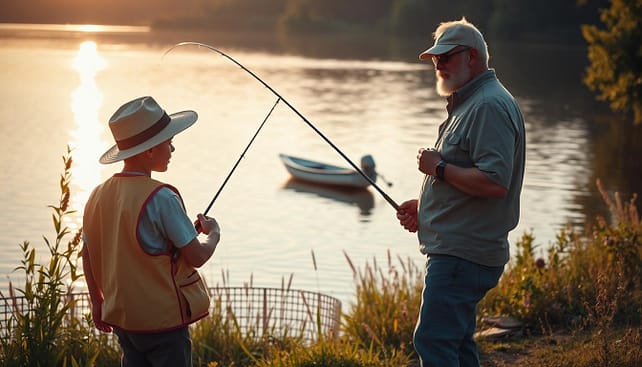
So, what does modern mentorship look like? It goes beyond the hunter-ed manual. It’s the unwritten rule after a missed shot: “The woods saw that. Be better next time.” It’s the tough, fishless practice days that teach grit. It’s the volunteer from the DBU or Tarleton State fishing team, doing boat checks at dawn for an event they’re not even fishing.
This network of guidance is the open-source code for a conservation ethic. It’s not top-down instruction. It’s peer-to-peer wisdom, passed from college anglers to teens, from bait-makers to beginners. This ecosystem doesn’t just produce better anglers; it forges responsible outdoorspeople. It creates the documented track records that lead to scholarships and awards.
The real catch of any youth event isn’t the bass on the scale. It’s the moment a kid stops seeing an adult as a supervisor and starts seeing them as a coach. That relationship—forged in range time and casting clinics—is the most durable piece of gear any young person will ever own.
Gear fit for youth: bows, recoil-light rifles, PFDs, rods/reels
In the world of youth competition Texas, success often hinges on a simple principle: gear that fits. It’s not about the most expensive gear. It’s about how it fits. Think of it as the hardware that lets the young person’s skills run smoothly.
You wouldn’t give a novice driver a Formula 1 car. The logic is clear. Yet, we often see kids struggling with heavy bows or rifles. Is that top-tier bow teaching them anything good? Probably not.
The right youth bow has a manageable draw weight. It’s adjustable. This lets young archers focus on their form, not the effort of holding the string back. A recoil-light rifle is also key. It builds confidence and prevents flinch, making them better marksmen.
On the water, safety and comfort are key. A Personal Flotation Device (PFD) that’s comfortable and cool-looking is a game-changer. It’s safety by design, not by force.
The rod and reel are also important. A rod that’s too long or a reel with a stiff drag can lead to tangled lines. The right combo fits their hands, making casting smooth and enjoyable. This feedback is key for junior fishing results.
Let’s break down the gear philosophy. The table below isn’t a shopping list. It’s a contrast between common adult pitfalls and youth-focused solutions that work.
| Gear Type | Adult Pitfall | Youth Solution | Key Benefit |
|---|---|---|---|
| Compound Bow | High draw weight, fixed settings | Adjustable draw weight & length, lower let-off | Teaches proper form, builds strength progressively |
| Rifle | Full-power calibers, heavy recoil | .22 LR or light-recoiling centerfire, youth stock | Develops accuracy without inducing flinch |
| PFD (Life Jacket) | Bulky, universal adult size | Youth-sized, Coast Guard-approved, mesh panels | Worn consistently, allows full range of motion |
| Fishing Rod & Reel | Full-size 7′ rod, heavy reel | Shorter (5′-6′) rod, matched spin-cast combo | Improves casting control, reduces fatigue |
| Footwear & Clothing | Ill-fitting hand-me-downs | Properly sized boots, moisture-wicking layers | Ensures comfort, focus, and safety all day |
Notice a pattern? The youth solution column isn’t about “less.” It’s about appropriate. It’s the gear that meets them where they are physically. This approach removes barriers to skill development. A kid who isn’t fighting their equipment can learn and enjoy.
The right gear is a silent mentor. It doesn’t yell instructions. It lets natural talent and coached skill shine. Whether it’s a podium finish in a youth competition Texas or personal best in junior fishing results, the foundation is built with tools that fit.
Parent/guardian checklist: permissions, waivers, supervision ratios
A good field trip is all about three things: a signature, a ratio, and a plan. This checklist is your control center. It’s not the most exciting part, but it’s essential for safety and fun.
First, we have the paperwork: permissions and waivers. It might seem boring, but it’s important. It shows that the event is serious and safe. By signing, your child learns about responsibility.
Then, there’s the supervision ratio. It’s not just about keeping everyone in line. It’s about making sure each child has a guide. A 1:4 ratio means every question gets an answer. It’s the support system that makes learning possible.
So, what’s on the checklist? Let’s get down to business.
- Documentation Done Right: Make sure all forms are filled out correctly. Have a printed copy of everything. For more on safety, check out this guide to safe scouting.
- Know the Numbers: Check the adult-to-youth ratio for the activity. Being a volunteer can make a big difference.
- Gear Pre-Check: Checklists should include more than just gear. Make sure you have permission slips and insurance cards.
- Communication Protocol: Know who the lead guide is and the emergency number. Save these in your phone.
Getting this admin work right is key to mentorship. It shows preparedness and respect for rules. This foundation helps skills and passion grow. The paperwork is where the journey starts.
Scholarships and awards pathways
Youth fishing tournaments offer more than just trophies. They also create a financial path for the future. Passion is great, but have you seen college tuition costs?
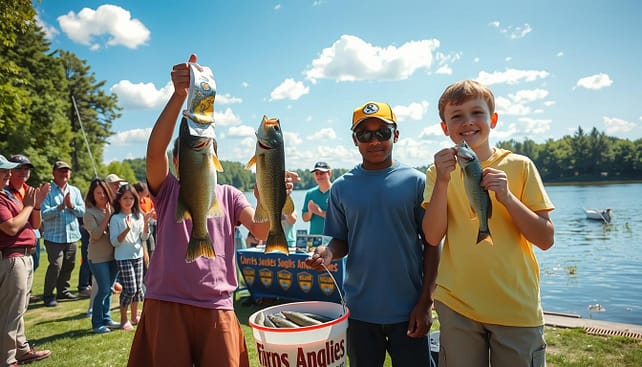
Scholarships and awards in these tournaments are a smart move. They offer real money that shows a young angler’s worth. This turns a hobby into a chance for a better future.
Let’s look at the cash prizes from recent big tournaments:
| Event | Total Payout | What It Means |
|---|---|---|
| State Championship | $23,400 | That’s a serious chunk of tuition, or a reliable used car. |
| Northwest Regional | $12,200 | Textbooks, a new laptop, and then some. |
| Southeast Regional | $9,200 | A solid financial boost for any college-bound student. |
But it’s not just about winning once. Titles like Angler of the Year are key. They offer money and prestige. This shows colleges and sponsors that the angler is serious and skilled.
The big goal is to make it to the Nationals. It’s the top level of junior fishing. Here, you face the best competition and get big financial rewards. Making it here shows you’re committed and excellent.
This setup does two big things. It rewards hard work with real money. It also shows that winning in these tournaments is worth investing in. For teens, this means their junior fishing results are more than just bragging rights. They’re proof of their future worth.
Next youth-friendly events and sign-up deadlines
In the world of youth outdoor sports, there’s always something happening. The last tournament may have ended, but the next one is already being planned. Planning is the first skill you teach.
The 2025–2026 Texas B.A.S.S. Nation Youth Tournament Schedule is more than just dates. It’s a roadmap for a year of growth and opportunities. It’s where dreams and structure meet.
Remember August 1st. That’s when registration opens. It’s like a tax deadline, but with better rewards. Missing it is a big mistake.
Not every event is a big deal. Caddo Adventure Day on August 14, 2025, is a great start. It offers archery, fishing, and paddling in a fun, relaxed setting. It’s a way to discover new passions.
So, how do you plan for these events? Treat it like a military plan. Pick the right events, plan travel, and get the right gear. It’s all about respect for the process.
Many miss this important point: joining youth competition texas circuits leads to scholarships. Colleges want disciplined competitors, not just talent. Your tournament schedule is like a resume.
The season never ends. It just starts again. Your job is to be ready. The dates are set, and the opportunities are there. What’s your next step?
Building a season plan for juniors
The difference between a hopeful participant and a youth hunting winner often comes down to a good season plan. It’s not about over-coaching or making a drill schedule. It’s about using your time wisely to grow.
Think of the tournament season as a three-act play. The local qualifiers are like your practice sessions. Here, you can test your gear and tactics without too much pressure.
The regional championships are like your mid-term exams. The competition gets tougher, and you need to refine your skills. It’s a chance to see what works and what doesn’t.
The state championship is like your final exam. It’s where everything you’ve learned comes together. Teams that make it here have already passed two big tests. They’re not relying on luck; they’re following a plan.
A good season plan mixes time on the water with learning. This includes hunter’s education and boater safety. It’s not just homework; it’s the knowledge that keeps you safe and successful. Ignoring this balance is like showing up for a final exam without attending a single lecture.
Mentorship becomes key at this point. The best plans are made together. A mentor and young angler work together to create a plan. They fill in gaps in skills and budget for travel.
Let’s break down the strategic progression:
- Foundation Phase (Qualifiers): Focus on participating, improving skills, and collecting data. The goal is to qualify, not to win.
- Development Phase (Regionals): Move to optimizing. Analyze your performance, target weaknesses, and aim for a top finish to get to the state.
- Peak Performance Phase (State): This is the final push. Finalize tactics, focus on mental preparation, and apply everything you’ve learned.
Teams that do well don’t get there by chance. They plan their way to success. Their season plan is the backbone of their victories. For young competitors, it teaches more than just hunting skills. It teaches project management, goal setting, and thinking on your feet.
A great season plan is the ultimate act of mentorship. It provides a framework for growth that goes beyond one tournament. It’s the blueprint for creating the next generation of skilled, thoughtful, and successful youth hunting winners.
Conclusion
So, what’s the final weigh-in? The junior fishing results we’ve analyzed aren’t just a leaderboard. They’re a census for a different kind of future.
Look at the numbers. Hundreds of young anglers, significant sponsor investment, and the palpable buzz in Gun Barrel City prove something. In a world of digital abstraction, this is a reclamation of the tangible. It’s mud on boots and the pull of a line.
Those scholarships are the smart money. They’re not just prizes; they’re direct investments in the next generation of conservationists. The pathway from a winning catch to college credit is now a marked trail.
The mentorship stories are a relay race of skills. The winners’ names are etched into the memory of a community that showed up. This is how you build something that lasts.
The takeaway is clear. The future isn’t just bright. It’s skilled, it’s responsible, and it knows how to tie a clinch knot that holds.