
The shallow coastal flats of Texas are some of the most productive redfish habitats in North America. Vast seagrass beds, marsh drains, and sandy shorelines provide the perfect environment for red drum to feed, spawn, and grow.
But these fragile ecosystems face increasing pressure from boat traffic, especially in heavily fished bays. In response, Texas regulators and conservation groups have introduced updated guidance and expanded enforcement efforts aimed at protecting seagrass beds and shallow flats.
For redfish anglers, understanding these boating rules is becoming just as important as reading tides or choosing the right lure.
Why Seagrass Flats Matter For Redfish
Seagrass beds form the foundation of many Texas coastal ecosystems. These underwater meadows support shrimp, crabs, baitfish, and countless small organisms that redfish rely on for food.
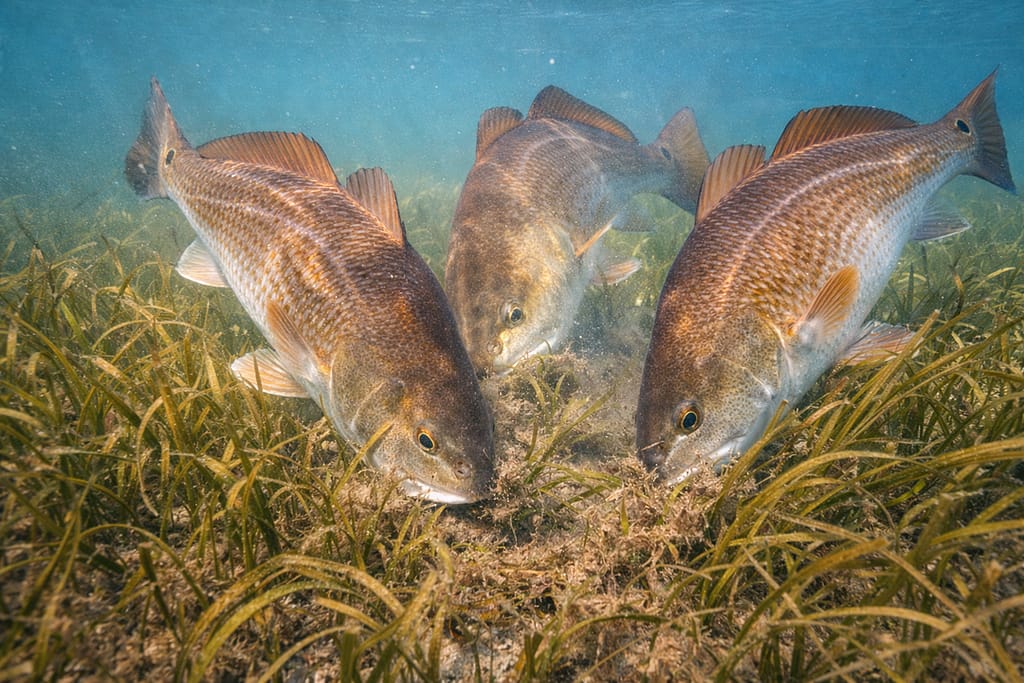
Healthy flats provide several benefits for redfish populations:
- Abundant forage species
- Protection for juvenile fish
- Stabilized sediments that improve water clarity
- Natural nursery habitat within estuaries
When seagrass beds are damaged, the effects ripple through the entire ecosystem. Areas once full of bait and feeding fish can become barren mud flats for years.
Because of this ecological importance, protecting seagrass has become a major priority for coastal management.
The Problem Of Propeller Scarring
One of the biggest threats to shallow flats is propeller scarring.
Prop scars occur when boat propellers cut through seagrass beds in shallow water. Even a single pass can tear up long stretches of grass and expose sediment beneath.
The damage can take years to recover.
In heavily trafficked fishing areas such as the Lower Laguna Madre and parts of the Coastal Bend, thousands of prop scars have been documented over time. These scars reduce habitat quality and create channels that allow erosion to spread across the flats.
To address this issue, Texas wildlife agencies have expanded education campaigns and increased enforcement around shallow-water boating practices.
Understanding Texas Seagrass Protection Zones
Texas has designated several coastal areas where seagrass protection measures are in place. These zones aim to reduce propeller damage and encourage responsible navigation across sensitive flats.
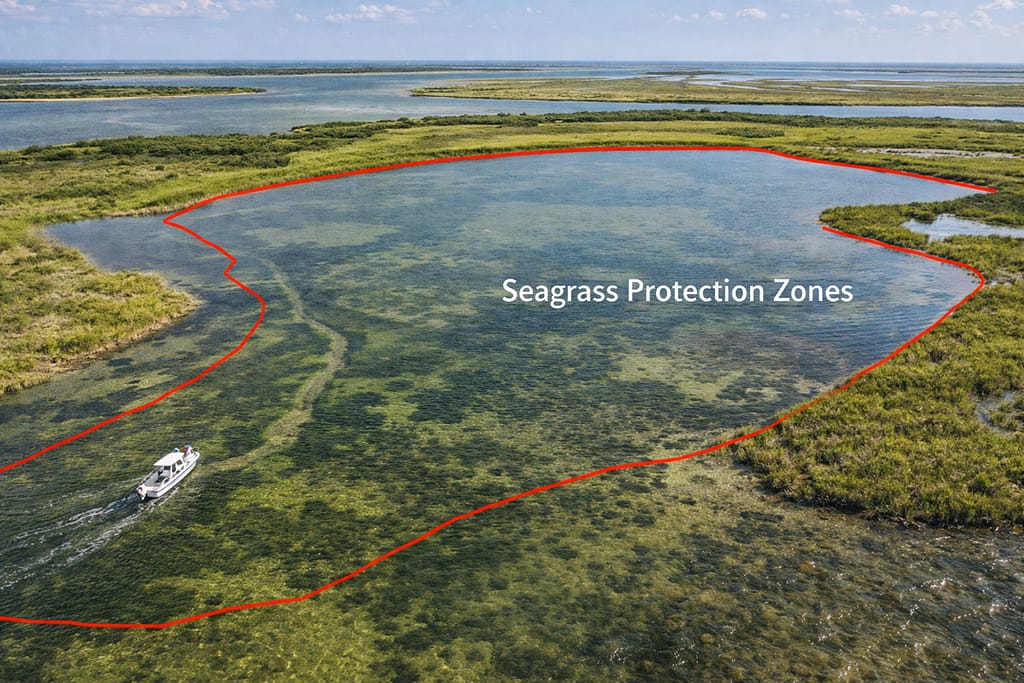
In these areas, boaters are encouraged to use alternative travel methods when water depth becomes too shallow for safe propeller operation.
Common best practices include:
- Trimming motors and idling through shallow zones
- Using trolling motors when approaching fishing areas
- Poling skiffs across shallow grass flats
- Avoiding high-speed runs across visible seagrass
These guidelines help protect habitat while still allowing anglers to access productive fishing areas.
A detailed overview of coastal seagrass protection efforts can be found through the Texas seagrass conservation program managed by the National Oceanic and Atmospheric Administration.
How Boaters Can Navigate Flats Responsibly
Modern shallow-water fishing boats make it easier than ever to explore Texas flats. However, technology alone cannot prevent habitat damage if anglers are unaware of local conditions.
Experienced coastal anglers follow several key strategies to minimize impact.
First, they slow down when entering unfamiliar water. Flats can change depth quickly, especially during low tides.
Second, they rely on visual cues such as water color and grass lines to identify shallow areas. Dark patches often indicate grass beds, while lighter sand pockets may offer safer travel routes.
Finally, many anglers switch to push poles or trolling motors long before reaching extremely shallow water.
These techniques not only protect habitat but also improve fishing success by allowing anglers to approach feeding redfish quietly.
Why These Rules Matter For The Future Of Texas Redfish
Protecting seagrass flats is directly tied to the long-term health of the Texas redfish fishery.
Juvenile redfish spend much of their early life in shallow estuaries where grass beds provide shelter from predators and abundant food sources. When these habitats decline, recruitment into the adult population can suffer.
Conservation measures that protect habitat today help maintain strong fish populations for future anglers.
This connection between habitat and fish populations is a key part of the conservation story explored in our guide to how Texas rebuilt the redfish fishery, which highlights decades of successful coastal management.
The Role Of Anglers In Coastal Conservation
Regulations alone cannot protect coastal ecosystems.
Successful conservation depends on anglers understanding the value of the habitats they fish. Responsible boating practices, catch-and-release awareness, and respect for shallow flats all contribute to preserving the Texas coast.
In many ways, redfish anglers are the first line of defense for these ecosystems.
The flats that produce legendary Texas redfish fishing today are the same waters that future generations will depend on. Protecting them ensures that the distinctive copper flash of a tailing redfish remains a common sight across the Texas coast for decades to come.