
Across the Gulf Coast, redfish populations vary widely depending on habitat quality, fishing pressure, and management strategies. Yet one state consistently stands out when it comes to healthy red drum populations: Texas.
From Sabine Lake in the upper coast to the clear flats of the Lower Laguna Madre, anglers regularly encounter strong numbers of slot-sized redfish across a vast network of estuaries and shallow bays. This sustained success is not accidental. It reflects decades of science-based fisheries management, habitat protection, and responsible angling practices that have made Texas a benchmark for coastal fishery health.
Understanding why Texas continues to lead the Gulf in redfish population stability offers valuable insight into how effective conservation can support both recreational fishing and ecological balance.
The Foundation: Strong Coastal Habitat
Healthy fish populations begin with healthy ecosystems. Texas benefits from one of the most extensive estuarine systems in the Gulf of Mexico, where marshes, seagrass flats, oyster reefs, and tidal passes create ideal habitat for redfish throughout every stage of their life cycle.
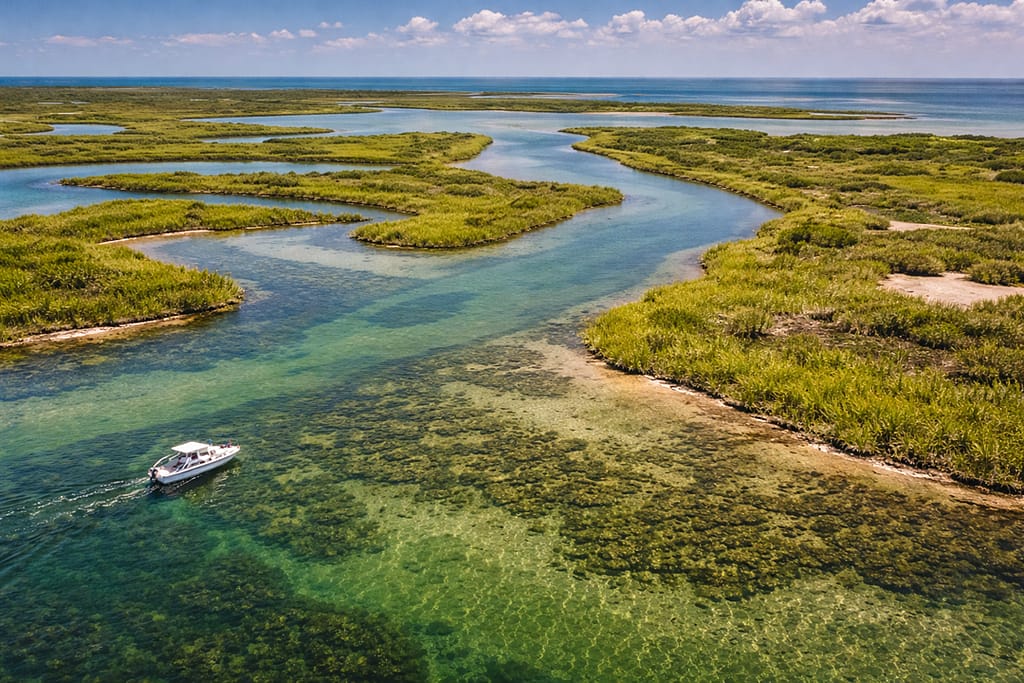
Juvenile redfish rely heavily on protected estuaries where shallow water provides both shelter and food. These areas are rich in shrimp, crabs, and baitfish that fuel rapid growth during the early years of a redfish’s life.
The Texas coastline also includes vast seagrass beds, particularly in the Laguna Madre system. These underwater meadows support entire food chains that sustain redfish populations.
Because these habitats remain widely distributed and relatively productive, Texas continues to offer the environmental foundation needed to maintain strong redfish recruitment each year.
Science-Based Regulations That Protect Breeding Fish
One of the most important factors behind Texas’ success is its carefully structured regulatory framework.
The Texas redfish fishery operates under a slot limit system designed to protect large breeding fish while allowing anglers to harvest mid-sized fish responsibly.
| Regulation | Purpose |
|---|---|
| Slot Limits | Protect mature spawning redfish |
| Bag Limits | Prevent excessive harvest |
| Seasonal Monitoring | Track population health |
| Habitat Protections | Preserve nursery ecosystems |
By protecting large adult fish that contribute most to reproduction, these regulations ensure that spawning populations remain stable.
This approach was first implemented decades ago when redfish populations began declining, and it has since become one of the most successful fishery management models in the Gulf region.
Hatchery Support Strengthening Wild Populations
Another unique component of Texas fisheries management is its hatchery stocking program.
State-run coastal hatcheries raise juvenile red drum and release them into Texas bay systems to supplement natural reproduction. While wild spawning remains the primary driver of population growth, stocking programs help reinforce year classes during periods of environmental stress.
Facilities like the Marine Development Center in Corpus Christi play a central role in these efforts. Each year, millions of juvenile redfish are released into coastal waters.
The program provides an additional safety net that helps maintain strong fish numbers even when environmental conditions fluctuate.
According to the Texas Parks and Wildlife Department’s coastal fisheries program, these stocking initiatives have contributed significantly to the long-term recovery and stability of Texas redfish populations.
Habitat Protection And Seagrass Conservation
Protecting habitat has become a central priority for Texas coastal management.
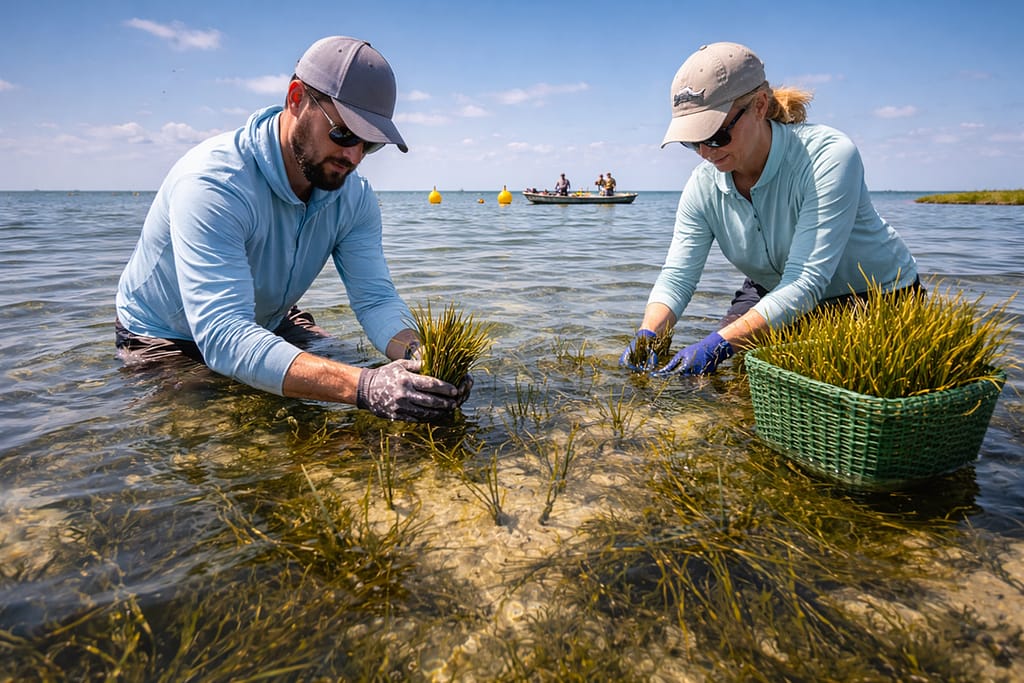
Seagrass beds in particular have received increased attention due to their importance as feeding grounds for redfish and other inshore species. Regulations aimed at reducing propeller scarring and encouraging responsible boating practices help prevent long-term damage to these fragile ecosystems.
When seagrass beds remain healthy, they support entire food webs that benefit not only redfish but also trout, flounder, shrimp, and crabs.
This connection between habitat health and fish populations has driven recent conservation initiatives designed to protect shallow-water ecosystems across Texas bays.
Many of these efforts are discussed in greater detail in our guide to Texas seagrass protection zones and boating rules, which explains how habitat protection directly impacts the future of coastal fishing.
Balanced Fishing Pressure Across A Vast Coastline
Another reason Texas redfish populations remain strong is simple geography.
The Texas coastline stretches more than 350 miles and contains numerous bay systems that distribute fishing pressure across a wide area. Unlike smaller coastal regions where anglers concentrate heavily in a few locations, Texas anglers have access to dozens of productive fishing environments.
Popular redfish areas include:
- Sabine Lake
- Galveston Bay
- Matagorda Bay
- San Antonio Bay
- Aransas Bay
- Laguna Madre
This geographic diversity allows fish populations to spread naturally while giving anglers multiple opportunities to find productive water.
The result is a fishery that can sustain both recreational fishing and tournament activity without overwhelming local populations.
A Model For Gulf Coast Fisheries Management
Texas is often viewed as a leader in coastal fishery management because its approach balances conservation with recreational access.
By combining habitat protection, responsible harvest regulations, and scientific monitoring, the state has built a resilient fishery capable of adapting to environmental changes.
Other Gulf states have adopted similar strategies in recent years, recognizing that long-term sustainability requires proactive management.
For anglers, this success translates into consistent fishing opportunities across the Texas coast.
Why Anglers Play A Role In Protecting The Fishery
While regulations and conservation programs provide the structure for a healthy fishery, anglers themselves remain an important part of the equation.
Responsible fishing practices help maintain the balance that allows redfish populations to thrive. Catch-and-release techniques, respect for slot limits, and careful boating practices all contribute to protecting the habitats that support redfish.
The continued strength of the Texas redfish population shows what is possible when fisheries management and angler stewardship work together.
For those casting along the Texas coast today, the thriving redfish fishery represents more than just great fishing.
It is the result of decades of thoughtful conservation that continue to shape the future of Gulf Coast angling.