
Across the Texas coast, a growing number of redfish are being tagged, tracked, and studied as part of expanding fisheries research programs. These tagging initiatives, led by marine scientists and supported by local anglers, are providing new insight into red drum migration, survival rates, and habitat use.
For decades, Texas has been known for one of the most successful redfish management programs in the Gulf of Mexico. But today’s tagging technology is helping researchers understand the fishery at an even deeper level. The data gathered from these programs is shaping conservation policies, improving fisheries management, and giving anglers a clearer picture of how redfish move across the Texas coastline.
Why Redfish Tagging Programs Matter
Tagging programs play a crucial role in understanding fish populations. By attaching small identification tags to redfish before releasing them, scientists can gather valuable data when those fish are recaptured or reported by anglers.
Each tag tells part of a larger story about how redfish live and migrate.
Researchers are particularly interested in learning:
- How far redfish travel between bay systems
- How long tagged fish survive after release
- Which habitats support the highest survival rates
- Seasonal movement patterns along the Texas coast
This information helps fisheries managers determine whether regulations are working and where conservation efforts should be focused.
Without long-term data, maintaining a healthy fishery becomes far more difficult.
How The Tagging Process Works
Most tagging programs follow a similar process. Researchers capture redfish using nets or rod-and-reel techniques, then record key biological data before releasing the fish back into the water.
Typical information collected during tagging includes:
| Data Collected | Purpose |
|---|---|
| Fish Length | Determines age class and growth rates |
| Capture Location | Tracks habitat usage |
| Tag Number | Allows identification if recaptured |
| Release Condition | Measures survival after handling |
After the fish is measured and tagged, it is released back into its original environment.
If the fish is later caught again, anglers can report the tag number along with the location and date of capture. This information becomes extremely valuable for tracking movement patterns.
What Scientists Are Learning About Redfish Movement
One of the most fascinating discoveries from tagging studies is how mobile redfish can be.
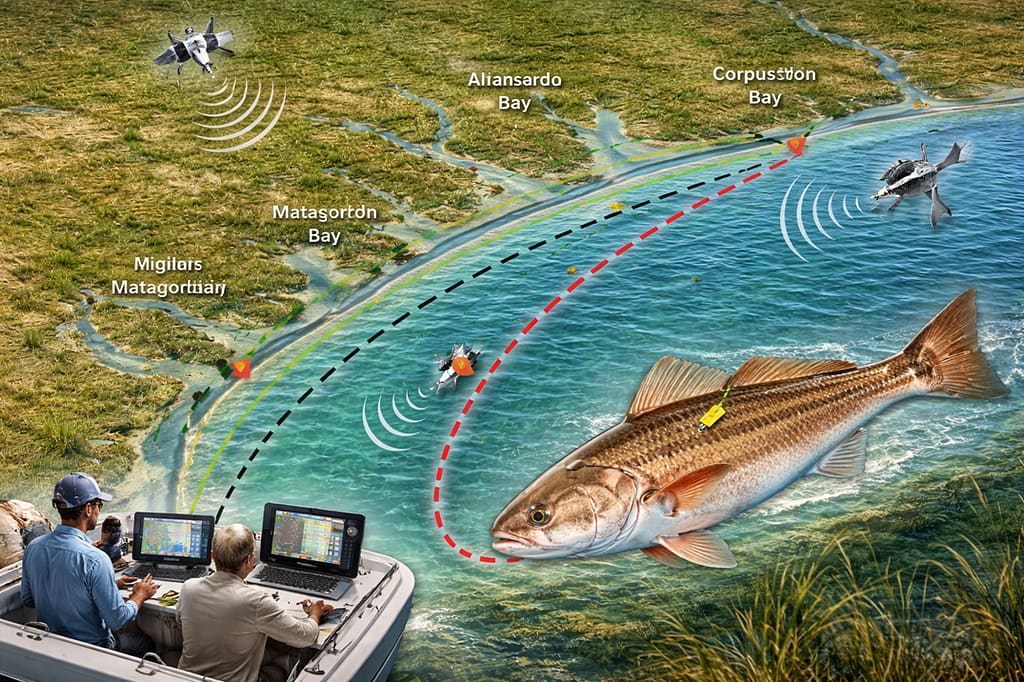
While many anglers believe redfish remain within a single bay system, tagging data has shown that some fish travel surprising distances along the coast.
In certain cases, redfish tagged in one Texas bay have been recaptured hundreds of miles away months later. These long-distance movements suggest that different coastal ecosystems are more connected than previously thought.
This connectivity reinforces the importance of protecting habitats across the entire coastline rather than focusing on a single region.
Tagging data also helps researchers understand how environmental factors influence fish movement.
For example, seasonal temperature changes, tidal flow, and bait migrations can all affect where redfish travel throughout the year.
The Role Of Anglers In Tag Reporting
Recreational anglers play a major role in the success of tagging programs.
When anglers report tagged fish, they provide the final piece of data that allows researchers to track migration patterns. Many tagging programs depend heavily on voluntary reporting from the fishing community.
Reporting a tagged fish is simple. Anglers typically record the tag number, note the location where the fish was caught, and submit the information to the research program.
These contributions allow scientists to build much larger datasets than would otherwise be possible.
In many cases, anglers who report tagged fish receive information about when and where the fish was originally tagged, offering a fascinating glimpse into that fish’s journey along the Texas coast.
New Technology Is Expanding Research Capabilities
Modern tagging programs are evolving beyond simple external tags.
Advanced electronic tags can now record detailed environmental data including water temperature, depth, and movement patterns. Some tags even transmit location data through satellite systems when fish travel long distances.
These technologies allow researchers to study redfish behavior in ways that were impossible just a decade ago.
Combined with traditional tagging methods, these tools are helping scientists better understand how redfish interact with coastal habitats such as marsh systems, seagrass beds, and tidal channels.
Many of these habitat connections are also highlighted in our guide to Texas coastal habitat conservation, which explores how ecosystem protection supports long-term redfish population health.
What The Data Means For The Future Of The Fishery
The growing body of tagging data confirms something many Texas anglers have long suspected: healthy habitat and responsible fisheries management are key to sustaining redfish populations.
Tagging programs help validate current regulations while also providing early warnings if population trends begin to change.
Scientists can use this information to adjust policies, improve conservation efforts, and ensure the fishery remains productive for future generations.
According to research supported by the National Oceanic and Atmospheric Administration’s coastal fisheries science programs, long-term monitoring is one of the most effective tools for maintaining sustainable fisheries.
With more anglers participating and technology improving each year, redfish tagging programs will continue providing valuable insight into the health of the Texas coast.
A Partnership Between Science And Anglers
The success of redfish tagging programs highlights a unique partnership between researchers and the fishing community.
Scientists provide the tools and analysis, while anglers help gather data across thousands of miles of coastal water.
Together, these efforts create one of the most comprehensive fisheries monitoring systems in the Gulf of Mexico.
For Texas anglers, that collaboration means something important: the fishery they enjoy today is backed by science, supported by conservation, and strengthened by the very people who fish it.
As tagging programs expand across the coast, the knowledge gained will continue shaping the future of redfish fishing in Texas.