
Lake Meredith’s new zebra mussel status is not only a Panhandle conservation story. It is a Texas tournament-angling story because competitive fishermen move boats, trailers, livewells, anchors, ropes, bait buckets, electronics, and gear between lakes all season. On June 25, 2026, the Texas Parks and Wildlife Department designated Lake Meredith, near Amarillo, as fully infested with invasive zebra mussels after evidence showed an established, reproducing population in the reservoir. For tournament anglers from Sam Rayburn to Toledo Bend, O.H. Ivie, Lake Fork, Possum Kingdom, and beyond, the lesson is direct: every road trip between lakes now carries more responsibility.
Why Lake Meredith’s New Status Carries Statewide Weight
Lake Meredith sits in the Texas Panhandle, but tournament anglers should not treat the infestation as a distant regional issue. The reservoir’s new status matters because Texas fishing competition is built around movement. Boats that fish one lake in March may travel to another in April, then cross regions again for a championship, club event, youth tournament, or team trail.
TPWD’s Lake Meredith zebra mussel announcement said the lake is now fully “infested,” meaning zebra mussels have an established, reproducing population. The agency said potential microscopic larvae were detected in late May from routine samples collected at three lake locations by partners with the U.S. Geological Survey Zebra Mussel Monitoring Program. TPWD’s Analytical Services lab then confirmed the specimens as zebra mussels through genetic analysis.
That is the kind of technical detail that should get competitive anglers’ attention. Zebra mussels do not have to be visible on a trailer bunk or prop to move. Larvae can travel in residual water that a boat owner may not think about after a tournament day. Livewell water, bilge water, bait buckets, ropes, anchors, and damp gear can all matter.
For Texas Sportsmen readers, the takeaway is not panic. It is planning. A lake designation in the Panhandle can affect the way anglers behave across the state because tournament fishing connects waterbodies through travel.
How The Infestation Was Confirmed
The Lake Meredith case did not come from one random sighting. TPWD described a sequence that should matter to anglers who care about early detection. Potential larvae showed up in routine samples. The Canadian River Municipal Water Authority reported multiple settled zebra mussels on a camp chair that had been retrieved from the lake by informed anglers. Those anglers reported the finding to the National Park Service only days before the larvae were collected.
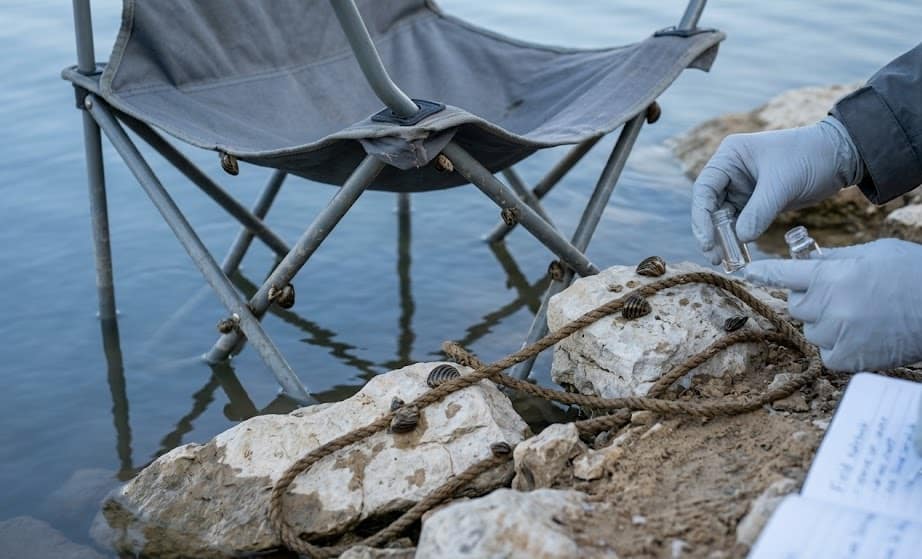
That detail is important. Anglers were part of the detection chain. They did not dismiss what they saw. They reported it, and that report helped confirm a wider problem.
TPWD staff in the Amarillo Fisheries District then surveyed shoreline rocks at multiple lake sites and found settled mussels of different sizes at all surveyed locations. The agency said that confirmed a well-established, reproducing population likely dispersed throughout the reservoir.
In tournament terms, this shows how fast the conversation can change. One season, a lake may be a destination with preventive messaging. The next, it may become a source lake where every departing boat needs stricter attention.
The Lake Meredith example should make anglers more serious about what happens after weigh-in. A boat may look clean at the ramp, but tiny organisms can still be hiding where anglers are least likely to look.
Why Tournament Travel Raises The Stakes
Tournament anglers are not typical occasional boaters. They are often high-frequency lake users who travel far, launch early, fish hard, and move between waters under tight schedules. That makes them valuable allies in invasive-species prevention, but it also means they can create risk if they get careless.
Texas already has a dense competitive fishing calendar. This site’s earlier coverage of Texas fishing tournament growth showed how the state’s tournament culture has expanded across freshwater lakes and coastal bays. That growth creates more opportunities for anglers, sponsors, schools, and local communities. It also creates more movement.
A bass boat that fishes a Panhandle or West Texas lake could later appear at a Central Texas event. A high school team might fish multiple reservoirs in one season. A club angler may chase points across regions. A family team may tow a boat from one waterbody to another over consecutive weekends.
That is why Lake Meredith matters beyond Amarillo. Invasive species spread through patterns, not headlines. The pattern that matters most is lake-to-lake travel.
| Tournament Travel Habit | Zebra Mussel Risk | Better Angler Response |
|---|---|---|
| Fishing multiple lakes in one month | Boats may carry larvae in residual water | Drain all water before leaving and before approaching another lake |
| Leaving ropes or anchors wet | Mussels can attach to hard surfaces and damp gear | Inspect and dry gear completely |
| Rushing after weigh-in | Cleaning steps may be skipped | Build cleanup time into tournament planning |
| Storing boats in infested water | Equipment can become high risk | Contact TPWD before moving stored equipment |
| Youth or team travel between reservoirs | Many boats may move together | Make clean, drain, dry part of team routine |
The competitive advantage in modern tournament fishing is no longer only about finding fish. It is about managing the whole trip responsibly.
How Zebra Mussels Threaten More Than Fishing Access
Zebra mussels are small, but the problems they create are not small. TPWD says they attach to hard surfaces, alter lake ecosystems, harm native species, damage boats and water supply infrastructure, and litter shorelines with sharp shells that affect recreation. That means tournament anglers have a direct stake in prevention even if they never fish Lake Meredith.
A lake affected by zebra mussels can become harder to manage, more expensive to maintain, and less pleasant for recreational users. Shoreline shells can affect families, wading areas, docks, and public access. Infrastructure damage can affect water systems. Ecological changes can influence food webs and fish habitat.
The TPWD Stop Invasives resources give anglers a broader view of affected Texas waterbodies and prevention guidance. That kind of official information should be part of tournament preparation in the same way anglers check lake levels, weather, off-limits rules, and weigh-in times.
For tournament organizers, the Lake Meredith case is a reminder that conservation messaging cannot sit quietly in the background. If a trail moves across multiple lakes, invasive-species education should be visible before registration, at check-in, around launch, and after weigh-in.
For anglers, the issue is more personal. The lakes they depend on for competition can be changed by the boats that visit them.
Why Clean, Drain, Dry Has To Become Tournament Routine
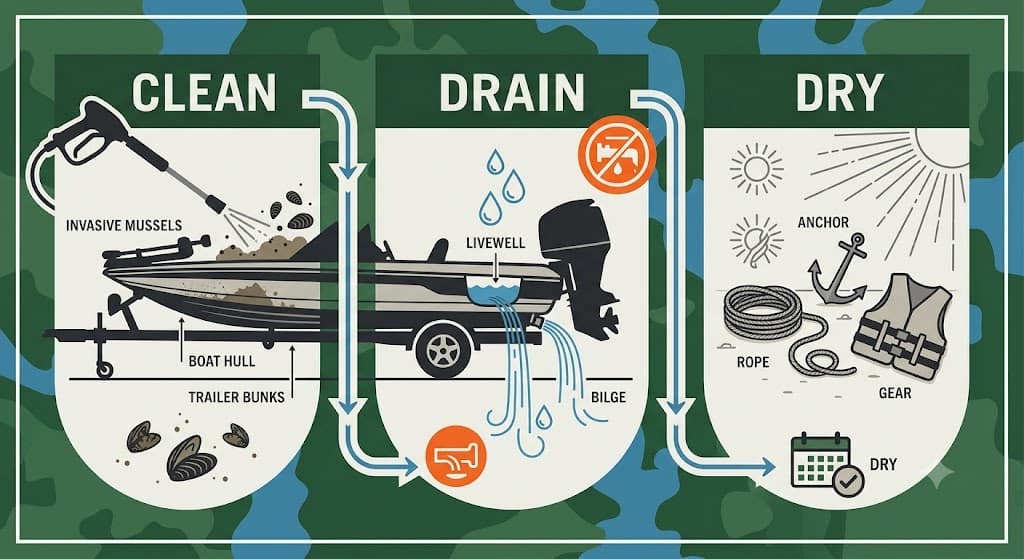
The clean, drain, dry message is familiar, but Lake Meredith shows why it still needs repetition. TPWD said zebra mussels are most often transported on or in boats. They can attach to boats, ropes, and anchors. Their microscopic larvae can move in residual water. The agency says mussels can survive for days out of water, often hiding in crevices where they may escape notice.
Tournament anglers need to treat those facts as part of the checklist.
Cleaning means removing plants, mud, debris, and anything attached to the boat or trailer. Draining means emptying all water from the boat and gear before leaving or approaching a waterbody. Drying means opening compartments and letting gear dry completely at home for at least a week when possible.
This is especially important after tournaments because anglers are often tired, hungry, sunburned, and focused on standings or the drive home. That is exactly when shortcuts happen. A few skipped minutes at the ramp can create long-term risk for another lake.
The clean, drain, dry habit should be built into team routines. A high school fishing captain should teach it. A club director should remind competitors. A tournament trail should mention it in rules meetings. A parent helping a youth angler should treat it as part of boating safety.
What Lake Meredith Teaches About Large Tournament Weekends
One of the most tournament-relevant details in TPWD’s announcement came from the Canadian River Municipal Water Authority. The authority had already worked with state and federal partners on early detection and prevention efforts at Lake Meredith, including clean, drain, dry billboards, boat ramp signage, boat cleaning stations, and boat inspections with zebra mussel detection dogs during large fishing tournament weekends.
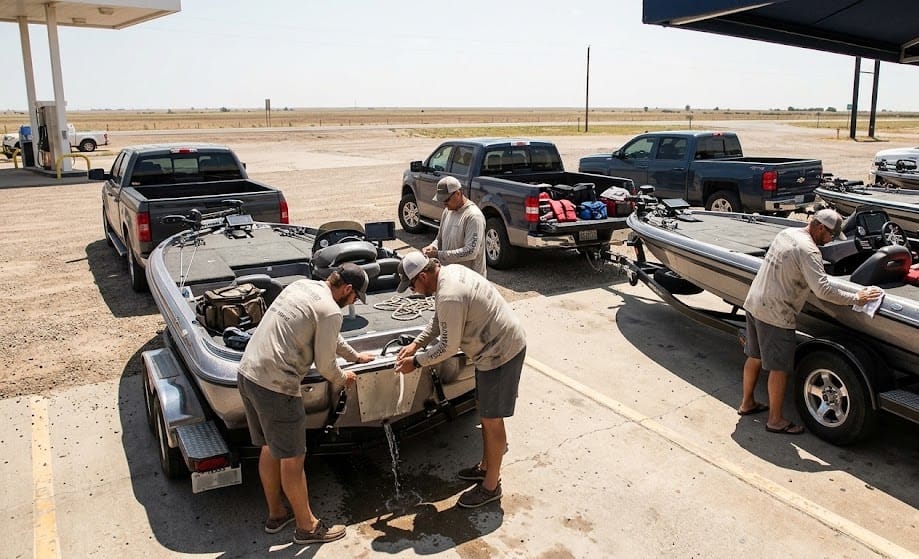
That detail shows that tournament weekends have been recognized as high-attention moments. When many boats arrive from different places and leave again after competition, prevention pressure rises.
Lake Meredith’s new designation does not mean those efforts failed in a simple way. It shows how difficult prevention can be once invasive species pressure increases across the state. Even with signage, cleaning stations, monitoring, and detection work, risk remains.
For tournament organizers elsewhere in Texas, the message is clear. Prevention cannot depend only on anglers noticing a sign while they are backing down a ramp in the dark. It has to be woven into the event’s culture.
That can include pre-event emails, registration reminders, captain meetings, launch-site volunteers, cleaning-station maps, social media posts, and post-weigh-in reminders. For bigger events, organizers may need to coordinate more closely with park staff, lake authorities, or TPWD regional contacts.
Why The Legal Side Should Get Anglers’ Attention
Texas law adds another reason for tournament anglers to take the issue seriously. TPWD says transporting prohibited aquatic invasive species in Texas is illegal and punishable with a fine of up to $500 per violation. State law also requires boaters to drain all water from their boat and onboard receptacles, including bait buckets, before leaving or approaching a body of fresh water. Boaters must remove invasive plants from the boat and trailer before leaving a lake.
Those rules matter because tournament anglers are highly visible. They tow wrapped boats, gather at ramps, post catches online, and represent sponsors, schools, clubs, or local communities. A preventable violation is not only a personal mistake. It can reflect poorly on the event and the larger fishing community.
The legal issue should not be framed as a threat first. It should be framed as a standard. Responsible anglers follow fish limits, boat safety rules, tournament rules, and aquatic invasive-species rules because all of them protect the sport.
A weigh-in bag, a livewell, and a trailer all belong to the same competitive system. If one part of that system is managed carelessly, the whole tournament culture pays for it.
How Youth And School Fishing Programs Can Lead The Habit Change
Youth fishing programs have a special role in this conversation because they train the next generation of competitive anglers before bad habits are fully formed. A high school team that learns clean, drain, dry as part of its normal routine will carry that expectation into adult fishing.
That connects directly with Southeast Texas high school fishing, where students travel to serious tournament lakes such as Sam Rayburn and Toledo Bend. Those lakes are competitive classrooms, but they are also shared public resources. Young anglers should learn that protecting waterbodies is part of representing a school.
Captains can make the difference. Before leaving a lake, they can assign jobs: one student checks trailer bunks, another drains compartments, another checks anchors and ropes, another removes vegetation, and an adult confirms everything before the boat leaves the ramp. That turns prevention from a vague slogan into a team habit.
Parents can reinforce it by building extra time into the travel schedule. Tournament days are already long, but rushing the cleanup process sends the wrong message. A team that wins but spreads risk has not represented the sport well.
Lake Meredith should become a teaching example for school programs across Texas. It shows how one lake’s status can change the expectations for everyone who moves a boat.
What Tournament Organizers Should Watch Next
The next step for Texas tournament organizers is not to avoid Lake Meredith or any other affected lake. It is to build better risk awareness into event operations. Anglers will keep traveling. Lakes will keep hosting. The question is whether prevention becomes part of the competitive standard.
Organizers should know whether their host lake is infested, positive, suspect, or still considered uninvaded. They should understand local cleaning stations, ramp rules, lake authority guidance, and TPWD resources. They should remind anglers that a boat leaving an infested lake may need extra attention before heading elsewhere.
This is especially important for trails that move from one reservoir to another. The more connected the schedule, the more important prevention becomes. A tournament that promotes growth without prevention risks helping the sport in one way while harming it in another.
The strongest events will treat invasive-species prevention like weigh-in integrity. Both protect fair competition. Both protect the resource. Both require clear communication before problems appear.
Why The Panhandle Warning Belongs In Every Texas Boat Ramp Conversation
Lake Meredith’s zebra mussel infestation should matter to Texas tournament anglers because it shows how connected the state’s fishing culture has become. A lake near Amarillo can shape conversations at Sam Rayburn, Toledo Bend, Lake Fork, O.H. Ivie, Possum Kingdom, and countless club-event ramps because tournament boats move.
That movement is part of what makes Texas fishing strong. Anglers chase different fisheries, represent schools and clubs, support small towns, and build a statewide competitive culture. The same movement can spread invasive species if prevention habits stay weak.
The answer is not to slow the sport. The answer is to raise the standard around it. Clean the boat. Drain every compartment. Dry the gear. Check ropes, anchors, trailers, livewells, and bilges. Know the rules before leaving one lake for another.
Lake Meredith is a warning, but it can also be a useful turning point. If Texas tournament anglers treat the Panhandle infestation as a statewide responsibility, the sport can keep growing without ignoring the waters that make competition possible.