
Sea Center Texas’ annual Shark Celebration shows why coastal education belongs in the same conversation as fishing access, youth development, and long-term angler awareness. Held July 18, 2026, from 11 a.m. to 3 p.m. at Sea Center Texas in Lake Jackson, the Texas Parks and Wildlife Department event invited families to learn about sharks through real specimens, expert conversations, scavenger hunts, shark-tooth activities, crafts, vendors, and hands-on educational programming. For Texas anglers, the value goes beyond a family day at a public aquarium. Events like this can turn curiosity about sharks into better fish identification, safer behavior, stronger conservation habits, and a clearer understanding of how coastal species fit into the same ecosystems anglers use every season.
Why Shark Celebration Fits The Texas Sportsmen Conversation
Sea Center Texas’ Shark Celebration event listing described a free public program built around shark specimens, shark experts, a Shark Scavenger Hunt, a shark-tooth sand pit, face painting, crafts, snacks, and family-friendly activities. That kind of event may sound like a children’s education day, but it also fits directly into the Texas Sportsmen audience because it builds the kind of marine literacy anglers need before they ever step onto a pier, beach, jetty, bay boat, or offshore deck.
Sharks are part of Texas coastal fishing whether an angler targets them or not. They appear in surf fishing, offshore trips, nearshore bait movements, pier conversations, conservation debates, and public safety discussions. A young person who learns early that sharks are managed wildlife, not movie villains, is more likely to become an angler who respects rules, handles encounters calmly, and understands the difference between curiosity and careless behavior.
TPWD’s July 15 announcement said the Shark Celebration would be led by TPWD Coastal Fisheries staff and volunteers. That detail matters because the event was not just entertainment. It connected families with the same agency framework that manages saltwater fisheries, operates hatchery programs, teaches regulations, and supports public conservation education across Texas.
For a website focused on hunting, fishing, tournaments, and outdoor sports participation, that connection is important. Angler awareness does not begin with a license purchase. It often starts with a child touching a specimen, asking a biologist a question, or understanding that coastal species have rules, roles, and value.
Why Sea Center Texas Is More Than A Visitor Attraction
Sea Center Texas is not just an aquarium stop in Lake Jackson. TPWD describes Sea Center Texas as a public aquarium, marine fish hatchery, and education center. The facility combines visitor exhibits with production hatchery work, giving families a way to see coastal fisheries from both the public-facing and resource-management sides.

That combination is powerful. Many anglers experience coastal fisheries only through catching, cleaning, cooking, or releasing fish. Sea Center Texas gives people another view: how hatcheries, education, volunteers, and public exhibits support the larger system that makes fishing possible.
TPWD’s release said Sea Center Texas averages 60,000 visitors annually, reaches 30,000 youths through education programs and hatchery tours, and produces about 15 million red drum and spotted seatrout fingerlings that are stocked in Texas bays each year. Those numbers show why the facility belongs in the angler-development conversation.
A future tournament angler, guide, conservation volunteer, marine biologist, or weekend fisherman may first encounter coastal fisheries in a place like this. That is why a shark event at Sea Center Texas should not be dismissed as a one-day family program. It is part of the pipeline that helps Texans understand the coast before they use it.
Recent Texas Sportsmen coverage of new angler access made a similar point from the freshwater side. Caddo Lake’s Fishin’ Fridays showed how simple access, borrowed gear, and ranger guidance can make fishing less intimidating. Sea Center Texas does something comparable for coastal awareness by giving families a low-pressure way to learn before fishing becomes competitive, technical, or regulation-heavy.
How Shark Education Can Change Future Angler Behavior
Shark education matters because shark encounters can bring out poor judgment when people do not understand the animal or the rules. Some anglers panic. Others pose too long for photos. Some misidentify species. Some assume all sharks can be handled the same way. Others treat sharks as threats instead of managed wildlife.
An education event cannot solve every behavior problem, but it can change the starting point. If families learn that sharks vary by species, size, habitat, regulation status, and ecological role, they are more likely to treat future encounters with respect.
TPWD’s current Texas shark regulations state that the daily bag limit is one fish in any allowable combination for allowable shark species, including Atlantic sharpnose, blacktip, and bonnethead. TPWD also states that non-offset, non-stainless steel circle hooks must be used when fishing for sharks in state waters, and that recreational anglers must have a Texas fishing license with a saltwater endorsement to land fish in state or federal water.
Those rules are not trivia. They shape responsible fishing behavior.
If young anglers learn early that sharks have regulations, prohibited species, gear rules, and handling expectations, they are less likely to treat shark fishing as a stunt. They are more likely to ask questions before they fish, check the current Outdoor Annual, and understand why identification matters.
That is where education becomes angler awareness.
Why Hands-On Learning Works For Coastal Families
The Shark Celebration’s activity list matters because hands-on learning reaches families differently than a rulebook alone. A scavenger hunt, shark-tooth activity, specimen table, expert conversation, and craft station can introduce marine science without making it feel like a lecture.
That matters for young anglers. Many kids first connect with fishing through objects: teeth, scales, fins, rods, bait, shells, nets, and fish mounts. They remember what they can touch, compare, and ask about. A real shark specimen can make body shape, teeth, skin texture, and identification more understandable than a diagram on a screen.
Hands-on learning also helps parents. Adults who may not know much about sharks can ask questions in a low-pressure setting. That is valuable because family fishing culture often depends on what adults are comfortable teaching. A parent who leaves Sea Center Texas with a better understanding of shark rules, coastal species, and conservation language can pass that awareness to a child later at the beach or pier.
| Shark Celebration Element | Why It Matters For Future Anglers | Long-Term Awareness Value |
|---|---|---|
| Real Shark Specimens | Helps families understand anatomy and identification | Builds species awareness before real encounters |
| Shark Experts | Gives visitors a place to ask practical questions | Reduces myths and fear-based reactions |
| Scavenger Hunt | Turns learning into active exploration | Keeps youth engaged with coastal science |
| Shark-Tooth Activity | Connects curiosity with predator biology | Makes marine ecosystems feel tangible |
| Crafts And Family Activities | Lowers the barrier for young participants | Keeps education accessible and memorable |
| TPWD Coastal Fisheries Staff | Connects the event to real management expertise | Links public learning with regulations and conservation |
The table shows why a family event can have a serious outdoor-sports impact. It makes coastal learning approachable.
Why Shark Awareness Belongs Beside Fishing Regulations
Texas coastal anglers do not need to target sharks for shark awareness to matter. Sharks can interact with bait, hooked fish, surf fishing setups, offshore chum lines, pier catches, and beachgoers. They also appear in public conversations after high-profile encounters or viral catch photos.
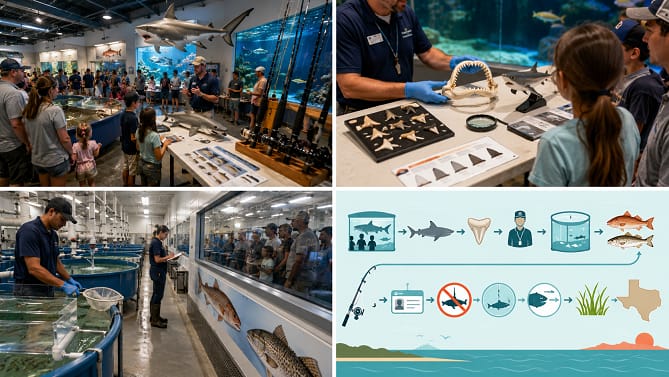
That is why education should sit beside regulation. Rules tell anglers what they may do. Awareness helps them understand why those rules exist and how to behave when the situation is not simple.
TPWD’s prohibited shark species guidance says prohibited species may not be retained, have a zero bag limit, and must be released immediately without being removed from the water. That is the kind of rule young anglers should hear before they are holding a rod with a large fish on the line.
The gap between knowing “sharks exist” and knowing “some sharks cannot be removed from the water” is exactly where education helps. Families who encounter that concept at Sea Center Texas can later connect it to fishing practice.
That is also why shark education pairs with broader coastal conservation awareness. Texas Sportsmen recently covered Texas coastal conservation awareness through TPWD’s sea turtle stranding role. The shark event works in the same direction: it teaches that anglers share the coast with protected, managed, or sensitive marine species.
How Hatchery Education Strengthens The Message
Sea Center Texas’ hatchery role gives Shark Celebration a deeper context. Visitors are not only learning about sharks. They are entering a facility tied to red drum and spotted seatrout production, public exhibits, volunteer service, and fisheries education.
That matters because coastal ecosystems are connected. Sharks, redfish, trout, baitfish, seagrass, estuaries, jetties, surf zones, and offshore waters are not separate stories. They are parts of a system that anglers use.
A child who visits Sea Center Texas for sharks may also learn that hatcheries support red drum and spotted seatrout stocking in Texas bays. That connection can broaden the way young anglers think. Fishing is no longer only about catching what bites. It becomes part of a managed coastal system involving science, habitat, hatchery production, regulations, volunteers, and public responsibility.
That is a valuable mindset for future anglers because Texas fishing pressure is not getting simpler. Coastal access, tournaments, conservation debates, offshore seasons, species rules, and habitat concerns all require anglers who understand more than technique.
Why Volunteers Are Part Of Angler Development
TPWD’s release said Sea Center Texas’ volunteer program includes more than 150 individuals who donate more than 12,000 hours of service annually. That detail deserves attention because volunteer networks are often invisible in outdoor sports.
Fishing culture depends on more than anglers. It depends on people who teach kids, staff events, answer visitor questions, support hatchery tours, help at education centers, run youth programs, assist tournaments, and keep community outdoor traditions visible.
Volunteers also create another pathway into coastal participation. Not everyone starts as a serious angler. Some start as a parent helping at an event, a retiree answering visitor questions, a student learning marine science, or a community member supporting TPWD programs.
That matters because future angler awareness is not only built through catching fish. It is built through service, observation, and repeated exposure to the resource.
Events like Shark Celebration can introduce families to that volunteer culture. A child may remember the shark teeth. A parent may remember the staff. A teenager may see a way to connect coastal science with future work or service.
Why Shark Events Should Avoid Fear-Based Coastal Messaging
Sharks attract attention easily, but not all attention is useful. Fear-based messaging can make people careless, hostile, or misinformed. A responsible shark event gives families a better framework: respect, identification, regulations, habitat, and behavior.
That matters for Texas anglers because shark stories can quickly become sensational. A large surf catch, a beach encounter, or a social-media video can create the wrong kind of energy. Education helps slow that reaction down.
The better question is not “Are sharks scary?” The better questions are: What species is it? Is it legal to retain? How should it be released? What gear is required? What role does it play in the ecosystem? What should anglers do if they accidentally hook a prohibited species? How can families fish safely without treating sharks as villains?
Sea Center Texas’ Shark Celebration creates room for those questions before they become dockside confusion.
How Coastal Education Supports Tournament And Access Growth
Texas coastal fishing is growing through tournaments, public ramps, youth events, school programs, and family-focused access. That growth is good for participation, but it also raises the importance of education.
New anglers need more than places to fish. They need context. They need species identification. They need license awareness. They need safe boating habits. They need conservation language. They need to understand that the coast includes animals they may never intend to catch.
That is why Sea Center Texas’ event fits into the same broad access story as new boat ramps, youth fishing programs, and tournament calendars. Access without education can create pressure. Access with education can create stewardship.
The difference matters. A young angler who learns about sharks, redfish stocking, hatcheries, volunteer service, and TPWD rules may approach the coast with more patience and responsibility. That is the kind of participant Texas fishing needs.
What Texas Anglers Should Take From Shark Celebration
The main lesson from Sea Center Texas’ Shark Celebration is that future angler awareness can start before a fishing trip. It can start in an education center, with a specimen table, a scavenger hunt, a shark tooth, a question for a biologist, or a hatchery tour.
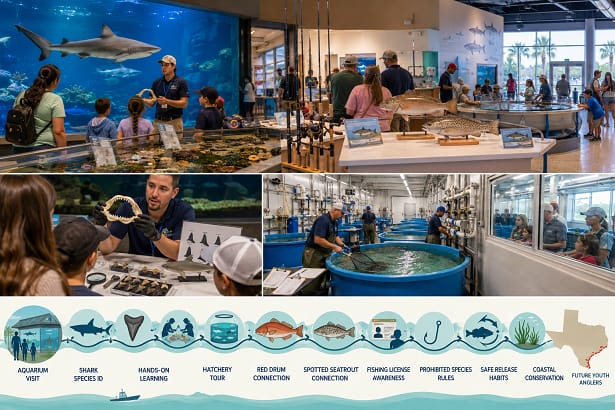
Texas anglers should treat that seriously. The next generation will inherit a coast shaped by heavier use, more complex regulations, changing conditions, and constant pressure on public access. They will need to know how to fish, but also how to think.
That means understanding species beyond target fish. It means knowing the difference between legal harvest and prohibited retention. It means recognizing that sharks are not props, pests, or symbols of danger. They are part of the same coastal system that supports redfish, trout, offshore species, public recreation, and fishing traditions.
Sea Center Texas’ Shark Celebration matters because it gives families an accessible entry point into that system. It turns shark curiosity into coastal awareness. For future anglers, that may be just as important as learning how to cast.