
CCA Texas STAR’s July tagged-redfish leaderboard shows why the State of Texas Anglers Rodeo remains one of the most unpredictable summer fishing races on the Texas coast. By July 12, 2026, Texas Fish & Game reported that six tagged redfish had already been caught, yet the tournament still had prize fish available, weeks remaining on the calendar, and anglers across the coast still capable of changing the leaderboard. That is the power of a summer-long tagged-redfish format. One bay trip from Galveston, Matagorda, Port O’Connor, Rockport, Port Aransas, Corpus Christi, Port Mansfield, or South Padre can still matter if the angler is registered before the catch.
Why The July Leaderboard Matters
The July leaderboard matters because it shows the tournament had moved beyond opening-week excitement and into the most important part of a long summer race. Early announcements create interest, but July proves whether anglers are still engaged, registered, checking rules, watching weigh stations, and planning trips.
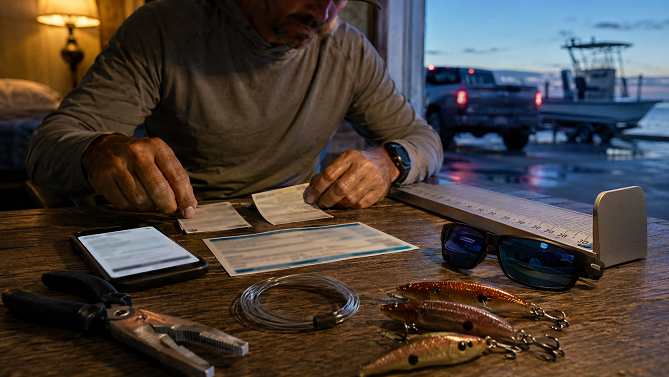
Texas Fish & Game’s July 12 update said the CCA-Texas STAR Tournament was “heating up the entire Texas Coast,” with six tagged redfish already caught and more still swimming with truck-and-boat packages tied to their tags. The July 19 update repeated the same central message: six registered anglers had caught tagged redfish, but additional prize reds remained available.
That makes the race feel wide open. A one-weekend tournament can be decided by a narrow window of weather, tides, and luck. STAR is different. The official CCA Texas STAR Tournament registration page lists the 2026 dates as May 23 through September 7, giving anglers more than 100 days of fishing across the entire Texas coastline.
That long window changes the psychology of the event. An angler who missed Memorial Day weekend still has time. A family planning an August coastal trip still has a reason to register. A youth angler can still enter scholarship divisions. A guide can still see the tournament become part of a client’s summer story.
The leaderboard is not only a standings page. It is the tournament’s pulse.
How Tagged Redfish Keep The Race Unpredictable
Tagged redfish are different from ordinary weigh-in fish because they create opportunity across the coast. A heavy sheepshead, gafftop, black drum, kingfish, dorado, cobia, or red snapper rewards size. A tagged redfish rewards readiness, timing, legal participation, and attention to rules.
That is why the July leaderboard feels so open. A registered angler does not need to be the most experienced redfish competitor in Texas. The angler has to be in the right place, already entered, prepared to recognize the tag, and disciplined enough to follow the tournament process.
The official CCA Texas STAR Tournament site lists two tagged-redfish tracks: the Texas Ford Dealers Red Tag Division and the Tags of Texas Division. In the Red Tag Division, the first five certified red-tagged redfish winners receive a 2026 Ford F-150 XLT SuperCrew Cab connected to a 23-foot Haynie Amigo package, while the second five certified winners receive a boat package. In the Tags of Texas Division, the first three certified winners receive boat packages tied to sponsored tag colors, and additional tagged fish carry gift-card and sponsor-package opportunities.
That structure keeps the race from becoming a single-catch story. Multiple tagged-redfish pathways mean the tournament can keep producing new headlines throughout the summer.
For texassportsmen.com readers, this builds on earlier coverage of the CCA Texas STAR summer circuit, where the key point was that STAR turns the Texas coast into one long competitive calendar. The July tagged-redfish leaderboard proves that idea in real time.
Why Registration Discipline Is The First Rule Of The Race
The most important competitive lesson in STAR is simple: an angler has to be entered before catching the fish. Texas Fish & Game emphasized that contestants must be current CCA members and registered in the 2026 tournament to win. The official registration page adds that an eligible angler needs a current CCA membership, a current CCA Texas STAR Tournament entry, and a current Texas saltwater fishing license.
That requirement is what makes July reminders so important. Summer fishing is often spontaneous. A neighbor invites someone to fish. A family heads to the coast. A teenager jumps on a boat with relatives. A redfish eats on a flat. If the angler is not already registered, the tournament opportunity is gone.
That is why the leaderboard does more than celebrate catches. It educates. Every July update is a reminder that preparation starts before the cast.
The rule also separates STAR from casual fishing luck. Catching a tagged redfish is rare, but winning requires more than the catch. It requires membership, tournament entry, a valid saltwater license, and correct tag-handling procedure.
How The August 2 Leaderboard Shows Room Still Remained
The official leaderboard as of August 2, 2026, showed the race had continued moving after the July updates while still leaving visible room across tagged-redfish divisions. In the Texas Ford Dealers Red Tag Division, the leaderboard listed four caught red-tagged redfish: Matthew Silvas Sr. of Beeville, Michael King of League City, Conner Stevens of Richmond, and Bradley Sutton of San Leon. Their listed weigh stations included Roy’s Bait & Tackle, Marina Bay Harbor, Surfside Marina, and West End Marina.
The same August 2 leaderboard listed four caught Tags of Texas redfish: Alejandro Gonzalez of Bay City, Riley Kutach of Hallettsville, Andres Garcia of Port Arthur, and Karem Garza of La Marque. Their listed weigh stations included Wayne’s Bait Camp, Indianola Fishing Marina, Sportsman Supply, and West End Marina.
That spread tells the story. The leaderboard had real names, real hometowns, and real coastal weigh stations, but it was not closed. It still showed open positions in a tournament that was scheduled to run through September 7.
| Tagged-Redfish Area | August 2 Snapshot | Why It Shows The Race Was Still Open |
|---|---|---|
| Texas Ford Dealers Red Tag Division | Four caught red-tagged redfish listed | Up to 10 certified red-tagged winners are part of the division structure |
| Tags of Texas Division | Four caught Tags of Texas redfish listed | Additional tagged-fish prize slots remained part of the division |
| Listed Hometowns | Beeville, League City, Richmond, San Leon, Bay City, Hallettsville, Port Arthur, La Marque | Participation stretched well beyond one coastal city |
| Listed Weigh Stations | Roy’s Bait & Tackle, Marina Bay Harbor, Surfside Marina, West End Marina, Wayne’s Bait Camp, Indianola Fishing Marina, Sportsman Supply | Local coastal businesses remained central to the race |
| Tournament Window | May 23 through September 7 | Late-summer trips still had leaderboard value |
That is why the July headline matters. Even after early tagged-redfish catches, STAR still had room for anglers to enter the story.
Why Weigh Stations Make The Leaderboard Feel Statewide
Weigh stations are easy to overlook, but they are one of the reasons STAR works as a coastwide event. A tagged-redfish tournament cannot operate only from a central office. It needs bait shops, marinas, tackle shops, and coastal businesses that anglers already trust.
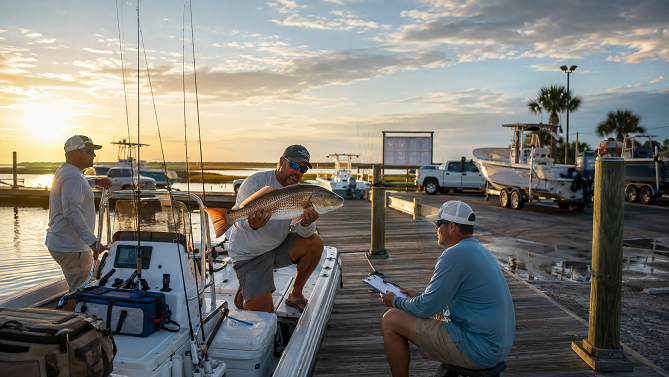
The August 2 leaderboard shows that network clearly. Roy’s Bait & Tackle, West End Marina, Surfside Marina, Wayne’s Bait Camp, Indianola Fishing Marina, Sportsman Supply, and Marina Bay Harbor were not just names below catches. They were the physical places where the tournament became real.
That matters because Texas’ coast is long, and redfish culture is local. Upper Coast anglers may fish Galveston-area marshes and bays. Middle Coast anglers may work Matagorda, Port O’Connor, Rockport, or Corpus Christi waters. Lower Coast anglers may build trips around Port Mansfield or the Laguna Madre. A statewide tournament has to respect those different fishing worlds.
Weigh stations help connect them. They turn local catches into statewide leaderboard events.
Why Youth Anglers Keep The Race Bigger Than Trucks And Boats
Tagged redfish bring attention because the prize packages are large, but STAR’s long-term importance is also tied to youth participation. The official STAR site says the tournament awards $375,000 in scholarships yearly and has awarded more than $8.7 million since 1995. It also lists youth giveaway scholarships, including the $25,000 ABC-13 Scholarship and the $50,000 Bill Kinney Conservation Scholarship.
That scholarship layer changes the meaning of the leaderboard. STAR is not only a contest for adult boat owners chasing redfish tags. It is also a summer structure that gives young anglers a reason to participate, track results, and see fishing as part of education and conservation.
The official August 2 leaderboard also listed STAR Kids and STAR Teens scholarship standings, with named youth anglers, ages, hometowns, weigh stations, and fish weights. That kind of visibility matters. It turns youth fishing from a side note into a real competitive pathway.
A healthy coastal tournament culture needs that. The next generation of anglers will not appear automatically. They need events, recognition, family buy-in, and reasons to stay connected to the coast beyond one vacation weekend.
Why Redfish Are The Right Species For A Summer-Long Race
Redfish are a natural fit for a summer-long Texas tournament because they are both iconic and accessible. They connect surf anglers, bay boat anglers, kayak fishermen, wade fishermen, charter clients, family crews, and serious inshore competitors.
That does not mean catching a tagged redfish is easy. It means the possibility feels reachable. A normal bay trip can become a major tournament moment. That is the emotional pull of STAR.
Redfish also carry strong Texas management context. TPWD’s current red drum regulations list the red drum daily bag and slot framework, red drum tag rules for oversized fish, and the requirement that recreational anglers possess a Texas fishing license with a saltwater endorsement to land fish in state or federal water.
That matters because STAR competition exists inside the same regulatory world as ordinary coastal fishing. Tournament excitement does not replace rules. It makes rule awareness more important.
The best STAR anglers understand that. They know the difference between a legal fish, a tagged tournament fish, an oversized fish requiring a red drum tag if retained outside normal limits, and a tournament-tagged fish that must be handled according to STAR procedures.
How Tag Handling Turns A Catch Into A Test
The official STAR site includes guidance from Tournament Co-Director Drew Adams on how to clip a tag from a tagged redfish before releasing it. That detail is important because tagged-redfish success is not just about hooking the fish.
The angler has to stay organized. The tag has to be handled correctly. The fish has to be released. The tag has to be turned in at an official CCA Texas STAR Weigh Station. Certification has to follow.
That sequence is why the July leaderboard should be read as a preparation tool. Every name on the board reminds other anglers that the process matters.
Fishing culture often celebrates the dramatic moment: the strike, the fight, the landing, the photo. STAR adds another layer. It rewards anglers who can manage the administrative and conservation side of the catch under pressure.
That is a useful lesson for Texas coastal fishing generally. Good anglers do not only catch fish. They know what to do next.
Why The Race Can Change Quickly In Late Summer
The STAR calendar runs through September 7, which means late July and August remain dangerous months for anyone assuming the leaderboard is settled. Summer heat, tide cycles, storm windows, family vacations, tournament chatter, and late-season coastal trips can all create new tagged-redfish chances.
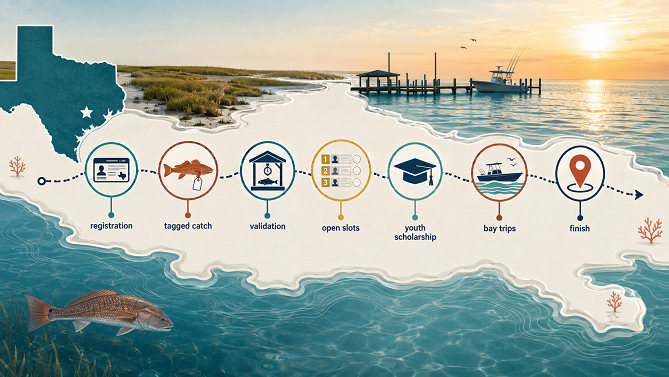
A wide-open leaderboard also changes behavior. Anglers may decide to register before a planned trip. Guides may remind clients about eligibility. Parents may enter youth anglers before a weekend at the coast. Bait shops and marinas may continue fielding questions long after the opening weeks.
That momentum is exactly what a long-format event needs. The July leaderboard does not only report what already happened. It keeps anglers looking ahead.
Late-summer fishing can be difficult. Heat affects trip timing. Boat ramps get busy. Afternoon storms can shorten windows. Redfish patterns shift with bait, pressure, water temperature, and tides. Yet STAR’s format gives anglers a reason to keep planning carefully instead of checking out after the first wave of results.
Why The Leaderboard Matters Beyond Winners
A leaderboard can look like a simple winner list, but STAR’s tagged-redfish board does more than rank catches. It shows where participation is happening, which communities are visible, which weigh stations are active, and how much opportunity remains.
That helps sponsors. It helps bait shops and marinas. It helps families follow the race. It helps anglers understand that the tournament is not only centered in one part of the coast.
It also gives the fishing community a shared summer language. Someone in Bay City, League City, Port Arthur, Beeville, Hallettsville, Richmond, San Leon, or La Marque can see a local connection on the board and feel part of a bigger coastal event.
That is why STAR’s July tagged-redfish leaderboard deserves attention even from anglers who are not currently in the tournament. It shows how Texas coastal competition stays public, distributed, and active.
What Anglers Should Watch Next
The biggest question through Labor Day is whether the tagged-redfish divisions continue filling. Every new tag changes the story. Every open slot keeps the race alive.
Anglers should also watch youth scholarship standings, inshore divisions, offshore divisions, and local weigh station activity. STAR is built around redfish attention, but the broader tournament includes inshore species, offshore species, guides, and youth scholarship pathways.
The practical lesson is clear: anglers who want to be part of the late-summer race should confirm their CCA membership, STAR tournament entry, Texas saltwater license, and rules before fishing. Waiting until after a catch is not a strategy.
The July leaderboard shows the race was already real. The August 2 leaderboard showed it was still moving. The September 7 finish line meant there was still time for one more ordinary coastal trip to become a STAR story.
That is why the tagged-redfish race remained wide open.