
The SAPA Saltwater Slam is set for Friday, August 28, through Saturday, August 29, 2026, at Robert’s Point — Main Pavilion in Port Aransas, and the strongest teams will treat the event like a two-day sports assignment: check in cleanly, understand the rule sheet, fish within the boundaries, and reach the weigh-in line before the cutoff. For inshore anglers, this is not just a redfish-and-trout contest. It is a community event with a scholarship purpose, a family-friendly Friday cornhole piece, sponsor support, volunteers, and a Saturday weigh-in that will reward preparation as much as fish-catching.
SAPA Saltwater Slam Schedule And Check-In
Friday Registration Sets The Tone
The official event listing for the SAPA 2026 Saltwater Slam lists the venue as Robert’s Point — Main Pavilion, 301 J.C. Barr Boulevard, Port Aransas, Texas, 78373. The event runs Friday, August 28, and Saturday, August 29, 2026. Friday’s mandatory registration period begins at 3:00 p.m. and runs through 7:00 p.m., with check-in and signed waivers required for all team members. The cornhole tournament begins at 2:00 p.m. on Friday.
That check-in window matters because this event is not built for casual last-minute paperwork. A team that has paid its entry still has to make sure waivers are signed. The research notes state that failure to sign a waiver can lead to disqualification, so captains should treat Friday afternoon as part of competition planning, not as a side errand.
Saturday Timing Is Tight
Saturday, August 29, is the tournament fishing day. The morning is reserved for fishing, while weigh-in runs from roughly 1:00 p.m. to 3:00 p.m. Teams must be in line by 3:00 p.m. Awards and the raffle drawing are scheduled from about 3:30 p.m. to 6:00 p.m.
For teams trailering to Port Aransas, launching from crowded access points, or moving through weekend boat traffic, the weigh-in deadline should shape the fishing plan. A strong late bite does not help if the team misses the line. Build in time for the run back, dock traffic, fish handling, parking, and walking fish to the official area. Tournament discipline means the clock matters as much as the scale.
Entry Fees, Team Size, And Community Roles
What A Team Entry Covers
A team entry costs $650 and allows up to four anglers. That entry does not include a guide or boat. If a group wants more than one team, each team must be registered separately. As of the most recent event data included in the research, about 70 teams had registered, with around 73 spaces left.
Those numbers point to a field with real participation but room for more boats at the time of that update. Captains should still rely on the event page for live registration status because team counts can change quickly in the final days before a Port Aransas weekend event.
Why The Non-Fishing Pieces Matter
The event also includes cornhole team registration, sponsorship levels, and volunteer roles. That is important for families and local supporters who want to be part of the weekend even if they are not running a bay boat Saturday morning. Fishing tournaments thrive when the weigh-in area becomes a gathering place, and Robert’s Point gives teams, volunteers, and supporters a central location for that energy.
For readers interested in community sports and outdoor activities, Banat Zayed is a related site in the same network, offering another perspective on maritime events. Here, the angle stays on the water: how a local event blends competition, youth-minded fundraising, and the shared rhythm of a Texas coastal fishing weekend.
Rules That Should Shape Every Fishing Plan
SAPA Saltwater Slam Prep Priorities
SAPA Saltwater Slam teams should start with the rule framework before talking about bait colors, drift lines, or favorite shorelines. Fishing must conform to Texas Parks & Wildlife Department laws, and any TPWD citation leads to automatic disqualification under the event rules. All fishing must be done with rod and reel only. Live bait, dead bait, and artificial bait are permitted.
The event rules also state that fishing outside the jetties or past the end of the jetties is not allowed. Land-based fishing is not allowed except wading, and wading must be accessed by boat and remain within sight of the vessel. That changes the playbook. Teams cannot plan a shoreline-only effort from land, and they cannot push offshore of the stated boundary. This is an inshore competition with defined limits.
- Confirm every angler has signed the required waiver before the close of registration.
- Carry accurate measuring tools for trout and redfish before deciding what to keep.
- Keep one pole per angler in the water at a time.
- Do not fish outside the jetties or past the end of the jetties.
- Plan the return route so the team is in the weigh-in line by 3:00 p.m.
The one-pole rule is simple, but it is easy to overlook during a hot bite. A disciplined captain should set the rule before lines go in. No spare soaking rod. No extra pitch rod sitting in the water. No confusion about who is actively fishing.
Weigh-In Categories And Fish Decisions
Pick The Right Category At The Right Time
Teams can choose among several contest categories at weigh-in, but once a team commits through its team chip, it cannot change that choice. The listed categories include heaviest trout within the 15-inch to 20-inch slot, heaviest redfish within the 20-inch to 28-inch slot, heaviest slam stringer needing two redfish and one trout, and most spots on a redfish, which must have more than two tail spots.
This is where the SAPA Saltwater Slam becomes a decision sport. A team with one excellent slot redfish and a decent trout has to decide whether the slam stringer is realistic or whether a single-fish category offers the better lane. Because the category choice becomes final once submitted, teams should discuss their decision before stepping into the official process.
The rules also state that fish must be fresh and caught on the day of the tournament. Fish caught earlier may be rejected, and questionable fish may bring a request for a time-stamped photo. That makes fish care and documentation part of tournament execution. Keep fish in condition, avoid any gray area, and be ready to support the catch if asked.
Guided Division Details
Guide services are allowed only in the Guided division. The guide cannot be one of the angling team members and cannot contribute fish toward the team’s entry. That distinction protects the competition structure. Anglers using a guide should make sure everyone understands who is fishing, who is operating, and whose fish count before the first cast.
Each boat or team must fish together, and fish must be caught by members of the same team in the same boat. Borrowed fish are not allowed. This rule is direct and necessary. It keeps the tournament centered on team performance, not dockside swapping.
Port Aransas Preparation For Tournament Morning
Build A Plan Around Time And Boundaries
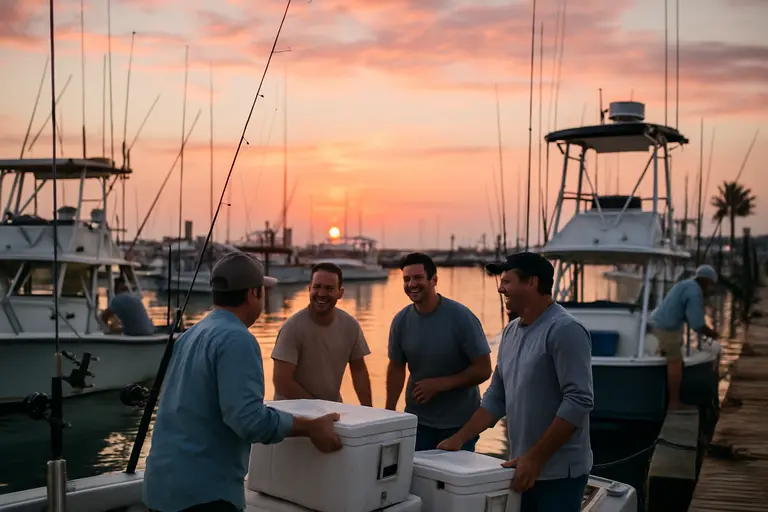
Port Aransas tournament mornings reward crews that know their roles. Before Saturday, assign who handles the boat, who checks the livewell or cooler setup, who tracks fish measurements, who monitors time, and who manages weigh-in documents. That may sound basic, but basic work wins time back when the boat is busy.
Because the event does not include a boat or guide with the standard team entry, teams are responsible for their own fishing platform and support plan. The rules allow bait choices across live, dead, and artificial options, so teams can prepare multiple approaches without stepping outside the event format. The key is not to overpack into confusion. Bring what fits the areas you can legally fish and the species you plan to target.
- For trout: verify the 15-inch to 20-inch category limit before placing a fish in the competition plan.
- For redfish: verify the 20-inch to 28-inch category limit before committing to a weigh-in strategy.
- For slam stringer: remember it requires two redfish and one trout.
- For most spots: the redfish must have more than two tail spots.
Texas anglers tracking the broader 2026 tournament calendar can also compare this stop with other coastal events in our coverage of Texas redfish events. The shared theme is clear: teams that understand rules, timing, and weigh-in choices give themselves a better shot before the first bite.
Protests, Disqualifications, And Captain Discipline
Keep The Day Clean
Disqualification rules are not background reading. Any entrant found violating TPWD rules, failing to sign a waiver, using multiple poles, or breaking tournament requirements can be disqualified. Fish that do not meet TPWD minimum measurements are disqualified as well. Protests must be submitted in writing before weigh-in closes, meaning before the last fish is officially weighed.
That protest deadline is worth noting because it gives teams a defined window. If there is a concern, the rules do not support waiting until after the event has moved into awards. Captains should handle any issue through the stated process and keep emotions off the dock.
The best tournament teams are not only good anglers. They are organized competitors. They read rules, respect officials, protect their catch, manage the clock, and avoid penalties that have nothing to do with fishing skill.
What The SAPA Saltwater Slam Means For Port Aransas
A Competitive Weekend With A Local Purpose
The SAPA Saltwater Slam brings together the core pieces that make Texas coastal tournaments valuable: measured competition, species-specific decision-making, sponsor and volunteer support, and a public weigh-in setting that gives the community a reason to gather. With Robert’s Point as the event base, the weekend has a clear home for registration, weigh-in, awards, and the raffle drawing.
For anglers, the preparation checklist is direct. Be at mandatory registration on Friday, August 28, with every waiver handled. Fish Saturday, August 29, within the boundaries and TPWD framework. Keep only eligible fish for the category you intend to enter. Be in the weigh-in line by 3:00 p.m. Make the category call carefully because it cannot be changed once committed.
The SAPA Saltwater Slam should reward teams that balance confidence with clean execution. Port Aransas gives anglers plenty of fishing tradition, but this event will be decided by the boats that pair local knowledge with rule awareness, clock management, and smart weigh-in choices. That is the kind of tournament weekend that strengthens both the sport and the coastal community around it.