
Bass Champs Prep for Lake Fork starts with a clean read on the confirmed schedule, the lake’s slot rule, and the fishing decisions that come with a late-October event on one of Texas’ best-known bass waters. The research identifies the Berkley Big Bass Bass Champs tournament at Lake Fork as scheduled for October 17-18, 2026, a Saturday-Sunday event window listed on the official Bass Champs schedule. With today set at October 16, 2026, this is a same-weekend planning story, not a recap.
Bass Champs Prep Starts With The Format
The first planning point is simple: anglers need to separate confirmed event information from habit. Lake Fork is familiar to many Texas competitors, but a familiar lake still punishes sloppy tournament preparation. The research notes that Adult Bass competition rules allow a team to bring up to five bass to weigh-in, using any combination of largemouth, spotted, or smallmouth bass. No team should treat that as a casual number; it affects livewell choices, culling judgment, measuring discipline, and how hard a boat should press for one more legal fish late in the day.
Official Dates And Format Checks
The October 17-18, 2026 event window gives competitors a tight runway. Since the event is scheduled immediately after October 16, the useful work is no longer broad scouting. It is format confirmation, rule review, tackle sorting, boat organization, and a practical plan for where to begin after launch. Anglers should confirm check-in, weigh-in, and event-day procedures directly with tournament officials, because those operational details decide how much time a crew can safely spend on the water before heading to the scales.
This is also where the community side matters. Lake Fork tournament weekends pull traffic toward ramps, lodging, fuel stops, restaurants, and tackle counters. Good planning helps anglers compete without adding needless strain around launch areas. A calm event morning starts the night before, with batteries charged, fish-care gear ready, and the first run planned around daylight, safety, and other boats.
Bass Champs Prep For Slot-Lake Decisions
Lake Fork’s largemouth bass regulation is the headline rule issue. The research states that no bass over 16 inches and under 24 inches may be presented to the scales in Bass Champs events on this slot lake. That creates a very different tournament math problem than a standard five-fish limit on a non-slot lake. Many quality bass that would help elsewhere cannot be weighed here, so the best decision is not always to chase the most bites or even the heaviest-looking fish.
For competitors, the slot rule changes boat conversation. Every fish needs to be measured carefully, and every borderline fish should be treated with caution. A short fish, a slot fish, or a dead-fish issue can erase good work. The research also notes that size violations, dead fish, and illegal measurements can trigger penalties ranging from loss of that fish to weight penalties or disqualification. That makes measuring boards, livewell management, and shared team communication part of competition strategy, not housekeeping.
Lake Fork Conditions Shape The Practice Plan
Lake Fork covers about 26,841 acres, has a maximum depth of 70 feet, and has been surveyed by Texas Parks and Wildlife Department with electrofishing and gill nets through 2021 and 2022, according to the official Lake Fork survey report. Those numbers explain why preparation has to be selective. A competitor cannot fish the entire lake well in a short event window. The better approach is to build a few high-confidence zones that match the season, the rules, and the expected fishing pressure.
Depth, Heat, And Structure
The research notes recent surface temperatures in the upper 80s to low 90s, with reported production on drop shot, Texas rig, and Carolina rig presentations in 15 to 26 feet around points, bridges, and humps. Those details fit a late warm-water plan where deep structure, shade lines, and bait positioning can matter as much as shoreline appeal. Anglers should still keep an open mind, but a plan built only around shallow history may miss the best tournament water under hot conditions.
That does not mean every boat should start offshore. It means each team should know why it is starting where it starts. A deep point with bait, a bridge area with current influence, or a hump with fishable cover gives a team a clearer reason to stay patient. If the early plan fails, the fallback should already be staged: another depth zone, another structural category, or a legal-fish pattern built around smaller bass under the slot.
Vegetation And Cover Choices
The research lists hydrilla, Eurasian milfoil, coontail, American lotus, water primrose, pennywort, and alligatorweed among Lake Fork’s vegetation types. Standing timber and boat docks are also key structural features. That variety is part of Lake Fork’s draw, but it can also scatter decision-making. A team that tries to sample every cover type may burn too much clock before building a repeatable pattern.
A stronger plan assigns a purpose to each cover choice. Vegetation can hold bait and ambush fish. Timber can create vertical targets near depth changes. Boat docks can offer shade and defined casts. Points, bridges, and humps can connect with deeper summer-style tactics still relevant during warm fall conditions. The best tournament preparation narrows those options before launch so the boat is not making every decision from scratch under pressure.
Rules Discipline At The Scales
Bass Champs Prep has to include scale-room thinking before the first cast. On a slot lake, the weigh-in is not just a finish line. It is where measurement choices become official. The research notes that Lake Fork fish inside the protected slot cannot be presented to the scales. Competitors should know how they will handle every fish category: clearly legal under 16 inches, clearly legal at 24 inches or greater, and any fish close enough to demand extra care.
Five-Fish Limit And Measurement Pressure
The five-bass team limit means the livewell should never become a place for uncertainty. If a fish is not legal for weigh-in, it should not be treated like a maybe-fish. Late in the day, that discipline gets harder because tournament pressure rises and the clock shrinks. That is exactly when teams need their clearest process: measure on a flat board, communicate the length, confirm the category, and protect legal fish in the best possible condition.
Fish care also connects to sportsmanship. Lake Fork’s bass reputation has been built through management, habitat, angler attention, and tournament culture. Events work best when competitors respect both the rulebook and the fishery. That means avoiding rushed handling, keeping livewells functioning, and giving tournament staff clean, compliant fish at weigh-in.
Community And Ramp-Day Awareness
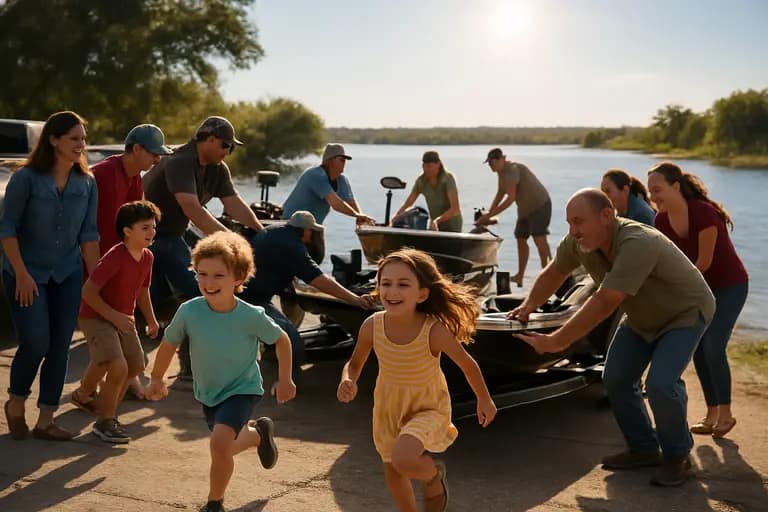
Lake Fork event weekends are not only about the leaderboard. They affect the local rhythm around marinas, ramps, cafés, lodging, bait shops, and roadways. Competitors who arrive organized help the whole event run better. That includes staging gear away from the ramp, launching efficiently, keeping courtesy in tight areas, and leaving room for other anglers who may not be in the tournament.
Local Traffic Around A Destination Fishery
Because Lake Fork draws serious bass anglers from across Texas and beyond, small planning choices carry weight. Fueling before the morning rush, checking trailer lights, tying tackle before backing down the ramp, and knowing the first safe run all reduce friction. Those details may not show up in a results sheet, but they support a better tournament setting for competitors and residents. Readers who are interested in similar updates across different sports can explore related coverage on SCAR Sports.
- Confirm the October 17-18 schedule and event procedures through official channels.
- Measure every bass carefully before any weigh-in decision.
- Build plans around legal fish, not just the biggest bites.
- Prepare deep structure options around points, bridges, and humps.
- Respect ramp flow, local businesses, and non-tournament anglers.
Bass Champs Prep At Lake Fork
The best Lake Fork plan for October 17-18 is disciplined, not complicated. Bass Champs Prep should begin with the official schedule, move through the slot rule, and finish with practical choices that match the lake’s warm-water conditions. The research points toward deep presentations in 15 to 26 feet, productive structure such as points, bridges, and humps, and a lake full of vegetation, timber, and docks that can tempt anglers into fishing too much water too quickly.
A Practical Event-Morning Checklist
On event morning, the strongest teams will know their first area, their backup depth range, their legal-fish plan, and their weigh-in process. They will also understand that Lake Fork’s protected slot changes how success looks. A boat full of impressive slot fish can still be a tournament problem if those fish cannot be weighed. A smaller legal limit, protected well and presented cleanly, can keep a team in the event while others lose time to avoidable mistakes.
That is the point of sound preparation. Lake Fork offers size, structure, cover, and pressure in equal measure. The anglers who manage rules, fish care, community awareness, and on-water decisions together give themselves the best chance to compete responsibly during the Bass Champs weekend.