
Big Cash Snapper is a Texas red snapper tournament with a long summer window, online registration, adult and junior divisions, captain participation, and weigh-in requirements that anglers need to plan around before they leave the dock. For coastal communities, the event is more than a leaderboard. It brings families, licensed captains, tackle shops, marinas, weigh stations, and weekend fishing crews into the same competitive rhythm during peak offshore season.
Big Cash Snapper Schedule And Registration
The 2026 tournament window listed in the research runs from June 1, 2026, at 12:01 a.m. CST through August 28, 2026, at 11:59 p.m. CST. That schedule gives anglers nearly three full months to find a qualifying red snapper, but the long window should not be mistaken for a loose format. The same research notes that fish must be weighed within the required post-catch period and no later than the tournament end date.
Registration opens online on February 18, 2026, and remains available until August 28, 2026, at 11:59 p.m. CST, according to the official registration page. The listed entry fees are $30 plus tax for the main tournament, $20 plus tax for the World Record Bounty, no fee for the Captain’s Cash Prize, and no fee for the Junior division. After successful registration, participants receive a confirmation email with a timestamped registration number.
Big Cash Snapper Timing Checklist
The most practical schedule decision is not simply choosing a weekend. Anglers should line up registration, licenses, boat plans, captain registration if applicable, weigh-station access, and a backup weather plan before the trip. A long tournament window can reward patience, but offshore snapper trips still depend on safe seas, legal compliance, and the ability to get a fish to an official weigh station on time.
- Confirm registration before fishing for tournament credit.
- Carry a valid Texas fishing license if required for your role.
- Know the tournament boundaries before running offshore.
- Plan fuel, ice, storage, and weigh-station timing before launch.
- For minors, confirm parent or legal guardian consent and supervision.
Eligibility, Boundaries, And Fish Requirements
The research states that the event is open to anglers age six and up as of June 1, 2026. Participants must hold a valid Texas fishing license, and minors need consent and supervision from a parent or legal guardian. That makes the tournament accessible to family crews, but it also means parents and captains should treat paperwork and supervision as part of the tournament plan, not as afterthoughts at the dock.
Eligible waters listed in the research include Texas territorial waters, common boundary waters with Louisiana, and seaward extensions up to 200 nautical miles. Fish caught outside those boundaries are ineligible. That boundary language matters for offshore anglers because long runs can cross jurisdictional lines. Crews should know where they are fishing, document the catch process as required, and avoid any gray area that could cost them eligibility.
The target species is red snapper, Lutjanus campechanus. The research lists a minimum weight of 20 pounds, with a suggested minimum length of 30 inches as an advisory for fish over 20 pounds. That minimum puts the focus on quality fish rather than routine keeper snapper. From a sports angle, it also changes trip strategy: crews are not just filling a box; they are managing time, structure, bait, fish care, and weigh-in logistics around one standout catch.
What The Red Snapper Minimum Changes
A 20-pound minimum affects how anglers evaluate a day offshore. Smaller legal fish may still matter for a recreational trip, but they do not move the tournament effort unless they meet the event standard. Crews chasing a qualifying fish should think carefully about bait size, reef selection, current, depth, handling, and keeping the fish in the best possible condition for weighing. None of that guarantees a leaderboard fish, but it gives a crew a cleaner process.
What The Big Cash Snapper Format Means For Anglers
For a Texas offshore angler, Big Cash Snapper is built around patience and verified execution. The prize distribution listed in the research includes $25,000 for first place, $8,000 for second, $7,000 for third, $6,000 for fourth, and $5,000 for fifth. Places sixth through tenth are listed as sponsor gift cards and fishing gear. Those payouts make the leaderboard meaningful, but the event still comes down to a simple sports truth: the fish must qualify, be caught inside the eligible area, and be weighed under the rules.
The research also lists a Junior division for anglers ages 6 to 17 as of June 1, 2026, with prizes of $10,000 for first, $5,000 for second, $1,000 for third, and $500 for fourth. That division is one of the strongest community pieces in the event. A youth angler can learn offshore safety, fish identification, legal limits, sportsmanship, and weigh-in procedure while competing in a format that gives young participants a clear place in the field.
The World Record Bounty is listed as an optional division for participants aiming to break the IGFA Certified Heaviest World Record for red snapper. The research notes the current record at 50.04 pounds. That is an extraordinary benchmark, so most anglers should treat that division as a separate target with its own expectations rather than as a normal tournament path.
Captain Participation And Crew Planning
Licensed Texas boat captains can register for the Captain’s Cash Prize at no fee, and the research states that captains must be registered as anglers and linked to a registered angler to be eligible. The official Captain Rules page is the key place to confirm those requirements before booking or running a trip. For charter operations, that connection between captain and angler matters because a missed registration step can affect prize eligibility even if the fish itself is impressive.
Captain participation also has a local business impact. Charter boats, bait shops, marinas, fuel docks, ice suppliers, and weigh stations can all become part of tournament-day planning. Readers who follow community sports across outdoor spaces might find similar strategies discussed at FS Golf, where local participation and event preparation shape the experience as much as the final score.
Weigh-In Rules And Documentation
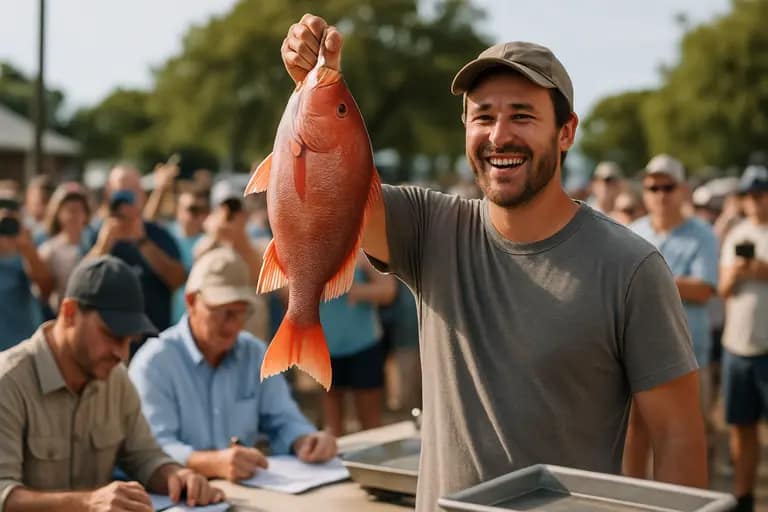
The research includes one detail that anglers should verify directly before fishing: the notes reference both a 24-hour post-catch weigh requirement and a 48-hour weigh-in procedure. Because those time frames conflict in the provided material, participants should confirm the current official rule before launch, then build the trip around the stricter confirmed deadline. That is the safest approach for a competitive catch.
The research states that fish must be weighed at an official weigh station and that a completed Official Weigh-In Form, signed by a Weigh Master, must be submitted. This is where tournament discipline matters. A big red snapper is not just a catch once it hits the deck. It becomes a time-sensitive entry that needs proper care, transport, paperwork, and verification.
Crews should identify the nearest official weigh station before leaving, not after returning tired from an offshore run. They should also think through ice, fish storage, traffic, dock timing, and who is responsible for documentation. In a tournament with cash prizes, clean procedure protects the angler, the captain, the weigh station, and the event.
Rules Of Conduct And Sportsmanship
The research states that participants must comply with applicable federal, state, and local fishing laws and regulations. It also states that unsportsmanlike conduct, as determined by Tournament Directors, may result in disqualification. That standard is central to the event’s credibility. Offshore tournaments depend on trust, documentation, legal harvest, and respect among crews competing across a wide stretch of Texas water.
Sportsmanship starts before the fish is caught. It includes honest registration, legal fishing locations, safe boating, respectful dock behavior, accurate forms, and cooperation with weigh-station staff. For junior anglers, it also sets the tone for how competitive fishing should work: serious about the rules, proud of the catch, and respectful of the fishery.
From a community perspective, a clean tournament benefits everyone. Anglers get a fair competition. Captains get clear standards. Weigh stations get orderly procedures. Local coastal businesses get traffic tied to a well-run event. The fishery gets participants who understand that following the law is part of the sport.
Why Big Cash Snapper Planning Matters On The Coast
Big Cash Snapper rewards more than one lucky bite. The 2026 format, as listed in the research, asks anglers to handle registration, age eligibility, license requirements, tournament boundaries, minimum fish standards, division choices, captain linkage, weigh-in documentation, and conduct rules. Each piece affects whether a catch can become a valid tournament entry.
For Texas fishing families and offshore crews, the best approach is to prepare before the season window opens. Register early if the event fits your plans, confirm every rule on the official pages, check weather and safety conditions, and make sure the full crew understands the weigh-in process. That preparation keeps the focus where it belongs once the lines are down: finding the right red snapper, handling it properly, and bringing it to the scale the right way.