
Canyon Lake’s reopened boat ramps are good news for Texas anglers, but they also create a new safety test after weeks of dramatic Hill Country flooding, debris movement, and fast-changing lake conditions. By late July 2026, Canyon Lake had reached full conservation capacity for the first time since 2021, with MySA reporting a water surface elevation of 909.95 feet and 386,729 acre-feet of water after mid-July storms. Several ramps reopened, including Ramps 1, 2, 5, 6, 7, 11, and 18, but officials continued warning visitors about currents, submerged debris, bacteria, wildlife waste, ramp-specific hazards, and the need to treat reopened access as a cautious return, not a free-for-all.
Why Canyon Lake’s Reopening Matters To Anglers
Canyon Lake is one of Central Texas’ most important fishing and boating reservoirs, and the return of multiple ramps after drought and flood disruption is a major access story. For months, low water had limited boat access. Then mid-July flooding rapidly changed the lake’s condition, pushing it toward full conservation capacity and forcing officials to evaluate ramps, water quality, debris, and visitor safety.
MySA reported that Canyon Lake reached 100% capacity for the first time since 2021, with a surface elevation of 909.95 feet and 386,729 acre-feet of water. That turnaround is especially striking because the lake had been only 61.6% full about a month earlier. The article also noted that water quality tests conducted by the Water Oriented Recreation District of Comal County, known as WORD, were within safe standards for recreational contact.
That sounds encouraging, but it does not erase risk. The same report warned visitors to remain cautious because flooding can leave behind submerged debris, strong or unpredictable currents, bacteria, wildlife waste, and ramp-specific hazards. Reopened ramps give anglers a way back to the lake, but they also demand better judgment.
For Texas Sportsmen readers, the point is simple: access returning after flooding is not the same as normal summer boating. It is a new phase that requires caution, patience, and updated information before every trip.
How Fast Water-Level Changes Reshaped The Lake
Canyon Lake’s July rebound happened quickly. Earlier reporting showed the reservoir jumping from drought-stressed levels toward full capacity after heavy Hill Country rainfall moved through the Guadalupe River watershed. MySA reported that the lake reached 909 feet above mean sea level on July 22, 2026, and held 378,781 acre-feet of conservation storage as of July 24.
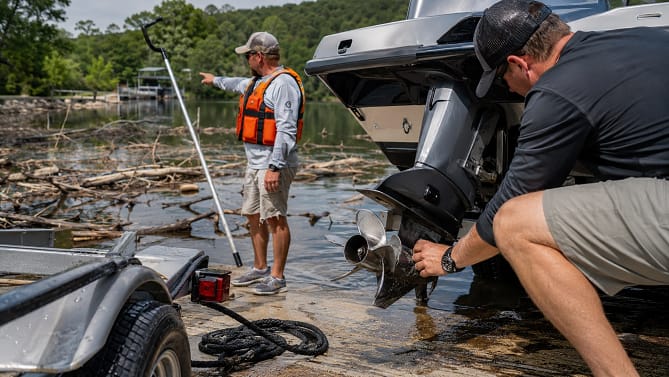
That speed matters because rapid rises change what anglers see and what they cannot see. A lake that rises quickly can float debris from shorelines, parks, river channels, docks, brush piles, and previously dry areas. Logs, limbs, boards, dock materials, and other hazards may drift or settle just below the surface.
The Comal County ramp updates reported by local outlets show how quickly access conditions changed. County crews had to clear ramps of debris and vegetation before reopening them. News 4 San Antonio reported that Ramps 1, 2, 6, and 7 reopened along with Ramp 18 at Canyon Park and Ramp 3 at Comal Park, while later reporting showed additional ramps returning as inspections and cleanup continued.
For anglers, that means every launch should begin with the assumption that the lake is still changing. A ramp that reopened yesterday may still have new debris today. A shoreline that looked clear in spring may now hold floating obstacles. A familiar route may feel different at full pool.
That is why post-flood fishing requires slower decisions.
Why Reopened Ramps Are A Safety Tool And A Risk Point
Boat ramps are access infrastructure, but they are also high-risk areas when lake conditions change quickly. Reopened ramps can bring back anglers, boaters, kayakers, families, and visitors all at once. That creates pressure at the exact places where people are backing trailers, launching boats, loading gear, and moving around wet surfaces.
MySA’s July 29 report listed Ramps 1, 2, 5, 6, 7, 11, and 18 among reopened ramps while noting that Ramps 8, 22, and 23 remained closed because of maintenance or ongoing risk. The same report said officials emphasized that ramps are for vessel use only and discouraged loitering or swimming near them.
That warning matters. A boat ramp is not a swim beach, fishing pier, or sightseeing platform. After flooding, ramp edges can be slick, debris can collect near lanes, underwater drop-offs can be harder to judge, and boaters may have limited visibility while backing or loading.
Texas anglers have a responsibility to keep ramp areas moving. Prepare gear away from the lane. Load coolers before backing down. Keep children and pets away from ramp edges. Avoid fishing directly beside active lanes. Give boaters time and space.
This connects with earlier Texas Sportsmen coverage of Texas angler safety, where the lesson was that public-water access always comes with setting-specific risk. At Canyon Lake, the risk is not alligators. It is post-flood uncertainty, ramp pressure, and hidden hazards.
How Water Quality And Hidden Debris Create Different Risks
Water quality results within safe contact standards are important, but they do not mean every part of the lake is risk-free. KSAT reported on July 23 that officials said the biggest concern at Canyon Lake after flooding might not be water quality, but what could be hiding beneath the surface. That distinction is important for anglers and boaters.
A lake can pass contact-recreation testing while still containing logs, branches, broken materials, displaced shoreline objects, and debris fields. Those hazards can damage props, strike hulls, injure swimmers, or create sudden danger for paddlers and small craft.
Officials also warned about natural bacteria and wildlife waste. After flooding, runoff can carry material from upstream land, roads, yards, and river corridors into the lake. Even when general tests are acceptable, smart anglers avoid swallowing water, wash hands before eating, clean fish properly, and pay attention to local advisories.
| Post-Flood Risk | Why It Matters For Anglers | Safer Choice |
|---|---|---|
| Floating Debris | Can damage boats, props, and lower units | Idle more often and keep a lookout |
| Submerged Obstacles | May sit just below the surface | Avoid running unfamiliar routes at speed |
| Slick Ramps | Increase fall and loading risk | Move slowly and keep ramp lanes clear |
| Bacteria And Runoff | Can affect contact and fish-cleaning hygiene | Wash hands and follow local advisories |
| Strong Currents | Can affect channels, inlets, and swimmers | Avoid risky areas and wear life jackets |
The safest anglers will not treat “open” as meaning “ordinary.” They will treat it as “usable with caution.”
Why Fishing Strategy Changes After Flooding
Flooding changes fishing, not only boating. Canyon Lake anglers may see stained water, moving bait, floating debris, changed shoreline cover, and fish repositioning after a rapid rise. Areas that were dry or inaccessible during drought may suddenly hold water again. Brush, rocks, boat docks, and shoreline structure may fish differently.
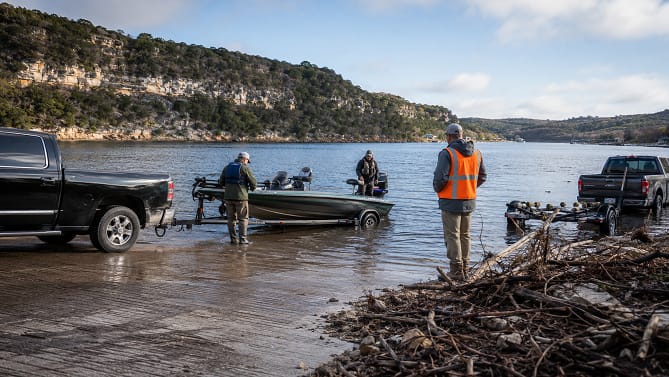
That can create opportunity, but it also creates temptation. Anglers may want to run quickly to newly flooded cover, explore river arms, or fish around debris piles. Those choices can be productive, but they are also where caution matters most.
Post-flood fishing should start with slower scouting. Use electronics carefully. Watch the water. Idle through unfamiliar zones. Give floating debris wide space. Avoid low-light high-speed runs until the lake settles. Check ramp status and weather before leaving.
For bank anglers, higher water can also change access. Trails, shorelines, and informal fishing spots may be muddy, unstable, or blocked. Floodwater can undercut banks or leave debris in places where people normally stand.
A full lake can make fishing exciting again after drought, but the smartest anglers give the lake time to show its new shape.
How Canyon Lake’s Reopening Fits The Bigger Texas Access Story
Texas Sportsmen has recently covered public fishing access, state park programs, new boat ramps, tournament schedules, and safety advisories. Canyon Lake’s reopened ramps fit that same pattern because they show how access is never just about whether a gate is open.
A ramp reopening after flooding is an access story, a safety story, and a community story at the same time. Local businesses depend on lake traffic. Anglers want to return. Families want to recreate. Officials need to protect the public. Cleanup crews must clear debris. Everyone has a role in making the return safe.
The same logic appeared in recent coverage of South Padre Island’s new Marisol Boat Ramp, where new infrastructure improved access to the Laguna Madre. Canyon Lake is different because the access is returning after a natural event rather than opening as a new project. But both stories ask the same question: how should anglers use public water responsibly when access expands?
The answer begins with patience. Crowding a reopened ramp, ignoring warnings, swimming near launch lanes, or running fast through uncertain water can turn good news into new problems.
Why Boaters Need To Treat Full Pool Differently
Canyon Lake returning to full conservation capacity changes the lake visually and operationally. Areas that were dry or shallow during drought may be submerged again. Hazards that boaters learned to avoid at low water may no longer be visible. Shoreline landmarks may look different. Floating debris can move with wind and boat wakes.
That means boaters should not rely only on memory. A route that was safe last season may have new obstacles. A cove that was unusable during low water may now attract more traffic. A ramp that was closed for months may now bring inexperienced or rusty boaters back into tight spaces.
Boaters should inspect trailers, tires, lights, batteries, bilge pumps, plugs, navigation lights, life jackets, and fuel before heading to the ramp. After long closures, both boats and boaters may need a slower restart.
This is especially important for anglers who have been waiting months to get back on the lake. Excitement is understandable, but post-flood boating rewards restraint. Start earlier, expect delays, and build extra time into the trip.
Why Swimming Near Ramps Is The Wrong Risk
Officials specifically discouraged loitering or swimming near ramps, and that warning deserves attention. Boat ramps are built for vessel movement, not swimming. After flooding, the reasons multiply: poor visibility, debris, slippery surfaces, underwater hazards, boat traffic, and unpredictable drop-offs.
For anglers, this matters because ramps often become crowded social spaces during reopening periods. People want to look at the lake, check water levels, take photos, fish nearby, or cool off. That can interfere with boaters trying to launch and retrieve safely.
Families should keep children away from ramp lanes. Bank anglers should choose areas designed for fishing rather than active launch sites. Boaters should communicate clearly and avoid rushing. Everyone should treat reopened ramps as work zones for vessel movement.
A safe ramp is one where people use the space for its intended purpose.
How Canyon Lake Businesses And Anglers Benefit From A Careful Return
Canyon Lake’s return to fuller water is important for local businesses that depend on lake activity. Marinas, bait shops, restaurants, rental operators, lodging providers, and guide services all benefit when ramps reopen and visitors return. But that recovery depends on public confidence.
If the return is chaotic, dangerous, or poorly managed, confidence suffers. If anglers and boaters follow guidance, respect closures, keep ramps moving, and report hazards, the lake can recover as a recreation destination more smoothly.
That is why anglers have a stake in doing this right. Responsible behavior does not only protect individual safety. It protects the reputation of the fishery and the surrounding community.
Canyon Lake’s reopened ramps should be treated as shared infrastructure. Every boater who launches cleanly, every angler who gives space, and every visitor who avoids closed areas helps the lake move from flood recovery back toward normal recreation.
What Anglers Should Check Before Launching
Before heading to Canyon Lake, anglers should check the latest ramp status, water level, weather, wind, debris reports, and local advisories. They should also confirm whether their preferred ramp is open, whether fees apply, and whether nearby facilities are functioning.
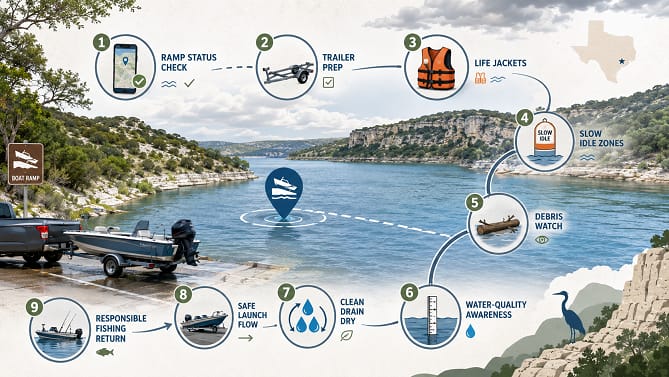
Comal County’s boat ramp status app gives boaters a direct way to review current ramp information. That kind of tool matters because post-flood conditions can change quickly.
Anglers should also prepare for clean-drain-dry habits. The status app references TPWD clean, drain, and dry education connected with zebra mussel prevention at Canyon Lake. That connects directly with recent Texas Sportsmen coverage of invasive mussel prevention, where boat movement between lakes was the central risk.
Flood recovery does not pause invasive-species responsibility. If anything, increased boat movement after ramp reopenings makes it more important.
Why Canyon Lake’s Safety Test Is Bigger Than One Lake
Canyon Lake’s reopened ramps are a local story, but the lesson applies across Texas. Reservoirs can swing from drought to flood quickly. Ramps can go from unusable to crowded in days. Water quality can improve while hidden hazards remain. Anglers can regain access before conditions feel familiar.
That volatility is part of modern Texas fishing. It requires anglers to be flexible, informed, and safety-minded. The old habit of assuming a lake behaves the same way every summer is no longer enough.
Canyon Lake’s July 2026 rebound is good news for fishing access. It brings boats back, helps local businesses, restores recreation, and gives anglers a chance to explore water they had been missing. But the reopening also asks anglers to slow down, check conditions, respect closures, and treat the lake like a changing post-flood system.
That is the real safety test. Not whether the ramps open, but whether anglers use them wisely.