
Cotton Bowl Renovations have reshaped how football crowds, teams, media crews, and Fair Park visitors move through one of Dallas’ busiest event settings. As of September 15, 2026, the first phase is no longer a future promise in the provided timeline; the City of Dallas agreement set Phase I completion for September 1, 2026, while Phase II planning remains tied to later deadlines. For fans who care about the Red River Rivalry, State Fair traffic, and the feel of a full stadium day, the work matters most in the practical places: concourses, gates, restrooms, concessions, vertical movement, and building systems.
What Cotton Bowl Renovations Changed For Gameday
Cotton Bowl Renovations And Crowd Flow
The strongest sports value in the project is not cosmetic. It is movement. Phase I focused on the west side of the stadium, including concourse work, restrooms, concessions, and ingress and egress. The governing stadium agreement lists the $140 million project framework and sets the Phase I and Phase II dates. That matters because the Cotton Bowl is asked to handle not just a football game, but a full Fair Park event day around it.
For fans, Cotton Bowl Renovations are most noticeable in the areas that decide whether a stadium feels manageable. Wider concourses give crowds more room before kickoff, at halftime, and after the final whistle. New and larger west-side entry points are also tied to the same goal: reducing choke points where fans tend to stack up before major games.
The supplied research states that the west side main concourse has more than doubled in width and that the upper west concourse grew from about 15 feet to 45 feet. Those are fan-experience numbers, but they carry sports meaning. A venue that clears crowds better can help fans get to seats earlier, reduce missed game action, and support better movement for staff during peak pressure windows.
Restrooms, Concessions, And Vertical Movement
Restroom and concession access can decide how a game day feels for a family, a student section, or a long-time season-ticket group. The research notes 104 new women’s toilets, 88 new men’s toilets, and seven new grab-and-go concession areas. Those changes are not about luxury first. They are about time away from the field.
- West-side concourse work targeted more room for fans during high-traffic periods.
- Restroom additions increased fixture counts for both women’s and men’s facilities.
- Grab-and-go concessions gave fans another way to manage quick food and drink stops.
- New escalators and entries addressed vertical and gate movement on major event days.
The Dallas Park and Recreation Department said Phase I included 14 new escalators and multi-story entries at the two west gates in its project announcement. For big football crowds, that is the kind of upgrade that does not need a scoreboard graphic to be felt. If fans can climb less, wait less, and move with fewer bottlenecks, the stadium can support a stronger event rhythm.
Why Athlete And Team Operations Benefit
Event Operations Around The Field
The research provided does not include confirmed locker-room dimensions or new training-room details, so athlete-facing analysis should stay with the information that is supported. Still, stadium operations affect athletes. Better crowd flow, clearer access points, stronger building systems, and better media placement all support a cleaner event day for the teams on the field.
Football teams do not experience a stadium only between the sidelines. Coaches, athletic directors, broadcast partners, support staff, and media all operate inside the building. The research notes new premium seating areas, suites, loge boxes, athletic-director space, coach space, broadcast rooms, and a relocated press box. Those pieces help define how a major neutral-site football event works behind the scenes.
For the Red River Rivalry, which the research identifies as one of the first major events using renovated facilities on October 11, 2025, operational improvements matter because the event draws intense pregame movement across Fair Park. By September 15, 2026, that 2025 game is firmly in the past, so the right way to view it is as an early test case for the renovated areas rather than an upcoming showcase.
Systems That Support A Major Football Venue
Cotton Bowl Renovations also included modern building-system work in the research notes: improved lighting, stronger Wi-Fi, upgraded mechanical, electrical, plumbing, and fire/life safety systems, plus chilled-water piping replacement and an air-cooled chiller after corrosion was found. These are not always the upgrades fans talk about on the walk back to the car, but they are part of whether a stadium can host large crowds with fewer friction points.
For athletes, media, and event workers, reliable systems matter during long days that can stretch from early arrivals to late exits. For fans, lighting and connectivity affect the way they find seats, follow scores, contact family members, and move through the park. For stadium operators, those upgrades help support events that are bigger than four quarters.
That is where football and public infrastructure meet. A stadium is not only a bowl of seats. It is a working sports facility that has to move people, power equipment, support communications, handle concessions, keep restrooms available, and maintain safety systems under heavy use.
How Fair Park Fits The Event-Day Plan
State Fair Traffic And Stadium Timing
The Cotton Bowl’s setting makes these upgrades different from a stand-alone stadium project. Fair Park can be packed with fairgoers, football fans, workers, vendors, bands, security teams, and media crews on the same day. That creates a planning challenge that starts well before kickoff.
The research states that Phase I officially opened in time for the 2025 State Fair of Texas, with a ribbon-cutting on September 20, 2025. It also notes that the Texas-Oklahoma game on October 11, 2025, was among the first major events to use the renovated facilities. Those dates help frame the project as a completed early-stage event asset, not just a construction story.
For an event guide, the practical takeaway is simple: the west-side work was aimed at the moments fans feel most sharply. Entry, halftime, concessions, restroom lines, and exit traffic are where a stadium earns trust. Better terraces and premium spaces may draw attention, but the wider concourses and added vertical movement are the changes that reach the largest number of people.
Readers who follow facility design beyond sports can find related built-environment coverage at Cad Cam Net, but the Cotton Bowl story stays rooted in football use, public events, and community access.
Community Park Adds A Broader Fair Park Piece
The renovation story also extends beyond the stadium walls. The supplied research notes that the Community Park at Fair Park is planned as an approximately 10.5-acre green space with playgrounds, trails, a fitness hub, pavilion, and stage. Construction was set to begin later in 2026, with completion targeted for December 2028. As of September 15, 2026, the supplied research does not confirm whether construction has begun, so the responsible wording is that the work was planned for later in 2026.
That park plan matters to sports families because Fair Park is not used by one type of visitor. A game day can include young fans, older alumni, marching bands, parents, neutral visitors, and neighbors who deal with event traffic. More usable public space can help Fair Park serve people outside the turnstiles as well as those headed into the stadium.
As an angler, I tend to judge public spaces by how well they serve regular people, not just headline events. Good access, shade, trails, rest areas, and family space matter at a lake ramp, and they matter around a stadium district too. The strongest public venues give communities reasons to return when there is no scoreboard running.
What Fans Should Know For Future Events
Planning Around A Renovated Venue
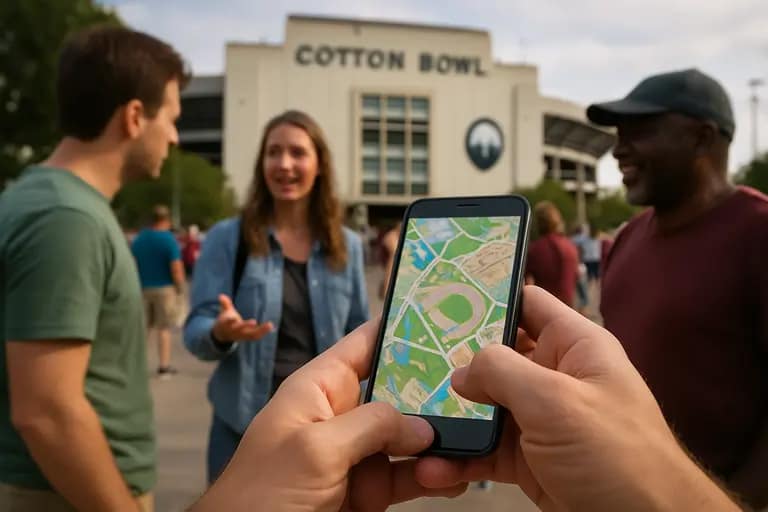
Fans headed to future Cotton Bowl events should think less about whether the stadium is “new” and more about how the updated west side changes their routine. Wider concourses and added escalators can help, but major football crowds still reward early arrival, clear meeting points, and a basic plan for restroom and concession stops.
The terraces noted in the research add another fan-facing layer, with views of Fair Park, the State Fair, and the Dallas skyline. Premium spaces, suites, and loge boxes serve a different part of the market, but they also show that the stadium is being positioned for a mix of traditional football crowds, hosted groups, media needs, and event partners.
Phase II remains the long-range part of the public timeline. The agreement states that the Phase II design plan must be presented by September 1, 2030, and completion is due by September 1, 2034. That keeps the Cotton Bowl in a multi-year facility conversation, with the first phase already tied to fan circulation and the later phase still defined by future planning requirements.
Fair Park And Cotton Bowl Stadium Renovations
The lesson from Cotton Bowl Renovations is that stadium upgrades count most when they change the parts of game day that fans and teams actually use. The west-side work addressed crowd movement, restrooms, concessions, entries, escalators, terraces, premium areas, media placement, and building systems. Those are practical improvements for a venue that sits inside a public event district rather than a parking-lot island.
For Dallas, the project connects football tradition with a community setting that has to handle fair crowds, rivalry games, and future park use. The facts supplied in the research support a clear reading: Phase I was built around fan flow and event operations, while Phase II remains on a longer public schedule. That gives fans and local residents a grounded way to judge the work—not by hype, but by how well Fair Park and the Cotton Bowl function when the crowd is at full pull.