
Fly Fishing Instructor training is on the calendar for Texas anglers who want to move from personal skill to community teaching. The Texas Parks and Wildlife Department lists the next workshop for August 15, 2026, from 9:00 AM to 4:00 PM at Honey Creek Ranch, 26226 TX-46, Spring Branch, TX 78070, with instruction tied to casting, aquatic ecology, habitat, equipment, flies, safety, and ethical fishing practices through the TPWD workshop listing. For local fishing circles, that schedule matters because certified volunteers help turn a good day on the water into a teachable experience for new anglers.
Event Snapshot For Texas Anglers
Date, Time, And Venue
The workshop is scheduled as a single-day session on Saturday, August 15, 2026. The listed window runs from 9:00 AM to 4:00 PM, giving participants a full day to work through teaching points, casting practice, and program expectations. Honey Creek Ranch in Spring Branch places the training in the Hill Country, a region where creek systems, ranch ponds, and community fishing access can all shape how anglers introduce fly fishing to beginners.
From a sports schedule angle, the one-day format rewards preparation. Anyone attending should treat it like a clinic rather than a casual meet-up. The workshop is not only about personal casting ability. It is built for anglers who expect to stand in front of youth groups, families, outdoor clubs, or school programs and explain the sport in a way that is clear, safe, and repeatable.
Why The Calendar Slot Matters
Mid-August can be a demanding time for Texas outdoor instruction because heat, daylight, and travel all affect participation. The 9:00 AM start gives attendees a morning arrival window, while the 4:00 PM finish keeps the training inside a single day. That matters for volunteers who may be balancing work, family, tournament schedules, church groups, or local conservation programs. The date also falls close to other TPWD Angler Education Instructor Training opportunities listed in August 2026, including online sessions on August 12 and 14 and in-person sessions in San Antonio on August 15 and Cypress on August 28.
Why The Fly Fishing Instructor Workshop Matters
Turning Anglers Into Teachers
Plenty of anglers can catch fish. Fewer can teach a beginner how to handle a fly rod, read water, respect fish, and understand why habitat matters. That is where instructor training has real value. A community program needs more than enthusiasm; it needs adults who can explain the sport, control a safe teaching area, and help new anglers build confidence without rushing the process.
The workshop content points to that balance. Casting is central, but it sits beside aquatic ecology, habitat, equipment, flies, safety, and ethics. That mix reflects what a good instructor should bring to a local event. A young angler learning a roll cast also needs to hear why clean water, stream cover, barbless hooks, and careful release habits matter. The best clinics leave people with skills and stewardship, not just a photo of a fish.
Community Impact Beyond One Class
A trained instructor can support fishing days at parks, school outdoor programs, scout activities, conservation events, and club clinics. In bass-heavy communities, fly fishing can also give anglers another way to study forage, casting lanes, shoreline cover, and fish behavior. A foam bug near bluegill beds or a streamer around pond structure teaches lessons that carry back to conventional bass fishing as well.
That cross-training value is easy to overlook. Fly casting forces anglers to think about timing, loop shape, line control, wind, and approach. Those are athletic skills in their own lane, much like a golfer managing tempo through a swing. Families interested in finding strategies that combine sports activities, lessons, and outings may explore cross-sport planning ideas at FS Golf, a related site in the same network.
Requirements Before You Register
Fly Fishing Instructor Eligibility
TPWD lists several entry requirements for this training path. Participants must be 18 years or older, live in Texas, have prior fly fishing experience, and complete the Angler Education Instructor Workshop. Those requirements set a baseline for maturity, residency, skill, and program familiarity. The goal is not to bring first-time fly anglers into a teaching role. It is to prepare experienced anglers to teach in a structured setting.
The Fly Fishing Instructor path also asks attendees to arrive with their own fly rod and reel with a complete line setup. That gear requirement is practical. Instructors need to know their own equipment well enough to demonstrate, troubleshoot, and explain. A borrowed or unfamiliar setup can slow down a teaching session and make it harder to diagnose casting errors or line-control problems.
How To Prepare Your Gear
Attendees should check their rod, reel, backing, fly line, leader, and tippet before the training day. The research notes confirm the need for a complete line setup, so arriving with missing pieces would be a self-inflicted problem. Leaders should be ready to turn over practice flies or yarn, and the reel should function smoothly enough for repeated demonstrations.
Preparation should also include sun protection, water, and a mindset built around teaching. The event is not framed as a competition. It is a training workshop for anglers who want to help others. That means listening closely, accepting corrections, and thinking about how each skill would sound to a student who has never picked up a fly rod.
What The Training Covers On The Water
Casting, Equipment, And Flies
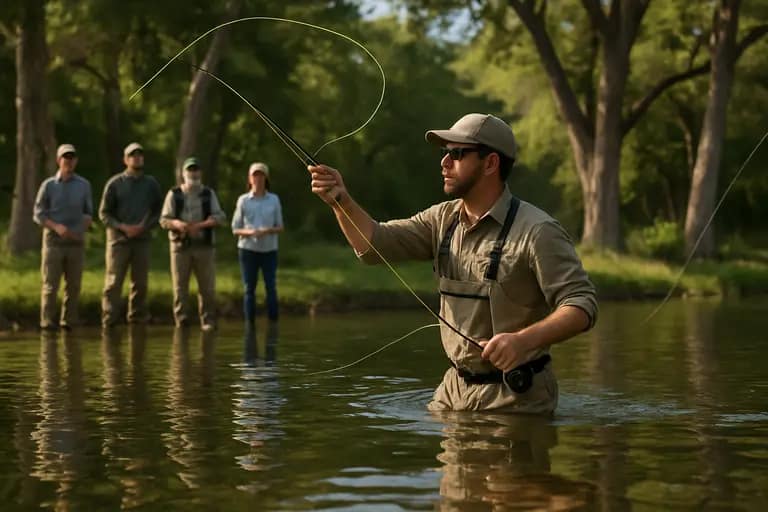
Fly casting is often the skill that intimidates newcomers, so instructor candidates need a clear teaching progression. The workshop’s casting component gives participants a chance to focus on fundamentals that can be explained in simple steps. Equipment and flies are part of the same lesson. A beginner who understands rod weight, fly line, leader setup, and basic fly choices will have a better chance of staying engaged after the first clinic ends.
For bass anglers, the teaching connection is direct. Casting accuracy around shade, grass edges, dock posts, and shallow cover matters in both fly and conventional fishing. A local instructor who can connect fly presentation to familiar bass-fishing concepts can make the sport feel less distant for anglers who grew up with spinning or baitcasting gear.
Aquatic Ecology, Habitat, Safety, And Ethics
The ecology and habitat portions give the workshop broader value. New anglers should learn that fish are tied to water quality, food supply, cover, temperature, and seasonal movement. Even at a basic clinic, those lessons shape better decisions. Anglers who understand habitat are more likely to respect access points, avoid damaging banks, and think carefully about how they handle fish.
Safety and ethical fishing practices are just as central. Fly lines, hooks, wind, nearby students, and uneven footing all create teaching challenges. A certified instructor needs to manage the casting area before a problem happens. Ethical fishing also matters because clinics often introduce people to the sport for the first time. The habits taught on day one can last for years.
Registration And Community Planning
Capacity, Pre-Registration, And Current Availability
Pre-registration is mandatory, and the workshop is limited to 16 participants. The Texas Hill Country Fly Fishers event page reported that, as of June 24, 2026, 12 slots remained available on the Texas Hill Country Fly Fishers registration page. Because that slot count is tied to a specific date, anyone planning to attend should verify current availability before arranging travel or gear.
The limited capacity is a signal that this is a hands-on training environment. Smaller groups can give instructors more room to watch casting mechanics, discuss teaching situations, and answer questions. For community programs, that type of training can help volunteers leave with a clearer plan for running local events rather than only a certificate.
Who To Contact
Questions or assistance should go to Natalia Gonzalez, TPWD Aquatic Education Training Specialist, at (512) 201-5790 or natalia.gonzalez@tpwd.texas.gov. That contact point is especially useful for anglers trying to confirm prerequisite status, gear expectations, or registration questions before the workshop date.
Community groups should also think about what happens after certification. A trained instructor can help schedule casting stations, youth fishing days, pond clinics, or conservation tie-ins. The most useful local programs tend to match instruction with clear logistics: safe casting space, manageable group size, enough volunteers, water access, and a plan for weather.
Fly Fishing Instructor Training Takeaways
Best Fit For This Workshop
This workshop fits Texas residents who already fly fish and want to teach the sport in a formal community setting. It also fits bass anglers, kayak anglers, creek anglers, and club volunteers who want a stronger teaching base. The required Angler Education Instructor Workshop means candidates should expect the certification track to include both fishing knowledge and educator responsibilities.
For an angler ready to serve, Fly Fishing Instructor certification can expand what a local fishing community offers. The August 15 workshop at Honey Creek Ranch gives qualified participants a defined path: meet the eligibility requirements, bring a complete setup, register before the limited seats are gone, and show up ready to teach. That is how individual skill becomes local impact, one casting lesson at a time.