
Let’s dive into the facts, not just the excitement. This isn’t just another fishing tournament. It’s a cultural snapshot of Texas inshore fishing, played out across iconic bays. Here, skill, luck, and stubbornness meet.
The Gulf Coast Derby is like Texas’s collective spirit, wearing fishing shirts and polarized sunglasses. Competitors are a mix of modern hunters and data analysts. They aim for glory, keeping an eye on tide charts and their livewells.
So, why should you care about these results? It’s not just about bragging rights. The impact goes beyond, touching economics, community, and the sport’s science. The Texas coast feels the effects, from bait shops to brew pubs.
This is your pre-game show for the wise angler. We’ll analyze the numbers, laugh at the drama, and find the real story. The real catch is always in the details.
Event overview: bays and launch sites (Galveston, Matagorda, Corpus, Port A)
Galveston, Matagorda, Corpus Christi, and Port Aransas are more than just places on a map. They are battlegrounds in the annual inshore fishing war. Your choice of launch site is the first and most important decision. It’s a gamble on geography, weather, and your ability to handle chaos. Let’s explore the four main areas of this Texas coast battle.
Galveston is like a busy city, with lots of traffic and sponsors. It has many ramps and bait shops, making it easy to start. The vibe is competitive, like a business deal. The morning ramp line is a quiet, coffee-fueled meeting.
Matagorda is different, like an artist’s studio. It offers solitude with its long shores and bay systems. The fishing here can be unpredictable, rewarding patience and punishing those who rush. It’s about listening and strategy, not just power.
Corpus Christi is for the tech-savvy anglers. Its deep channels meet shallow flats, creating a perfect spot for strategy. Anglers here focus on water movement and salinity. It’s all about the science, not just fishing.
Port Aransas is the wild child, full of energy and chaos. The jetties are a mess, and the beach launches are an adventure. Despite the chaos, legendary fish are caught here. It’s all about being ready for anything.
So, how do these places compare? The table below is more than a list. It helps you choose your fishing style for the day.
| Launch Zone | Primary Vibe | Key Strategic Advantage | Historical Haul (Avg. Slam Weight) | Ramp Chaos Factor (1-5) |
|---|---|---|---|---|
| Galveston | Corporate Hustle | Multiple access points & bait intelligence | 18.2 lbs | 5 |
| Matagorda | Moody Artist | Solitude & diverse habitat | 17.5 lbs | 2 |
| Corpus Christi | Technical Expert | Tidal flow & structure precision | 19.1 lbs | 4 |
| Port Aransas | Chaotic Party | Opportunistic, reactive fishing | 17.8 lbs | 5 |
Your launch site sets the story for your derby. Galveston is for the crowd, Matagorda for solitude, Corpus for strategy, and Port Aransas for instinct. The Texas coast offers all these options. Your first decision, before you even start, is where you’ll tell your inshore slam story.
Winners and Weights/Lengths by Division (Boat/Kayak)
The derby showed a battle of tactics, with kayaks using stealth and powerboats using brute force. It’s more than just names and numbers. It’s a deep dive into strategy, where every detail matters.
Boat Division: Power and Precision
“Line Shooter” didn’t just win; they played a perfect game. Their victory was built on steady, consistent catches. They caught a 26.5-inch redfish and a 22-inch speckled trout, weighing 14.8 pounds together.
This shows a careful, strategic approach. They focused on a good spot, working it well. This method beats the rush for a big catch. In the boat division, being efficient is key.
Kayak Division: The Stealth Advantage
Mark T. took the kayak crown with a clever strategy. He blended into the mangrove, catching a 28-inch redfish and a 20-inch trout. His total weight was 15.1 pounds.
His kayak’s total weight beat the boat’s. His redfish was the game-changer. While boats were loud, he found a hidden spot.
This win shows kayaks can compete with big boats. You don’t need a fancy boat to win. Patience, local knowledge, and stealth are key.
| Division | Champion | Redfish (Weight/Length) | Speckled Trout (Weight/Length) | Total Slam Weight |
|---|---|---|---|---|
| Boat | Team “Line Shooter” | 7.8 lbs / 26.5 in | 7.0 lbs / 22 in | 14.8 lbs |
| Kayak | Mark T. | 8.9 lbs / 28 in | 6.2 lbs / 20 in | 15.1 lbs |
Did kayak stealth beat the boat’s range? The derby’s results suggest a shift. Kayaks caught the biggest fish and the heaviest slam. The kayak division is challenging the boat’s dominance, quietly.
Tide and wind report: how conditions shaped the bite
A strong north wind isn’t bad; it’s a focus tool. It pushes bait and predators to the same spots. Winners saw the chop as a sign to find redfish in the bay.
Marsh drains and leeward shores became hotspots for topwater action. This was because of the wind.
The tide worked like a Swiss watch. The best time was the last hour of the outgoing tide. As the water left the flats, crabs and shrimp were funneled into waiting fish.
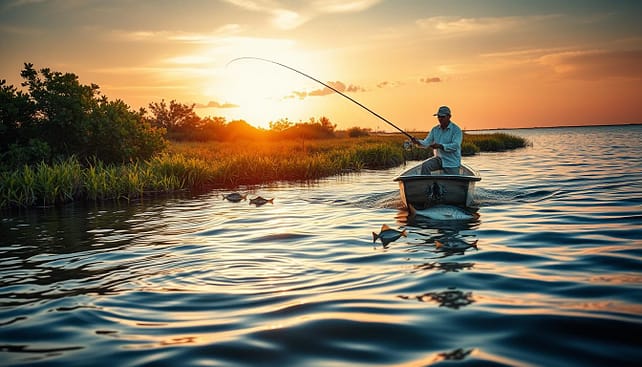
Atmospheric pressure and water clarity set the mood. A falling barometer made fish more active. In cloudy water, reaction strikes were key. In clear water, live bait vs artificials were better.
So, how did smart anglers adjust? The table below shows how they matched tactics to weather.
| Wind Direction | Tide Phase | Primary Strategy | Bait Preference |
|---|---|---|---|
| Strong North (15-20 knots) | Last Hour Outgoing | Position in protected drains; aggressive topwater | Loud walking baits, spoons |
| Light & Variable | Slack Tide | Finesse approach; slow presentations | Weightless soft plastics, live shrimp |
| South-East (10 knots) | Incoming | Sight-fishing on shallow flats | Smaller soft plastic jerkbaits |
| Post-Front Calm | Mid-Outgoing | Deepening presentations; targeting edges | Jigheads with paddletails, live pinfish |
The real lesson was in adapting, not just following the forecast. Anglers who changed with the water’s mood swings did well. For more on this, see our detailed historical catch data. It shows fish follow food, not weather.
Lure/rigs rundown: topwaters, spoons, soft plastics, live bait
Forget political debates; the real divide on the Texas coast was between free-lined shrimp and topwater plugs. The winners didn’t just catch fish. They showed off their skills in a debate of live bait vs artificials.
We looked at the winners’ gear. It’s not about catching the most fish. It’s about the heaviest ones. Think of it as the difference between a popular vote and the electoral college. Here’s what won over the judges.
The Topwater Theatre. When conditions were right, topwaters were unmatched. Winners used MirrOlure’s She Dog and Super Spook Jr. in bone and chrome blue. Their erratic, splashy action triggered predator impulse. It was all about provocation.
The Spoon’s Seductive Flutter. The gold Johnson Silver Minnow, often with a soft plastic trailer, was a workhorse. It worked in stained water or over grassy flats. Its glinting, wounded flutter was irresistible. It was a reliable, deadly lure.
Soft Plastic Subtlety. For finesse, paddle-tail shad on a lightweight jig head were key. DOA and Norton were favorites. The subtle shake on the fall fooled even skeptical redfish. The Vudu Shrimp also fooled redfish with its lifelike action.
The debate between live bait vs artificials was nuanced. Live shrimp won in sheepshead and black drum categories. It was a tactical choice for specific targets.
But for the inshore slam (trout, redfish, flounder), artificials had a slight edge. They offered versatility and coverage. An angler could switch between topwater, spoon, and soft plastic without re-rigging.
Live bait purists also scored big. Pogies and pinfish in the livewell caught monster redfish. It was a strategic choice, not a clean sweep for either side.
The most successful anglers were bilingual. They used both live bait and artificials. They matched their tool to the problem at hand. The inshore slam was won by using every tool in the box.
Conservation: slot rules, hero-shot handling, release success
In a fishing derby, the most exciting moment isn’t always the catch. It’s the release. This is where the Sage in every angler shines. The real analysis isn’t just about what you caught, but how you let it go.
The Texas coast fishing competition has strict rules. For redfish, it’s the “keeper” range. For trout, it’s the same. Catching a big, overslot red is a moment of respect, not a win.
The modern angler faces a dilemma: the hero-shot. Is it quick photography or a long hold on a hot deck? The pressure for the perfect photo is huge. But a fish gasping on a ruler isn’t heroic. It’s a fish in danger, dressed up for social media.
The real hero shot is a fish swimming away. Success on the Texas coast means letting fish go. While derby release rates are hard to find, the best practices are clear. They make all the difference.
So, what’s a clean release? It’s a four-point plan:
- Keep ‘Em Wet: Keep air exposure low. Lift the fish over water if you must. A quick photo in the net is better than a long pose.
- Handle with Care: Wet your hands. Avoid the gills and eyes. Support the body. It’s not a football.
- Revive with Purpose: Hold the fish upright in the water. Move it gently until it kicks powerfully. Patience is key.
- Tools of the Trade: Use circle hooks, rubber nets, and pliers. Good gear makes ethical choices easier.
This derby focused on conservation. The real win is not on the leaderboard. It’s the fish that swim off strong, ready for another day on the Texas coast. That’s the victory that matters for the resource and your soul.
Gear notes: rods, reels, braid/leader, shallow-draft boats, kayaks
If the Gulf Coast derby were a tech conference, the gear would be the latest prototypes. Each piece tells a story of innovation and obsession. Rods, reels, and rigs are not just tools; they’re extensions of identity, a silent language.
The rods and reels were mostly a 7-foot medium-power stick. This versatile rod was perfect for popping topwaters and working soft plastics. The reels had a 6.2:1 to 7.1:1 gear ratio. It was all about speed management, not brute cranking power.
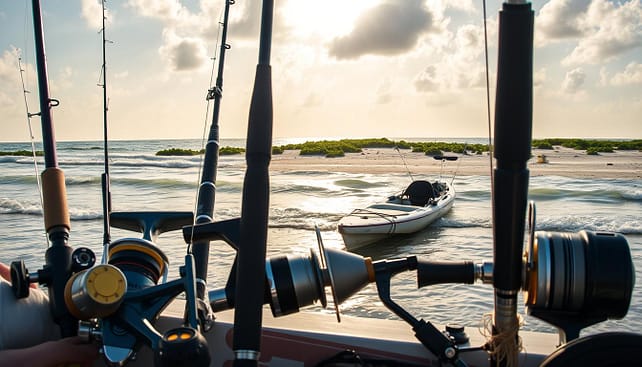
The line choice was almost universal: braid-to-fluoro leader. Anglers used 10-20 lb braid for its sensitivity, connected to 15-30 lb fluorocarbon leader. The sweet spot for leader strength was 20 lb. It was strong enough to catch a redfish but light enough not to scare a snook.
The platforms were just as interesting. The shallow-draft skiff was the top choice for the inshore flats. Brands like Hell’s Bay and East Cape were there, with hulls designed for shallow water. These skiffs are like sports cars for the marsh, allowing access to very shallow water.
But the high-tech fishing kayaks were rewriting the rules. Hobies and Old Towns were everywhere, with their MirageDrives and pedal power. They offered stealth and affordability. Kayak anglers are like ninjas, slipping into backwaters even skiffs can’t reach.
The gear arms race shows two sides: the skiff purist and the kayak revolutionary. Both agree on the rod, reel, and line basics. The gear is about how you catch fish, and what that says about you. The winning technology is what puts the angler in the right place, with the right presentation, and the right mindset. The fish always have the final say.
Photos and Maps of Productive Areas (High-Level)
Looking at the winner’s circle photos and maps is like getting a secret briefing. The geographic “ground zero” for trophy fish was clear. It was a pattern that stood out to those who knew what to look for.
Winning fish were not spread out randomly across the texas coast. They were found in specific, predictable spots. For example, spoil islands in the Laguna Madre were like fish condos, and a certain marsh complex in Galveston Bay was a redfish nursery.
The habitat types were clear on our metaphorical heat map. Oyster reefs were like market squares, and grass flats were ambush points. Even pipeline canals were strategic highways for predators. The photos showed the real estate that produced the big fish.
If this were a stock ticker, the tape would show huge volume in a few key sectors. The winning weights were concentrated. The bite was not widespread but targeted.
| Bay System | Key Habitat Feature | Observed Pattern | Analogy |
|---|---|---|---|
| Upper Texas Coast (Galveston) | Protected Marsh Complexes | High density of slot redfish; fish holding in deeper marsh drains on low tide. | A fortified castle with multiple gates. |
| Mid Texas Coast (Matagorda) | River Mouth Sandbars | Big trout staged on the down-current edges; a classic funnel point. | A busy airport runway for feeding fish. |
| Lower Texas Coast (Laguna Madre) | Spoil Islands & Grass Flats | Winning trout and reds came from islands with mixed shell and grass. | A high-rise apartment complex with perfect amenities. |
So, what’s the big picture? Success was geographically literate. Anglers who read the water like a map and targeted these zones won. The derby’s story is etched in the texas coast itself.
Next derbies and entry fees
Let’s look ahead to the Gulf Coast’s upcoming fishing tournaments. This circuit is like a market where you invest your money and hope. The entry fee is your currency, and winning brings bragging rights, a big check, or a great story.
To succeed, you need to know what’s coming. Here’s a list of Texas redfish derbies for the detail-oriented angler.
| Date | Event Name | Location | Info Source | Fee (Approx.) | Vibe |
|---|---|---|---|---|---|
| March 15-16 | Port O’Connor Spring Slam | Port O’Connor | portoconnorchamber.org | $400 | Pro-Am |
| April 5-6 | Matagorda Bay Redfish Rumble | Matagorda | matagordachamber.com | $550 | Big-Money Pro |
| April 20 | Galveston Bay Charity Shootout | Galveston | galvestonsportfishing.org | $250 | Community Charity |
| May 10-11 | Corpus Christi Coastal Classic | Corpus Christi | ccadventures.com | $600 | Big-Money Pro |
| June 1 | Rockport’s “Kids & Reds” Tournament | Rockport | rockport-fulton.org | $150 | Family/Charity |
This table shows two main types of events. There are big-money professional circuits with high fees and a serious vibe. Then, there are community charity affairs that focus on giving back. The first is like a high-stakes game. The second is like a fun block party.
Entry fees are going up. The cost of competing is increasing. What used to be expensive is now the minimum for serious events. It’s not just about the prizes. It’s about the prestige of winning.
So, who will be the champions next year? I think it will be those who can handle the pressure. The Matagorda Bay Rumble and the Corpus Christi Classic are where the big money is. Winners often start here.
But don’t overlook the charity events. They offer a chance to win without the high stakes. Winning here can boost your confidence without breaking the bank.
The Texas tournament scene has something for everyone. Whether you’re after prestige or giving back, there’s plenty to choose from. Just remember, past wins don’t guarantee future success. But they make for interesting analysis.
Spectator/volunteer opportunities
You don’t need a fishing rod to enjoy a major saltwater derby. Sometimes, the best spot is on a public pier. Competitive fishing might seem dull, but watching from the sidelines can be thrilling. It’s like watching theater.
The final act is the weigh-in. This is where all the hard work on the water comes to life. Imagine the season finale of your favorite show, but with more excitement. The suspense is real as the digital scale shows the weight.
Where can you get a good view? Skip the crowded docks. Public piers and bayfront parks are better. The Galveston Seawall offers a wide view of the fleet’s return. Matagorda Harbor jetties and Port Aransas’ University of Texas Marine Science Institute pier are also great spots.
Want to be more than a spectator? Volunteer. It’s not just about getting coffee. You get a behind-the-scenes look at the competition.
Volunteering can be exciting. Here are some roles that are more thrilling than they sound:
- Data Recorder at the Scales: You record each fish’s details. You see the disappointment and triumph before anyone else. It’s like being the scorekeeper.
- Fish Handling Support: You help with measuring and releasing fish safely. It’s a chance to make a difference and earn respect from anglers.
- Festival & Logistics Crew: You help with registration and directing traffic. You hear the stories from the teams. It’s like getting the inside scoop.
Volunteering gives you access to the action. You’re not just watching; you’re helping to record the event. It makes the experience more meaningful.
Watching fish weighed might not be as exciting as the Super Bowl. But, understanding the effort and stakes adds depth. The celebration feels earned. And you can be part of it, even without a rod.
Conclusion
This year’s Gulf Coast derby results in Texas show more than just who won. They give us a snapshot of our inshore fishery’s health. The weights and slot fish sizes are good, showing conservation is paying off.
The tech battle with fancy graphs and shallow boats is ongoing. But the winning strategies often mix new tech with old instincts.
What do these results say about the community? The community’s spirit is strong. There were quick hero shots, high release rates, and lots of stories at the weigh-in.
This culture is the derby’s true heart, stronger than any rod or line.
The derby is like a cultural festival that repeats every year. The rituals, like the early morning launch and the gamble on topwater, stay the same. But the people and their strategies, using MirrOlure lures and Z-Man soft plastics, keep changing.
These results show the sport is witty, adaptable, and thriving. The water is ready for next year’s adventure.