
TPWD access projects selected for the 2026–27 Habitat and Angler Access Program give Texas anglers a clear view of where fishing infrastructure is being strengthened: piers, kayak launches, shoreline access points, ADA-compliant routes and fish habitat work. The Texas Parks and Wildlife Department announced on October 1, 2025, that 11 new HAAP projects had been selected and were expected to be completed by August 31, 2027, according to the agency’s official announcement.
Why TPWD access projects Matter To Anglers
The 2026–27 HAAP cycle is sports-first at its core because access changes who can fish, how often they can fish and which waters can handle steady community use. A new pier or kayak launch is not just a construction item on a park plan. For anglers, it can determine whether a family can fish after work, whether a bank angler has safe footing, or whether a paddler can reach productive water without relying on a private ramp.
TPWD’s selected projects focus on two connected needs: making public fishing easier to reach and improving the aquatic habitat that supports sportfish and prey. That pairing matters. Access without fish habitat can create pressure without better fishing conditions. Habitat without access can improve a water body while leaving many anglers on the outside. The HAAP list ties both sides together in communities from Abilene and Big Spring to Coleman, Brownwood, Muenster, Stamford, Austin and San Antonio.
TPWD access projects In The 2026–27 Cycle
The selected work includes shoreline piers, floating docks, kayak launches, ADA-accessible walkways, artificial fish structures, gravel spawning beds and native vegetation plantings. TPWD has listed total HAAP habitat and angler access improvement funding at approximately $500,000 for the 2026–2027 fiscal years. The scale is not presented as a single mega-project. It is a statewide group of targeted upgrades, which fits how freshwater fishing is often used in Texas: locally, repeatedly and by anglers who value dependable public entry points close to home.
Where Access And Habitat Meet
Several selected projects show how the 2026–27 work links fishing opportunity with on-water function. In Abilene, the Kirby Reservoir Multiuse Pier Project is set to add a multi-use fishing pier to improve shoreline fishing access. The Kirby and Fort Phantom Hill Multipurpose Fishing Piers are also listed with two boat-loading areas and an offset fishing pier at each site, improving shoreline-based access around Abilene.
At Lady Bird Lake in Austin, the Native Plant and Fish Habitat Restoration Project includes riparian and aquatic vegetation restoration and improved angler access tied to the newly developed Holly Fishing Pier. That is a strong example of an urban fishery project where habitat and public use sit side by side. The work is not just about putting anglers at the water’s edge. It also addresses vegetation that can support fish habitat around a heavily used city lake.
Shoreline Fishing Gets A Clear Boost
Shoreline-based anglers are a major part of the HAAP story. Not every angler owns a boat, and not every family can plan a full-day trip to a distant reservoir. A pier, dock or accessible walkway can turn a community lake into a reliable place for after-school fishing, weekend trips and local youth outings. The City of Coleman Memory Lake Habitat and Access Project reflects that point. The project is enhancing a community fishing lake with aquatic vegetation, structural habitat, a fishing pier, a parking area and an ADA-accessible walkway to the pier.
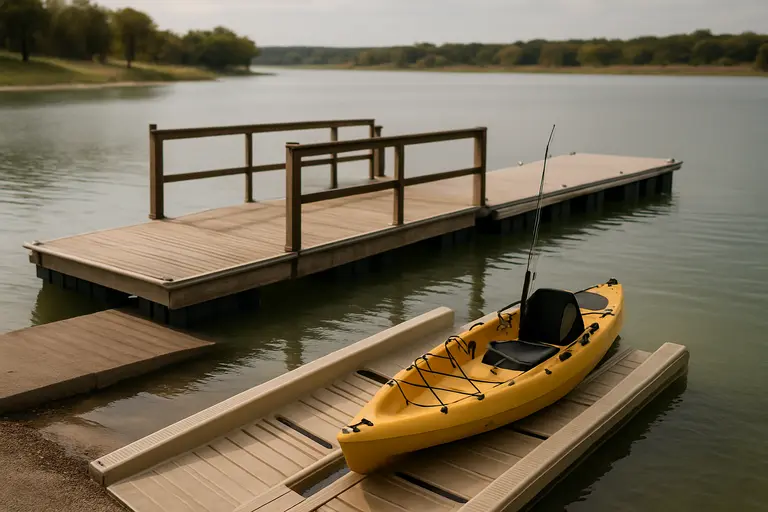
The City of Big Spring Comanche Trails Pier and Kayak Launch Project is another access-centered example. It includes construction of a 53-foot floating fishing dock that is ADA-compliant, along with a kayak launch at Comanche Trails Park. For a community park, that combination matters because it serves more than one style of angler. A bank angler, a mobility-limited angler and a kayak angler may all use the same site in different ways.
Habitat Work Supports The Sport
Habitat improvements are just as significant for fishing quality. The Lake Brownwood Fish Habitat Project will install structural habitat in reservoir areas where cover has diminished during low water levels. TPWD’s stated purpose is to improve refugia for sportfish and prey. That is practical fisheries work because cover can affect how young fish survive, how baitfish use a lake and where anglers may find fish as water conditions change.
In San Antonio, the Cassin Lake Fish Habitat Enhancement Project includes artificial structures, gravel beds for spawning bass and sunfish, and native vegetation plantings intended to improve fish habitat diversity. That project shows how HAAP work can reach smaller local waters, not only major reservoirs. For anglers, small community lakes can be training grounds, family spots and regular practice water between bigger trips.
Community Value Beyond The Pier
Fishing access carries a community value that is easy to miss if the discussion stays limited to construction. A safe dock can give grandparents and young anglers a place to fish together. A kayak launch can reduce pressure at informal entry points. An ADA-accessible route can make the difference between watching from a parking lot and taking part. These are sports access issues, but they also affect how a town uses its parks and water.
Lake Muenster’s Fishing Pier and Kayak Launch Project is framed around improved public fishing and paddling access at one of the only publicly accessible lakes within an hour’s drive of the fast-growing Dallas-Fort Worth metro area. That fact points to a regional access concern. As population grows, public waters near major metro areas carry more recreational demand. A small access project can have a larger reach when it serves anglers who do not have many public lake options nearby.
The Lake Stamford Anchor Marina Crappie House Project also speaks to access and safety. The selected work will reconstruct the crappie house at Anchor Marina to make it safe, ADA-compliant and usable for shoreline-based angler access. Crappie fishing has long been a community-friendly part of Texas freshwater culture because it can be enjoyed from fixed structures, docks and calm water. Rebuilding an access point keeps that style of fishing available to anglers who may not fish from boats.
ADA Access Changes Who Can Fish
ADA-compliant features appear in several listed projects, including Big Spring, Coleman and Stamford. That is not a side note. Accessible fishing infrastructure directly affects participation. A dock with usable access, a walkway designed for mobility needs and a safe pier layout can help broaden the group of anglers who can fish with friends, family or local clubs.
Community fishing grows when facilities invite repeat use. That includes anglers with disabilities, older anglers, parents managing kids and gear, and beginners who need a stable place to learn casting, fish handling and basic water safety. The best public access points reduce friction before the first cast is ever made.
Local Parks Become Fishing Venues
Many of the selected sites are tied to parks, marinas or community lakes. That setting matters because fishing can connect with picnics, school breaks, local events and family routines. Texas Sportsmen has covered how park programming can build outdoor participation through access and public use, including Galveston park events that link recreation with community life.
These freshwater HAAP projects fit the same basic idea. When a park has a safer dock, clearer access and better fish habitat, the site becomes more useful for anglers and easier for local groups to build activities around. You might find additional resources or related articles on this topic through our network at CAD/CAM Net.
Project Snapshot Across Texas Waters
The selected HAAP projects are spread across different kinds of public water: urban lakes, community fishing lakes, reservoirs and marina-based access points. Each site has its own purpose, but the shared theme is clear. The 2026–27 cycle is using targeted projects to help anglers reach fishable water while also supporting the habitat that makes those waters more productive.
| Project | Confirmed Access Or Habitat Element | Community Fishing Impact |
|---|---|---|
| Kirby Reservoir, Abilene | Multi-use fishing pier | Improves shoreline fishing access |
| Comanche Trails Park, Big Spring | 53-foot ADA-compliant floating dock and kayak launch | Serves pier and paddling anglers |
| Memory Lake, Coleman | Habitat, pier, parking and ADA-accessible walkway | Upgrades a community fishing lake |
| Lake Brownwood | Structural habitat in low-cover areas | Improves refugia for sportfish and prey |
| Cassin Lake, San Antonio | Artificial structures, gravel beds and native plants | Broadens habitat diversity for local anglers |
The table does not cover every selected project, but it shows the pattern. TPWD access projects in this cycle are not limited to one region or one fishing style. They touch bank fishing, pier fishing, paddling access, marina use and habitat restoration.
What TPWD access projects Mean For Texas Anglers
The strongest read on TPWD access projects is that they treat fishing access as part of the sport’s foundation. Tournament coverage often focuses on winning bags, lake patterns and individual skill, but community fishing depends on the places where anglers can safely and legally reach the water. The 2026–27 HAAP selections put attention on those entry points.
There is also a conservation angle that stays grounded in practical fishing. Artificial structures, native vegetation and spawning beds are not abstract improvements. They can affect where forage holds, where young fish find cover and how anglers interact with a lake through changing water levels and seasonal pressure. The Lake Brownwood and Cassin Lake projects make that connection especially clear.
Because all selected projects are expected to be completed by August 31, 2027, anglers should view the list as a near-term public access plan rather than a distant concept. The value will be measured locally: a safer crappie house in Stamford, a more useful community lake in Coleman, a new dock and kayak launch in Big Spring, and better shoreline access around Abilene. For Texas fishing communities, those are the kinds of projects that can put more people on the water and keep local fisheries connected to public life.