
Lake Austin hydrilla is now a direct fishing story, not just a shoreline maintenance issue. As of the February 27, 2026 vegetation survey cited by the city, hydrilla covered about 592 acres of Lake Austin, and all aquatic vegetation together covered about 37% of the lake, according to the City of Austin Lake Austin page. For bass anglers, dock owners, boaters, and youth fishing families, that amount of grass changes access, casting lanes, habitat, and how people share one of Austin’s most visible urban fisheries.
Why Lake Austin Hydrilla Became A Bass Fishing Issue
Lake Austin Hydrilla And Angler Access
Hydrilla can help fishing when it offers edge habitat, ambush cover, and places for baitfish to hold. Bass anglers know that a clean grass line can be a productive target. The problem comes when plant growth expands beyond useful cover and starts closing off water that anglers, paddlers, and boaters need to move through safely.
The city’s records show how quickly the plant expanded in 2025. In June 2025, hydrilla was found on 74 acres, about 5% of the lake area. By September 2025, it had reached 456 acres, about 30%, with growth noted in coves, backwaters downstream of Loop 360, and dock slips, according to a City of Austin staff document. That kind of increase affects real fishing decisions. A bass angler may still find fish around grass, but getting a boat into position, clearing hooks, and working shoreline targets becomes harder when the mat is too thick.
What Bass Anglers Can Learn From The Spread
The main lesson is that vegetation is not automatically good or bad. The best bass water often has a mix: grass edges, open pockets, docks, shade, and enough room for fish to feed. Too little plant life can leave young fish and bait without cover. Too much can limit open-water movement, reduce usable casting lanes, and push more anglers into fewer fishable stretches.
For community fishing, that balance matters. Lake Austin is not a remote tournament-only reservoir. It is a city lake with homes, public interest, paddling, boating, and anglers who may only have a short window before work or after school. When grass blocks a dock slip or narrows a cove, the effect is local and immediate.
How The 2026 Carp Release Fits The Management Plan
Sterile Grass Carp Were Added After The Spread
The City of Austin released 2,790 sterile grass carp into Lake Austin on or about May 1, 2026, after the rapid hydrilla expansion documented in 2025 and early 2026. The city estimated around July 1, 2026 that Lake Austin had about 4,467 sterile grass carp, including fish stocked in November 2025 and May 2026.
For anglers, the carp release is not a scorekeeping item by itself. The key question is what level of plant control leaves enough habitat for bass without allowing hydrilla to choke access. Past experience on Lake Austin has made that question sensitive. Research notes for this story state that by 2014, after years of grass carp herbivory, submerged aquatic vegetation had been essentially removed from the lake, and fishery quality and water quality suffered. That history is why many anglers want control, not a bare-bottom reset.
Why Management Choices Are Limited
Lake Austin hydrilla management is restricted by the lake’s public uses. The city notes that herbicides are prohibited because of drinking water intake concerns. Drawdowns are also limited by power requirements, fish spawning periods, erosion risk, and possible habitat disruption. That leaves managers working with a tight set of tools, where each choice can affect anglers and waterfront residents in different ways.
A scheduled 10-foot drawdown was listed in the research notes as beginning on October 12, 2026, with lake levels expected to return to normal by the end of November 2026. Since today is September 5, 2026, that drawdown had not yet occurred as of this article’s date. Anglers planning fall trips should track official city notices before launching because ramps, docks, shallow grass edges, and bank access can change during a water-level reduction.
What Redfish Anglers Should Take From Lake Austin
The category label around this story points toward redfish fishing in Texas, but Lake Austin is not a confirmed redfish destination based on the research notes provided. Red drum are primarily a coastal and estuarine species, and while Texas has freshwater red drum fisheries in some reservoirs, the notes did not confirm a documented red drum stocking or established redfish population in Lake Austin.
That does not make the story irrelevant to redfish-minded Texas sportsmen. It makes the lesson broader. Invasive aquatic plants, access limits, stocking choices, and habitat balance are statewide fishing issues. Coastal anglers already think about grass, salinity, runoff, and bait movement. Freshwater anglers on Lake Austin are reading a different set of conditions, but the sports logic is similar: habitat helps when it creates feeding edges, and it hurts when it shuts down access or compresses effort.
Texas anglers following invasive-species issues beyond Austin have seen similar access and boat-care concerns in other waters, including the cleanup habits discussed in our note on Stillhouse Hollow zebra mussels. The species are different, but the community responsibility is familiar: know the water, respect the rules, and do not move problems from one lake to another.
Community Stakes Around Lake Austin Hydrilla
Why This Is Bigger Than One Bass Pattern
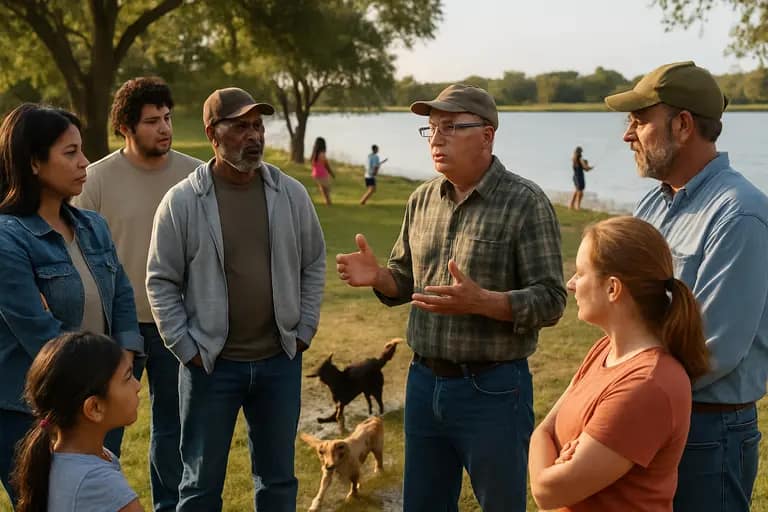
Lake Austin hydrilla affects more than lure selection. It touches dock maintenance, weekend boating, public safety, water operations, and how city residents think about a shared resource. A bass angler might see hydrilla as cover. A homeowner might see it as a blocked slip. A paddler might see it as a mobility problem. A fisheries manager has to weigh all of those realities while trying to avoid the two extremes: plant growth that takes over, or plant removal that strips away fish habitat.
That is where local engagement matters. Anglers can bring useful on-water observations to the conversation. They know where hydrilla mats block access, where bass still use healthy edges, and where boat traffic is forcing people into tight lanes. Those observations are not a replacement for surveys, but they can help explain how official acreage totals feel on a real fishing day.
- Report dense hydrilla areas through proper city channels when access or safety is affected.
- Clean boats, trailers, props, and gear before leaving the lake to reduce plant movement.
- Check official lake notices before fall trips, especially around any drawdown dates.
- Fish grass edges carefully and avoid damaging docks, shoreline structures, or other users’ space.
For readers who track community reporting across our wider network, our linked site Noticias BO also covers civic issues impacting residents’ enjoyment of public areas. Lake Austin is central to such discussions, blending fishing, recreation, water supply, and neighborhood interests along its shore.
What Lake Austin Hydrilla Means For The Community
The clearest sports takeaway is that Lake Austin remains a bass fishery where vegetation can both help and hinder success. Anglers should not treat hydrilla as a simple enemy, and they should not ignore the access problems that heavy growth creates. The useful target is balanced habitat: enough submerged vegetation to support bait and bass, enough open water for casting and boating, and enough public coordination to keep the lake fishable.
Lake Austin hydrilla has already moved from a biology note to a community fishing issue because the documented acreage, carp stockings, and planned management actions all affect how people use the lake. For local anglers, the smart response is practical: follow city updates, adjust patterns around grass edges and open pockets, clean equipment, and stay involved. That is how a fishing community protects both the bite and the water it depends on.