
The final scorecards are in. Another season of antlered ambition in the Lone Star State has officially wrapped.
Forget the Oscars. In certain circles, the real red carpet is a dusty ranch road. We’re talking about the premier deer events where bragging rights are measured in inches and score sheets tell the real story.
This post-game analysis isn’t just a list of names. It’s a forensic dive into the how and why. What separates a great buck from a legendary one? Strategy, habitat management, and yes—a little luck.
Think of this as the cultural commentary on our obsession with scoring nature’s artwork. We’re here to dissect the winners and the fascinating tales behind their trophy status.
Scoring explained: B&C vs regional systems, gross vs net
If antlers were art, whitetail scoring systems would be the rival art critics. One praises classical symmetry. The other celebrates chaotic expression.
The Boone and Crockett Club is like the IRS of the antler world. It’s all about the net score. Official measurers deduct for asymmetry, treating every unmatched inch like a tax penalty.
This system venerates balance. A perfectly matched 10-point rack scores higher than a lopsided monster with one freak tine. It’s a philosophy of order.
Then you have the regional systems. These are the local indie bands of deer scoring. They often roll with the gross score. That means they tally every inch, no deductions. It’s a celebration of raw, unfiltered biomass.
Here, the quirky, non-typical buck with extra points going everywhere is the rockstar. The debate between gross vs net isn’t just math. It’s a Texan-sized argument about what we value most.
Why does this accounting drama matter? For herd management, accurate assessment is everything. You can’t manage what you can’t measure correctly.
A landowner using net scores might cull for symmetry. One using gross scores might let the weird ones walk, hoping for more total inches. Your scoring choice dictates your strategy.
| Scoring Method | Philosophy | Best For | Impact on Management |
|---|---|---|---|
| Gross Score | Celebrates total growth, “more is more” | Regional contests, raw size appreciation | Encourages maximum antler development, less focus on symmetry |
| Net Score (B&C) | Values symmetry and perfection | National records, classic trophy hunting | Promotes selective harvest for balanced genetics |
So, when you see a contest winner, ask: did it win on a technicality or on sheer, unadulterated size? The answer lies in the rulebook they used.
Key differences at a glance:
- B&C (Net): The purist’s choice. Deductions for asymmetry. The gold standard for record books.
- Regional (Often Gross): The populist’s choice. Every inch counts. Favors the unique and massive.
- The Management Takeaway: Know which system your contest or lease uses. It defines your “trophy” and shapes your herd’s future.
In the end, understanding whitetail scoring is the first step to decoding any winner’s circle. It tells you whether you’re looking at a meticulously composed sonnet or a glorious, unruly punk song.
Winner Profiles: Scores, Mass/Tine Length, Regions (Hill Country, South Texas)
Forget the scoreboard for a moment. The real story of this year’s deer contest results is in the dirt of two Texan ecosystems. We’re not just tallying points. We’re looking at success in every inch of antler.
Let’s meet our two champions. One comes from careful farming, the other from being hard to find.
| Contender | Region | Final Score (Net B&C) | Key Anatomical Attribute | The Management Story |
|---|---|---|---|---|
| The Bruiser | South Texas Brush Country | 187 3/8 | Exceptional Mass (4″+ H4 circumferences) | Protein-supplemented, low-density pasture. A testament to nutritional engineering. |
| The Ghost | Central Hill Country | 182 5/8 | Superior Tine Length (G2 & G3 >12″) | Native forage, high hunter pressure. A study in survival and selective harvest. |
The numbers tell a story. The Bruiser’s big beam shows great mineral uptake and growth. It’s like a trust fund from good resources.
The Ghost’s long tines are about survival. In the Hill Country, where finding a buck is rare, length is key.
Was it about feeding or being stealthy? South Texas is like a science lab. Management is detailed, with controlled burns and protein pellets. The winning buck is well-fed and protected.
The Hill Country is different. It’s a tense place with thin soil and sparse cover. A buck here is like a ninja, evading hunters.
These profiles are more than just deer contest results. They tell us about soil, rainfall, and hunter patience. The next question is obvious: what did these champions eat, drink, and hide behind? That’s where habitat comes in.
Habitat insights: brush management, feed/water, pressure
Forget the score sheet for a moment; the real blueprint for a champion buck is written in the dirt, the brush, and the water table. You can’t cram for this final. Winning is almost always the product of a deliberate real estate strategy, executed over years. The best hunters and landowners aren’t just participants—they’re habitat developers. They curate neighborhoods where bucks don’t just survive, but decide to put down roots and invest in antler growth.
Think of it as curating a gallery. The habitat is the lighting, the space, the ambiance that makes the antler art truly shine. Your job isn’t to find a masterpiece. It’s to create the conditions where one can be painted.
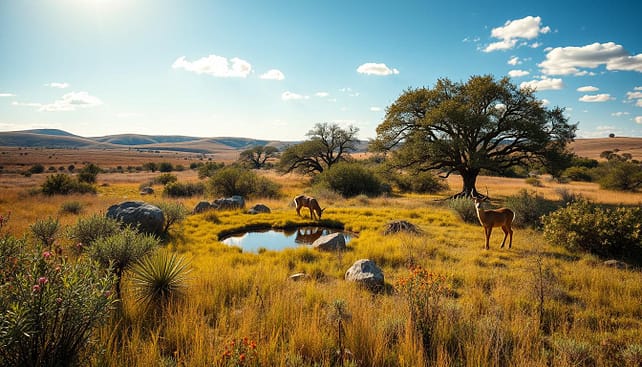
Let’s start with the foundation: brush management. This isn’t about clear-cutting. It’s selective landscaping. Aggressive, strategic clearing creates a smorgasbord of forbs and new growth—a protein-rich salad bar open 24/7. It’s about creating edge, that magical transition zone where cover meets food. A dense thicket next to a lush opening is like having a bedroom right next to the kitchen. Convenience is king.
Then comes the lifeblood: feed and water. In a droughty year, a strategically placed waterhole isn’t a resource; it’s a nightclub. Everything converges there. Supplemental feed can be a tool, but it’s the native forage, bolstered by smart brush work, that builds sustainable health. It’s the difference between a quick snack and a home-cooked meal.
The most overlooked element, pressure management, is the subtle art of being a ghost. High hunter intrusion creates nomadic, nocturnal bucks. Low pressure? That builds a sense of security thicker than any cedar break. When a buck feels safe, it moves during daylight. It feeds more consistently. It spends energy growing antlers, not evading predators.
This ties directly to resource competition. Fewer deer, or a well-distributed population due to low pressure, means less stress. Each animal has access to more of that curated salad bar and nightclub. Environmental stressors like extreme heat have less impact when the baseline stress from competition and fear is low. It’s simple math: more security + more resources = more growth.
| Factor | High-Pressure Habitat | Low-Pressure Sanctuary |
|---|---|---|
| Deer Movement | Nocturnal, erratic, security-focused | Daylight, predictable, routine-based |
| Resource Access | High competition, stress during peak times | Low competition, relaxed feeding patterns |
| Management Style | Reactive, harvest-focused | Proactive, habitat-focused |
| Result | Suppressed genetic genetic potentials | Expressed genetic potentials |
So, the winning formula isn’t a secret. It’s real estate 101: location, location, location. But here, you build the location. You combine thick cover (brush management) with abundant food and water, all wrapped in a blanket of low pressure. This holistic management approach doesn’t just attract a good buck. It manufactures the conditions for a great one to emerge. The antlers on the wall are simply the dividend paid out by a well-managed property.
Aging and field judging: body cues vs antler myths
Forget everything you’ve heard about counting points; aging a buck is less about his crown and more about his crow’s feet. This is the art and science of aging on the hoof. It’s where textbook biology meets the gritty reality of the woods.
Relying solely on antlers to guess a deer’s age is a classic hunter’s trap. That massive, sweeping 10-point rack? It could belong to a genetically gifted 3-year-old living his best life. Antlers are a report card on nutrition and health, not a birth certificate.
The real story is written in the body. Think of it as the difference between a lean, hungry college linebacker and a seasoned, powerful NFL veteran. The signs are subtle but telling.
A young buck is all legs and angles. As he matures, his body fills out. The telltale signs of middle age start to show. Look for the sagging belly—it’s not laziness, it’s a paunch earned from years of successful foraging. His chest deepens, and his back appears straighter.
The neck transforms. On a rutting mature male, it doesn’t just look thick; it blends seamlessly into the shoulders, creating a powerful, continuous line. His face takes on a blockier, more “Roman nose” appearance. These are the reliable chapters of his life story.
Then there’s the forensic gold standard: tooth wear. In the lab, biologists examine the wear patterns and eruption sequences of a deer’s molars with near-scientific certainty. It’s the most accurate method we have.
But you’re not in a lab. You’re in a blind at dawn with fog on your glasses. So, how do these methods stack up in the real world?
| Aging Method | What It Reveals | Field vs. Lab Reliability |
|---|---|---|
| Antler Size & Shape | Current health, genetic, and nutritional history. | Low field reliability for age. A common myth leads to mistakes. |
| Body Proportions | True physiological age. The sagging belly, deep chest, and straight back. | High field reliability. The cornerstone of aging on the hoof. |
| Facial Features | Long-term maturity. The blocky, Roman nose and thick neck blend. | Moderate to High reliability. Excellent supporting evidence. |
| Tooth Wear & Eruption | Exact biological age. The definitive answer. | Lab-only precision. In the field, it’s an educated guess at best. |
The table doesn’t lie. Body characteristics are your most trustworthy allies. Aging on the hoof is about synthesizing these visual clues under pressure. It’s reading a living, breathing biography written in muscle, bone, and demeanor.
Why does this matter? For management, taking a truly mature animal requires a discerning eye. It’s the difference between harvesting a peak 5.5-year-old buck and accidentally culling a future giant at age three. For the contest hunter, it’s about knowing the true trophy.
So, train your eye. Look past the glamour of the rack. Study the belly, the back, the neck. Become a student of the body. In the end, aging on the hoof isn’t just a skill—it’s the mark of a sage in the field, one who trades gambler’s hope for hunter’s wisdom.
Ethics and Regulations: The Unseen Scoreboard
Forget about antler size for now. The real test of a hunter’s worth is in their ability to follow rules. This includes using duct tape and going to a check station. It’s the part of hunting that shows who is serious about management.
Tagging your deer is more than just a form. It’s the start of tracking the deer population. Each tag filed with the Texas Parks and Wildlife Department (TPWD) helps understand the herd’s health. Not doing it is like ignoring a big problem.
The check station is like a health check for your deer. It’s where your deer gets inspected by the state. This is important for:
- Confirming what you hunted.
- Gathering data on age and weight.
- Checking for Chronic Wasting Disease (CWD).
CWD is a serious disease that can spread among deer. Hunting in areas with CWD means you’re helping to monitor it. Your cooperation is key to early detection.
The TPWD isn’t trying to ruin your hunting. They’re protecting a resource that belongs to everyone. Every rule, from tagging to check stations, helps keep hunting safe and sustainable. Ethical hunting means following the rules, even when it’s hard.
The benefits of following these rules are clear. They help keep the environment healthy and wildlife populations balanced. Your efforts, from tagging to driving to the check station, show you care about the land. It proves you’re not just taking, but also giving back to resource management.
Management takeaways for landowners and lease groups
You’ve seen the champions. Now, let’s talk about building the factory that makes them. Contest results aren’t just bragging rights; they’re a blueprint. The question shifts from “How did they win?” to “How do you engineer your own success?”
For the landowner or lease group, this is where the real game begins. It’s a game of data. Are you collecting it, or are you just guessing? The most consistent winners treat their property like a lab, not a lottery.
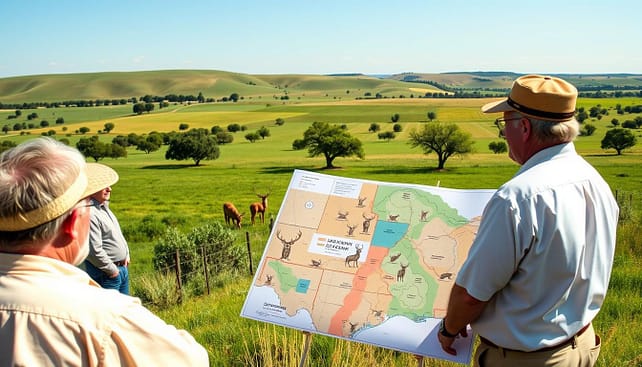
Start with the foundation: knowing your herd. As the data suggests, being able to estimate age is your most powerful managerial tool. It transforms a harvest from a singular event into a strategic data point. Was that buck 4.5 or 6.5? The answer dictates your next ten moves. This isn’t just about ethics; it’s about economics. You’re allocating resources—forage, water, sanctuary space—to your most valuable assets.
Your harvest strategy must mirror your habitat’s reality. Is your removal rate aligned with your land’s carrying capacity? Overharvest is a bankruptcy filing. Underharvest is leaving money on the table. The goal is selective curation, not random removal.
Think of it as chess, not checkers. Letting a promising 3-year-old walk is your queen’s gambit—a short-term sacrifice for long-term dominance. The impulse to “take him now” is the equivalent of tweeting in anger. You usually regret it by morning.
So, what’s the actionable playbook?
- Institutionalize Aging: Jawbone or tooth wear analysis on every harvest. Build a database.
- Match Harvest to Habitat: If your browse is thin, your harvest should be aggressive on lower-quality animals.
- Protect Your Capital: Identify your “future contender” yearlings and give them a sanctuary.
- Play the Long Game: Measure success in five-year cycles, not single seasons.
The trophy is the finale. The management is the novel you write season by season, acre by acre. It requires the patience of a novelist and the cold-eyed analysis of a hedge fund manager. Your land is the portfolio. Start managing it like one.
Photo gallery plan and taxidermy timelines
Think of your trophy deer as a data set, not just a kill. The hunt’s end marks the start of a legacy project. This project involves documenting and preserving your deer, turning a deer contest results entry into a lasting memory.
First, create a detailed photo gallery. It’s not just for social media. It’s a forensic archive. The hero shot is key, but the real proof is in the detail shots. Include clear images of the antlers and molars.
Next, the taxidermy process begins. The best taxidermists are in high demand. Don’t delay, as your cape is precious.
Send it to your chosen artist quickly, properly prepared. This step is as important as the hunt itself. A poorly preserved cape can ruin your trophy.
Creating a photo gallery and mounting your deer is like publishing a research paper. The gallery is the peer-reviewed paper, and the mount is the hardbound book. Plan carefully to ensure your legacy is preserved.
Upcoming deer contests and registration tips
Think the contest circuit hibernates? Think again; a new season of scoring and strategy is always coming. For the hunter with a competitive streak, analyzing past deer contest results is just the start. The real action is planning your next move on the ever-changing calendar of events.
Registration is the first, and often most missed, step. Treat the entry form like a legal document you’d sign before a merger. Is it a gross score contest, or does it use a net system with deductions? Are there separate categories for youth, bow-only, or management deer? Missing a single detail is like showing up to a black-tie gala in your favorite leaf-pattern camo—technically present, but fundamentally disqualified.
Inspired by the promise of “more Aging Contests in the future,” the landscape is ripe with opportunity. These aren’t just random gatherings; they are highly specific games with their own quirky rulebooks. Your mission, should you choose to accept it, is to scout them with the same intensity you’d use on a trophy buck.
To cut through the noise, here’s a tactical overview of notable upcoming events. Consider this your intelligence briefing.
| Contest Name | Region / Focus | Key Dates | Scoring System | Special Notes |
|---|---|---|---|---|
| Texas Big Game Awards | Statewide | Entry Opens: Sept 1; Deadline: Jan 31 | Boone and Crockett (net) | Long-running, prestigious. Separate categories for typical and non-typical. |
| Hill Country Deer Contest | Central Texas | Season-Long; Check-in by Dec 15 | Gross Score (Main) | Heavily favors mass and spread. Youth division has its own prize pool. |
| South Texas Shootout | South Texas Plains | Registration: Oct 1-15; Hunt: Nov | Composite (Score + Age) | Unique “aging” component. Requires pre-season photo submission for habitat review. |
| Lone Star Youth Archery Challenge | Statewide (Youth Only) | One-Day Event: Late October | Gross Score | Bowhunting only. Includes on-site skills clinics. Parent/guardian mandatory. |
Your administrative game needs to be as tight as your shooting. Here are the non-negotiable tips:
Read the Fine Print. Twice. The “Rules & Regulations” PDF is your bible. Paywall? Entry fee? Tagging procedure? Know it cold.
Document Everything at the Moment. Take time-stamped photos in the field. Get clear shots of the antlers, the tag, and the whole animal. This is your evidence chain.
Understand the Scorecard. Before you even go out, know how your target contest measures success. Is it about tine length, inside spread, or main beam mass? Hunt to the test.
Submit Early, Not On Time. Online portals crash. Mail gets lost. Be the first entry in the digital pile, not the frantic last-minute email at 11:58 PM.
Ultimately, your success in these upcoming contests hinges on a blend of field skill and front-office diligence. The hunters who consistently top the deer contest results aren’t just lucky; they’re meticulous. They’ve turned registration into a strategic advantage. Now, go get your calendar.
Conclusion
So what does it take to win? The answer is not in a single shot but in a thousand decisions.
Victory in a Texas deer contest is a quiet science. It combines the biology of aging a buck with the strategy of brush management. It also includes the luck of wind direction. Winners know this. Their trophy is just proof of a year’s hard work.
The real prize is the dirt under your nails. It’s the improved habitat in South Texas brush country. It’s the knowledge gained from scoring sessions, wondering if your buck makes the book. For more on this, check out the culture of Texas deer hunting contests and their legendary stages.
As this season ends, remember the score is just a number. The real story is in the land. Keep observing and managing. The next chapter is already growing on the hoof.