
Let’s be honest, the old saying exists for a reason. Here, the legends are supersized.
This past season, the stories weren’t just tall tales. They were documented, weighed, and undeniable. We saw record-shattering weights and drama intense enough for Hollywood.
A 22-year-old from Minnesota named Easton Fothergill made headlines. Just months after brain surgery, he dominated the Bassmaster Classic on Lake Ray Roberts. His final haul of 76 pounds, 15 ounces was historic.
So, what does a comeback like that tell us? It shows the modern pro angler is about sheer resilience, adaptive strategy, and local mojo.
This recap is your official debrief from the competitive front lines. We’re diving into the how and why. It’s the cultural and analytical post-mortem of a season with high stakes.
Schedule overview: lakes and coasts covered this season
The 2025 Texas tournament schedule was more than just dates. It was a tough test of knowing the state’s geography. This tournament recap is like a map of that test.
Imagine a semester abroad, but instead of exploring Rome, you’re fishing in Texas. You had to know two different fishing styles. One week, you fished in East Texas’s big lakes like Fork and Rayburn. There, patience and knowing the lake’s depths were key.
The next week, you fished on the windy coastal flats. A sudden tide change could feel like a betrayal. This constant change was the season’s biggest challenge.
The Bassmaster Classic at Lake Ray Roberts was the highlight. This 23,950-acre lake near Fort Worth was the stage for history. The takeoffs and weigh-ins were at Ray Roberts Lake State Park and Dickies Arena, mixing nature with city excitement.
The Classic was the final test. But the real challenge was the long journey before it. The tour started in Florida and then moved to Texas. To understand the texas fishing tournament results, you had to see the journey.
It was like asking a chess master to win a bar fight. One day, you needed finesse. The next, raw aggression. The schedule was the silent competitor, weeding out those who couldn’t adapt.
| Event Type | Primary Body of Water | Key Location / Feature | Strategic Demand |
|---|---|---|---|
| Bassmaster Elite Series | Lake Fork | Legendary Big Bass Habitat | Deep-Structure Patience, Flipping |
| Bassmaster Elite Series | Sam Rayburn Reservoir | Vast Grass Flats & Channels | Sight Fishing, Power-Fishing Grass |
| Bassmaster Classic | Lake Ray Roberts | Ray Roberts Lake State Park | Shallow-Water Finesse, Current Reading |
| Texas Coast Swing | Various Coastal Bays | Wind-Swept Flats & Marshes | Tide-Based Timing, Light Tackle Mastery |
| Central Texas Showdown | Lake Travis | Clear, Deep Canyon Reservoir | Suspended Fish, Downrigger & Spoon Tactics |
This schedule was like a poem of logistics. It created a hierarchy. It rewarded those who could see the water as a puzzle. The winners were the most adaptable, not just lucky.
The weights and big fish awards were the final grades. We’ll explore them next.
Top-5 results by event: weights, big fish awards
Let’s look beyond the final scores. The real excitement in Texas fishing tournament results comes from the total weight and the impact of a big catch.
Imagine it like a season of your favorite TV show. The overall standings show the long-term effort and skill. But the big bass awards are the surprises everyone talks about.
The Bassmaster Classic on Lake Fork was the season’s highlight. Easton Fothergill didn’t just win; he broke records. His 76-15 total weight beat Kevin VanDam’s record, showing his skill over three days.
| Position | Angler | Total Weight (lbs-oz) | The Story in a Nutshell |
|---|---|---|---|
| 1 | Easton Fothergill | 76-15 | Record-shattering consistency. A new benchmark. |
| 2 | Trey McKinney | 68-7 | Brilliant composure, anchored by a 7-11 Sunday kicker. |
| 3 | Lee Livesay | 66-10 | Veteran savvy. Experience pays off. |
| 4 | Hunter Shryock | 64-14 | Aggressive strategy almost paid off. |
| 5 | Cory Johnston | 58-7 | Top-five finish thanks to flawless execution. |
The real story is the daily battle for the biggest bass. These aren’t just big fish; they’re game-changers.
John Garrett’s 8-12 on Day 1 made a statement. Brandon Lester’s 8-6 on Day 2 changed the game. Fothergill’s 8-1 on Day 3 sealed his win. Each catch was worth millions in prestige and prize money.
| Day | Angler | Big Bass Weight (lbs-oz) | Impact |
|---|---|---|---|
| Day 1 | John Garrett | 8-12 | Set the tone. Proved the giants were biting. |
| Day 2 | Brandon Lester | 8-6 | Momentum-shifter that kept leaderboards volatile. |
| Day 3 | Easton Fothergill | 8-1 | The champion’s signature, sealing the deal. |
This data shows the power of small, smart gains every day. The big bass awards are like lottery tickets. In Texas, you need a mix of both.
The weigh-in stage is like a theater of economics. The steady climb of a McKinney or Livesay is like investing in blue-chip stocks. The sudden big catch is like a boom in the market. Both are key to understanding Texas fishing tournament results.
These numbers tell more than just stats. They are like ancient texts revealing a lake’s secrets. The averages win you a trophy. But the outliers make your name legendary.
Patterns that paid: water temps, clarity, baits, retrieve speeds
This season’s Texas fishing results show that winning isn’t just about the lure. It’s about understanding the water and timing. The secret wasn’t a special lure, but knowing when and how to fish.
The champion’s strategy was all about adapting. He changed his game plan with the weather. On windy days, he used finesse. This flexibility was key to his success.
He caught most of his fish with a 3/32-ounce Neko rig in red bug. The water was a bit stained, not murky. He also used an off-white jerkbait. The common thread was a delicate presentation to avoid scaring fish.
His approach was simple. In stained water, slow and quiet fishing was best. The Neko rig’s slow retrieve outsmarted louder lures. The jerkbait was perfect for mid-water when the sun was high.
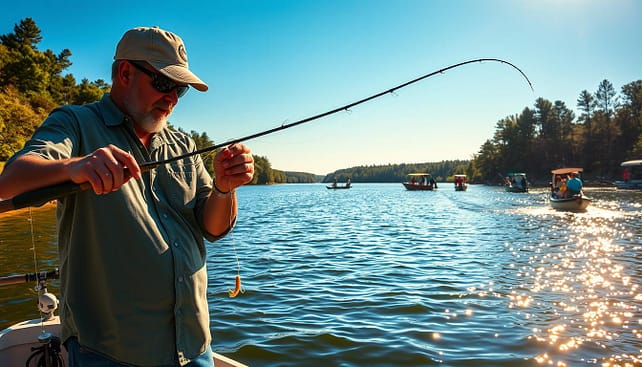
Across Texas, anglers who adjusted to the water’s conditions did well. They focused on real-time data, not just techniques. The winning formula included:
- Water Clarity: Stained water needed finesse plastics and soft colors. Clear water was for natural colors and longer casts.
- Retrieve Speed: The best retrieve was slow, not fast. It was a hop or a twitch.
- Bait Selection: It was about the bait’s profile and action, not just the brand.
The main lesson from this tournament recap is deep. Anyone can buy a red bug Neko rig. But the champion understood why it worked on a specific day. That’s the real edge. It’s not in the tackle, but in the mind.
Lake-by-lake notes: Fork, Rayburn, Travis, Falcon, Choke Canyon
Understanding texas fishing tournament results means knowing each lake’s unique language. Each lake has its own rules and challenges. They are like professors in the school of bass fishing.
Ray Roberts was the star this season. It played a strategic game. Bass moved to shallower, warmer waters as temperatures rose. Anglers like Fothergill found giants in backwater sloughs, using precise techniques.
Now, let’s explore the rest of the lakes.
Lake Fork is a battleground. Bass here are truly massive. The lake’s fertile waters and famous spots like “Crappie Hole” are key. Winning here means outlasting the competition.
Sam Rayburn is a vast, green board. It’s all about mastering hydrilla and grass flats. Success comes from using the right baits and finding the right spots.
Lake Travis is for tech-savvy anglers. Its deep waters and clear conditions make sight-fishing essential. It’s all about finding the right depth and spots.
Down south, Falcon and Choke Canyon teach about structure and care. These lakes are known for their big catches. But they need to be fished with respect.
The table below gives a quick overview of each lake.
| Lake Name | Personality Profile | Primary Seasonal Challenge | Winning Pattern Preview |
|---|---|---|---|
| Lake Fork | The Prolific Giant-Maker | Intense pressure & locating uncrowded giants | Jigging deep structure or flipping heavy cover |
| Sam Rayburn | The Endless Grass Flat Guru | Locating fish in miles of identical hydrilla | Power-fishing grass edges with moving baits |
| Lake Travis | The Clear-Water Technocrat | Fishing deep in ultra-clear, rocky conditions | Deep-diving crankbaits & precise jigging on ledges |
| Falcon / Choke Canyon | The Structure-Specific Powerhouse | Managing fragile fishery health & precise casting | Targeting standing timber with crankbaits & Carolina rigs |
When you look at texas fishing tournament results, think about the lake. It tells you more about the angler’s skill than the score.
Conservation & rules: slot limits, livewell care, penalties
The modern bass pro is a mix of hunter and nurse, all bound by rules. You might have the best gear and bait. But without knowing the rules, your fishing results texas will fail.
Slot limits are a big part of this. On famous lakes like Lake Fork, you can’t keep just any big bass. The slot protects fish between 16 and 24 inches. Catch a 22-inch bass? It’s a temporary guest, not a winner.
This changes how you fish. You’re not just looking for big bass. You’re looking for ones that fit within the slot. It’s a mental game that separates the winners from the losers.
Livewell rules are also strict. It’s not just a bucket; it’s a mobile ICU. B.A.S.S. and other trails have strict rules. Fish need constant oxygen, the right temperature, and special chemicals. Their comfort is the law.
Why are these rules important? They keep the sport ethical and look good. A dead bass on the scale is bad PR. Proper livewell rules show the sport is about conservation, not just taking.
Break these rules, and the penalties are harsh. A dead fish at weigh-in means a weight penalty. Repeat offenders get disqualified. It shows poor care is worse than poor fishing.
These rules shape where you fish, what you target, and how you handle every catch. A 4-pound fish outside the slot is more valuable than a 5-pound fish inside it. This decision is made in every boat, in real time.
The table below shows how these rules affect strategy and fishing results texas tournaments.
| Rule Category | Specific Regulation | Typical Penalty | Strategic Impact |
|---|---|---|---|
| Slot Limits | Protected size range (e.g., 16″-24″ on Fork) | Fish cannot be weighed; must be released immediately. | Forces targeting of sub-slot or supra-slot fish; changes location choices. |
| Livewell Care | Mandated aeration, temperature control, additives. | Weight deduction for dead or stressed fish (e.g., 1 lb.). | Requires investment in high-end systems; dictates check-in timing. |
| Dead Fish Penalty | Per-fish mortality penalty at weigh-in. | Subtraction from total weight; DQ for excessive mortality. | Makes fish care a primary skill; can decide final standings. |
| Legal Length | State-wide minimum length (e.g., 14″ for bass). | Disqualification of short fish; possible tournament ban. | Requires precise measuring; risk management on short strikes. |
So, when you see a pro win, remember the hidden battle. They’ve navigated rules on legal lengths, slots, and fish care. The angler who masters these livewell rules is not just better at fishing. They’re a better caretaker. And in today’s world, that’s key.
The gladiator must also be a zookeeper. Forgetting this role comes with a heavy price, much higher than any lost prize money.
Angler interviews: strategy shifts and clutch decisions
The real drama of any competition isn’t on the water. It’s in the moments when anglers share their struggles. A tournament recap lists weights and places. But the post-game interviews reveal the human side.
Imagine a psychological thriller with a sleep-deprived hero smelling like shad. The weigh-in is the climax. But the confessions after are the real twists.
Easton Fothergill’s record-breaking catch is legendary. But his voice at the scales was suspenseful. “I was scared at 1 o’clock,” he said, holding only four fish. “But that was the fish that got it for me.”
That fish, an 8-1 giant, changed the story. It turned a day of disaster into history. The discipline behind it was incredible.
Fothergill explained breaking off four baits—on purpose. This was a lesson in subtraction. It’s like a surgeon leaving a scalpel in to avoid more harm. A brutal, beautiful risk calculation.
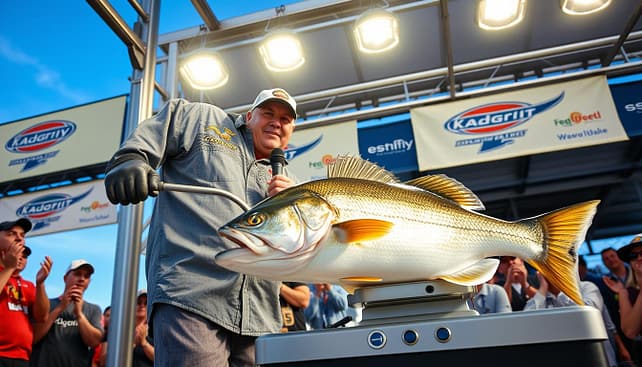
The Coosa River was more than a location for Fothergill. It was a therapist’s couch. He found fish and a new mindset. This wasn’t just a pattern shift. It was a complete reboot.
But no thriller has just one character under pressure. Lee Livesay, the local favorite, felt the weight of home-state expectations. As his bite faded, the crowd’s hope became a burden. Trey McKinney, the phenom, was quietly building his charge. His was the steady, relentless pressure of a rising tide.
These interviews are the ultimate tournament recap deep dive. They explain the “why” behind every critical decision. Why stick with a dying pattern? Why make that one, desperate long run? Why retie when every second counts?
It’s a masterclass in in-game adjustment under a microscope. The weigh-in shows who won. The interviews reveal who they had to become to get there.
Stats box: average bag, cut line, historical comparisons
In modern tournament fishing, data is key. It’s like the director’s commentary in a blockbuster film. The texas fishing tournament results show a sport in its prime.
The average bag weight this season was impressive. It showed a healthy fishery and skilled anglers. When 11 competitors caught over 20 pounds on Day 2, it was more than a contest. It was an arms race.
The cut line is a key factor. Making the Top 25 was a huge achievement. The difference between winning and going home was tiny. This shows the talent pool is deep.
Chris Fothergill’s four-day total of 76 pounds, 15 ounces was a record. It broke Kevin VanDam’s 2011 record by over eight pounds. His win was a statement.
This data proves the sport is evolving fast. Heavier winning weights and tough cut lines are the new standard. It’s thanks to advanced sonar, top-notch livewells, and skilled anglers.
This season’s stats box is more than just numbers. It shows winning a big bass title today requires more than luck. It needs a strategy.
Upcoming events and registration windows
The confetti from the final weigh-in has barely been vacuumed up. But in the tournament fishing world, that’s just the start. This tournament recap looks back. Now, let’s look ahead to the next big event.
The glow of a big win fades fast. For everyone else, the clock starts ticking right after. Your motivation from this tournament recap needs to turn into action quickly. Before the registration windows close.
For pros, the goal is the Bassmaster Elite Series in Texas. These are the big events with strict entry times. For amateurs or locals, the Bassmaster Opens offer a chance for a big win.
Knowing the tournament calendar is key. Missing a window means waiting another year. But hitting it right puts you in the game. Here’s your guide for the next big Texas events.
| Event | Typical Registration Opens | Event Window | Key Notes |
|---|---|---|---|
| Bassmaster Elite at Lake Fork | Early December (preceding year) | Late February | The first major test. Spots fill in minutes. Have your payment method ready. |
| Bassmaster Open (Texas Division) | Mid-January | Spring (Dates Vary) | Your qualifying shot. Often less crowded than Elite registration, but no less critical. |
| Major Team Trail Championship (Various Lakes) | Rolling, post-season | Summer/Fall | Many local trails crown champs and open invites for bigger team events. Check your trail’s website. |
| Texas Bass Nation Qualifiers | State-specific deadlines | Throughout the year | The grassroots path to the big stage. Deadlines are strict and non-negotiable. |
See the pattern? The Fork Elite registration is your December alarm bell. It’s the first domino. The Opens window in January is your second chance saloon. The team and state qualifiers? Those are the year-long grinding stations.
The real sleeper opportunity isn’t always the biggest event. It’s the Open with slightly less fanfare that offers a clearer path. It’s the team championship that feeds into a national final. Your job after reading this tournament recap is to identify which of these windows aligns with your goals and resources.
The train is, quite literally, leaving the station. This was your heads-up. The momentum from this season’s final weigh-in is pure energy. The question is, will you use it to click “register” or just watch the schedule roll by?
Fan guide: best places to watch weigh-ins in Texas
The real excitement in bass fishing happens at the weigh-ins in Texas. It’s where all the quiet planning meets loud results. Feeling the crowd’s shock when a big fish is weighed is unforgettable.
The weigh-in is like a big show, a mix of a courtroom, a concert, and a stock market update. Watching online misses the real feel of the event. Being there in person makes you feel like you’re part of the action.
The Bassmaster Classic at Dickies Arena in Fort Worth was a big deal. Doors opened at 3:15 PM CT, and the arena buzzed with excitement. The scale of the place adds to the drama, making every fish weigh-in feel huge. It’s the ultimate fan experience.
The Fort Worth Convention Center was the spot for the Bassmaster Classic Outdoors Expo. It’s like a big pre-game and post-game party. It’s fun for families, full of gear, and a great place to talk about fishing results from Texas with others. The energy here is all about excitement.
But Texas has more than one place for weigh-ins. The vibe changes with the location.
At Lake Fork, the weigh-ins are small and close to the water. The crowd is a mix of locals and fans. Here, you can talk to the pros right after they weigh in. It’s a real, raw look at the sport.
In Houston, the weigh-ins are big and polished. They’re great for families, with lots of lights and energy. It’s all about the show and the city experience.
So, where should you watch the weigh-ins?
For the true fan: Go to the lake pavilions like those on Fork or Sam Rayburn. The connection to the water is strong, and the stories are amazing.
For families: Choose big city venues like Fort Worth or Houston. They have lots of amenities and are fun for everyone.
For the socialite: Dickies Arena is the place to be. It’s huge, loud, and you feel part of something big.
Your choice of venue changes your experience of the weigh-in. Each place offers a unique view of the moment. Pick your spot and feel the excitement of Texas fishing for yourself.
Conclusion
This Texas tournament season was like a story of high stakes. Our final texas fishing tournament results show more than just numbers. They tell a tale of human struggle and fishy puzzles.
A finesse rig became a key to success in the right hands. The weights set new records, changing how we see these legendary lakes.
The drama needed a stage, and the stage had rules. The livewell rules and care for the environment are key. They keep the sport alive, ensuring it lasts long.
As we wrap up, the sport’s story goes on. For a lesson in high-stakes fishing, check out the Zane Grey Championship Playoffs in Cabo San. It’s a story of adaptation, strategy, and victory, but on a bigger scale.
This tournament recap is your summary. The lakes have spoken. We’ve learned about resilience, magic moments, and new heights of greatness. The talk of what’s next is already buzzing. Are you ready for it?