
What started as a freshwater controversy is now echoing across the Texas coast. Forward-facing sonar—once a niche advantage—is quickly becoming one of the most debated tools in competitive fishing. And in 2026, the conversation is no longer confined to bass lakes. It’s knocking on the door of Texas redfish tournaments.
Recent rule changes in freshwater circuits, including outright bans in some Texas-based events, have forced tournament organizers to ask a difficult question: where should the line be drawn between innovation and competitive fairness?
For redfish anglers, the stakes are different—but the implications may be just as significant.
What Forward-Facing Sonar Actually Changes
Forward-facing sonar isn’t just another fish finder. It fundamentally shifts how anglers interact with the water. Instead of interpreting structure or relying on instinct, anglers can now track fish movement in real time, watching how redfish react to presentations.
In freshwater bass tournaments, that capability has already proven game-changing. Anglers can:
- Identify individual fish behavior before casting
- Adjust lure presentation based on real-time feedback
- Eliminate unproductive water almost instantly
Inshore environments, however, present a different dynamic. Redfish are often found in shallow flats, grass beds, and murky water—conditions where sonar has traditionally played a limited role.
But as technology improves, that limitation is fading.
Why Freshwater Rule Changes Are Raising Concerns
The controversy intensified when certain Texas freshwater circuits introduced restrictions or bans on forward-facing sonar for 2026. The reasoning was clear: participation was declining among anglers who felt outmatched by technology-heavy competitors.
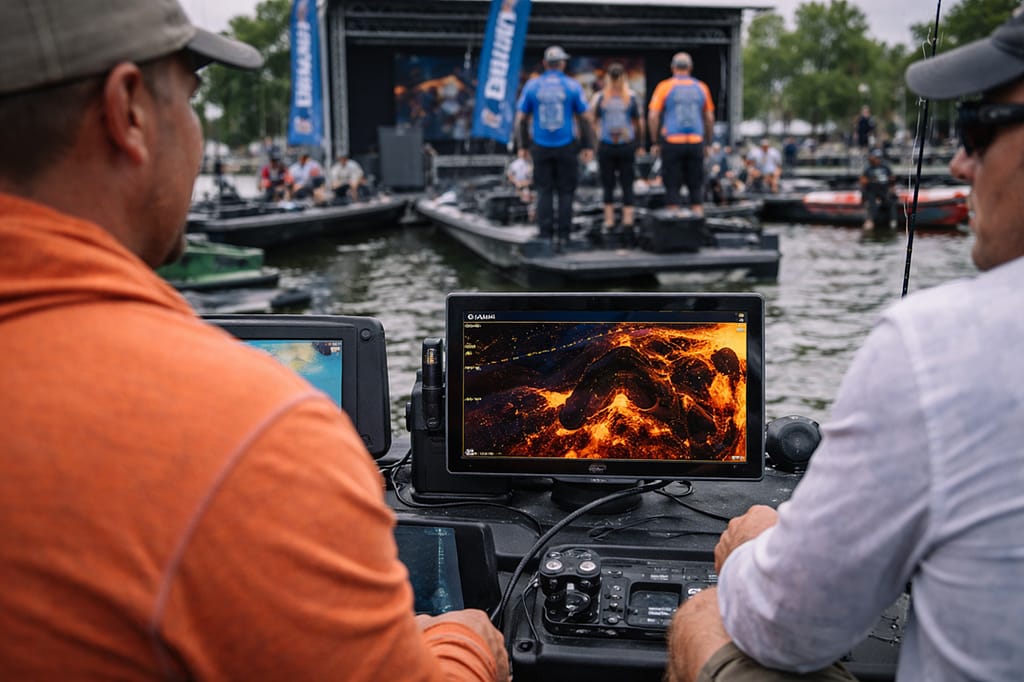
The debate quickly shifted from performance to accessibility. When success becomes tied to expensive, high-end electronics, tournaments risk losing their competitive balance.
According to coverage from major Texas fishing tournament rule changes, organizers cited fairness and long-term participation as key drivers behind new restrictions.
That same logic is now being applied—at least informally—to coastal tournament discussions.
How Redfish Tournaments Differ From Bass Circuits
Before assuming a direct crossover, it’s important to understand that redfish tournaments operate under different conditions.
Unlike deep-water bass fishing, Texas redfish competition often emphasizes:
- Sight-fishing in shallow flats
- Reading water movement and bait activity
- Navigating changing tides and wind conditions
These variables naturally limit the dominance of sonar—at least for now.
But the concern isn’t what the technology does today. It’s what it might do next. As sonar becomes more refined in shallow environments, its potential to reshape redfish strategy grows.
That’s why some tournament directors are taking a proactive approach.
Early Signals From Texas Tournament Circuits
While no widespread bans have been implemented in major redfish circuits as of early 2026, conversations are clearly underway. Organizers are exploring options that fall short of outright prohibition but still address competitive concerns.
Potential approaches being discussed include:
- Limiting real-time sonar usage during competition hours
- Restricting certain display configurations
- Creating separate divisions based on equipment allowances
These discussions mirror the broader evolution already happening in formats like the Texas Redfish Series tournament format, where maintaining fairness across diverse skill levels has become a priority.
Technology Versus Tradition On The Texas Coast
At the heart of the debate is a philosophical divide. For many Texas anglers, redfish fishing has always been about reading the water, not the screen.
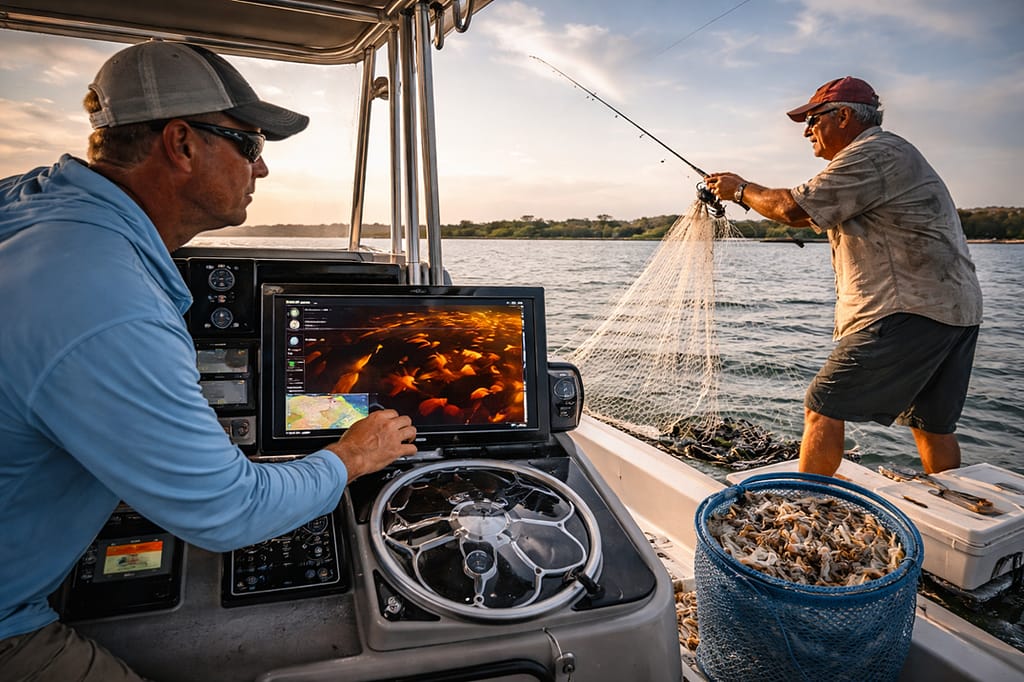
There’s a cultural element at play here—one rooted in:
- Poling skiffs across shallow flats
- Watching tailing reds at sunrise
- Interpreting subtle signs like wakes and bait movement
Forward-facing sonar challenges that identity. It introduces a layer of digital interpretation that some anglers feel distances the sport from its traditional roots.
Others see it differently.
The Case For Keeping Technology In Play
Not every angler is calling for restrictions. In fact, many argue that technology has always been part of fishing’s evolution.
Better rods, improved hull designs, advanced GPS systems—all were once considered unfair advantages. Over time, they became standard.
Supporters of sonar point out that:
- It still requires decision-making and skill
- It doesn’t guarantee success in changing coastal conditions
- It can shorten the learning curve for newer competitors
In a growing tournament scene, accessibility cuts both ways. While high-end electronics can create barriers, they can also help newer anglers compete more quickly, keeping participation strong.
Where The Competitive Balance Gets Tested
The real challenge for tournament organizers isn’t choosing sides—it’s finding balance.
If technology is left completely unrestricted, the risk is clear:
- Increased cost of entry
- Reduced competitiveness for traditional anglers
- Potential decline in participation
But if it’s heavily restricted, tournaments risk:
- Slowing innovation
- Alienating tech-savvy competitors
- Falling behind broader industry trends
The solution likely lies somewhere in the middle—a controlled approach that allows innovation without letting it dominate outcomes.
What This Means For The Future Of Redfish Tournaments
As 2026 unfolds, forward-facing sonar will remain a defining issue in competitive fishing. Whether or not Texas redfish tournaments adopt formal restrictions, the conversation itself is already shaping how anglers prepare and compete.
For now, the Texas coast remains a place where skill, instinct, and environmental awareness still lead the way. But the pressure to adapt is building.
If freshwater trends are any indication, change may not come overnight—but it’s coming.
And when it does, it won’t just alter tournament rules. It will redefine what it means to win on the Texas coast.