
There’s a moment on the Texas coast when the water explodes without warning. A copper flash. A powerful tail kick. Then your drag starts singing.
That’s redfish country.
From the shallow marshes of Galveston Bay to the windswept flats of Port Aransas and the Lower Laguna Madre, redfish fishing in Texas isn’t just popular — it’s part of coastal culture. These fish are aggressive, resilient, and capable of turning an ordinary morning into a memory you’ll replay all year.
Whether you’re poling skinny water at sunrise or working jetties at sunset, chasing redfish is about timing, water awareness, and knowing when to commit.
Why Redfish Thrive in Texas Waters
Texas offers some of the most diverse redfish habitats in the country. Estuaries, bays, grass flats, oyster reefs, marsh drains, and beachfront surf zones all provide ideal conditions.
Unlike many species, redfish tolerate a wide range of salinity. That adaptability allows them to move with seasonal shifts and tidal swings, making them accessible year-round.
The result? Consistent action across:
• Upper Coast marsh systems
• Central Coast bay complexes
• South Texas flats
And for anglers who enjoy competition, redfish are often featured in coastal tournament circuits alongside events covered in our fishing competitions in Texas guide.
Understanding Redfish Behavior
To consistently hook into redfish, you have to understand what drives them.
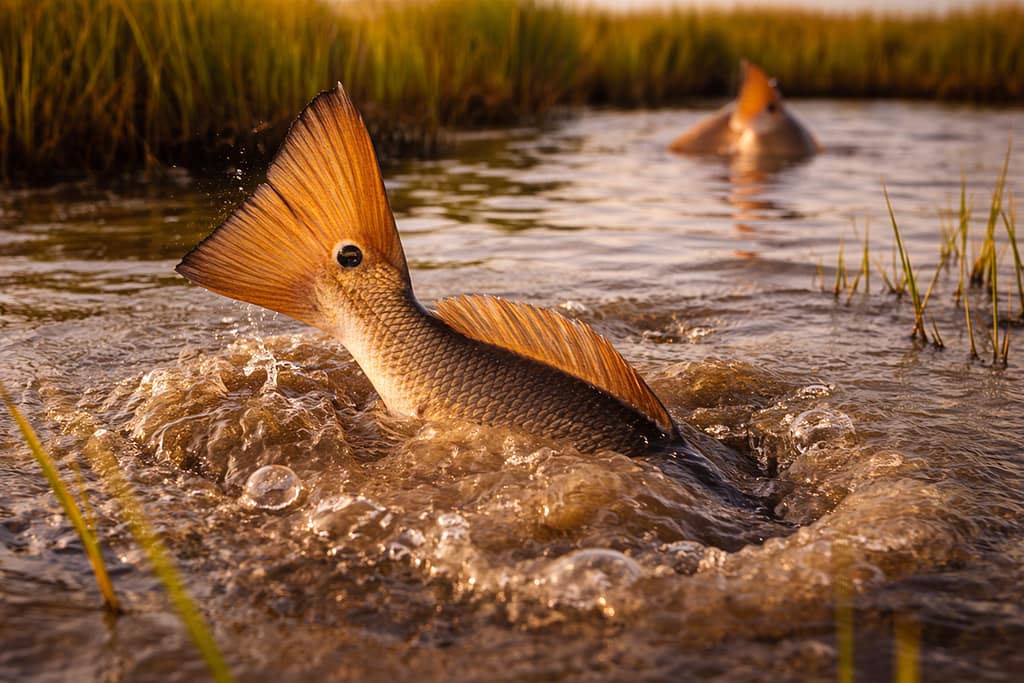
Redfish feed primarily on shrimp, mullet, crabs, and small baitfish. They rely heavily on scent and vibration, often rooting through mud or grass in shallow water.
You’ll recognize feeding redfish by:
• Tailing behavior in skinny flats
• Mud boils near marsh drains
• Nervous bait activity
• Subtle surface pushes in calm water
Wind direction, tide flow, and water clarity matter more than boat speed or lure color. The anglers who succeed are the ones reading water movement, not just casting at open space.
Seasonal Strategy for Texas Redfish
Redfish don’t disappear — they relocate. Smart anglers adjust tactics based on season.
| Season | Where to Target | Key Approach |
|---|---|---|
| Spring | Marsh drains & shallow flats | Soft plastics & sight casting |
| Summer | Grass flats & open bays | Topwaters early, spoons mid-morning |
| Fall | Back lakes & bait-rich shorelines | Aggressive reaction baits |
| Winter | Deeper channels & mud bottoms | Slow presentations, jig heads |
Fall, especially, is legendary. Large schools of “bull reds” stage near passes and beachfront areas, offering some of the most powerful fights Texas anglers experience.
Lures and Presentations That Work
While bait fishing is always an option, artificial lures dominate modern Texas redfish culture.
Top producers include:
• Gold spoons in stained water
• Paddle-tail soft plastics
• Topwater plugs at dawn
• Weedless rigged plastics in grass
• Crab imitations near structure
The key isn’t owning every lure on the shelf — it’s matching forage and adjusting retrieve speed.
Redfish are reaction feeders. When they’re aggressive, they’ll crush a moving bait. When conditions shift, slowing down can turn refusals into hookups.
Sight Fishing the Texas Flats
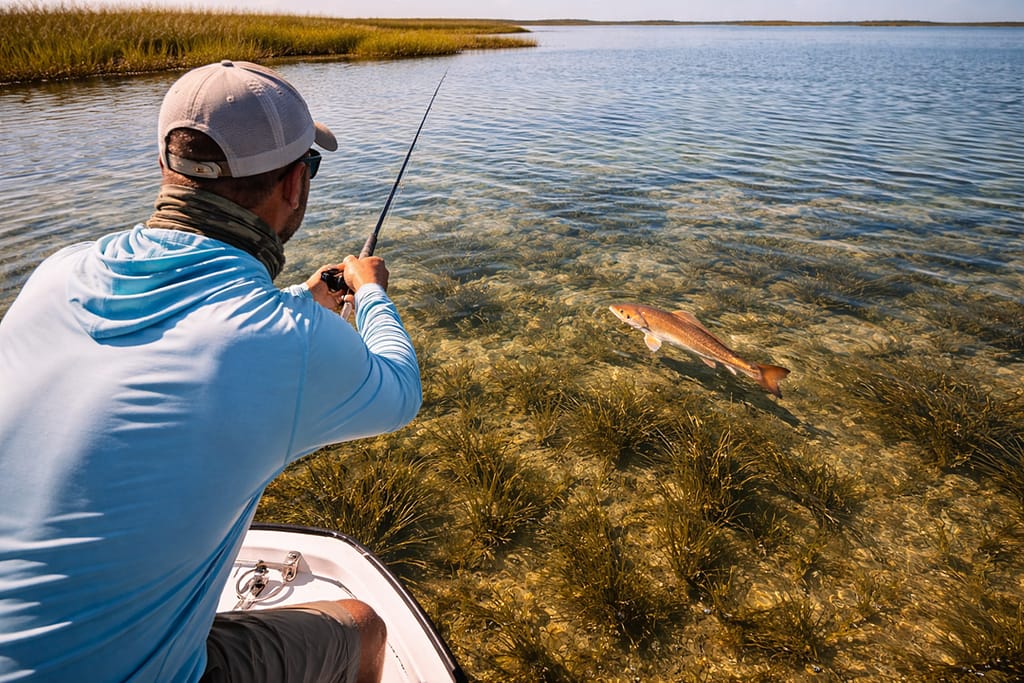
Few experiences compare to sight casting for redfish in ankle-deep water.
Clear mornings on the Lower Laguna Madre often reveal cruising fish. You’ll see their backs, tails, or subtle wakes before they ever notice you.
Successful sight anglers focus on:
• Quiet boat positioning
• Long, accurate casts
• Leading the fish instead of casting on top of it
• Reading body language before the strike
When a redfish tips down and flares its gills over your lure, it’s not subtle. It’s explosive.
Redfish Tournaments Along the Coast
Texas redfish tournaments combine strategy with endurance. Teams often measure total weight or slot-size fish limits within specific legal regulations.
Much like the structure of a Texas Team Bass Championship, communication and decision-making are critical. Coastal teams must account for wind shifts, tidal timing, and boat traffic.
Prize purses vary widely depending on entry numbers and sponsorship, but competition is always fierce.
Tournament anglers typically prioritize:
• Pre-fishing specific tide windows
• Identifying protected backup locations
• Balancing risk versus consistency
Regulations and Conservation
Texas Parks and Wildlife enforces strict slot limits to protect breeding stock. Anglers must stay updated on current regulations regarding size and bag limits.
Catch-and-release practices have grown significantly in popularity, especially among tournament circuits. Healthy redfish populations depend on responsible handling and habitat protection.
Our recent coverage of conservation initiatives at Texas outdoor sports events highlights how coastal tournaments are increasingly integrating education and stewardship into their platforms.
The Fight: Why Redfish Are Addictive
Redfish don’t give up easily.
They bulldog toward structure. They run shallow. They shake violently at boatside. And larger “bull reds” can test both tackle and patience.
The power-to-size ratio makes them one of the most respected inshore species in Texas waters.
Even seasoned anglers admit: when that copper flash rolls beside the boat, the adrenaline never fades.
Planning Your Texas Redfish Trip
Success often begins before launch.
Monitor:
• Tide charts
• Wind forecasts
• Water temperature
• Seasonal bait patterns
Local knowledge makes a difference. Hiring a guide for your first trip can shorten the learning curve dramatically.
But whether you’re a seasoned coastal veteran or exploring saltwater for the first time, redfish reward preparation.
Why Redfish Fishing Defines the Texas Coast
Redfish represent everything Texas coastal fishing stands for — accessibility, intensity, and connection to water movement.
They’re not just another species. They’re a proving ground.
From sunrise flats to tournament weigh-ins, from solo kayak anglers to competitive team circuits, redfish continue to anchor the Texas saltwater scene.
And once you’ve watched one tail in skinny water before the strike, you’ll understand why anglers keep coming back.