
Competitive redfish fishing is reaching a new spotlight on the Texas coast.
The Bassmaster Redfish Cup Championship arriving in Port Aransas represents more than just another professional fishing tournament. It signals national recognition for Texas’ thriving inshore fishery and highlights the region’s reputation as one of the most productive redfish ecosystems in North America.
For coastal anglers, guides, and tournament teams across Texas, the event reflects the growing influence of competitive redfish fishing and the strategic challenges that define success in modern inshore tournaments.
Why Port Aransas Is A Premier Redfish Tournament Destination
Port Aransas sits at the center of one of the most dynamic coastal fisheries in the Gulf of Mexico. Surrounded by Aransas Bay, Corpus Christi Bay, and the Laguna Madre system, the region offers a unique combination of habitats that consistently produce tournament-quality redfish.
These waters include:
- Shallow grass flats ideal for sight fishing
- Oyster reef shorelines that concentrate bait
- Marsh drains that funnel feeding fish during tidal movement
- Tidal passes connecting bays to the Gulf
Because of this diversity, tournament teams can adjust strategies quickly depending on wind conditions, tide stages, and bait movement.
For professional circuits like Bassmaster, locations that allow anglers to access multiple habitat types within a short run are ideal. Port Aransas provides exactly that flexibility.
How The Bassmaster Redfish Cup Format Works
Unlike traditional offshore tournaments that reward the heaviest overall catch, competitive redfish events typically follow a strict slot-limit format that prioritizes precision.
Teams usually weigh two fish within a regulated size range, which means anglers must carefully manage every catch to remain within legal limits.
| Tournament Element | Typical Format |
|---|---|
| Team Structure | Two anglers per boat |
| Fish Count | Usually two redfish |
| Slot Limit | Often within state regulations |
| Strategy Focus | Consistent mid-slot fish |
This format dramatically increases the importance of accuracy. Oversized fish — including large bull reds — often cannot be weighed.
Instead of chasing giants, winning teams focus on locating areas where slot-size redfish are consistently feeding.
Tournament Pressure And Tactical Decision Making
Professional redfish tournaments reward anglers who can combine scouting knowledge with real-time adaptation.
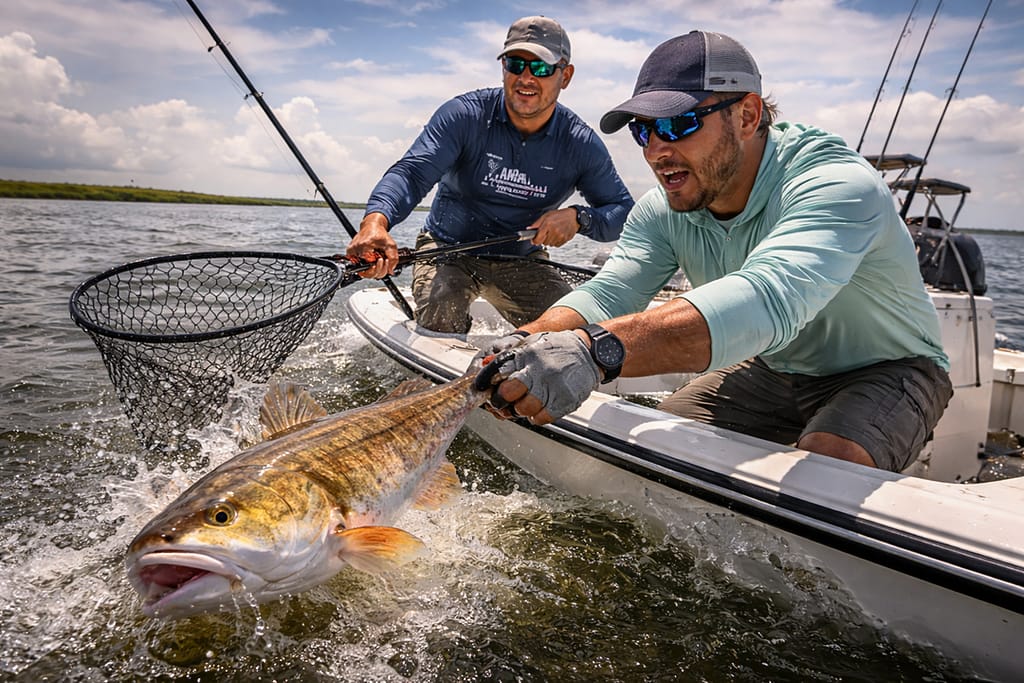
Pre-fishing often begins days or weeks before the event as teams gather information about:
- Tidal timing across multiple bays
- Bait concentrations in marsh systems
- Average fish size within different habitats
- Boat traffic patterns in popular areas
However, tournament day rarely follows a perfect script.
Changing wind conditions, unexpected water clarity, and boat pressure from competing teams can force rapid adjustments. The anglers who succeed are those capable of abandoning a failing pattern quickly and identifying a new productive zone.
These real-time decisions often determine the difference between finishing in the middle of the pack and reaching the final leaderboard.
The Economic Impact On Port Aransas
Major fishing tournaments bring significant economic activity to coastal communities.
Hotels, restaurants, marinas, and bait shops all experience increased traffic as anglers, sponsors, media crews, and spectators arrive for the event. For Port Aransas, which already relies heavily on tourism tied to fishing and boating, hosting a nationally recognized tournament provides valuable exposure.
Events like the Bassmaster Redfish Cup also showcase the local fishery to a national audience. Broadcast coverage and social media highlights often introduce new anglers to the Texas coast, inspiring future fishing trips and charter bookings.
This ripple effect strengthens the entire coastal fishing economy.
Why Texas Redfish Fisheries Continue To Thrive
The success of large tournaments on the Texas coast is closely tied to the long-term health of the redfish population.
Texas is widely considered one of the greatest redfish fisheries in the United States thanks to a combination of habitat diversity and strong conservation policies. Regulations such as slot limits, bag limits, and hatchery stocking programs have played a major role in maintaining stable red drum populations.
Research and monitoring programs conducted by the Texas Parks and Wildlife Department’s coastal fisheries division continue to track population health and ensure sustainable fishing practices.
These conservation efforts allow both recreational anglers and professional tournaments to thrive without compromising the long-term stability of the species.
Lessons Recreational Anglers Can Learn From Tournament Pros
Although professional tournaments may appear highly specialized, the strategies used by elite competitors often translate directly to everyday fishing success.
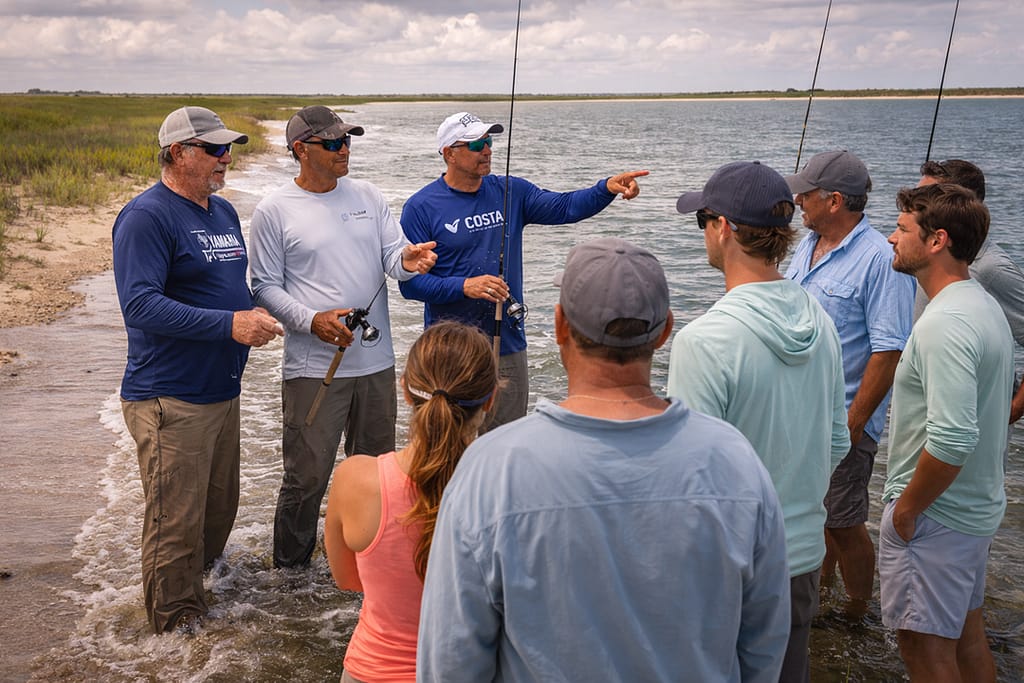
Some of the most important takeaways include:
- Focus on areas that produce consistent slot fish rather than occasional giants
- Prioritize tidal movement and bait activity over random exploration
- Limit long runs and maximize fishing time in proven zones
- Maintain flexibility when conditions change
Professional anglers rarely rely on luck. Instead, they approach each day with a structured plan built around environmental patterns.
For many coastal fishermen, studying tournament strategy can dramatically improve everyday redfish success.
A Spotlight On The Texas Coastal Fishery
The arrival of the Bassmaster Redfish Cup Championship in Port Aransas underscores a simple reality: Texas has become one of the premier redfish destinations in North America.
From the marshes of Sabine Lake to the clear flats of the Lower Laguna Madre, the Texas coast offers a wide range of environments that consistently produce healthy redfish populations.
Events like this championship highlight not only the skill of professional anglers but also the strength of the ecosystem supporting the fishery.
For Texas coastal anglers watching the competition unfold, the message is clear.
The same waters that challenge the nation’s best tournament teams are the waters available to anyone willing to launch a boat, read the tides, and follow the movement of the fish.