
Few conservation stories in American saltwater fishing are as remarkable as the recovery of Texas redfish.
Today, anglers across the Texas coast regularly encounter healthy populations of slot-sized red drum in marsh systems, shallow bays, and grass flats. Tournament circuits flourish, recreational anglers enjoy consistent action, and coastal communities benefit from thriving fishing tourism.
But this success did not happen by accident.
The modern Texas redfish fishery is the result of decades of conservation planning, habitat protection, and science-based management designed to rebuild a species that once faced serious decline.
The Redfish Decline Of The 1970s And 1980s
During the late 1970s and early 1980s, redfish populations across the Gulf Coast were under significant pressure.
Several factors contributed to the decline:
- Rapid growth of coastal fishing pressure
- Expanding commercial harvest for seafood markets
- Increased popularity of redfish in restaurants
- Limited regulatory protections at the time
Large breeding red drum were particularly vulnerable because they gathered in predictable offshore spawning aggregations. Heavy harvest during these periods dramatically reduced reproductive output.
As catches declined and warning signs grew more visible, biologists and conservation groups began pushing for stronger management.
Texas soon became a national leader in redfish conservation.
The Birth Of Modern Redfish Regulations
In response to declining populations, Texas introduced a new set of regulations aimed at protecting breeding fish while maintaining recreational opportunities.
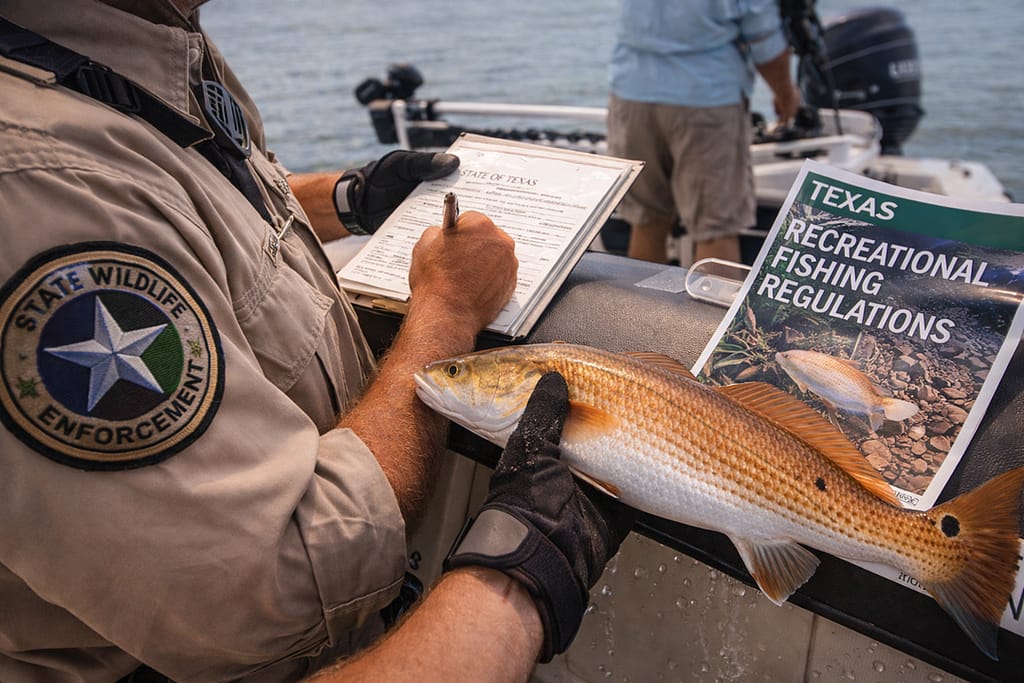
These changes included the now-famous slot limit, which allows anglers to keep redfish only within a specific size range.
| Regulation Strategy | Purpose |
|---|---|
| Slot Limits | Protect large breeding redfish |
| Bag Limits | Reduce overall harvest pressure |
| Commercial Restrictions | Prevent overharvest of spawning fish |
| Habitat Protection | Preserve estuary ecosystems |
The slot system ensures that large adult fish — the primary breeders — remain in the ecosystem, sustaining future generations.
For anglers today, these rules are simply part of normal fishing practice. But when first introduced, they represented a major shift in fishery management.
Hatchery Programs And Redfish Stocking
Another key piece of Texas’ conservation strategy involved large-scale hatchery stocking.
Beginning in the 1980s, coastal hatcheries started raising juvenile red drum and releasing them into Texas bay systems. These stocking programs helped accelerate population recovery during critical rebuilding years.
Facilities such as the Marine Development Center in Corpus Christi became central to the effort.
According to research and management updates from the Texas Parks and Wildlife Department’s coastal fisheries division, hatchery programs have released hundreds of millions of juvenile redfish into Texas waters over the past several decades.
The program continues today as a supplemental tool supporting natural reproduction.
The Role Of Coastal Habitat
Redfish are closely tied to estuarine ecosystems.
Healthy marshes, grass flats, oyster reefs, and tidal channels provide the food and shelter that juvenile redfish need to survive and grow. Protecting these habitats became a central component of Texas fishery management.
Key habitat types include:
- Marsh drains where bait concentrates during tides
- Shallow seagrass beds supporting shrimp and crustaceans
- Oyster reefs that create feeding structure
- Tidal passes connecting bays to the Gulf
These environments allow redfish to transition through different life stages while remaining protected from predators and harsh offshore conditions.
Without strong habitat protection, even the best fishing regulations would struggle to maintain healthy fish populations.
The Rise Of The Texas Redfish Fishery
By the 1990s, the combined effects of regulations, hatchery programs, and habitat protection began showing measurable results.
Anglers started reporting improved catch rates across the Texas coast. Tournament circuits expanded, and guide businesses grew as the reputation of Texas redfish fishing spread nationwide.
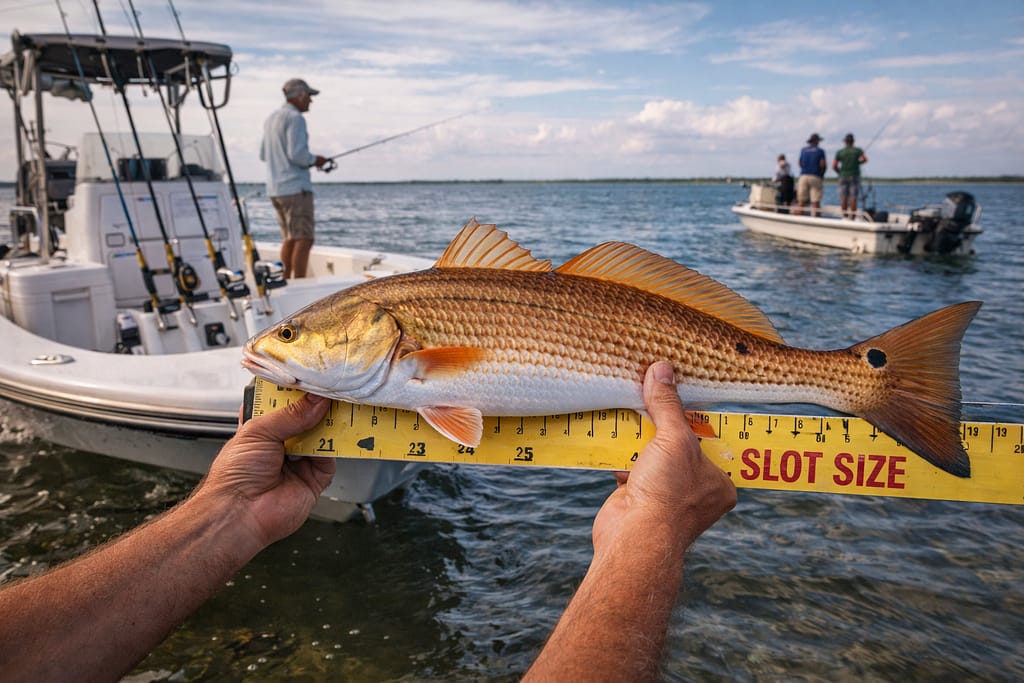
Today, Texas is widely considered one of the premier destinations in North America for redfish.
From the marsh systems of Sabine Lake to the clear flats of the Laguna Madre, the fishery supports both recreational anglers and major competitive events.
Our regional breakdown of top Texas bays for redfish fishing highlights how diverse coastal environments across the state contribute to this success.
Conservation Success And Angler Responsibility
The rebuilding of the Texas redfish fishery demonstrates how science-based conservation can restore marine populations when supported by anglers and policymakers alike.
But success also brings responsibility.
Continued stewardship requires anglers to respect:
- Slot limits and bag limits
- Catch-and-release best practices
- Habitat protection efforts
- Responsible boating in shallow flats
Modern redfish fishing is built on the understanding that protecting the breeding population ensures the fishery remains productive for generations.
A Model For Coastal Fisheries Management
The Texas redfish recovery story has become a model studied by fisheries managers across the United States.
By combining scientific research, regulatory protection, hatchery support, and angler cooperation, the state successfully rebuilt one of its most iconic coastal species.
For anglers standing on a shallow Texas flat today — watching copper-colored wakes move across the water — that recovery is visible in every cast.
The booming redfish populations of modern Texas are not simply a natural resource.
They are the result of decades of conservation effort working exactly as intended.