
Regulations don’t exist to complicate fishing.
They exist to protect it.
Along the Texas coast, redfish — officially known as red drum — represent one of the state’s most valuable inshore resources. From shallow marshes to Gulf passes, their presence supports recreational anglers, tournament circuits, coastal communities, and conservation programs alike.
Understanding Texas redfish regulations isn’t just about staying legal. It’s about sustaining a fishery that defines coastal culture.
And it starts with the slot limit.
Understanding the Texas Redfish Slot Limit
Texas uses a slot limit system to protect both juvenile fish and mature breeding stock.
A slot limit allows anglers to keep redfish only within a specific size range while requiring smaller and larger fish to be released. This protects younger fish that haven’t spawned and oversized breeders that produce the next generation.
Current Texas regulations allow anglers to retain redfish within a designated size window, with daily bag limits applied per person. Oversized fish — commonly called bull reds — typically exceed the upper slot threshold and must be released in most scenarios.
These regulations are set and enforced by the Texas Parks & Wildlife Department, which manages coastal fisheries through science-based population assessments and seasonal monitoring.
The slot system is not arbitrary. It is designed to maintain spawning strength and ensure long-term sustainability.
Why Bull Reds Must Be Released
Bull reds — often exceeding 40 inches — are mature spawning fish. During peak fall migration, these fish stage near passes and offshore structures to reproduce.
Allowing widespread harvest of breeding-size fish would dramatically reduce future recruitment.
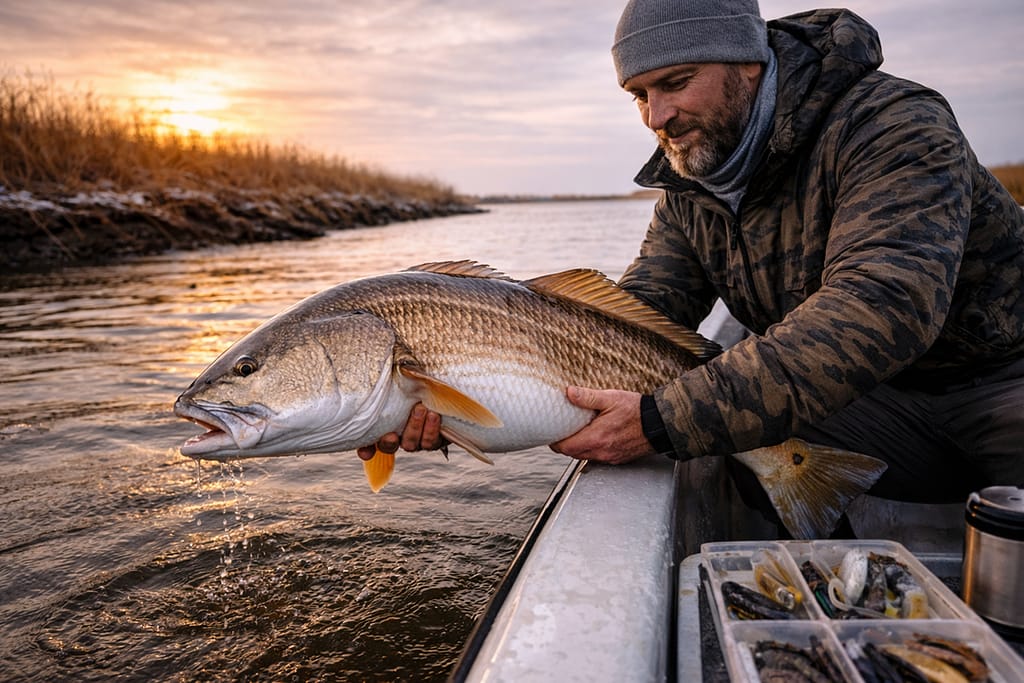
That’s why oversized redfish are protected.
Anglers targeting migration patterns discussed in our guide to fall bull reds in Texas should expect most trophy-class fish to fall outside the slot and require release.
Keeping the biggest fish might feel rewarding in the short term. Releasing it ensures stronger runs next season.
Regional Considerations Along the Coast
While regulations apply statewide, regional conditions influence how redfish behave and how anglers encounter them.
| Region | Common Redfish Encounter | Regulatory Impact |
|---|---|---|
| Upper Coast | Marsh slot fish & occasional bulls | Frequent slot harvest compliance |
| Central Coast | Mixed-size schools | Careful measurement required |
| Lower Coast | Clear-water sight fishing | High release rates for oversized fish |
Anglers should always confirm the most current rules through official updates before launching. Regulatory adjustments can occur based on environmental conditions or stock assessments.
Compliance begins with preparation — including accurate measuring tools onboard.
Measuring Redfish Properly
Slot limits rely on total length measurement from the tip of the snout to the longest point of the tail when pinched.
Improper measurement is one of the most common violations along the coast.
To avoid mistakes:
- Use a flat measuring board
- Pinch the tail naturally
- Measure with fish laid straight
- Avoid estimating by eye
Even slight misjudgment can push a fish outside the legal range.
Tournament anglers are particularly strict about measurement compliance. Penalties for illegal retention can result in disqualification and fines.
Daily Bag Limits and Tagging Requirements
Texas enforces a daily bag limit per licensed angler. In certain situations, anglers may use a bonus red drum tag to retain one oversized fish per year, subject to current rules and documentation requirements.
This tagging system allows limited harvest flexibility while maintaining protection for breeding populations.
Understanding these nuances separates responsible anglers from careless ones.
Regulations aren’t static — they adapt as coastal ecosystems shift.
Ethical Handling for Released Redfish
Legal compliance is only part of responsible fishing. Ethical handling ensures released fish survive and continue contributing to the fishery.
Best practices include:
• Minimizing air exposure
• Supporting the fish horizontally
• Avoiding dry decks or hot surfaces
• Reviving fish facing into current before release
Oversized bull reds, especially during spawning season, should be handled with additional care. Their survival rate directly affects recruitment success.
Cold-water conditions — such as those discussed in our coverage of winter redfish in Texas — may reduce fight stress but still require careful revival before release.
Responsible handling is conservation in action.
Why Slot Limits Protect the Future of Texas Redfish
Redfish were once heavily depleted along Gulf Coast states in the 1980s. Strict management, including slot limits and harvest restrictions, rebuilt populations to current healthy levels.
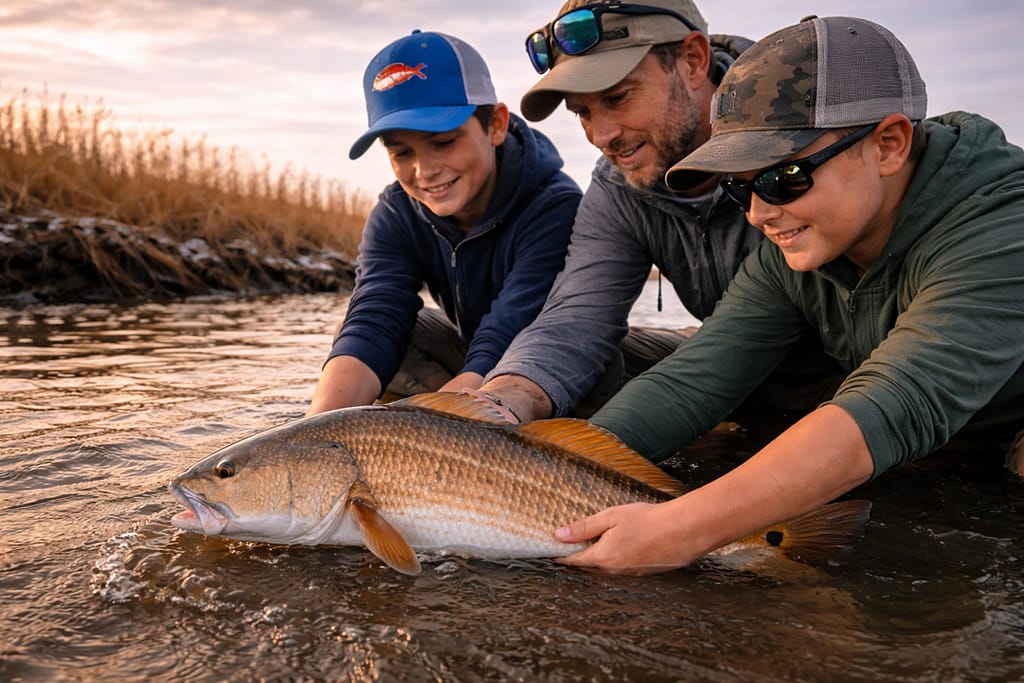
Today’s strong coastal fishery is the direct result of regulation compliance and habitat protection.
Slot limits serve three primary purposes:
- Protect juveniles before first spawn
- Safeguard breeding-size fish
- Stabilize long-term population cycles
When anglers respect these rules, they participate in sustaining a resource that supports both recreation and coastal economies.
Staying Current on Regulation Updates
While core regulations remain stable year to year, temporary emergency orders or adjustments can occur based on weather events, freeze impacts, or population studies.
Before any coastal trip, anglers should verify current rules directly through official state resources such as the Texas redfish regulations page, maintained by Texas Parks & Wildlife.
Relying on outdated information is one of the easiest ways to unintentionally violate the law.
Prepared anglers double-check.
Conservation Beyond Compliance
Redfish regulations represent the minimum standard. Ethical anglers often go further.
Voluntary catch-and-release during spawning seasons, careful photo handling, and habitat awareness all strengthen the fishery beyond what rules alone accomplish.
The Texas coast remains one of the strongest redfish fisheries in the country because regulation, education, and angler culture align.
Understanding slot limits isn’t about restriction.
It’s about stewardship.
When anglers respect the boundaries designed to protect redfish populations, they ensure that future seasons — from winter mud flats to fall migration runs — remain productive.
The health of Texas redfish doesn’t depend solely on enforcement.
It depends on informed anglers making the right decisions on the water.