
If you spend enough time around Texas tournament anglers, one conversation keeps surfacing in 2026—how much technology is too much? What started as a quiet shift toward better electronics has now turned into a full-scale debate shaping rules, strategy, and even the identity of competitive redfish fishing.
From advanced GPS mapping to real-time sonar and ultra-precise trolling motors, today’s tournament boats look nothing like they did a decade ago. The result is undeniable: anglers are more efficient, more informed, and more consistent. But that same evolution has raised an uncomfortable question—are tournaments still testing skill, or are they becoming a test of equipment?
The Rise Of Precision Electronics On The Flats
Modern inshore setups have blurred the line between traditional fishing instincts and digital assistance. High-definition mapping systems now allow anglers to identify subtle bottom changes, oyster structures, and even historical fish-holding zones with incredible accuracy.
Forward-facing sonar—once more associated with freshwater bass fishing—has started creeping into coastal conversations as well. While not universally adopted in redfish tournaments, the technology’s ability to track fish movement in real time is forcing organizers to rethink what’s fair.
Add in GPS-enabled trolling motors with spot-lock anchoring, and you get a system where anglers can:
- Hold position in wind and current without drifting
- Return to exact waypoints with precision
- Cover water more efficiently than ever before
For some, this represents progress. For others, it feels like a departure from the roots of Texas inshore fishing.
Why Tournament Rules Are Starting To Shift
Tournament circuits across Texas are beginning to respond—not with blanket bans, but with carefully structured limitations. The goal isn’t to eliminate technology, but to preserve competitive balance.
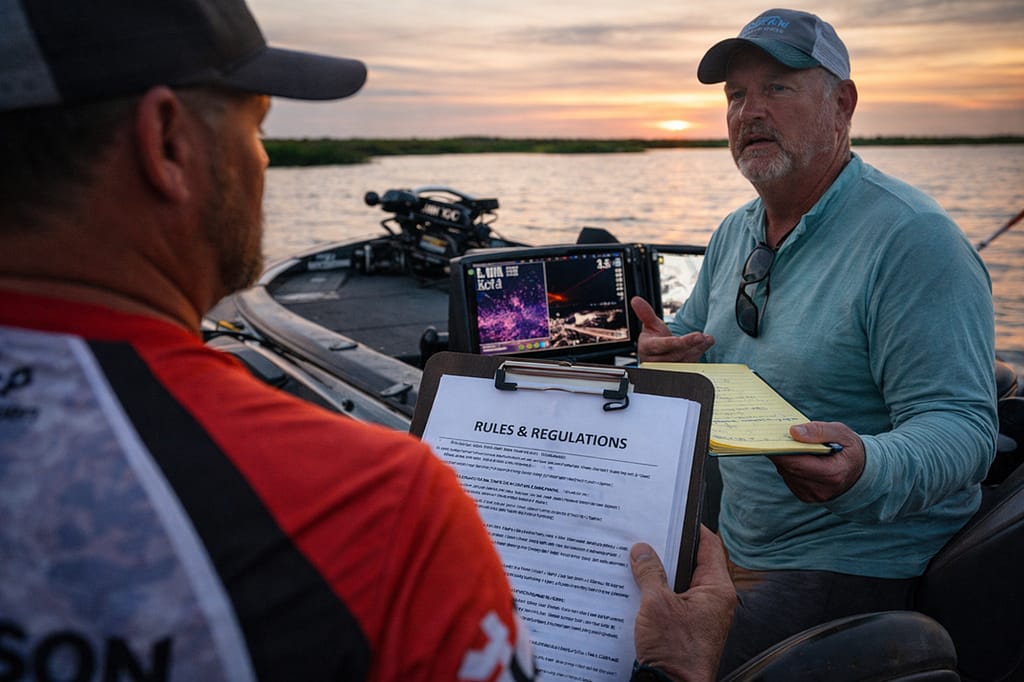
Several 2026 rule adjustments being discussed or implemented include:
- Restrictions on certain real-time sonar applications
- Limits on the number of active electronic systems during competition
- Clarification on pre-loaded mapping data and scouting advantages
These changes are designed to keep tournaments from becoming purely technology-driven while still allowing anglers to use modern tools responsibly.
The debate echoes what many circuits have already addressed in other formats, as seen in the evolving frameworks highlighted in the 2026 Texas Redfish Series rules, where competitive integrity is becoming just as important as innovation.
Skill Versus System: Where The Line Gets Blurry
At its core, the controversy isn’t about electronics—it’s about what defines a “better angler.”
Traditionalists argue that reading water, understanding tides, and recognizing bait movement should remain the foundation of success. They see over-reliance on electronics as a shortcut that reduces the value of experience.
On the other side, modern competitors view technology as simply another tool—no different than better rods, improved boats, or refined lure design. To them, success still depends on decision-making, adaptability, and execution.
In reality, the line isn’t clean. In a place like Port Aransas or Matagorda Bay, where conditions shift quickly, the best teams are blending both approaches:
- Using electronics to locate structure
- Relying on instinct to interpret fish behavior
- Adjusting in real time based on environmental cues
The result is a hybrid style of fishing that’s redefining what it means to compete at a high level.
How Technology Is Changing Tournament Strategy
The influence of technology isn’t just philosophical—it’s tactical. Teams are approaching tournaments differently than they did even five years ago.
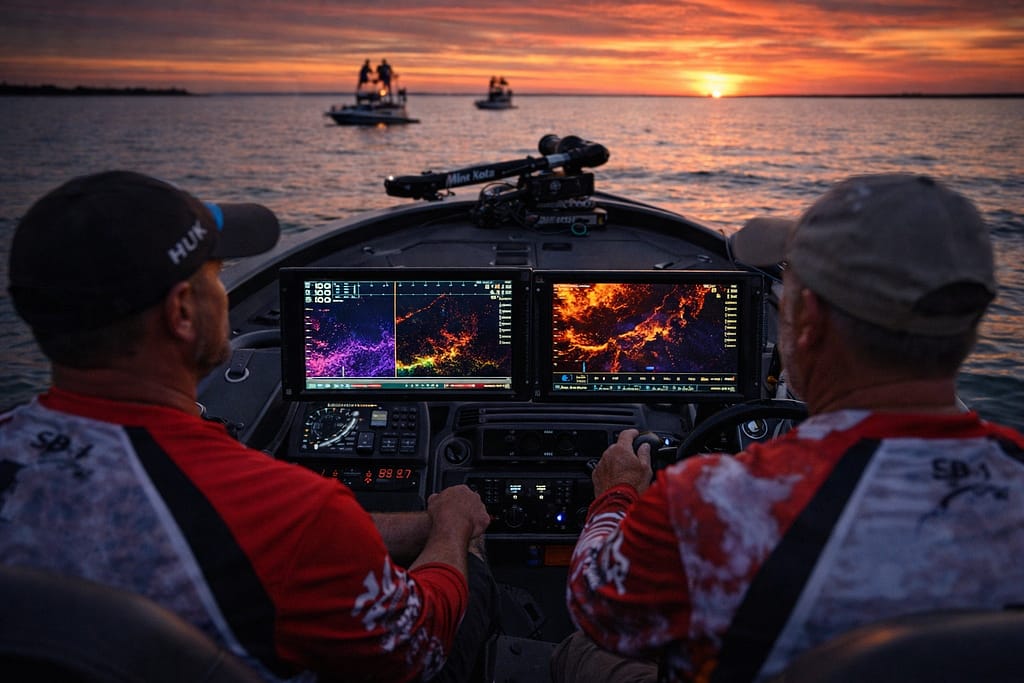
Pre-fishing, for example, has become far more data-driven. Anglers now build detailed digital logs of:
- Productive tide stages
- Water clarity changes
- Seasonal fish positioning
During competition, that data allows for faster adjustments. Instead of committing to a single pattern, teams can pivot quickly based on conditions.
Here’s how strategy has evolved:
| Traditional Approach | Modern Tech-Driven Approach | Tournament Impact |
|---|---|---|
| Visual scouting | GPS + mapping overlays | Faster location decisions |
| Drift fishing | Spot-lock positioning | Increased precision |
| Memory-based patterns | Data-backed adjustments | More consistent results |
| Limited coverage | Expanded range via efficiency | Reduced dead time |
While this improves performance, it also narrows the margin for error—because now, everyone has access to similar tools.
The Cost Factor And Competitive Accessibility
One of the most overlooked aspects of the technology debate is cost. High-end electronics packages can run into the thousands, creating a barrier for entry-level competitors.
This raises a legitimate concern: if success becomes tied to equipment investment, tournaments risk losing accessibility. Grassroots anglers—the backbone of Texas fishing culture—could find themselves at a disadvantage.
Some circuits are already exploring solutions, including:
- Equipment standardization rules
- Division-based competition tiers
- Restrictions on certain high-end technologies
The goal is to ensure that competition remains open, not exclusive.
Conservation And Data: The Positive Side Of Innovation
Not all technological advances are controversial. In fact, some are actively improving the fishery.
Better mapping and environmental tracking tools are helping anglers avoid sensitive habitats like seagrass beds and oyster reefs. GPS logging also contributes to research efforts, providing insights into fishing pressure and movement patterns.
Organizations like the Texas Parks and Wildlife Department fisheries programs continue to emphasize how responsible use of technology can support conservation goals, not undermine them.
In this sense, the conversation isn’t about rejecting innovation—it’s about using it wisely.
What 2026 Means For The Future Of Texas Tournaments
As the 2026 season unfolds, the technology debate is far from settled. But one thing is certain: the decisions being made now will shape the future of competitive redfish fishing in Texas.
Tournament organizers are walking a fine line—embracing progress without losing the essence of the sport. Anglers, meanwhile, are adapting in real time, finding ways to stay competitive while navigating evolving rules.
The likely outcome isn’t a complete rollback of technology, nor an unchecked embrace of it. Instead, Texas tournaments are moving toward a middle ground—one where skill, strategy, and technology all play a role, but none dominate completely.
And in a fishery as dynamic as the Texas coast, that balance may be exactly what keeps the competition both fair and compelling for years to come.