
Winning a major bass tournament is not just luck. It’s the result of careful planning and strategy. It’s like starting a big business project. Success comes from detailed planning, precise execution, and handling many variables.
The countdown begins a month before the tournament. In Texas, the “off-limits” period starts at 5:30 PM on Friday. This is the start of the game plan. Everything before is the preparation phase.
Top anglers don’t just fish. They follow a well-researched and practiced routine. This includes remote scouting, organizing gear, confirming patterns, and mental preparation. It turns uncertainty into a controlled performance.
This article will show you the winning framework. We’ll cover the key phases from T-30 to launch. You’ll learn a systematic approach to preparation. This method helps any driven professional, whether on the water or in the boardroom.
Digital scouting: contours, creek swings, hazard lanes; tide charts for coastal rivers
The modern tournament angler’s most vital tool isn’t a rod or reel—it’s a detailed digital map. This phase, called digital scouting, is where pros build their strategic foundation. It’s the desk research that turns unknown water into a familiar battlefield.
Effective map study starts with understanding the lake’s anatomy. Anglers look at contour lines to find sudden depth changes. These drop-offs and underwater ledges are classic ambush points for bass. Identifying these contours before launch saves precious practice time on the water.
Next, focus shifts to inflow areas, or “creek swings.” These are points where smaller creeks or drains enter the main lake. They funnel nutrients and baitfish, creating natural feeding zones. Pros mark these areas as high-priority waypoints for their initial practice runs.
Shallow structures, often termed “hazard lanes,” are also critical. These include submerged timber, grass lines, and rock piles. While tricky to navigate, they hold fish, making them key spots, even in pre-spawn or post-front conditions. Marking these productive hazards creates a safety net of backup spots.
The process of marking strategic waypoints is the core of creating a game plan. Each marked spot represents a hypothesis. Is this ledge holding fish? Does this creek swing have the right cover? This digital groundwork is akin to a business professional conducting market research before a product launch.
For Texas anglers targeting coastal rivers like the Trinity or Sabine, another layer is non-negotiable: tide charts. Tidal movement dictates everything in these systems. It controls water flow, clarity, and, most importantly, fish positioning.
Understanding the tide allows you to predict feeding windows. Fish often position on current seams during moving water. They may slide into backwater slacks during the tide change. Consulting daily tide charts is as essential as checking the weather.
Local knowledge, which can be gleaned from forums or even resources like Bass Pro Shops’ regional reports, complements this digital map study. It helps interpret why certain waypoints might be more productive based on seasonal patterns.
Here’s a quick checklist for your digital scouting session:
- Identify primary and secondary contours (sharpest depth changes).
- Mark all major creek channels and inflow points.
- Pin shallow hazard zones with possible cover.
- Cross-reference marked waypoints with seasonal patterns.
- For coastal waters, overlay tide stages on your map and note predicted current flow.
This phase isn’t about guessing. It’s about building a data-driven list of possible fishing zones. You arrive on practice day not to search, but to test. Your digital map study has already given you a head start, turning hours of random searching into targeted, efficient exploration.
Building a pattern tree: primary, backup, emergency plans
Think of your tournament day as a tree of options, each rooted in a practice plan. This pattern tree turns fishing data into a strong decision-making tool. It helps you deal with the unpredictable nature of competition.
Building the trunk of this tree is your Primary Plan. You test different variables like depth and bait selection. The best combination becomes your primary pattern, aiming for a winning five-fish limit.
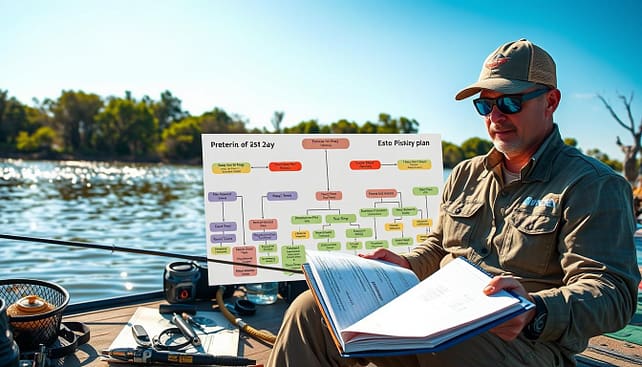
A professional pattern tree has three branches. Each has a specific role under pressure.
- The Primary Plan: This is your top strategy, refined and trusted. You start with it and stick to it if it works.
- The Backup Plan: When your primary plan fails, switch to this tested alternative. It might target a different area or use a different bait.
- The Emergency Plan: This is your safety net. It’s a reliable spot or simple technique that guarantees at least a couple of fish. Its main goal is to prevent a zero.
The emergency plan is essential for serious competitors. It follows contingency planning principles from business and risk management. It helps you stay calm and make clear adjustments.
Official rules set strict practice days and off-limits periods. In Texas tournaments, you might only have Friday to scout. This short time makes your practice plan very important. You must find all three plan levels in this short time.
Creating this pattern tree is key to professional preparation. It’s not just about finding fish. It’s about managing risk and uncertainty. Your final plan is a strategic framework, ensuring you always know your next move.
On‑the‑water practice: coverage plan, timing checks, “no‑burn” ethics
Pro anglers see practice days as a key rehearsal. It’s where they put their skills to the test. A well-planned approach turns random scouting into a winning strategy.
The first step is a coverage plan. You have many waypoints from scouting. The goal is to visit them all efficiently. Don’t fish randomly.
Create a logical route on your mapping software. Group waypoints by area. Start with primary spots, then move to backups. Tools like forward-facing sonar help scan large areas quickly. This way, you can confirm fish presence without casting.
Your plan should answer key questions. Is the structure holding fish? What’s the depth and bait situation? This info is invaluable for tournament day.
The second step is timing checks. Tournament days are all about the clock. You need to know how long it takes to move from one spot to another.
During practice, make runs at tournament speed. Note the time under different conditions. This helps avoid scheduling mistakes when every minute matters.
Using forward-facing sonar helps with timing. You can quickly assess a spot’s worth. This saves time and lets you cover more water.
The last, but most important, step is ethics. Tournament fishing has rules and codes. Following them makes you a true sportsman.
The “no‑burn” ethic is key. If you see another angler at a spot, give them space. Don’t fish it after they leave. This rule builds trust and fair competition.
Written rules are also strict. Organizations like Bassmaster and MLF enforce sportsmanship codes. Every angler needs to know these rules:
| Rule | Description | Purpose |
|---|---|---|
| Rule 11: Anchored Boat | Do not fish within 50 yards of another competitor’s anchored boat unless invited. | Prevents crowding and ensures fair access to water. |
| Rule 12: Fishing Methods | Defines legal techniques; typically prohibits “hole sitting” or persistently fishing a single small area. | Encourages active competition and diverse strategy. |
| Non-Competitor Assistance | Receiving active fishing help from anyone not in the tournament is prohibited. | Maintains a level playing field for all participants. |
| “No-Burn” Ethic | An unwritten courtesy to not overfish a spot discovered by another angler during practice. | Builds professional respect and integrity within the community. |
Following these principles is essential. It shows the same integrity needed in business. Your reputation is built on how you compete, not just winning.
Mastering practice means balancing aggressive scouting with respect. Tools like forward-facing sonar give a tactical edge. A solid plan and timing strategy provide a strategic edge. Ethical practice keeps your reputation high among peers.
This disciplined approach is key for all serious competitors. It’s not just for fishing titles. It applies to preparing for your first Texas hunting. Planning, timing, and sportsmanship are essential in outdoor sports.
Logistics: permits, livewell checks, trailer maintenance, spares list
Getting disqualified can happen because of one missed item on your local rules checklist. It’s not about catching a lot of fish. It’s about being ready for everything. This is your must-do check before the tournament.
Start by checking your documents. Make sure you have a valid Texas fishing license and any needed tournament membership. Also, find out if you need special permits for the lake or river. Having these ready can save you from a big disappointment before you even start fishing.
Then, check your boat’s safety and systems. Make sure your livewell pumps and aerators work well. This is a key rule. Also, check that all Coast Guard-approved life jackets are on board and in good shape. Your engine kill switch must work perfectly. This is for your safety, not just to follow rules.
Your trailer and trolling motor also need attention. Check your trailer’s bearings, lights, and winch strap. Make sure your trolling motor batteries are fully charged. A problem here can stop you or cut your fishing time short.
Lastly, make a list of spares to take with you. This list is your safety net on the water. You’ll need:
- An extra propeller and shear pins
- Assorted fuses for your electronics and pumps
- Spare livewell pump impeller
- Basic tool kit and electrical tape
- Extra trailer light bulbs
Stores like Bass Pro Shops have service centers and experts to help. They can help you get what you need and do any last-minute trailer checks. Treat this part as seriously as your practice on the water. It’s the prep work that lets your fishing skills shine.
Mental game + sleep/fuel plan
Winning a tournament isn’t just about finding fish. It’s about getting your mind and body ready to perform under pressure. A focused mind and a strong body are key for pros.
Your mental game helps you handle changes and setbacks. It starts long before you even get on the water.
Visualize the whole day, from the morning calm to the final minutes. Imagine making key decisions and catching fish. This builds confidence in your mind.
Manage your expectations. Not every spot will be good. Accepting this helps you stay focused during slow times. Plan for when things slow down.
Remember, fishing is about reducing stress and enjoying the sport. See the tournament as a challenge, not just stress. A calm, positive mindset is powerful.

Your sleep and fuel plan are your foundation. You can’t do well with a tired brain or empty tank.
Start your sleep routine three nights before the event. Aim for 7-8 hours of quality sleep. This helps you wake up alert at dawn.
Your day-of nutrition strategy should keep you energized and hydrated. Avoid heavy breakfasts that make you crash. Choose complex carbs, lean protein, and healthy fats.
Have high-protein snacks like nuts, jerky, or bars. Eat small amounts every few hours to keep your energy up.
Drinking water is key for your brain and body. Start drinking water the night before. Use a big water bottle on the boat and sip often. Dehydration hurts your decision-making skills fast.
| Factor | Poor Prep | Pro Prep |
|---|---|---|
| Mindset | Easily frustrated by slow fishing; views day as stressful. | Accepts slow periods as part of the game; maintains a problem-solving attitude. |
| Focus | Scattered attention; dwells on missed opportunities. | Present in the moment; focused on executing the next cast or move. |
| Energy | Relies on sugar and caffeine, leading to midday crashes. | Uses a planned nutrition strategy for steady energy all day. |
| Hydration | Drinks only when thirsty, often leading to mild dehydration. | Proactively sips water throughout the day to maintain peak function. |
| Recovery | Poor sleep before the event; feels sluggish at launch. | Prioritizes a pre-tournament sleep routine for optimal alertness. |
Preparing for a tournament is like preparing for a big presentation. You wouldn’t show up tired and hungry. Treat your mind and body with the same care as your tackle.
Day‑1 launch routine and after‑hours notes review
Day one of a bass tournament is more than just fishing. It’s a well-planned operation starting at the ramp. Your hard work turns into action. A smooth morning sets a positive tone for the whole competition.
Your day starts in the dark. You must arrive early to inspect your boat without rush. This ensures everything is ready for a fair start.
Follow the tournament’s staging order. It makes sure everyone launches safely and fairly. Before you launch, do these important steps:
- Boat Systems Check: Make sure livewell pumps, bilge pump, and electronics work.
- Gear Stowage: Keep rods, tackle boxes, and personal gear secure to avoid mess.
- Safety Protocol: Wear your kill switch lanyard and check your lights. It’s a key rule.
Once you’re on the water, take a moment to plan your day. Think about your first few stops.
For those fishing in coastal areas, check your tidal timing before you start. Match your fishing spots with the tide chart. This helps you fish during the best tidal conditions.
Using the tidal timing can make a big difference. It turns fishing into a strategic game.
After the weigh-in, the real work starts. Reviewing your notes is key to improving. It’s like a business review.
Start by looking at your day’s data. What worked? What didn’t? Be honest. Then, update your plan:
- Dissect Your Catches: Note the depth, cover, and bait for each fish. Find what to use tomorrow.
- Update the Pattern Tree: Move successful techniques to “Primary” status. Demote failed ones. Find new “Emergency” options.
- Plan Day Two’s Opening Moves: Decide if you’ll stick with your winning pattern or try something new.
This evening review is key. It turns experience into useful information. You’re not just fishing; you’re building a winning strategy.
Printable checklist
After you’ve made your 30-day tournament prep plan, it’s time to take action. A detailed checklist helps you not miss a thing. It puts all important tasks from digital scouting to your day-one launch routine in one place.
The checklist breaks down your pro angler prep into easy-to-follow categories. Begin with Pre-Tournament Admin tasks like B.A.S.S. membership and your Texas fishing license. Then, focus on Boat & Gear Safety, checking your PFD, kill switch, and livewell.
Make sure you have the Mandatory Equipment to follow the event’s rules. Your Spares Kit should have extra props, fuses, and trailer bearings. Don’t forget Personal items like sun protection, hydration, and fuel. The Pre-Launch steps remind you of your morning routine.
For a real example, check out the 2025 Bassmaster Classic logistics.
Print this checklist and keep it where you work. Use it to track your progress every day. This guide makes complex prep simple and doable. It’s the best tool for any angler wanting to compete with confidence.