
Texas is known for its top-notch bass fishing spots. Two places stand out for serious anglers. Each offers its own set of challenges and rewards.
Lake Fork is famous for its huge fish and complex underwater layout. Recent reports say conditions are GOOD. The water is stained, at 73 degrees, and just 0.25 feet above pool level.
The Sabine River system is different. It’s a dynamic, tidal waterway flowing to the Gulf. Its environment changes with the tide and freshwater flow. This makes it unlike a managed lake.
Knowing the basics is key to success. A structured reservoir and a coastal river need different approaches. You also need to know local rules and where to launch.
This guide will compare these top fishing spots. We’ll explore seasonal patterns, boat launch tips, and how to read the water. Being aware of navigation hazards is essential. Let’s dive in.
Regulations that matter
At Lake Fork and the Sabine River, following the rules is key. It’s not just about avoiding fines. It’s about winning and protecting the fish. For Elite Series anglers, these rules shape the game.
At Lake Fork, the slot limit is a big deal. Bass between 16 and 24 inches must be released right away. This rule makes the game tough. Anglers aim for fish under 16 inches or hope for a big catch over 24 inches.
This protected slot changes how anglers plan. They look for small fish or try to catch big ones. The 2025 Bassmaster rules also stress fish care. Proper livewell management and quick weigh-ins are essential.
On the Sabine River, the rules focus on water movement. Knowing the tides is a must for safety and access. Tides can change where you can go, from shallow marshes to open drains.
There are strict no-wake zones near homes and marinas. Breaking these rules can lead to fines and harm the sport’s image. Also, watch out for barge traffic, as their wakes can be dangerous.
Some areas are off-limits, like private docks and wildlife sanctuaries. Always check for signs. Respecting these areas shows you’re a true pro.
| Regulation | Lake Fork Focus | Sabine River Focus |
|---|---|---|
| Primary Rule | Slot Limit (16-24″ protected) | Tidal Access & Navigation |
| Key Impact | Strategy for sub-16″ or 24″+ fish | Timing runs based on tide charts |
| Navigation Hazard | Submerged timber lanes | Barge traffic & no-wake zones |
| Off-Limits Typical Areas | Private docks, certain creek arms | Private marshes, posted wildlife zones |
| Conservation Link | Instant release of slot fish | Minimizing wake erosion in marshes |
B.A.S.S. now focuses more on following the rules and saving fish. These local laws keep Texas’ famous fisheries healthy for the future. Knowing the slot limits and the Sabine’s tides is as vital as understanding bass behavior.
Seasonal Bite: Fork vs. Sabine
Lake Fork’s bass follow a traditional pattern, but the Sabine River’s bite is all about the tide. You need to know two different rhythms. One is based on water temperature and the life cycles of baitfish. The other is ruled by the moon and the daily ebb and flow of saltwater.
Lake Fork’s Temperature-Driven Calendar
The spring spawn marks the start of the year. Before they move shallow, bass stage on secondary points and creek bends. This pre-spawn time is great for fishing. Anglers use jigs and crankbaits in these areas.
As the water warms up, the shad spawn lights up the lake. This happens early in the morning, near shallow grass and docks. Topwater baits and spinnerbaits can lead to exciting catches.
In the summer heat, bass seek deeper waters. The offshore bite is where the action is. Bass are found in 15 to 22 feet of water, near main lake structures. A Carolina rig, slowly moved along the bottom, is very effective for these deep fish.
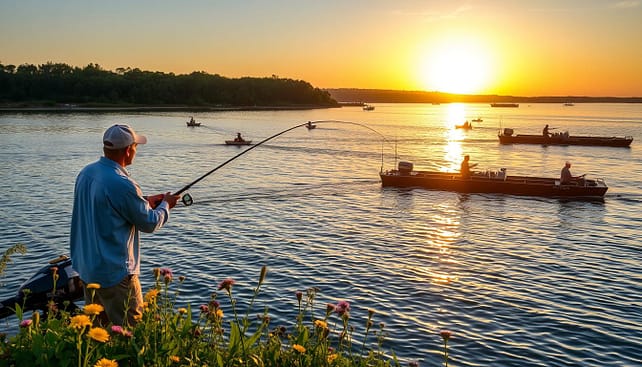
Forget about the calendar on the Sabine. The tide chart is your guide. The best summer current fishing isn’t about the month, but the tide. The best times are often when the tide is moving, like the last few hours of an incoming tide.
Fish hide in current seams and eddies to ambush prey. Look for areas where water flows from the marsh into main channels. These spots attract bait and bass. It’s important to position your boat to cast into these areas.
Commercial barge traffic adds a surprise element. A passing barge creates a huge wake and a temporary current surge. This can move fish and create new feeding lanes. Smart anglers watch for barges and fish the disturbed water behind them.
| Season/Phase | Lake Fork Pattern | Sabine River Pattern | Key Technique |
|---|---|---|---|
| Pre-Spawn / Early Season | Bass staging on secondary points and creek channels. | Fish positioning on deeper edges, awaiting tide movement. | Jigs, deep-diving crankbaits. |
| Peak Activity (Spawn/High Tide) | Explosive shad spawn at first light near cover. | Aggressive feed during peak moving tide, specially in drains. | Topwater, spinnerbaits, swimbaits. |
| Summer / Offshore | Bass relating to deep structure (15-22 ft). | Fish using current seams created by structure or barge traffic. | Carolina rig, deep crankbaits, jigging spoons. |
Your approach must change. On Fork, follow the bass as they move from shallow to deep. On the Sabine, chase the tide. Both places offer amazing fishing. You just need to listen to the right rhythm.
Pattern packages: hard spots & timber on Fork; current seams, drains, and marsh drains on Sabine
Fishing on Texas’s top waters requires two main pattern packages. One is for hard spots and timber, and the other for moving water. Knowing these patterns is like having a playbook for each lake.
On Lake Fork, the focus is on structure. Fish like “hard spots” and submerged timber. These spots are key all year.
Hard spots include old roadbeds, rock piles, points, and humps. Creek channel swings are also important. These spots create current breaks and hold bait. Your depth finder is key here.
Look for depths of 8 to 20 feet for most presentations. A slow retrieve works best. Use a Carolina rig or a jig to cover the area well. Your sonar should highlight these bottom changes.
Don’t miss the backs of coves. Hydrilla and milfoil grow there, providing cover. This vegetation holds fish, mainly during certain times.
The second Fork package is its standing timber. Fish hide in these vertical structures for ambush and shade. Pitch a jig or soft plastic into the timber pockets. A flipping presentation is often the key.
For the Sabine River system, the pattern package focuses on water movement. Hydrology helps find fish. The three key elements are current seams, drains, and marsh drains.
Current seams are where fast and slow water meet. Baitfish gather in the slower edges. Cast a crankbait or swimbait along these seams. Predators hide in the slack water, waiting to ambush.
Drains are channels where water flows out of flats on a falling tide. This flow pulls bait and creates feeding lanes. Position your boat at the drain’s mouth. Work a topwater or spinnerbait as the tide falls.
Marsh drains are smaller networks within the grass. They’re often overlooked but hold big fish. Use a shallow-running bait or weedless soft plastic to explore these areas. Knowing the tide is key for this pattern.
The table below shows the main differences between these two pattern packages:
| Feature | Lake Fork Package | Sabine River Package |
|---|---|---|
| Primary Focus | Static Structure & Cover | Moving Water & Hydrology |
| Key Targets | Points, Humps, Road Beds, Timber | Current Seams, Drains, Marsh Drains |
| Optimal Presentation | Slow, Vertical (Jigs, Carolina Rigs) | Horizontal, with the Current (Crankbaits, Swimbaits) |
| Critical Tool | High-Definition Sonar | Tide Chart & Current Observation |
| Best Water Clarity | Stained to Clear | Stained to Murky |
Learning these patterns will change your fishing approach. It moves from random casting to targeted hunting. Keep these packages in mind for your next trip.
Bait/gear setups by water clarity and cover
Water clarity and cover type are key when fishing for bass in Texas. The right bait and rod can turn a slow day into a successful one. Fishing in Lake Fork’s stained waters is different from the Sabine River’s tidal bass.
In Lake Fork’s stained waters, visibility is low. Use reaction baits that make a lot of noise and flash. A 3/8-ounce chatterbait with a paddle-tail trailer works well around grass and wood.
For fishing in Fork’s timber, you need to be precise. A Texas-rigged soft plastic, like a 10-inch worm, gets through the limbs. Use a 3/0 to 5/0 extra-wide-gap hook and a 3/8-ounce tungsten weight for a slow fall.
For summer fishing on Fork, a Carolina rig is best. Use it with a 6-inch fluke or a big 10-inch worm to find deep points. A 7-foot, medium-heavy rod with a fast tip helps with subtle bites and long casts.
Choosing the right line is important. For reaction baits, use 15-20 lb fluorocarbon. For Texas and Carolina rigs, 50-65 lb braid with a fluorocarbon leader is best. This combo offers strength and sensitivity.
The Sabine River tidal bass game is all about current and vegetation. A compact, 1-ounce flipping jig is key for punching matted hydrilla. Use a 7-foot, 6-inch heavy-power rod and 65 lb braid to pull fish from the jungle.
In moving water, baits that look like fleeing baitfish work well. A 3/8-ounce vibrating jig and a 4-inch swimbait are deadly. Match your retrieve speed to the tide’s flow to keep your bait in the strike zone.
For marsh drains, a medium-heavy spinning rod with 20 lb braid and a 12 lb fluorocarbon leader is ideal. It works with lightweight swimbaits and small topwaters. This lets you quickly adapt to the Sabine River tidal bass as the water moves.
Being organized is key. Use a tackle bag with clear plastic boxes. Label them for “Fork Timber,” “Sabine Current,” and “Universal Plastics.” This saves time when conditions change. For more on precise presentations, check out our guide on top Fork baits and the draggin’ bait.
| Condition | Primary Bait | Gear Setup | Line Recommendation |
|---|---|---|---|
| Lake Fork – Stained Timber | Texas-rigged 10″ Worm | 7’3″ Heavy, Fast Action | 50 lb Braid to 20 lb Fluorocarbon Leader |
| Lake Fork – Offshore Summer | Carolina Rig with Fluke | 7’6″ Medium-Heavy, Moderate Action | 15 lb Fluorocarbon |
| Sabine River – Tidal Current | 3/8 oz Vibrating Jig | 7’2″ Medium-Heavy, Fast Action | 17 lb Fluorocarbon |
| Sabine River – Heavy Vegetation | 1 oz Flipping Jig | 7’6″ Heavy, Extra-Fast Action | 65 lb Braid |
| Both – Clear Water Finesse | Weightless Senko | 7′ Medium, Fast Action Spinning | 10 lb Braid to 8 lb Fluorocarbon Leader |
Success depends on being adaptable. Carry rods ready for the day’s pattern, but have a backup plan. The angler who quickly adjusts to the water and cover will catch more Sabine River tidal bass and Lake Fork giants.
Spectator plan: bridges, ramps, marina etiquette
There are many great spots to watch the Lake Fork and Sabine River tournaments. But, there are rules to follow for a good time. A smart spectator plan makes your day better and helps the anglers.
First, find legal spots to watch. Bridges like the State Highway 154 bridge on Lake Fork or the I-10 bridge near Sabine’s marshes are great. Make sure to park off the road and use walkways.
Public parks near ramps are perfect for families. Places like Lake Fork Public Park or Sabine River Authority parks are good. Get there early to secure a spot, but don’t block the ramp or staging areas. Angler access is key from dawn till the end.
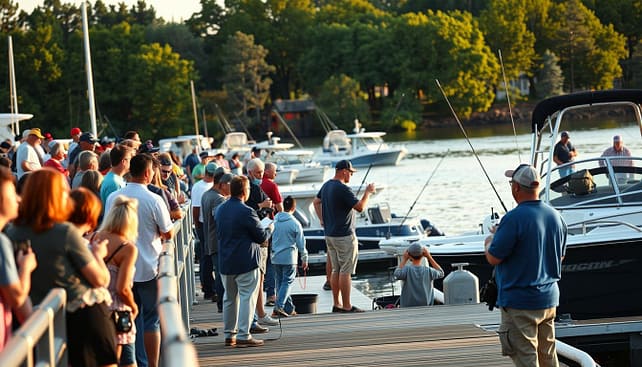
Marina overlooks are great for weigh-ins and boat traffic. But, remember, marinas are work areas. It’s important to follow marina etiquette for safety and respect.
Here are some important tips for a good experience:
- Clear Launch Lanes: Don’t block the dock or ramp when boats are coming or going. A clear path is essential for safety.
- Respectful Noise Levels: Cheer on your favorites, but keep the noise down. Loud sounds can distract anglers.
- Proper Trash Disposal: Use bins for trash. Leaving it behind can limit future viewing locations.
- Photography Courtesy: Take pictures, but don’t disturb anglers or use flashes that might distract them.
By following tournament etiquette, you help create a great atmosphere. This makes the Texas events even more enjoyable for everyone. When spectators and anglers work together, everyone benefits.
Safety notes: timber lanes, barge wakes, storms
Mastering Lake Fork and the Sabine River means knowing their safety rules. Your safety depends on how well you understand these rules. A safe and successful fishing trip is your goal.
Lake Fork’s timber is both a challenge and a risk. It’s dangerous to speed through timber lanes without knowing the area well. Always slow down in unknown spots. Use your sonar to find hidden stumps and plan your path safely.
The Sabine River has another danger: barge wakes. These big waves can upset your boat. Watch for barges and position your boat to face the wake. This helps avoid taking on water.
Thunderstorms in Texas can come fast. It’s vital to watch the weather closely. Keep a weather app handy and know where to find shelter, like a marina, quickly.
Remember, safety is not just for you. It’s also about the fish. Follow professional fish care to protect the resource. Handle bass gently, use wet hands, and quick-release them. This keeps the waters good for all anglers.