
California’s July 4 Free Fishing Day shows why removing one barrier can help create the next generation of anglers, but only when access comes with rules, guidance, and responsibility. The California Department of Fish and Wildlife set Saturday, July 4, 2026, as the first of the state’s two Free Fishing Days for the year, allowing people to fish without a sport fishing license. The second Free Fishing Day falls on Saturday, September 5. For Texas Sportsmen readers, the lesson reaches beyond California: if states want more families, youth anglers, and returning adults to try fishing, they need low-pressure entry points that make the first cast feel possible without teaching people that fishing is rule-free.
Why California’s July 4 Free Fishing Day Matters
CDFW’s official Free Fishing Days page lists California’s 2026 Free Fishing Days as July 4 and September 5. The timing of the first date matters because July 4 turns fishing into part of a larger outdoor holiday. Families are already outside, traveling, camping, visiting lakes, exploring rivers, and looking for summer activities. Removing the license requirement for one day gives curious beginners a reason to try.
That does not mean California is giving up on regulation. It means the state is using a short access window to introduce people to the sport. A person who has never bought a license may not want to invest money before knowing whether fishing is enjoyable. A parent may not want to buy multiple licenses and gear for a first family attempt. A former angler may need a simple reason to return.
Free Fishing Day lowers that first step. It does not replace the long-term licensing system that funds conservation and management. It gives people a chance to understand why they may want to become licensed anglers later.
That is the same development logic behind Texas state park fishing programs, youth fishing calendars, and public pier access. If people cannot start, they cannot grow into responsible anglers.
How License-Free Access Still Depends On Rule Awareness
The most important part of California’s Free Fishing Day is the fine print. CDFW’s July 4 announcement makes clear that while no sport fishing license is required, all fishing regulations still apply. That includes bag and size limits, gear restrictions, report card requirements, fishing hours, and stream closures.
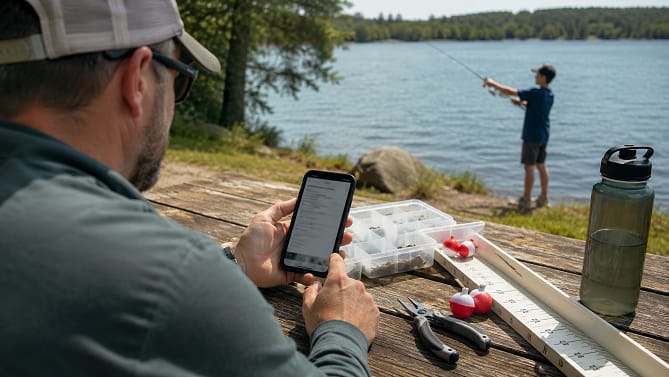
That detail is what makes the program useful for serious angler development. Free access should not mean casual disregard for the rulebook. It should be a teaching moment. Beginners need to learn early that fishing access and fishing responsibility move together.
CDFW’s July 4 Free Fishing Day announcement encouraged potential anglers to check the rules and regulations for each water they plan to fish. That is the habit every state should want beginners to build.
Texas anglers understand this well. A public lake, river, pier, bay, or state park may look simple, but the rules can change by species, season, water body, possession limit, gear type, and access point. A one-day license break is helpful only if it introduces people to those responsibilities instead of hiding them.
That is why California’s Free Fishing Day works as a national lesson: access can be flexible while regulations remain firm.
Why The First Fishing Trip Needs Less Pressure
Many people do not avoid fishing because they dislike the outdoors. They avoid it because the sport can feel complicated from the outside. Licenses, rods, bait, knots, limits, species, gear rules, and local regulations can make a first trip feel like a test before the fun starts.
A Free Fishing Day changes that emotional equation. It gives beginners permission to try without making a full commitment. That matters for families with children, urban residents without fishing relatives, adults returning after years away, and visitors who may be near water on a holiday weekend.
The strongest first fishing trips are not always the most productive. They are the ones where a beginner learns how to cast safely, identify a basic species, ask questions, respect limits, and enjoy being near water. A single bluegill, trout, bass, or catfish can be enough to create a memory.
Recent Texas Sportsmen coverage of new angler access made a similar point through Caddo Lake State Park’s Fishin’ Fridays. Borrowed tackle, ranger help, and pier access can make fishing less intimidating. California’s Free Fishing Day removes a different barrier, but the goal is the same: make the first step easier without weakening the culture of responsibility.
How Free Fishing Days Can Support Families And Youth Anglers
Youth development often begins before anyone calls it youth development. A child may not start with a tournament team, a boat, or a serious tackle setup. They may start on a holiday weekend when a parent, grandparent, neighbor, or friend says, “Let’s try fishing today.”
Free Fishing Days give families that opening. The date is easy to remember. The cost barrier is lower. The activity can fit into a broader outdoor day. The pressure to “make the license worth it” disappears.
For licensed anglers, these days also create a clear role. They can introduce someone else to the sport. They can bring a beginner to a safe public water, explain limits, demonstrate knot tying, handle fish carefully, and show how to clean up line and bait. A Free Fishing Day can become a mentorship day.
That matters because fishing cultures survive through invitation. If experienced anglers only fish with other experienced anglers, the sport narrows. If they use access days to bring in new people, the sport grows.
| Barrier For Beginners | How Free Fishing Day Helps | What Still Must Be Taught |
|---|---|---|
| License Cost | Removes the one-day sport fishing license requirement | Future license rules and conservation funding |
| Rule Confusion | Gives a reason to learn with help | Bag limits, size limits, closures, gear rules |
| Gear Uncertainty | Encourages simple starter trips | Safe hooks, basic tackle, responsible cleanup |
| Family Hesitation | Makes the first trip easier to justify | Water safety and fish handling |
| Lack Of Mentorship | Gives licensed anglers a reason to invite beginners | Ethics, patience, and respect for public water |
The program works best when experienced anglers treat it as an introduction, not a loophole.
Why Rules Still Shape The Experience On Free Days
California’s July 4 Free Fishing Day is useful because it keeps regulations visible. A beginner who learns that bag limits, size limits, gear restrictions, report cards, fishing hours, and stream closures still apply is learning the real sport, not a simplified version that disappears after one day.
That matters especially on popular holiday weekends. Lakes, rivers, beaches, and piers may see more people, more families, more boats, and more casual anglers than usual. Without rule awareness, free access can create crowded-water problems.
The best approach is to make rule checking part of trip planning. Anglers should decide where they are going, check local regulations, confirm whether special report cards apply, understand species limits, and bring the right gear. A beginner does not need to know everything immediately, but someone in the group should know where the official rules live.
That is also where public agencies and experienced anglers can help. Clear web pages, ranger programs, tackle shops, fishing clubs, and family mentors can turn a Free Fishing Day into a responsible learning environment.
A state does not build new anglers by hiding complexity. It builds them by making the first step manageable and teaching the next step clearly.
How California’s Model Connects With Texas Fishing Access
California’s Free Fishing Day is not a Texas program, but the access lesson fits Texas perfectly. Texas has its own mix of state park fishing programs, urban public water, youth events, tournament pathways, coastal access points, and family-friendly fishing opportunities. The common question is the same: how do new people get into the sport?
Texas Sportsmen has recently covered Caddo Lake Fishin’ Fridays, Lake Casa Blanca July programs, San Antonio public fishing rules, and Southeast Texas high school fishing. Together, those stories show that angler development has several entry points. Some remove gear barriers. Some provide ranger instruction. Some clarify public-water rules. Some create school competition. California’s July 4 Free Fishing Day adds another model: remove the license barrier for a limited time, then reinforce the rules.
That model matters because the future of fishing cannot depend only on people born into fishing families. New anglers may come from cities, suburbs, public parks, holiday trips, school programs, and casual invitations. They may start without knowing the difference between a bass and a trout. The goal is not to judge that. The goal is to give them a safe, responsible way in.
A one-day license exemption can do that if the message is clear: try fishing, enjoy the outdoors, and learn the rules that protect the resource.
Why Free Fishing Days Can Bring Former Anglers Back
Free Fishing Days are not only for first-timers. They can also bring back people who stopped fishing. Some adults drift away because of work, family schedules, cost, relocation, or simply losing the habit. A holiday Free Fishing Day gives them a low-commitment reason to return.
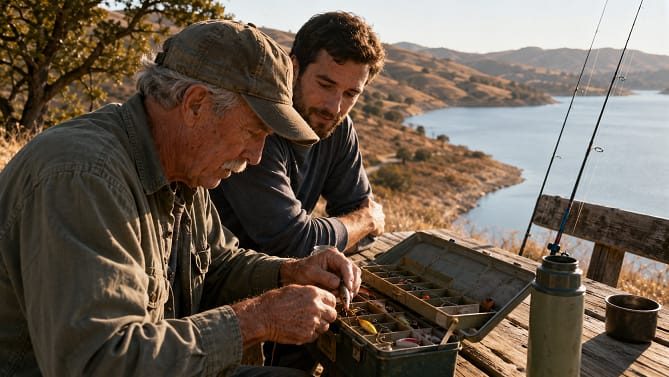
That can be valuable for conservation and participation. A returning angler may already have basic skills but need a reminder of current regulations, license rules, and local access points. They may also introduce children, spouses, friends, or neighbors who have never fished.
That ripple effect matters. One returning angler can become the person who brings three new anglers. A family trip can become an annual tradition. A casual July 4 outing can become the reason someone buys a license later in the year.
Fishing participation grows when the sport creates easy re-entry points. California’s July 4 and September 5 dates give people two opportunities in 2026 to reconnect.
How Free Access Can Support Conservation If It Is Framed Correctly
Some anglers may worry that license-free days weaken conservation funding or encourage casual rule-breaking. Those risks exist if the program is framed poorly. But when Free Fishing Days are presented as supervised entry points into the real rule system, they can support conservation over time.
A person who tries fishing for free and enjoys it may buy a license later. A child who catches a first fish may become a lifelong license holder. A family that learns regulations on a free day may become more responsible on future trips. A returning angler may reconnect with conservation funding and public-water stewardship.
That is the long game. Free access should not be measured only by one day’s license revenue. It should be measured by how many people it moves toward regular, legal, responsible participation.
The key is messaging. Agencies and anglers should make clear that Free Fishing Day is not a free-for-all. It is a chance to experience fishing while still respecting the same rules that protect fish populations, habitat, and public access.
What Experienced Anglers Should Do On Free Fishing Days
Experienced anglers have a special role on Free Fishing Days. They should not treat the day only as a chance to fish around more people. They should treat it as a recruitment and education opportunity.
That means choosing beginner-friendly waters, bringing simple gear, explaining rules before fishing starts, teaching safe casting, keeping trips short enough for children, avoiding crowded pressure points, and modeling good fish handling. It also means cleaning up line, respecting other users, and showing beginners that fishing culture is built on patience.
A good mentor does not overwhelm a beginner with every technical detail. They give enough structure for the first trip to feel successful. They explain why limits matter, why hooks need care, why some fish should be released quickly, and why public water must be shared.
That is how a Free Fishing Day becomes more than a calendar note. It becomes an entry point into sportsmanship.
Why July 4 Shows Fishing Still Belongs In The American Outdoor Story
CDFW connected the July 4 Free Fishing Day to America’s 250th birthday, framing fishing as one of the country’s oldest pastimes. That theme matters because fishing remains one of the most accessible outdoor sports when the first barriers are lowered.
A person does not need a stadium, a team roster, or elite equipment to begin. They need legal access, basic gear, safe water, and someone willing to explain the rules. That simplicity is why fishing can still connect generations.
For Texas Sportsmen readers, California’s July 4 Free Fishing Day should be read as a reminder rather than a distant state policy. The future of fishing depends on entry points. Some will come from state parks. Some will come from school teams. Some will come from public piers. Some will come from free access days.
The strongest fishing culture is not the one that only celebrates experts. It is the one that keeps making room for beginners and teaches them how to become responsible anglers.
California’s July 4 Free Fishing Day did exactly that. It removed one barrier, kept the rules in place, and gave families a reason to make a first cast.
