
Wyoming’s latest afternoon trout advisory should matter to anglers far beyond the Snake River. In mid-July 2026, the Wyoming Game and Fish Department urged anglers in the Jackson Region to avoid afternoon fishing as warm, dry weather, lower flows, and rising water temperatures increased stress on trout and other cold-water species. The warning was not about poor fishing conditions. It was about fish survival. For Texas Sportsmen readers, the advisory belongs in the same conversation as red snapper handling, catch-and-release data, summer boat safety, and conservation-minded access: heat is no longer just something anglers endure. It is something they must plan around if they want released fish to live.
Why Wyoming’s Afternoon Advisory Matters Beyond Trout Country
Wyoming Game and Fish’s fishing in the heat guidance explains the basic problem clearly: when it is hot and dry, streams and rivers carry less water, water temperatures rise, and trout can struggle because warm water holds less dissolved oxygen. That makes it harder for fish to recover after being caught, especially when they are fought hard, handled poorly, or released during the hottest part of the day.
In the Jackson Region, Wyoming officials warned that the Snake River and its tributaries had already approached 68 degrees, with conditions expected to worsen. WGFD also noted that catch-and-release trout mortality increases significantly when water temperatures exceed 70 degrees. That is the number anglers should remember because it turns heat from a comfort issue into a conservation issue.
This is not only a Wyoming story. Texas anglers understand summer heat better than almost anyone. Coastal fishermen plan around water temperature, oxygen, tides, and release stress. Bass anglers watch livewell conditions during tournaments. Park programs teach young anglers to fish early, drink water, and handle fish quickly. Wyoming’s trout advisory simply gives the issue a sharp national example.
The lesson travels well: when the water gets too warm, responsible anglers may need to change when they fish, how they fight fish, and whether they should keep casting at all.
How Warm Water Changes Catch-And-Release Math
Catch-and-release fishing depends on one assumption: the fish survives after release. Heat makes that assumption less reliable. Warm water carries less dissolved oxygen, and trout are cold-water fish that rely on oxygen-rich conditions to recover after stress. When an angler hooks, fights, lifts, photographs, and releases a trout in warm afternoon water, the fish may not have enough oxygen available to recover.
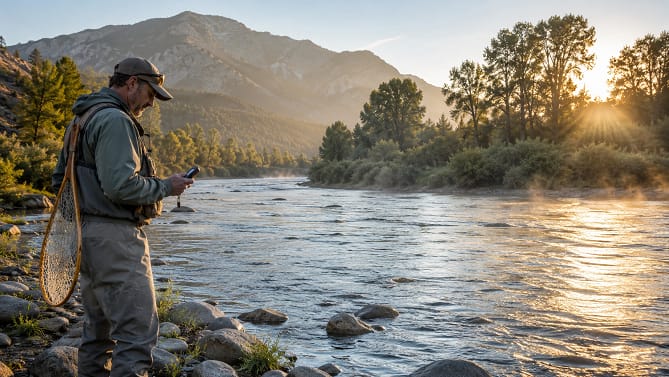
That is why WGFD’s July 2026 advisory urged anglers to limit fishing to early morning hours before water temperatures peak. The agency also advised anglers to land fish quickly, keep fish in the water as much as possible, and handle fish gently.
Those recommendations are practical because they focus on the moments an angler controls. No fisherman can cool an entire river in July. But an angler can choose the hour, shorten the fight, wet hands before touching a fish, avoid squeezing it, remove hooks carefully, and skip long photo sessions.
That connects directly with Texas Sportsmen’s earlier coverage of catch-and-release responsibility. Whether the species is a Wyoming trout or a Gulf reef fish, release survival depends on what happens after the hookset.
Why The Afternoon Window Is Becoming The Safety Line
The word “afternoon” matters. Wyoming officials did not simply say fishing was bad. They focused on the part of the day when water temperatures typically peak. That framing gives anglers a more useful decision point than a broad seasonal warning.
Early morning fishing can still be responsible when overnight cooling gives trout better recovery conditions. Afternoon fishing after several hot, dry days can be a different story. The same river can be safer for catch-and-release at sunrise than it is after hours of direct sun.
That idea should feel familiar to Texas anglers. Summer fishing already revolves around windows: first light, tide movement, moon phase, oxygen levels, boat traffic, wind, and storm timing. Wyoming’s advisory adds another window that should be part of modern fishing judgment: the temperature-recovery window.
| Heat-Safety Factor | Why It Matters For Trout | Angler Adjustment |
|---|---|---|
| Water Near 68 Degrees | Cold-water fish begin facing higher stress | Fish earlier and monitor conditions |
| Water Above 70 Degrees | Catch-and-release mortality rises sharply | Avoid catch-and-release trout fishing |
| Low Flows | Less habitat and less oxygen-rich refuge | Reduce pressure on stressed fish |
| Long Fights | Fish burn energy they may not recover | Land fish quickly |
| Air Exposure | Recovery becomes harder in warm conditions | Keep fish in the water |
This is not a complicated system. It is a discipline system. The angler who understands the window protects the fishery.
How Wyoming’s Warning Fits A Larger Western Water Pattern
Wyoming’s advisory also fits a broader western fishing challenge. WGFD’s Central Wyoming 2026 fishing and habitat outlook noted record-breaking low precipitation, unseasonably high temperatures, and close monitoring of how habitat conditions could affect aquatic wildlife. In the Laramie Region, Game and Fish officials urged caution when fishing rivers and creeks with elevated water temperatures during the heat of summer and pointed anglers toward the same fishing-in-the-heat guidance.
That matters because one hot afternoon is not the whole story. The bigger issue is cumulative stress: low snowpack, low flows, warm air, high sun, and sustained fishing pressure. Trout can survive a difficult day, but repeated stress across a season can make fisheries more vulnerable.
This is where anglers have to think like resource users, not only recreation users. If a river is warm, low, and crowded, every additional hooked fish adds pressure. A voluntary decision to stop fishing can protect the same fish anglers want to catch later.
Texas anglers have seen similar logic in different habitats. Low dissolved oxygen can affect summer fish behavior. Shallow coastal flats can become stressful during heat spikes. Tournament livewells need attention. Warm-water handling can decide whether a released fish swims off strong or struggles.
The geography changes, but the conservation math stays familiar.
Why “Keep Your Limit” Can Sometimes Be More Responsible Than Releasing
One uncomfortable part of hot-weather trout fishing is that catch-and-release may not always be the most responsible choice. Wyoming outdoor guidance has repeatedly told anglers that when water temperatures reach high-stress levels, keeping legal fish within the limit can be better than repeatedly catching and releasing fish that may die afterward.
That does not mean anglers should harvest carelessly. It means they should understand that release mortality changes the ethics. A fish that swims away slowly, rolls, loses balance, or cannot maintain itself in current may not survive. WGFD’s July guidance urged anglers to keep fish that appear exhausted and cannot remain upright, because those fish are unlikely to survive release.
That point matters for all anglers because it challenges a simple slogan. “Catch and release” is not automatically conservation if conditions make survival unlikely. Conservation depends on timing, handling, legal harvest choices, and restraint.
For Texas anglers, the same concept applies in different forms. A fish pulled from deep water may need descending help. A trout or redfish handled too long in summer heat may be compromised. A tournament bass in a poor livewell can decline quickly. The right action depends on the fish, the rules, and the conditions.
Good anglers do not follow habits blindly. They adapt to what the resource needs that day.
How Anglers Can Make Better Heat Decisions
The strongest part of Wyoming’s advisory is that it gives anglers actions they can actually take. Fish early. Carry a thermometer. Watch water temperature. Land fish quickly. Keep fish wet. Avoid squeezing fish or touching gills. Remove hooks gently. Stop fishing when conditions are too warm.
Those habits are simple, but they are not always easy. Anglers often travel long distances, plan trips weeks ahead, and want to keep fishing once they reach the water. Heat-safety fishing requires restraint. It asks anglers to treat stopping early as part of success rather than failure.
That mindset can improve summer fishing everywhere. Texas anglers planning July or August trips should think the same way. What is the water temperature? What time will oxygen be best? Is the fishery stressed? Is catch-and-release realistic? Are there cooler alternatives, deeper water, shaded areas, or a different species better suited to the conditions?
Anglers should also avoid turning heat guidance into a trophy-photo debate. The issue is not whether one photo is always bad. The issue is whether a fish already stressed by warm water can afford extra air exposure, handling, and delay. In hot conditions, speed and restraint matter.
Why Voluntary Compliance Can Prevent Hard Closures
Wyoming’s July warning also carried a policy message. Darren Rhea, a WGFD fisheries supervisor, said a voluntary or emergency closure could be implemented if needed to protect the resource. If that happened, WGFD would notify the public and post signs at water access points.
That matters because voluntary behavior can sometimes prevent stricter rules. If anglers avoid afternoon fishing, handle fish carefully, and reduce pressure during warm periods, agencies may have more room to manage without closures. If anglers ignore warnings, emergency restrictions become more likely.
Texas Sportsmen readers have seen similar logic in other settings. Public fishing rules, red snapper seasons, invasive-species prevention, alligator safety, and sea turtle reporting all depend on angler behavior before enforcement steps in. Strong fishing cultures use voluntary discipline to protect access.
That is the practical reason Wyoming’s advisory matters. It is not only about trout. It is about the relationship between anglers and agencies. When anglers take heat stress seriously, they show managers that the community can help protect the resource.
What Texas Anglers Can Learn From A Wyoming Trout Warning
Texas anglers may not be chasing Snake River trout, but the lesson fits summer fishing in this state. Heat changes everything. It changes dissolved oxygen, fish movement, handling risk, boat safety, livewell performance, bank-fishing comfort, and the decisions anglers should make before and during a trip.
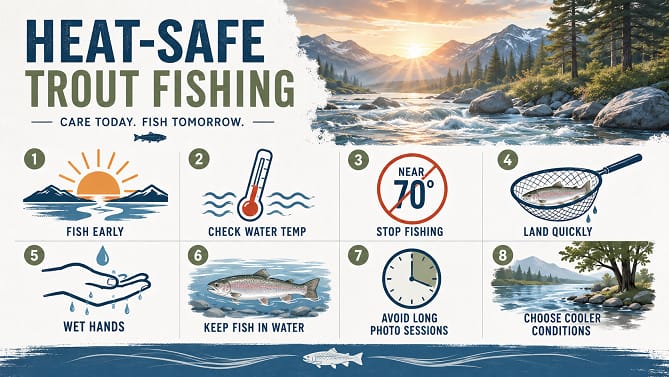
The first takeaway is timing. Early starts are not only about better bites. They can be better for fish survival.
The second is handling. A fish that will be released should be landed quickly, kept wet, handled gently, and returned without unnecessary delay.
The third is honesty. If conditions make release survival doubtful, anglers should change plans, keep legal fish where appropriate, target a different species, move to cooler water, or stop fishing.
The fourth is education. Youth programs, park fishing events, tournament captains, guides, and clubs should teach heat safety as part of basic angler development. A young angler who learns when not to fish may become a better sportsman than one who only learns how to catch.
That is why Wyoming’s advisory belongs on a Texas outdoor site. It turns heat into a fishing ethics story.
Why Heat Is Now Part Of The Fishing-Safety Conversation
Fishing safety has traditionally focused on life jackets, hooks, weather, boat handling, hydration, and access. Those still matter. But heat has become a fish-safety issue too, especially for anglers who practice catch-and-release during peak summer.
Wyoming’s afternoon trout advisory makes that visible. The Snake River and its tributaries approaching 68 degrees, the 70-degree mortality warning, the early-morning recommendation, and the possibility of voluntary or emergency closures all point to the same conclusion: summer fishing decisions now need a temperature check.
For Texas anglers, the message is not to stop fishing whenever it is hot. The message is to become more precise. Know the water. Know the species. Know the stress signs. Know when an early start is responsible. Know when the afternoon bite is not worth the cost.
The best anglers are not defined only by what they catch. They are defined by how well they read the conditions and protect the fishery when conditions turn against the fish.
Wyoming’s advisory is a trout story, but the lesson is national. Heat is part of fishing safety now, and anglers who understand that will be better prepared for the summers ahead.