
The 2026 CCA Texas STAR Tournament has always been more than a summer fishing contest. It is part coastal tradition, part conservation campaign, part family event, and part redfish treasure hunt stretching across the entire Texas shoreline.
But this year, one rule change carries more weight than it might seem at first glance.
For the 2026 tournament, tagged redfish divisions now emphasize a clear process: catch the fish, clip the tag, release the redfish, and turn the tag in at an official CCA Texas STAR weigh station. That shift moves the event deeper into modern conservation territory. It keeps the thrill of a prize-winning tagged redfish alive, but it reframes the angler’s job around fish survival, clean documentation, and ethical handling.
That matters because the STAR Tournament is not a small side event. The official 2026 program runs from May 23 through September 7, covers the entire Texas coastline, and offers more than $2 million in prizes, including boats, trucks, UTVs, and scholarships. When an event that large changes how anglers handle tagged redfish, the message reaches far beyond one tournament season.
How The Clip And Release System Works
The idea is simple enough for any coastal angler to understand: the tag proves the catch, not the dead fish.
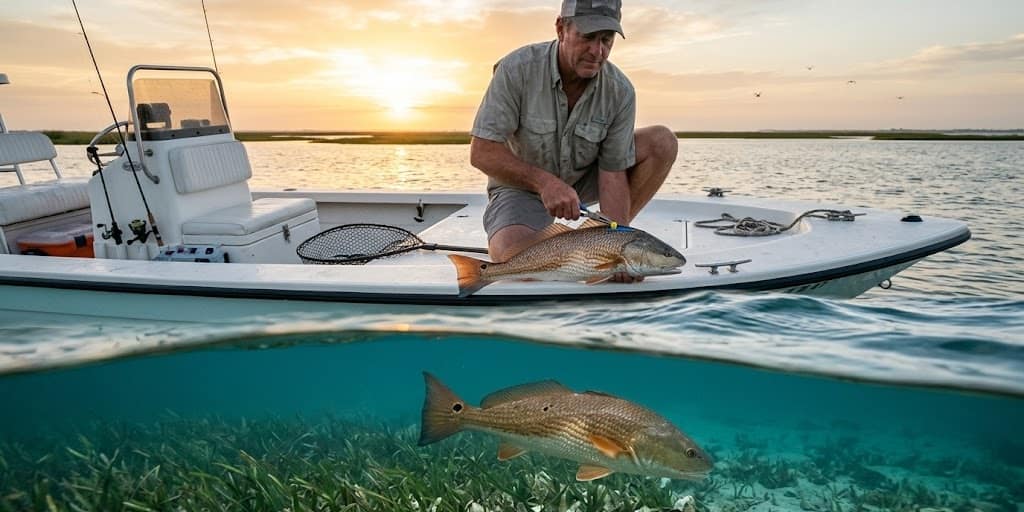
In the 2026 STAR format, the first five certified winners in the Texas Ford Dealers Red Tag Division can win a 2026 Ford F-150 XLT SuperCrew Cab connected to a 23-foot Haynie Amigo package, while the next five certified winners receive a 23-foot Haynie Amigo boat package. The tournament also added the newer Tags of Texas Division, where different sponsor-colored tags create additional winning opportunities.
The important part is the process. The angler catches the tagged redfish, clips the tag, releases the fish, and submits the tag through the tournament’s official system. STAR’s own language around the 2026 event is direct: the first five red-tagged redfish must be caught, the tag clipped, the fish released, and the tag turned in at an official weigh station.
That changes the emotional rhythm of the catch. Instead of racing a redfish to a dock as proof, the angler’s responsibility is to secure the tag and return the fish to the bay in the best shape possible.
Why This Matters For Redfish Conservation
Texas redfish are one of the state’s great fisheries success stories, but that success has never been automatic. It came from decades of slot-limit management, hatchery support, habitat attention, and a strong conservation ethic among anglers.
A tournament as visible as STAR sits directly inside that story.
The tournament is open to registered CCA members with proper tournament entry and a valid Texas saltwater fishing license, and it reaches anglers from Sabine Lake to South Padre Island. With that kind of scale, handling practices matter. Even if only a small percentage of anglers encounter tagged redfish, the rule sets a public standard for how prize fish should be treated.
It also reflects the broader direction of Texas coastal fishing. The conversation is no longer just about catching more fish or winning bigger prizes. It is about building tournament formats that can grow without pushing the resource in the wrong direction.
That is especially important as more anglers discover the long-format tournament model. In our previous look at CCA STAR Tournament participation, the biggest takeaway was that season-long events make competition more accessible across the coast. The new clip-and-release approach adds another layer: accessibility must come with stewardship.
The Ethics Of A Prize Fish
Tagged redfish create a unique ethical moment. The fish is not just another slot red. It may represent a truck, a boat, a scholarship, or a life-changing summer story.
That kind of prize pressure can change how people behave.
The clip-and-release rule helps remove some of that tension. By making the tag the central proof of eligibility, the rule encourages anglers to treat the fish as a living resource instead of a possession that must be physically delivered for validation.
That distinction is subtle, but it is important. It tells anglers that the right outcome is not simply winning. The right outcome is winning while keeping the fishery intact.
In a state where outdoor competition continues to grow, from redfish tournaments to broader conversations around Texas sports betting, the same public expectation keeps surfacing: if competition is going to expand, the rules need to protect trust, fairness, and long-term sustainability.
What Anglers Need To Think About Before The Catch
The clip-and-release system rewards preparation. An angler who catches a tagged redfish should already understand the tournament process before the fish ever hits the deck.
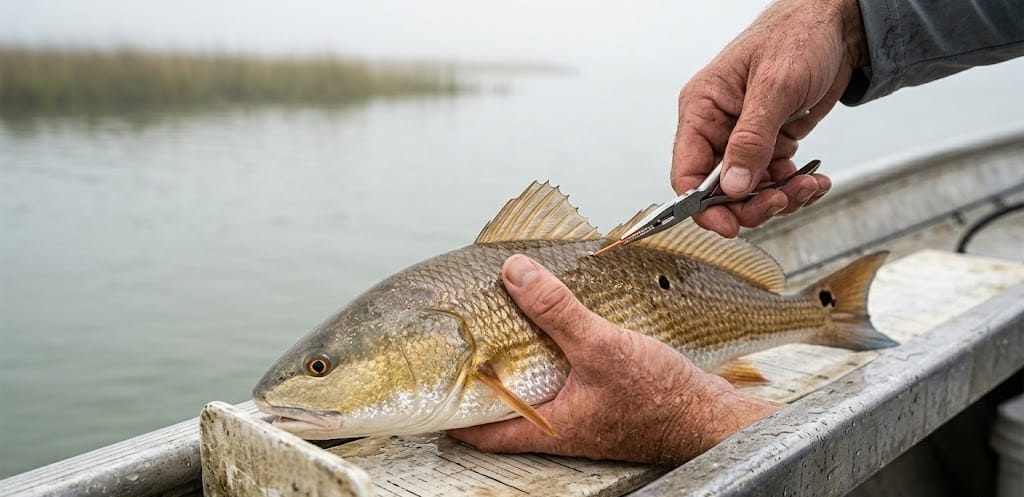
That means knowing whether their CCA membership and STAR entry are active. It means knowing where the nearest official weigh station is. It means understanding the deadline for tag submission. It also means having tools ready so the fish is not sitting out of the water while everyone on the boat scrambles.
Good fish care starts before the bite.
A prepared angler can land the fish cleanly, control the moment, clip the tag, document what the tournament requires, and release the redfish quickly. A disorganized angler may still be excited, but excitement is not a fish-handling plan.
That is where ethics becomes practical. The rule does not ask anglers to stop competing. It asks them to compete with better habits.
How STAR Fits The Bigger Shift In Tournament Fishing
The STAR rule change is part of a wider evolution across fishing tournaments. More events are moving away from old weigh-and-display habits and toward formats that reduce stress on fish.
Catch-photo-release systems, digital verification, live-release formats, tagging partnerships, and better handling rules are becoming more common because tournament organizers know the sport is under more scrutiny than ever.
The Texas coast is especially suited for that evolution. Redfish tournaments already operate inside slot-limit culture, where anglers are used to thinking about legal length, release decisions, and ethical handling. The new STAR system leans into that existing mindset.
It also gives youth anglers a stronger lesson. STAR has scholarship divisions and family participation built into its identity, so the habits taught through the tournament can shape how younger anglers think about redfish for years.
The Tournament Still Keeps Its Big-Event Energy
None of this makes STAR less exciting.
If anything, the new format may make the chase cleaner. The tagged redfish divisions still offer major prizes. The tournament still stretches across more than 100 days of fishing. The odds still create that classic Texas dock-talk energy every summer: someone, somewhere, may be one cast away from a truck-and-boat package.
The difference is that the fish does not need to become collateral damage in the story.
That balance is exactly why the rule matters. STAR keeps the adrenaline of a major prize tournament while placing conservation directly into the winning process. It shows that Texas anglers do not have to choose between excitement and ethics.
What It Means For Coastal Tournament Culture
The most important effects of this rule may show up outside STAR.
When a tournament this visible changes expectations, smaller events notice. Local redfish tournaments, youth events, and regional circuits may not copy the exact structure, but they will feel the influence. The standard shifts. Anglers become more familiar with release-first thinking. Organizers get more comfortable building rules around fish survival.
That is how culture changes—not all at once, but through repeated examples that become normal.
For Texas redfish fishing, that is a healthy direction. More people are competing. More events are filling the calendar. More coastal communities are benefiting from tournament traffic. The only way that growth works long-term is if the fishery remains strong enough to support it.
A Better Definition Of Winning
The new clip-and-release rule does not take anything away from the CCA Texas STAR Tournament. It sharpens what the event already represents.
This is still a coastwide competition with big prizes, serious excitement, and decades of Texas fishing tradition behind it. But in 2026, the tagged redfish chase carries a clearer conservation message.
Catch the fish. Clip the tag. Release the redfish. Keep the story alive.
For Texas anglers, that may be the future of tournament ethics in its simplest form: the prize matters, but the fishery matters more.