
As the Texas tournament season pushes through the late fall of 2026 and prepares for the winter stretch, competitive anglers are facing a complex array of environmental challenges. The transition from the oppressive heat of the summer to the unpredictable cold fronts of the late year completely alters bass behavior, baitfish migration, and effective strike zones. Furthermore, severe hydrological shifts across major reservoirs have reshaped the playing field. To remain competitive in heavily contested fields, anglers must move beyond standard seasonal patterns and apply analytical approaches to water volume, temperature fluctuations, and strict regulatory compliance.
The late-season slate is rarely won by accident. The teams standing at the weigh-in scales in November and December are those who successfully decipher the rapidly changing conditions. From high school circuits to high-stakes team trails, success during this transitional period relies heavily on reading the water and maintaining a disciplined approach to every cast. For those competing across the state, this means evaluating everything from dropping lake levels in East Texas to the enforcement of restrictive slot limits designed to protect prime breeding stock.
Evaluating the Impact of Low Water Elevations
The defining narrative for many late 2026 events has been the significant drop in water levels across key fisheries. A prime example is Lake Sam Rayburn, which historically serves as the anchor for the late-year tournament schedule. By mid-October 2026, Sam Rayburn was reported near 153.73 feet mean sea level, dropping roughly 10.66 feet below its 164.40-foot conservation elevation. According to official measurements tracked by Water Data for Texas, this places the reservoir at approximately 63.4 percent of its total capacity, fundamentally altering how anglers approach the legendary fishery.
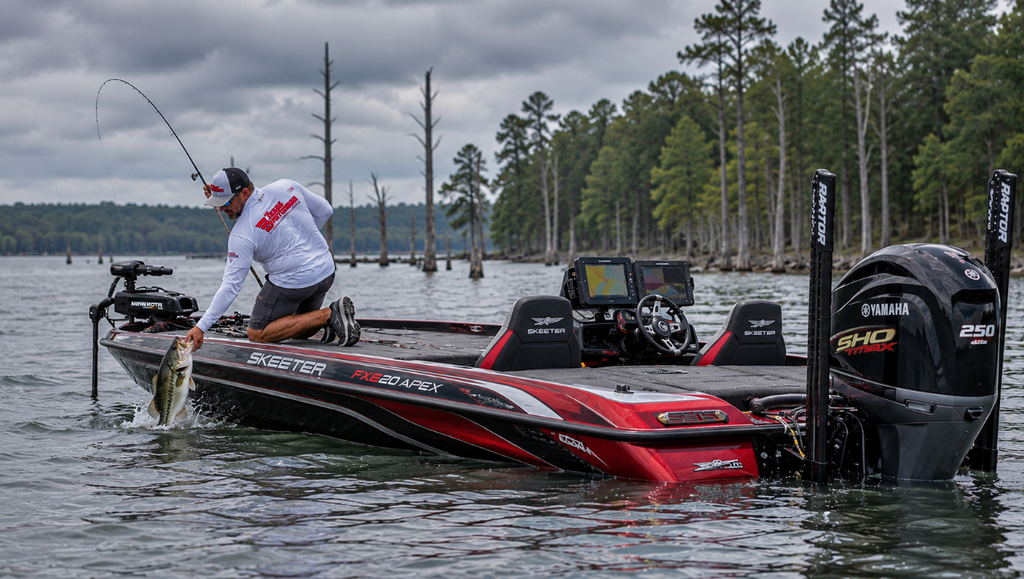
When a reservoir loses this much volume, the impact on fish positioning is immediate and profound. Submerged aquatic vegetation—primarily hydrilla and coontail—that held massive schools of bass during the summer months is suddenly left high and dry. The loss of shallow cover forces baitfish and predatory bass to retreat toward the first available deep-water breaklines. For tournament anglers, this means shifting focus away from the banks and concentrating heavily on secondary points, submerged creek channel swings, and isolated offshore brush piles.
Low water also introduces significant navigational hazards. Stumps, submerged standing timber, and shallow ridges that were easily cleared at full pool are now perilous obstacles that can disable a fiberglass bass boat. Competitive anglers must balance the urgency of reaching their primary waypoints with the necessity of safe, calculated navigation. Mapping software and forward-facing sonar become invaluable tools, not just for locating suspended fish, but for safely navigating the treacherous, exposed topography of a drawn-down reservoir.
Redefining Late-Season Bass Positioning
As strong late-season cold fronts sweep across Texas, surface water temperatures plummet, initiating the biological process of lake turnover. The distinct thermocline that established itself during the summer breaks down, allowing oxygenated water to mix vertically throughout the water column. While this temporarily scatters bass, the eventual stabilization leads to highly predictable winter feeding patterns.
During this transition, the primary forage base—threadfin and gizzard shad—begins a distinct migration. Early in the transition, baitfish push toward the backs of creeks to find warmer, nutrient-rich water. However, as winter truly sets in and shallow waters cool too rapidly, these baitfish schools retreat to the stability of deeper water, suspending over main-lake points and deep river channels. The bass follow suit, transitioning from horizontal pursuit predators into vertical ambush predators.
Because cold water slows the metabolic rate of largemouth bass, they become significantly less willing to chase fast-moving lures over long distances. Anglers who continue to burn spinnerbaits or retrieve crankbaits at summer speeds will quickly find themselves falling out of contention. Instead, the strategy must shift toward targeting specific, high-percentage structural features where bass can conserve energy while waiting for an easy meal to pass directly in front of them.
| Reservoir Condition | Primary Structural Focus | Optimal Presentation Strategy |
| Dropping Water Levels | Secondary points, deep channel swings, offshore brush piles | Heavy football jigs, deep-diving crankbaits, Carolina rigs |
| Post-Front Cold Water | Vertical bluff walls, main lake points, standing timber | Suspending jerkbaits, blade baits, vertical jigging spoons |
| Stable Late-Fall Warming Trend | Shallow flats near deep water access, backs of major creeks | Lipless crankbaits, chatterbaits, medium-diving crankbaits |
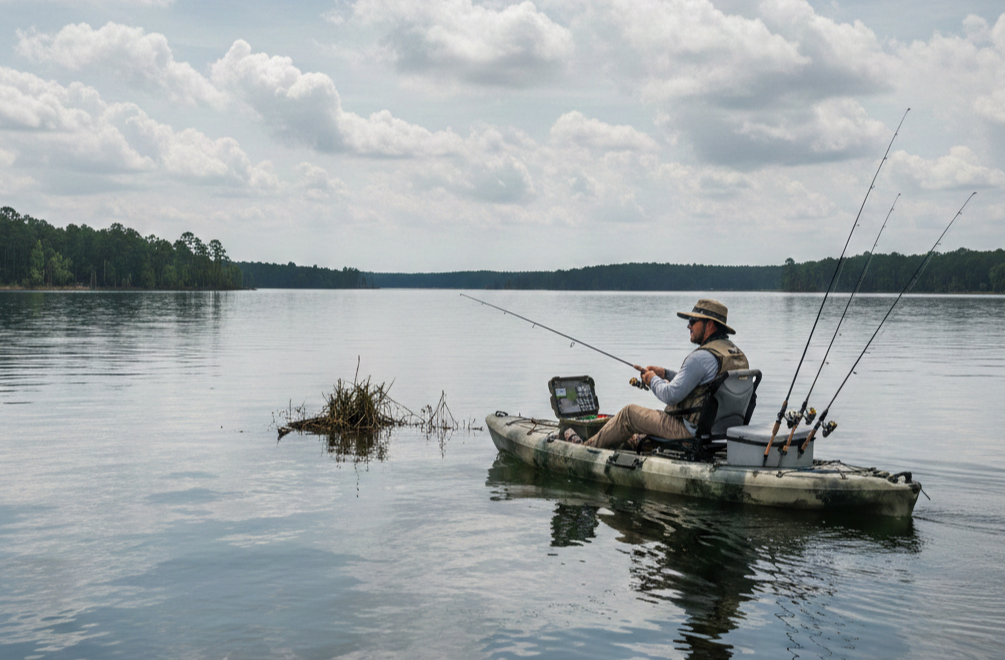
Adjusting Tackle and Presentation for Cold Fronts
The mechanical adjustments required for late-season tournaments are just as critical as the locational shifts. As the water cools and often clears due to a lack of summer algae blooms, bass become highly pressure-sensitive and line-shy. This necessitates a strategic down-sizing of terminal tackle and a shift toward transparent, low-visibility line choices. Fluorocarbon lines, which sink rapidly and become nearly invisible underwater, are mandatory for late-season success on pressured lakes.
The suspending jerkbait emerges as the dominant weapon during late-year cold fronts. This lure mimics a dying shad perfectly, but its effectiveness relies entirely on the cadence of the angler. A typical summer retrieve involves aggressive, continuous twitches. In late November and December, anglers must impart a sharp twitch followed by pauses that can last anywhere from five to fifteen seconds. It is during this agonizingly long pause that the sluggish, cold-water bass commits to the strike.
For bass glued to the bottom in deeper water, heavy football jigs and Texas-rigged creature baits dragged painstakingly slow across rocky points remain highly effective. The goal is to maintain continuous bottom contact, feeling every rock and stump. Bites in cold water are rarely aggressive; they often feel like a subtle, spongy weight at the end of the line. Anglers must remain hyper-focused to detect these nuanced strikes and set the hook with authority.
Competition Preparation and Rule Discipline
The physical act of catching fish is only half the battle in modern competitive circuits. Strict regulatory compliance and fish care are what ultimately determine the final standings. The 2026 Bass Champs team finale at Lake Fork served as a prime example of this reality. The format placed a massive premium on rule discipline and slot-limit awareness. Lake Fork enforces a strict slot limit protecting bass between 16 and 24 inches, meaning these fish must be immediately released.
Tournaments operating under these restrictions force anglers to make high-pressure, split-second decisions regarding the legality of their catch. A mismeasurement can result in severe penalties or outright disqualification. This level of scrutiny requires teams to carry certified bump boards and to measure every marginal fish with extreme care. The Texas Parks and Wildlife Department strictly enforces these regulations during competitive events to ensure the long-term health of the state’s premier trophy fisheries.
Beyond regulatory compliance, late-season events demand proactive fish care. While cold water holds more dissolved oxygen than warm water, the rapid temperature fluctuations experienced in livewells during long tournament days can severely stress the catch. As the premier destination for Texas hunting and fishing competitions, event organizers consistently emphasize the following protocols for maintaining fish health:
- Continuous Aeration: Run livewell aerators on a continuous cycle rather than a timer, ensuring maximum oxygen saturation throughout the day.
- Chemical Additives: Utilize specialized livewell treatments to replenish the slime coat that bass often lose when handled during the culling process.
- Ice Management: During unexpected late-fall warm spells, use frozen water bottles to slowly lower the livewell temperature, matching the cooler deep-water environment where the fish were caught.
- Culling Efficiency: Use non-penetrating cull clips to avoid damaging the jaw structure of the fish, allowing for safe and rapid identification.
Managing the Transition to Winter Tournaments
As the 2026 competitive season presses forward into its most challenging months, the margin for error shrinks dramatically. The aggressive, reactionary bites of the early fall are replaced by a methodical, grind-it-out reality. Anglers who refuse to adapt their pacing, or those who ignore the severe hydrological realities of dropping reservoir levels, will struggle to put together consistent bags.
The true test of a tournament angler lies not in catching active fish during optimal conditions, but in manufacturing bites when the environment turns hostile. By embracing detailed water-level analysis, mastering cold-water lure presentations, and adhering strictly to conservation-minded tournament rules, competitors can navigate the late-season transition successfully. In the high-stakes arena of Texas tournament fishing, the ability to adapt to the water is the single most valuable skill an angler can possess.