
Along the Texas coast, few habitat features are as quietly powerful as oyster reefs. Beneath the surface of bays like Matagorda, these dense shell structures create some of the most productive fishing environments in the Gulf.
Recent restoration efforts and improved management have allowed sections of Matagorda Bay’s oyster reefs to recover, signaling a positive shift for coastal ecosystems. For redfish anglers, this recovery is more than environmental news—it directly impacts where fish feed, stage, and thrive.
Understanding the connection between oyster reef health and redfish behavior reveals why these restoration efforts are reshaping inshore fishing across Texas.
Why Oyster Reefs Are Critical To Coastal Ecosystems
Oyster reefs function as living infrastructure within Texas bay systems. Unlike static structures, reefs grow, filter water, and support entire food chains.
A single oyster can filter gallons of water daily, improving clarity and allowing sunlight to reach submerged vegetation. This process supports seagrass growth, which in turn creates ideal feeding grounds for shrimp, crabs, and baitfish.
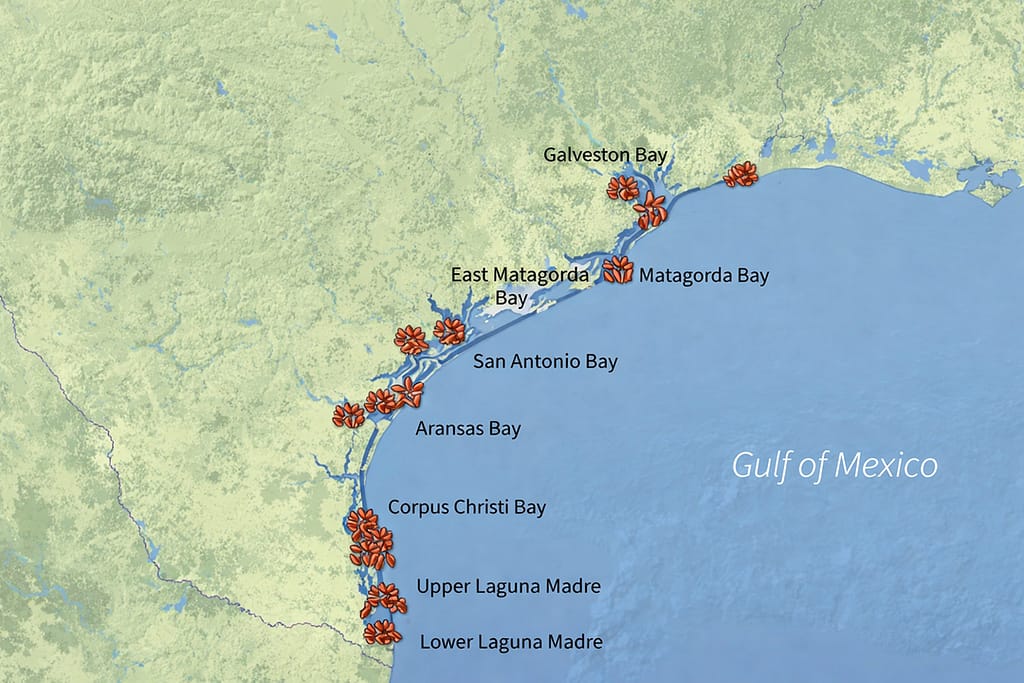
Reefs also provide physical structure that attracts marine life. Small organisms attach to shells, baitfish gather around the reef edges, and predators like redfish patrol these zones looking for easy feeding opportunities.
Without healthy oyster reefs, much of this biological activity disappears.
The Recovery Of Matagorda Bay Reefs
Matagorda Bay has long been one of Texas’ most productive estuaries, but like many coastal systems, it has faced pressure from overharvest, storms, and environmental changes.
Recent management strategies have focused on:
- Controlled harvesting zones
- Seasonal closures
- Habitat restoration projects
These efforts have allowed reef structures to rebuild naturally while maintaining sustainable use.
As reef density increases, so does the complexity of the habitat. This creates more feeding edges, ambush zones, and protective areas for juvenile species.
The result is a more balanced ecosystem that benefits both commercial fisheries and recreational anglers.
How Oyster Reefs Influence Redfish Behavior
Redfish are opportunistic feeders, and oyster reefs provide one of the most consistent food sources in coastal waters.
Around these structures, redfish target:
- Small crabs hiding between shells
- Shrimp pushed by tidal movement
- Baitfish seeking shelter along reef edges
The presence of oysters creates natural “feeding lanes” where current pushes prey directly into predictable zones.
This is why experienced anglers often focus on transition areas between reefs and grass flats, where redfish move between structure and open water depending on tide conditions.
For a deeper look at how habitat shapes fish populations, explore our breakdown of redfish habitat improvements, where conservation and ecosystem health directly influence fishing success.
Water Clarity And Feeding Efficiency
One of the less obvious benefits of oyster reef recovery is improved water clarity.
Clearer water allows redfish to rely more on sight while feeding, especially in shallow environments. This can increase feeding activity during daylight hours and make fish more responsive to artificial lures.
Cleaner water also supports healthier bait populations, which further enhances feeding opportunities.
According to research from the NOAA oyster reef restoration program, restored reefs significantly improve water quality and biodiversity in coastal ecosystems, reinforcing their importance beyond just shellfish production.
Strategic Fishing Around Restored Reefs
As oyster reefs recover, anglers must adapt their approach to take full advantage of these environments.
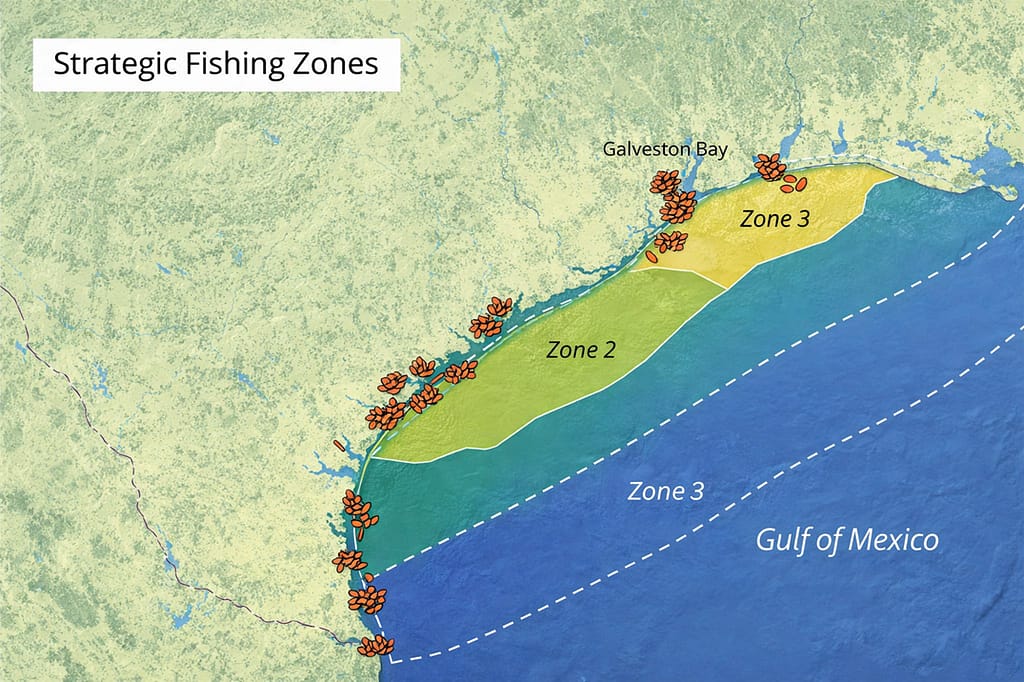
Fishing near reefs requires precision and awareness, as structure can both attract fish and increase the risk of losing gear.
| Strategy | Why It Works |
|---|---|
| Target Downcurrent Edges | Bait is pushed toward feeding redfish |
| Fish Moving Tides | Increased activity around structure |
| Use Weedless Lures | Reduces snagging on shell |
| Work Transition Zones | Redfish move between grass and reef |
Rather than casting directly into dense shell, experienced anglers focus on edges, drop-offs, and current seams where fish are actively feeding.
Long-Term Impact On Texas Redfish Fishing
The recovery of oyster reefs in Matagorda Bay reflects a broader trend across the Texas coast—habitat-driven fisheries management.
When foundational ecosystems improve, the effects ripple outward:
- Stronger bait populations
- Increased juvenile survival rates
- More consistent redfish distribution
- Improved fishing quality across seasons
These outcomes reinforce why conservation efforts remain essential for sustaining Texas’ reputation as one of the top redfish fisheries in the Gulf.
A Rebuilding Process That Benefits Every Angler
Oyster reef restoration is not an overnight solution. It requires years of careful management, environmental monitoring, and cooperation between agencies and coastal communities.
But the results are becoming increasingly visible.
Healthier reefs mean more predictable fishing patterns, stronger redfish populations, and better long-term opportunities for anglers exploring Texas bays.
For those who spend time on the water, the signs are clear—where oysters thrive, redfish are never far behind.