
Imagine a story that makes West Texas guides shiver. A trophy mule deer stands broadside, ready for the shot. The hunter has a perfect rest and her finger is on the trigger. But then, ten minutes of pure panic. She couldn’t find the deer in her scope.
This isn’t bad luck. It’s a systems failure. The deer walked away, leaving only regret and a story of “the one that got away.”
Welcome to your first Texas hunting competition. Here, the stakes are high. It’s not just about the meat. It’s about bragging rights, pride, and respect from your peers. Think of it as the Super Bowl, but with more camouflage and better scenery.
This guide is your pre-game montage. We mix analytical breakdowns with humor. Our goal is to turn you from an anxious rookie into a composed competitor.
Your mission, should you choose to accept it, starts right here.
Pick your division: species, terrain, day/night, team/solo
Before you start hunting, you must decide what kind of hunter you want to be. This choice affects your whole experience, from the challenges to the paperwork. It’s not just a preference; it’s a strategic decision.
Think of it as the hunt comp’s character creation screen. You can’t respawn. Your choices here dictate your required gear, your training montage, and the specific chapter of the Texas Parks and Wildlife Department rulebook you’ll need to memorize. Picking wrong isn’t a minor setback. It’s like showing up to a chess tournament having only studied checkers.
Species: The Ego Check. Are you a whitetail purist, chasing the ghost of a mature buck through thick oak motts? Or are you a javelina junkie, drawn to the pungent thrill of a herd in the scrub? The species you target defines your hunt. Whitetail demands patience and stealth. Javelina requires aggressive tracking and a strong stomach. Your choice is the first clue about your hunting personality.
Terrain: The Fitness Reality. Will you be silently stalking the rugged hill country, where every step is a negotiation with gravity and limestone? Or will you be glassing from a comfortable box blind on a managed pasture? One is a physical endurance test. The other is a mental patience game. Be brutally honest about your cardio. The terrain doesn’t care about your gym membership.
Day/Night: The Legal & Sensory Gamble. Day hunting is the classic experience. You play by the sun’s rules. Night hunting, where legal and for specific species, is a different beast. It trades color and depth perception for the enhanced hearing and the eerie glow of optics. It’s more tactical, often colder, and governed by an entirely different set of regulations. Choose based on your comfort with the dark and your appetite for red tape.
Team/Solo: The Accountability Spectrum. Going solo is the purest form of the sport. Every triumph is yours. Every missed shot, navigational error, and forgotten sandwich is also yours. There’s no one to blame but the map. A team division adds a layer of complex human dynamics. It’s about complementary skills and shared blame. It can halve the scouting work and double the post-hunt storytelling. It can also end friendships.
This decision is your first test of analytical skill. It requires research. As seasoned sources note, your prep work here determines your success later. Don’t just pick what sounds cool. Pick what aligns with your actual skills, your available time, and your tolerance for frustration.
Your division is your battle plan. The species is your enemy. The terrain is your battlefield. The day/night cycle is your operational window. Your team status is your chain of command. Get this foundation right. Everything else—the gear, the licenses, the scouting—flows from this single, critical series of choices.
Choose wisely. Or, you know, choose poetically and fail memorably. The Texas hunt comp welcomes both narratives.
Licensing and TPWD rules: seasons, zones, tagging, transport
Your first move in a Texas hunt competition isn’t scouting. It’s understanding the state’s licensing and rules. Paperwork might not be as exciting as a sunrise stalk. But, ignoring regulations is a big mistake.
The Texas Parks and Wildlife Department (TPWD) is in charge. Their rules are the non-negotiable part of ethical hunting.
Knowing seasons and zones is key. Texas has different hunting areas with their own rules. Hunting in the wrong place can lead to big trouble. These regulations help manage wildlife, and knowing your zone is as important as knowing your gun.
Next, you need a license. It’s your permission to hunt. The TPWD offers several licenses, but for new hunters, the Super Combo is usually the best choice. It covers hunting and fishing, and is a great value.
| License Type | Key Inclusions | Best For… | Approx. Cost* |
|---|---|---|---|
| Super Combo | Hunting, Freshwater & Saltwater Fishing, Archery, Migratory Bird | The serious all-around hunter; ultimate convenience. | $68 |
| Hunter Combo | Hunting, Freshwater Fishing, Archery | Landlocked hunters focused on game. | $55 |
| Youth Combo | All Super Combo privileges | Hunters under 17. | $9 |
| Resident Hunting | Basic hunting license only. | The minimalist who has separate fishing needs. | $25 |
*Prices for Texas residents. Non-resident fees are significantly higher.
Your Hunter Safety Certification number is in your license. It’s your permanent record. Losing it can cause a lot of trouble. Keep it safe in your phone.
After you bag an animal, the work isn’t over. Texas has specific tagging and transport rules. Not following these can lead to big problems.
Doing your paperwork early is smart. It helps you stay focused and avoid last-minute stress. Think of it as getting your plan before the game starts.
Your pre-event checklist should include:
- Purchasing your license online at least a week out.
- Printing physical copies and saving digital ones to your phone.
- Studying old permits or the TPWD app to understand the exact tagging workflow for your species and zone.
- Bookmarking the electronic harvest reporting page on your phone.
Game wardens are not villains. They are referees with law degrees and radios. Knowing the regulations shows respect for the game and the land. It makes you a better hunter.
Scouting plan: maps, trail cams, sign reading, private land etiquette
Think of scouting as a military mission, not just a casual walk. Every piece of information is key to success. In a hunt competition, having data is everything.
Start with digital recon. Know the terrain like your backyard before you go. Use topographical maps and satellite images. Tools like Google Earth help you see the land from above. State agency resources give you the lay of the land. Understanding topography and terrain is essential. It helps you find funnels, water sources, and thick cover.
Next, set up your trail cameras. They act as your eyes on the ground. Place them on game trails and near scrapes. You want to know when animals visit.
Then, go out to read animal signs. This is like learning a new language. Rubs, scrapes, tracks, and droppings tell you a lot.
- Rubs: A buck’s business card on a tree. Size and height tell a story.
- Scrapes: The community bulletin board of the deer world.
- Tracks: Direction, speed, and group size are all written in the dirt.
- Droppings: Freshness indicates recent activity. It’s not glamorous, but it’s informative.
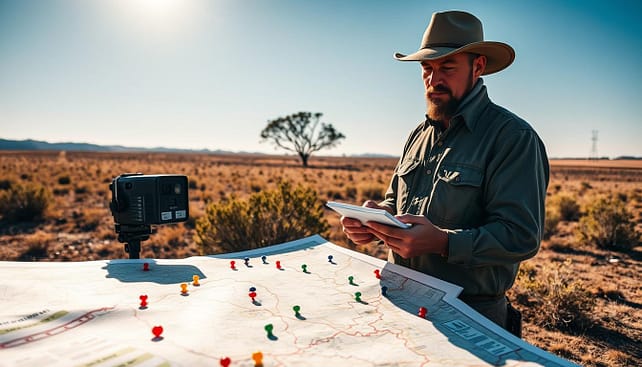
In Texas, knowing private land etiquette is key. Access to prime land is a tradition, but it’s a privilege. Showing up unannounced is a bad idea.
Always contact the landowner before you go. Be clear about your plans and respect their rules. This builds trust and ensures access for the future.
Combine all your scouting data into one picture. This will tell you where and when to find animals. Your scouting plan is your guide. On competition day, you’ll be ready to strike with confidence.
Gear checklist: weapon, optics, packs, layers, boots, first aid, comms
Your gear is more than just stuff you carry. It’s a system where each piece helps or hinders you. Think of it as your pre-mission plan—every item has a mission-critical function. You don’t need to spend a lot, but cheap gear is a risk.
Your weapon system is about having a reliable gun, not the latest one. It should be zeroed, familiar, and reliable. A fancy scope is useless without practice.
Optics let you see the competition world clearly. A good binocular or scope makes targets clear. But, you need a stable platform to use them well.
Your pack is like a mobile base. It’s not a suitcase. It should have water, snacks, and emergency gear easily accessible. How you pack affects your comfort after a while.
Clothing works in layers: base, insulation, shell. Your base layer manages sweat. Your insulation keeps you warm. Your waterproof shell keeps you dry. Cotton is bad because it absorbs moisture and loses insulation.
Boots are your primary way to move. Breaking them in is essential. Blisters can ruin your hunt, not your shooting.
First aid is for when you’re more ambitious than skilled. A basic kit helps with cuts, sprains, and thorns. Communications gear keeps you from getting lost.
| Gear Category | Primary Function | Priority Level | Smart Investment |
|---|---|---|---|
| Weapon & Optics | Target engagement and identification | Critical | Spend on reliability, not bells |
| Pack System | Logistics and weight distribution | High | Comfort and organization over brand |
| Clothing Layers | Thermoregulation and protection | High | Technical fabrics, not fashion |
| Footwear | Mobility and endurance | Critical | Fit and break-in time are everything |
| Support Items (First Aid, Comms) | Safety and coordination | Medium-High | Reliable basics, not expedition-grade |
This gear checklist is a curated selection, not a shopping spree. Each item should solve a real problem. The goal is to carry only what you need.
Test your gear before the event. Wear your pack and boots. Practice with your communications. Your gear should feel like an extension of you, not a burden. When everything works together, you’re not just carrying equipment—you’re operating a personalized hunting platform.
Skills blocks: marksmanship, calling, field dressing, navigation
Think of skills as the operating system for your gear. Today, we’re focusing on marksmanship, calling, field dressing, and navigation. Success is not just luck. It’s about building a solid skill set before you start.
Let’s begin with marksmanship. Hitting a target is easy. But real shooting is about executing a plan under pressure. It’s all about physics.
Forget about high magnification scopes. Modern drills use low-power scopes for quick target acquisition. Your scope is a tool, not a telescope.
Next, find a steady field position. The prone position is best for stability. But you also need to master kneeling and supported stands. Your body is your rifle’s platform. Make it solid.
Integrate these skills with the “snap” drill. This drill involves shooting at an unknown distance. You must scope, assume a position, control your breath, and shoot cleanly. It simulates real-world pressure.
Now, let’s move to psychology. Calling is not just talking. It’s an art of deception. You’re speaking in a way that sounds local.
Animals vocalize for reasons like mating, distress, and socializing. Your call must match the situation. A desperate fawn bleat is different from an aggressive buck grunt.
You have two main tools. Reed calls are good for loud, long-range calls like elk bugling. Diaphragm calls are for hands-free operation and subtle turkey calls. Each has its own dialect.
The psychology is simple. You’re using curiosity, fear, or attraction. A perfect call triggers a primal response. A bad one signals danger. There’s no middle ground.
After the shot, the real work begins. Field dressing is your post-victory logistics. It’s a bloody, practical art. Speed and hygiene are key.
The goal is to cool the meat quickly to preserve quality. You’ll need a sharp knife, game bags, and a clear process. It’s not glamorous, but it’s what turns an animal into food.
Lastly, navigation is the most underrated skill. Not getting lost is a big advantage. It’s more than just following a blue dot on a phone.
Learn to read a topographic map. Understand how terrain features guide movement. Use GPS technology, but never rely on it alone. Your brain is the main processor.
To help you choose your calling tool, here’s a breakdown of the two main systems.
| Call Type | Best Use Case | Skill Level Required | Key Tip |
|---|---|---|---|
| Reed Call | Long-range attraction (elk, coyote) | Intermediate | Control air pressure for volume; practice breath support. |
| Diaphragm Call | Close-range realism (turkey, deer) | Advanced | Placement on the roof of the mouth is critical for tone. |
| Electronic Call | Predator hunting, learning sounds | Beginner | Use sparingly; check local competition rules for legality. |
Mastering these four blocks—shooting, speaking, processing, and pathfinding—makes you a formidable hunter. They are interconnected. Poor navigation means you’re too tired for a steady shot. Bad field dressing ruins a perfect harvest.
Drill each skill deliberately. Your performance on event day is the sum of these practiced repetitions. Now, let’s talk about not getting yourself—or anyone else—killed.
Safety and ethics: shot selection, livestock awareness, heat/cold plans
Think of your safety plan as the brain of your hunt. It’s not just about following rules. It’s about having a mindset that values both ethics and survival. Hunters in Texas learn that these two are intertwined, shaped by the land and their own wisdom.
Shot selection is key. It’s not just about hitting your target. It’s about making a clean, humane kill. If there’s any doubt, like a twig in the way, you should not shoot. This rule respects the animal and keeps your reputation intact. It also means you must handle your gun with precision, keeping your finger off the trigger until you’re ready to shoot.
In Texas, knowing about livestock is also important. That cow grazing near your spot is not a target. It’s someone’s work and can lead to legal trouble. Always treat domestic animals with care and respect. Your scouting should show where they are, and your shooting lanes should avoid them. This is not just good manners; it’s a must for your safety plan.
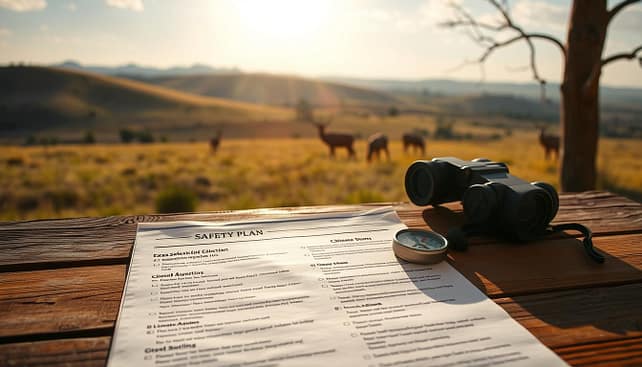
Lastly, Texas weather can be unpredictable. Your safety plan must include how to stay safe in extreme heat and cold. Dehydration and heat stroke are silent dangers. Hypothermia can sneak up on you, too. It’s not about being comfortable; it’s about staying alert and able to make the right shots and get home safely.
| Threat Condition | Early Symptoms | Primary Action | Critical Gear Check |
|---|---|---|---|
| Heat Exhaustion/Stroke | Headache, dizziness, excessive sweating progressing to no sweating, confusion. | Immediately cease activity. Move to shade. Hydrate with electrolytes. Use cooling towels. | Water bladder capacity, electrolyte packets, wide-brim hat, moisture-wicking base layers. |
| Hypothermia | Uncontrollable shivering, slurred speech, clumsiness, fatigue. | Add insulating layers immediately. Seek shelter from wind/rain. Consume high-calorie, simple sugars. | Quality insulated jacket, spare dry socks and beanie, chemical hand warmers, windproof shell. |
| Severe Dehydration | Dark yellow urine, dry mouth, lethargy, impaired judgment. | Drink small, frequent sips of water or electrolyte solution. Avoid caffeine and alcohol. | Hydration pack (3L minimum), backup water filter/purification tablets, electrolyte mix. |
Your plans for heat and cold are essential. Pack for the worst, not the best forecast. Watch for signs of dehydration, heat stroke, and hypothermia in yourself and your team. A hunter struggling with the weather is a risk to themselves and others.
Combine ethical shooting, respect for property, and being ready for any weather. This is more than a safety plan. It’s the mark of a mature hunter. Remember, a hunter who fails to return safely has failed, no matter the score. Your true legacy is in making it home safely, not in the trophies you bring back.
Event day timeline: check-in to scoring table
Forget zombie movie chaos. Your hunt day should be as smooth as a military operation. We’ll guide you through the day, from quiet start to public finish.
Get ready the night before. Organize your gear like a surgeon. Make sure you know your hunting hours and where you can hunt with the TPWD app. This step is key to a great start.
The Pre-Dawn Ritual (0400-0530)
Arrive early for check-in. Bring all your documents. Forgetting your license is a big mistake. Check your gear in the truck’s dome light. Then, drive quietly to your spot. This is time for mental focus, not doubts.
The Execution Phase (First Light – Engagement)
Blend in when you arrive and set up. Move with purpose. Then, wait patiently. The adrenaline rush of a hunt is what you’ve trained for. Your skills will be tested.
After you shoot, act fast and ethically. A bad field dressing can ruin your hunt. Follow TPWD tagging rules right away. Proper transport to the check station is essential. It shows respect for the animal and the law.
The Final Reckoning: The Scoring Table
Stand tall at the scoring table. Even if you didn’t get a big one, show respect. Officials will check your tagging and see how well you did. It’s a moment of validation or a lesson.
Common mistakes that mess up your event day timeline:
- Check-in errors: Missing papers, showing up late.
- Gear problems: Broken optics, wrong clothes for the weather.
- Breaking hunting hours by shooting too early.
- Choosing a bad shot, making recovery hard.
- Bad field dressing that ruins the meat or breaks the rules.
- Carrying game the wrong way, drawing attention.
Your event day timeline is about what you can control. The weather, animals, and terrain are beyond your control. But your preparation, rules, and calm are yours. Follow this timeline well, and you’ll not just hunt. You’ll perform.
Practice schedule (4–6 weeks) and budget worksheet
The gap between dreaming of a podium finish and actually achieving it is filled with sweat and spreadsheets. Let’s build your macrocycle.
You have 4-6 weeks. This isn’t time to learn new skills from scratch. It’s time to polish, condition, and integrate. Think of it as a startup’s launch phase: every resource is allocated with intent.
Your weekly schedule must be a periodized blend of raw fitness and refined skill. Physical conditioning isn’t optional; it’s your ticket to accessing the steep draws and having steady lungs for a 300-yard shot.
This isn’t gym-bro fitness. It’s the practical kind from the source material: loaded hikes with your pack, heart-pumping cardio for stamina, and functional strength work. Pair this with deliberate skill drills—the marksmanship and calling blocks from earlier.
A sample week might look like this: Monday for strength and mobility. Tuesday for precision shooting drills. Wednesday is your loaded hike day. Thursday focuses on calling practice and gear maintenance. Friday is active recovery. Weekend days are for long scouting trips or full mock hunts.
The foundation of functional fitness is what lets you move quietly over rough terrain and make the shot when it counts. Practice, practice, practice isn’t just a mantra; it’s a scheduled obligation.
Now, for the less-glamorous counterpart: the budget worksheet. This is where fitness meets finance. Treating your hobby like a professional project requires a financial model.
You must account for the real cost. It’s the difference between a fun idea and a viable plan. Ignoring this step is how hobbies become financial burdens.
Let’s make it tangible. Below is a budget worksheet. Fill it in with your numbers. It forces clarity and prevents post-event sticker shock.
| Expense Category | Estimated Cost (USD) | Notes & Rationale |
|---|---|---|
| TPWD License & Tags | $50 – $150 | Non-negotiable. Varies by species and residency status. |
| Fuel for Scouting Trips | $200 – $400 | Based on 4-6 trips to your zone. Texas is big. |
| Ammunition for Practice | $100 – $300 | Quality ammo isn’t cheap. Drills burn through it. |
| Gear Upgrades/Replacements | $100 – $600 | New boots? Rangefinder? Be honest here. |
| Meat Processing | $80 – $200 | If you’re successful. A cost, but also a reward. |
| Miscellaneous (Food, Lodging) | $150 – $300 | Event day fuel and possible overnight stays. |
See that “Gear Upgrades” line? Maybe it’s for better boots that save your feet on a long hike—a purchase directly tied to your fitness and endurance. This worksheet isn’t about stifling your passion. It’s about funding it sustainably.
The dedicated hunter plans for both their body and their bank account. The dilettante does neither. In the final weeks before the comp, your confidence should come from two places: the rigor of your training schedule and the clarity of your budget. You’ve managed your fitness and your finances. Now you’re ready to perform.
Post-event debrief: lessons and community groups
Forget the leaderboard for a moment. The true score of your hunt is tallied in the lessons you catalog and the connections you forge.
This is your after-action review. It’s where experience gets a PhD. Were you a tactical genius, or did your plan unravel like a cheap sweater?
A structured post-event debrief is your best tool. It turns raw emotion into cold, hard data. Even the data points of despair are valuable.
Start with the big questions. Did your scouting model actually predict animal movement, or did you just get lucky? Was your gear flawless, or did a buckle fail at the worst possible moment?
Most importantly, analyze your fieldcraft. Was your calling seductive or repellent? Be brutally honest. The goal isn’t self-flagellation. It’s pattern recognition.
This analysis is how you evolve. You transform a single event into a renewable resource of wisdom. One competition becomes a masterclass for the next.
But here’s the sage’s secret: you don’t hoard this knowledge. Hunting comps aren’t performed in a vacuum. Your growth is tied to the community.
Your next move is to plug into the network. Share your lessons, even the hilariously catastrophic ones. They have more social currency than a boring success story.
Where do you start?
- Online Forums: Niche hunting competition boards are goldmines. Search old threads about your specific struggle.
- Local Clubs: Nothing beats face-to-face advice. Find a group that meets at a diner or a range.
- The NSSF’s +One Movement: This initiative is built on a simple, powerful idea: bring one new person into the fold. It’s about growing the community itself.
Engaging with these community groups does two things. It gives you access to collective experience no single hunter possesses. It also forces you to articulate your own lessons clearly.
That process—explaining your failures to a newcomer—solidifies the learning like nothing else. You stop being a one-time participant. You become a perennial contender.
The hunt is over. The real work—and the real reward—is just beginning. Go share the story.
Conclusion
You’ve just finished a top-notch lesson on variables. Getting ready for a Texas hunt is like a personal check-up. It tests your patience, endurance, and quick thinking.
This isn’t just a hobby; it’s a serious project. Success is about being good at it, not just showing up. You need to be smart and focused, not just eager.
The real prize isn’t always the trophy. It’s about the hard work you put in, the shots you don’t take, and the stories you tell. It’s about leaving with your head held high, knowing you’ve improved.
Your plan is ready. Now it’s time to act. Scout with a purpose, train with precision, and pack with care. Then, go out there and show what you’re made of. The Texas outdoors is waiting for you.