
Welcome to the journey through America’s most famous hunting spots. The Lone Star State makes every hunt a legendary event. It’s a place where hunting becomes a cultural tradition.
In Texas, hunting competitions are more than just about winning. They’re about tradition, strategy, and pride. Every event is a story waiting to be told.
This is your chance to see what makes champions stand out. We’ll look at the cultural importance and strategies behind these hunting events Texas fans love.
Are you ready to see where hunting meets victory? Let’s explore a world where every shot has a story. And every winner becomes part of Texas history.
Introduction: Tradition of Competition
Ever wonder why Texas loves competitive hunting Texas like some states love football? It’s like asking why we put beans in our chili – some traditions just make sense at a cellular level.
The roots go deeper than your average oak tree. What started as a need to survive evolved into a sport. We’ve turned our survival instincts into a game. Clever, right?
Today’s competitive hunting Texas scene is all about using primal skills in a smart way. It’s not just about who bags the biggest buck; it’s about strategy, patience, and knowing ecosystems better than others. Think chess, but with camouflage and longer waiting periods.
The shift from survival to sport created a unique culture. Weekend warriors and serious competitors share the same fields. This isn’t just hunting – it’s performance art with higher stakes and better stories for afterwards.
| Aspect | Traditional Hunting | Competitive Hunting Texas | Cultural Significance |
|---|---|---|---|
| Primary Goal | Sustenance/Management | Skill Demonstration | Evolution of practical skills |
| Community Role | Individual/Family activity | Social competition ecosystem | Building regional identity |
| Skill Emphasis | Basic proficiency | Strategic excellence | Elevating local expertise |
| Outcome Measurement | Successful harvest | Points, rankings, recognition | Creating measurable prestige |
What makes Texas different? We’ve built a whole competitive hunting Texas ecosystem that mixes tradition with innovation. The same skills that fed families now fuel friendly rivalries and community bragging rights.
The beauty of this system is its accessibility. From local club competitions to major statewide events, there’s a tier for every skill level. It’s democracy in action – just with more camouflage and better stories.
This isn’t some redneck stereotype either. The competitive hunting Texas circuit attracts professionals like engineers, doctors, and teachers. It’s where Ivy League meets oak tree, and everyone leaves smarter.
The tradition continues because it works. It honors our past while pushing skills forward. It creates community while testing individual mettle. And honestly? The barbecue tastes better when you’ve earned it.
Main Event Types
The hunting scene in Texas is as varied as a craft beer festival’s IPAs. Each event has its own unique taste and challenge. Whether you’re a pro or new to hunting, knowing these categories is key. They all require strategy, but each game is different.
Deer, Turkey, and Hog Hunts
Deer hunting is like playing chess. It’s a game of patience and waiting for the right moment. Hunters spend hours studying the land and waiting for the perfect shot.
Turkey hunting is a battle of wits. It’s not just about tracking; it’s a vocal showdown with the most wary bird in North America. Success here often depends on who can call the turkey best.
Hog hunting is all about quick thinking. Unlike deer or turkey hunting, hog events are fast-paced and unpredictable. These animals don’t follow patterns, making each hunt a new challenge.
Archery vs. Firearm Events
Archery competitions are about precision and stealth. Texas bow competitions, like those at Guadalupe River State Park, focus on skill over power. It’s all about distance and steady aim.
Firearm events add a new layer of strategy. Hunters must know animal behavior and how their guns work. It’s about understanding ranges, bullet drop, and the best shooting spots.
Don’t forget about youth archery. Programs aim to teach the next generation about hunting. They focus on safety, basics, and sportsmanship, preparing young hunters for the future.
Top Annual Competitions
If Texas hunting competitions were a buffet, you’d need multiple plates. The calendar is full of events from precision marksmanship to dog-assisted rodent hunting. It’s all about being big in Texas, even in our competitions.
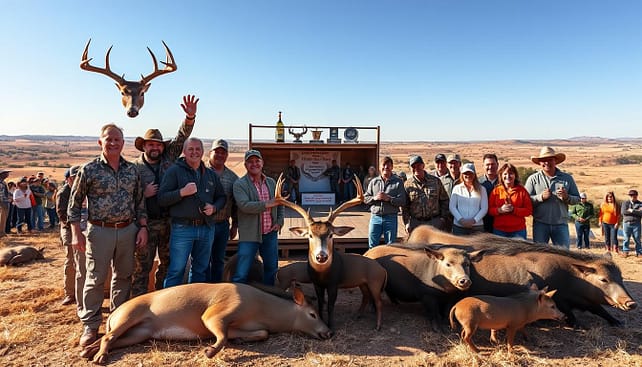
Event Details, Dates, and Locations
The precision rifle scene is the hunting world’s brainy side. Triple C Range and Jacob’s Plain Gun Club host matches that impress even Swiss watchmakers. These aren’t your old-fashioned hunting competitions. They involve complex calculations and shots that make physics teachers proud.
For those who like quiet challenges, Guadalupe River State Park has archery tournaments. Young competitors show off skills that would impress Robin Hood. It’s about accuracy and tradition, connecting modern hunters with ancient methods.
The Greater Dallas Barn Hunt in McKinney (March 20-22, 2026) is unique. It pits dogs against rats in a Texas-style showdown. It shows that sometimes, the best hunter isn’t the one with the gun.
| Competition | Dates | Location | Unique Feature |
|---|---|---|---|
| Triple C PRS Matches | Quarterly | Triple C Range | Precision rifle elite competition |
| Jacob’s Plain PRS | Bi-monthly | Jacob’s Plain Gun Club | Long-range tactical challenges |
| Guadalupe Archery Tournament | Annual Fall Event | Guadalupe River State Park | Youth-focused traditional archery |
| Greater Dallas Barn Hunt | March 20-22, 2026 | McKinney, TX | Canine-assisted rodent hunting |
Each event has its own vibe and rules. Precision rifle competitions need math skills. Archery events honor history. The barn hunt is a Texas showstopper, where dogs hunt rodents.
What ties them together is the Texas spirit of competition. We don’t just standardize our events. We add character, challenge, and local flavor to make them unforgettable.
Entry and Registration Process
Getting into Texas hunting competitions is like solving a puzzle. The steps change more than the weather. Sometimes it’s easy, other times it’s like finding your way through a digital maze.
For precision rifle matches, like those at Triple C, you must watch Facebook groups and Practiscore closely. These places are your hunting grounds before you even go to the field.
Archery competitions are often simpler. NASP events might just need $15 and your gear. But, even easy registrations need some prep.
The way you sign up shows what a competition is like. Quick online forms mean modern, easy events. Complex rules mean it’s for serious competitors.
Here’s a tip: sign up early. It’s not just to get in. It’s for a better spot, more time to prepare, and a mental edge. The early bird gets the best spot.
Here are the main ways to sign up for Texas hunting events:
- Facebook groups for updates
- Practiscore for shooting events
- Official websites for big events
- Local clubs for local events
Remember, Texas hunting event deadlines are strict. Miss them, and you’ll be watching from the sidelines.
Key Rules, Ethics, and Conservation
The rulebook for Texas hunting competitions is as thick as a tax code. Hunters take it very seriously.
To join, you need more than just a license and a gun. Most hunting competitions texas require skills that would impress a Navy SEAL. For example, the Barn Hunt Regionals need dogs with Open titles (RATO) or higher. Humans must show they have experience, safety training, and sometimes references.
Rules change often, like Texas weather. Organizers can update them without warning. This keeps the competition fair and helps protect animals.
Competitions have a three-tier system: qualification rounds, semi-finals, and championships. Each level has strict rules about gear, hunting methods, and time limits. It’s more like a dance with nature than a free-for-all.
Conservation ethics are key in Texas hunting. Competitions focus on managing ecosystems. Bag limits, species protection, and habitat care are musts.
These rules do more than just guide the competition. They turn hunting into a way to care for nature. Texas hunting competitions keep traditions alive and protect the environment for the future.
In the end, these rules act as barriers to entry. They help keep the competition focused on skill, ethics, and conservation. It’s not just about winning.
Competitor and Winner Spotlights
Forget reality TV stars – the real heroes wear camouflage. They calculate wind drift. Texas hunting competitions show athletes who outsmart chess grandmasters.
At Guadalupe River State Park, youth archers are more than just shooting arrows. They’re earning mentored hunts with legends. These kids can outshoot adults while discussing ethical hunting.
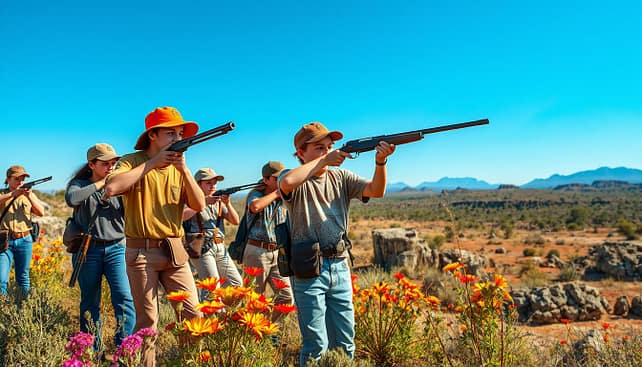
At Triple C, precision rifle competitors are like major league players. They analyze environmental factors like meteorologists. They track wind speed, humidity, and more with spreadsheets.
Barn Hunt dogs are the dark horses. They’re not your average backyard pups. They earn “Byes” for nationals with impressive competition resumes. Their owners just hold the leash.
What sets winners apart in Texas hunting events? It’s not luck. It’s ancient skills and modern analytics. Champions study animal behavior, master equipment, and execute like special forces.
The prize structure shows Texas hunting culture. It’s about recognition, opportunity, and tradition. Regional medals become family heirlooms. Placement certificates are framed with wedding photos.
| Competitor Type | Training Approach | Key Achievements | Prize Structure |
|---|---|---|---|
| Youth Archers | Mentored practice sessions | Qualifying scores for advanced hunts | Guided hunt experiences |
| Precision Rifle | Ballistics analysis drills | PRS scoreboard placement | Sponsorship opportunities |
| Barn Hunt Teams | Scent detection training | National championship byes | Travel packages to finals |
| Traditional Hunters | Seasonal pattern study | Regional medal placements | Equipment sponsorship deals |
These competitors show the evolution of hunting culture. They’re not just participants in Texas events – they’re ambassadors. Their success stories attract the next generation.
The beauty of Texas competitions? There’s room for everyone. From math-loving ballistics experts to instinct-driven traditional hunters. They all share respect for animals, mastery of craft, and the Texas competitive spirit.
Tips for Spectators
You don’t need a rifle to enjoy Texas hunting events. Just bring your eyes and comfy shoes. Watching becomes a mix of nature, strategy, and fun.
Many events in Texas have hands-on zones for spectators. Here, you can try simple gear. It’s like getting a free lesson while watching the pros.
Watch how hunters read the wind and position themselves. It’s like they’re experts in chess. Seeing their teamwork with dogs is amazing.
Here’s how to watch like a pro:
- Binoculars are non-negotiable – they help you see the details
- Wear comfy shoes to move around easily
- Arrive at the right time to learn more
- Ask questions during breaks to learn more
It’s like watching a live science experiment. The scenery is better than any stadium. And the learning is as good as theater.
For those who want to join in, understanding these tips is key. It helps you get the most out of every hunt.
At Texas hunting events, you’ll find expert commentary. It makes the action clear. You’re seeing a dance of human skill and nature.
How to Get Involved (First Timers)
Ever watched a Texas bow competition and thought, “I could do that if I didn’t accidentally shoot my own foot?” Welcome to the beginner’s circle. Here, humility meets ambition, and everyone’s first shot is more like a philosophical question than a targeted arrow.
The beauty of Texas bow competitions lies in their accessibility. Unlike some hunting events, archery events often provide borrowed equipment and introductory sessions. Guadalupe River State Park’s events function as hunting competitions with training wheels – in the most dignified way possible, of course.
Your intellectual approach should mirror a chess player studying opening moves. Start by joining Facebook groups for Triple C and other clubs. Lurk like a digital ninja, absorb the culture, and learn the unwritten rules before you ever nock an arrow.
Remember: every expert competitor was once a beginner who probably missed an easy shot. They endured the good-natured ribbing that follows. The key is to embrace the learning curve like a philosopher, with curiosity and self-deprecating humor.
For young enthusiasts, the Texas Youth Hunting Program offers structured entry points. It transforms nervous first-timers into confident competitors. It’s like academic hazing but with more safety protocols and less existential dread.
Event timing matters more than you might think. Early season competitions have more relaxed atmospheres. They’re perfect for dipping your toes without the pressure of championship energy. It’s the difference between open mic night and Madison Square Garden.
Your equipment strategy should follow the “rent before you repent” philosophy. Many beginners make the mistake of buying top-tier gear before understanding what actually works for them. Start with borrowed equipment, then upgrade once you’ve developed preferences beyond “the one that looks coolest.”
The community aspect might surprise you. Texas bow competitions function as social ecosystems where knowledge transfer happens naturally. You’ll find mentors in the most unexpected places – often the same people who later roast your terrible aim over post-competition beers.
Embrace the journey from spectator to competitor as intellectual fieldwork. You’re not just learning to shoot arrows; you’re studying a subculture, decoding rituals, and discovering that the real trophy isn’t the prize. It’s the transformation from clueless newbie to competent contributor.
Prize Structures and Recognition
In Texas hunting competitions, respect and reputation are the real prizes. While cash and trophies are there, the most valuable rewards are often beyond material value.
Think about the mentored hunt prizes at archery competitions. These aren’t just any trophies. They’re like getting a private lesson from a hunting master. The experience gained is often more valuable than any trophy.
Regional competitions offer medals and ribbons that are big deals. At events like Barn Hunt Regionals, winning ribbons are like social gold. They last longer than many Hollywood marriages. These awards create a hunting legacy that competitors are proud of for years.
The truth about prize hunting Texas style? The real rewards are often hidden. Making the PRS scoreboard at Triple C is like getting a career boost in precision rifles. It’s the hunting world’s version of making partner at a top law firm.
What makes these competitions stand out? It’s the detailed recognition systems that honor skill and sportsmanship. Regional medals spark conversations at hunting lodges. Qualifying ribbons open doors to exclusive events and networks.
In the end, the most valuable prize is often not something you can display. It’s the respect from seasoned competitors, the chance to join elite hunting circles, and proof you’ve earned your place among Texas’s hunting elite.
Conclusion
So, what’s the real deal after our deep dive into Texas hunting culture? These deer hunting competitions are more than just about the biggest buck. They’re where tradition, strategy, and skill meet.
Imagine Texas’ intellectual safari. Precision rifle folks play meteorologist with wind, while archery pros calculate like NASA. The true prize is joining a community that values hunting’s legacy.
These competitions are key to preserving something important. They mix conservation with competition, where everyone – humans and dogs – help keep a tradition alive. It’s as Texan as Willie Nelson and Whataburger.
The question isn’t if you should join. It’s if you’re ready to be part of a cultural phenomenon that’s been refining itself for ages. The field is open – it’s your turn.