
For generations, the narrative surrounding oyster reef restoration along the Texas Gulf Coast was confined to the realm of ecology. Environmental groups talked about water filtration, marine biologists monitored larval settlement, and state agencies focused on resource longevity. While those conservation tenets remain undeniably crucial, a profound shift has occurred on the water. In 2026, oyster reef restoration has officially broken out of its ecological silo to become one of the most critical factors driving the state’s competitive inshore fishing landscape.
The multi-million-dollar public and private investments pouring into Texas bay systems are completely rewriting the tournament playbook. Professional redfish teams and high-stakes weekend tournament anglers no longer view reef restoration as an abstract headline in a conservation journal. Instead, they view it as the creation of premium, high-yield tournament real estate. As tournament formats evolve and the pressure on public flats intensifies, these newly constructed, high-relief structures are dictating where the heaviest slot fish live, how tournament fields distribute themselves, and what it takes to stand on the weigh-in stage.
Benthic Real Estate: The New Tournament Battleground
The competitive fishing landscape across the Texas coast relies entirely on consistency. In a standard tournament format where a two-fish redfish aggregate within a strict 20-to-28-inch slot limit decides tens of thousands of dollars, finding a random school of fish is no longer enough. Winning requires targeting hyper-specific micro-habitats where fish are not only abundant but predictably heavy for their length. This is where restored oyster reefs have altered the game.
When the Texas Parks and Wildlife Department (TPWD) or private organizations deposit limestone cultch and recycled shell to rebuild a degraded reef, they are not just replacing flat shell beds; they are engineering complex, multi-tiered vertical structures. Traditional commercial dredging historically planed down public reefs into featureless, low-profile shell carpets. In stark contrast, modern restoration projects prioritize vertical relief, often building structures that rise three to five feet off the bay floor.
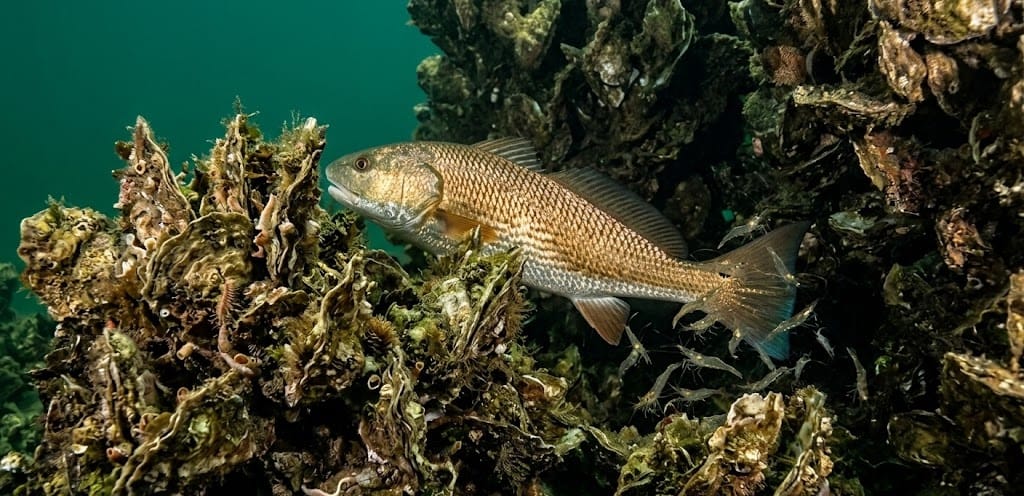
For a competitive angler, this vertical variation is pure gold. High-relief reefs disrupt traditional tidal flows, creating micro-eddies and localized current breaks where apex predators can ambush prey without expending critical energy. The intricate matrix of living oysters provides immediate shelter for blue crabs, mud crabs, grass shrimp, and finger mullet—the exact high-protein forage that packs dense, tournament-winning weight onto a slot redfish.
Rebuilding the Matrix: Why High-Relief Structure Holds Winning Slots
To understand why restored reefs have become the ultimate tournament target, one must analyze how slot-sized redfish behave under heavy competitive pressure. During major coastal events, such as the Rojo Classic out of Port O’Connor or specialized redfish series trail stops, hundreds of shallow-draft skiffs and bay boats invade the traditional grass flats. This intense acoustic and visual pressure quickly drives wise, heavy-shouldered slot fish off the open sand flats and shallow seagrass meadows.
Restored reef systems provide a physical sanctuary that open flats simply cannot offer. The deep pockets, crevices, and sheer drop-offs of a newly engineered reef allow redfish to retreat down the water column when tournament pressure peaks, all while remaining in immediate proximity to their primary food source. Teams that have spent years mastering the Texas redfish tournament playbook understand that navigating these complex structures is the key to assembling a consistent livewell. Instead of chasing erratic schools of fleeing fish in the backlakes, winning teams are increasingly anchoring on the upcurrent edges of restored reefs, utilizing precise presentations to extract highly territorial, maximum-girth slot fish.
| Reef Structure Type | Forage Density | Tactical Tournament Utility | Structural Presentation Strategy |
| Dredged / Degraded Flat Shell | Low to Moderate | Poor; fish scatter quickly under heavy boat traffic | Long-distance drift fishing with soft plastics |
| Restored High-Relief Reef | Extremely High | Excellent; holds heavy slot fish under intense pressure | Anchor upcurrent; vertical jigging or precise soft-plastic presentations along the drop-offs |
By focusing efforts on these newly engineered environments, competitive anglers are finding that the fish holding on restored shell consistently out-weigh fish of the exact same length caught in open marsh systems. The sheer volume of high-protein forage available in a thriving reef matrix creates a noticeably thicker, heavier body profile—the exact margin needed to secure a victory when ounces dictate the leaderboard.
Digital Mapping and the Strategy Shifts in 2026 Events
The intersection of reef restoration and advanced marine electronics has accelerated this competitive shift. With the widespread adoption of high-definition sidescan sonar, downscan imaging, and forward-facing sonar (FFS), tournament anglers can now visualize the exact structural footprints of newly permitted restoration zones.
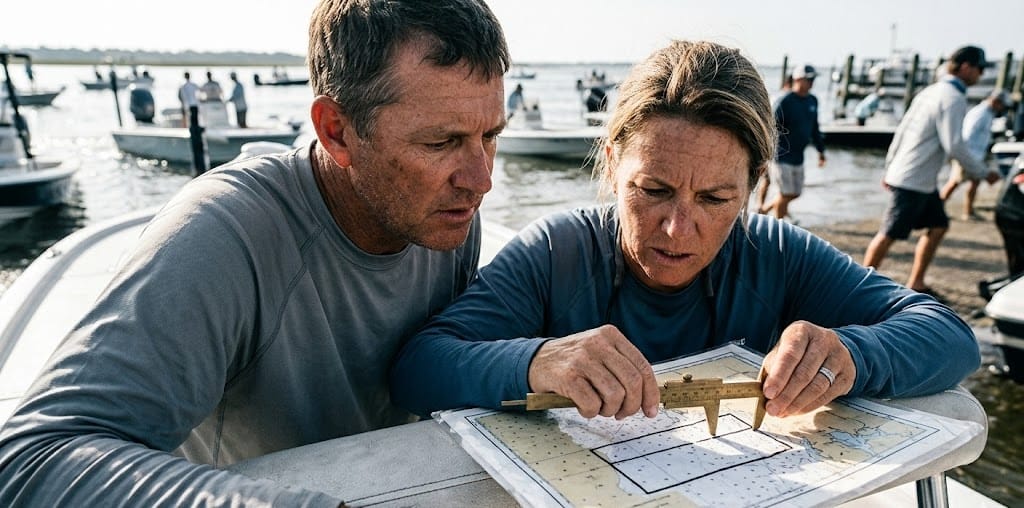
When agencies announce closures or new cultch deployments, tech-savvy tournament teams immediately mark these coordinates. Over the subsequent months and years, as the reef matures and living oysters begin to colonize the limestone, these anglers use side-imaging to map out every distinct peak, gap, and wash-out within the structure. Rather than fishing a reef blindly, an angler can position their boat perfectly to cast directly into a three-foot limestone ledge that holds a specific pod of redfish.
This reliance on structural mapping has fundamentally shifted tournament tactics away from the traditional “run-and-gun” philosophy. In the past, a team might cover miles of shoreline, burning fuel to find active fish. Today, top-tier competitors are opting for a localized, highly analytical approach. They choose to dissect a single, well-established restoration reef throughout an entire tournament day, shifting their positioning by mere yards to track how the redfish move across the shell as the tide rises and falls.
The 2026 Seasonal Shift: From the CCA STAR to Weekend Classics
The operational reality of this habitat-driven strategy is fully visible across the 2026 Texas tournament calendar. A prime example is the prestigious CCA Texas STAR Tournament, which runs from May 23 through September 7, 2026. The tournament’s highly coveted tagged redfish division requires anglers to catch specifically tagged fish released by tournament officials across the entire Texas coast.
Historically, many of these prized fish were scattered across vast shallow flats. However, tracking and recapture data continually reveal that these tagged redfish migrate rapidly toward structured environments, with restored oyster reefs acting as major biological magnets. Anglers who consistently target the perimeters of these newly constructed habitats significantly increase their odds of intersecting with a tournament-winning fish.
This pattern holds true for localized weekend events as well. In major coastal hubs like Matagorda and Port Aransas, the proximity of a boat ramp to a major reef restoration project heavily influences tournament boundary strategies. Anglers are calculating transit times against the productivity of restored shell, realizing that running further to fish pristine but flat habitat is often less productive than staying local and fishing complex, reconstructed vertical structures.
Adapting Inshore Presentations to Reconstructed Environments
Successfully executing a tournament strategy on restored oyster reefs requires a total departure from standard flat-fishing presentations. Anglers cannot simply blind-cast a lightweight spoon or drift a unweighted soft plastic over a high-relief reef without constantly breaking off on the razor-sharp public shell.
The modern tournament approach demands highly specialized tackle configurations. Competitors are utilizing heavier fluorocarbon leaders—often bumping up to 30- or 40-pound test—to withstand the brutal abrasion of living oyster clusters. Bait selections have shifted toward heavy-gauge weedless swimbaits, precisely weighted jig heads designed to bounce vertically along shell faces, and durable topwater plugs worked aggressively over the crests of shallow reefs during early morning high-tide cycles.
Furthermore, the localized water clarity benefits provided by active oyster filtration require a heightened level of stealth. As thousands of adult oysters filter the surrounding water column, the immediate vicinity of a restored reef often features a distinct emerald-green clarity that contrasts sharply with the muddy, wind-whipped water of adjacent flats. This pristine visibility means that redfish can easily spot unnatural boat movements or heavy fishing lines. Long, accurate casts and quiet boat positioning using silent electric trolling motors or shallow-water anchors have become mandatory components of the modern reef fishing playbook.
Ultimately, the massive influx of capital into Texas oyster infrastructure has done something truly remarkable: it has aligned the long-term goals of coastal conservationists with the immediate desires of the competitive angling community. By building complex, resilient vertical habitats, restoration projects are not only preserving the ecological balance of the Texas coast—they are directly fueling the next generation of tournament-winning strategies.