
Memorial Day weekend has long stood as the symbolic gateway to the Texas summer boating season. Across the state, thousands of anglers clean out their livewells, hitch up their trailers, and head down to the coast to chase schooling redfish through the backlakes and shallow flats. Yet, as the 2026 holiday weekend arrives, the atmosphere at Texas boat ramps is defined by an escalating sense of biosecurity urgency. The Texas Parks and Wildlife Department (TPWD) has launched an aggressive, high-visibility invasive species enforcement and education blitz that represents a fundamental shift in how the state protects its aquatic ecosystems.
For over a decade, Texas biosecurity campaigns focused almost exclusively on the westward migration of zebra mussels, which have now successfully infiltrated 39 lakes across seven major Texas river basins. While zebra mussels remain a severe threat to infrastructure and inland water bodies, they possess a distinct biological limitation: they cannot survive the brackish and high-salinity environments that define the Texas coastal bend. However, a new, far more adaptable invader has emerged on the environmental radar. The impending threat of the golden mussel (Limnoperna fortunei) has forced state biologists and coastal fisheries managers to re-engineer their defensive playbooks to safeguard the state’s premier redfish nurseries.
The Coastal Boundary Shift: A Threat Tailored for Brackish Estuaries
The golden mussel represents a terrifying evolutionary leap in aquatic bio-fouling. Native to Southeast Asia, this invasive bivalve first gained a North American foothold in October 2024 when it was detected within California’s Sacramento-San Joaquin Delta. Unlike its dreissenid cousins, the golden mussel possesses an extraordinary tolerance for wider temperature and salinity gradients. It thrives in fresh water but remains highly viable in brackish coastal environments, including tidal creeks, salt marshes, and shallow bay systems—the exact geographical matrix where post-spawn redfish feed and juvenile slot fish seek refuge.
According to recent briefings by Monica McGarrity, TPWD Senior Scientist for Aquatic Invasive Species, the golden mussel’s ability to transition from inland river systems down to brackish estuarine interfaces eliminates the natural salinity barrier that historically shielded Texas bays from freshwater mussel invasions. This adaptability means that if the golden mussel breaches the state’s borders, it will not stop at the reservoir dams. It can colonize the primary river mouths along the upper and middle coast, establishing dense, suffocating blankets over the very transition zones where blue crabs, grass shrimp, and juvenile finfish reproduce.
Understanding the Vector: The High-Stakes Biology of Limnoperna fortunei
The primary mechanism that makes the golden mussel an ecological nightmare for redfish anglers is its blistering filtration capacity. One mature golden mussel can process approximately one liter of raw surface water every ten hours, stripping vital microscopic organic particles, phytoplankton, and zooplankton out of the water column at a rate significantly faster than a zebra mussel.
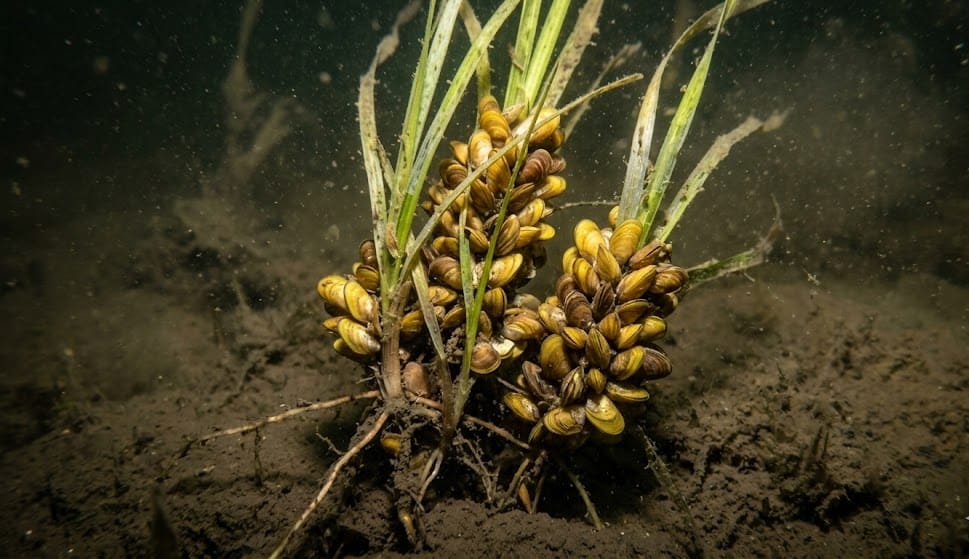
When millions of these organisms form interlocking colonies, they create an immediate ecological collapse from the bottom up. By consuming the primary producers that sustain post-larval shrimp and small crustaceans, the golden mussel effectively starves out the primary forage base that slot-sized redfish depend upon to build body mass. Furthermore, their metabolic processes reject unwanted organic materials in dense, mucus-rich strands that settle on the bottom. This toxic accumulation promotes localized blooms of harmful cyanobacteria (Microcystis species), creating localized dead zones over shallow shell beds and destroying the water clarity required for sight-casting on the flats.
| Invasive Species Feature | Zebra Mussel (Dreissena polymorpha) | Golden Mussel (Limnoperna fortunei) | Impact on Redfish Fishery |
| Salinity Tolerance | Strictly Freshwater | Fresh to Brackish (Wider Range) | Can directly invade coastal bay complexes and redfish nurseries |
| Substrate Preference | Hard Surfaces Only (Rock, Metal) | Hard and Soft Substrates (Plants, Mud) | Suffocates vital seagrass beds and open foraging flats |
| Filtration Speed | Moderate to High | Extremely High (Blistering Rate) | Depletes primary plankton forage, starving out baitfish populations |
| Texas Status (2026) | Confirmed in 39 Lakes / 7 Basins | Not yet detected; High Biosecurity Alert | Threatens to permanently alter coastal food webs if introduced |
Compounding the biological threat is the golden mussel’s unique structural flexibility. Zebra mussels require hard, solid surfaces like limestone, concrete, or boat hulls to anchor their byssal threads. The golden mussel faces no such restrictions; it can readily colonize soft mud bottoms and wrap itself around aquatic vegetation, meaning that pristine seagrass beds across systems like Aransas and Matagorda Bay could easily be smothered under dense clusters of invasive shell.
The Memorial Day Transport Wave: Why Inshore Anglers Are Ground Zero
The timing of TPWD’s late May push is highly tactical. As Brian Van Zee, TPWD Inland Fisheries Regional Director, noted in the state’s holiday address, Memorial Day represents the absolute peak of watercraft transit across regional boundaries. Inshore anglers often operate highly mobile setups, frequently towing multi-species bay boats or technical poling skiffs from inland freshwater lakes down to coastal boat ramps over the course of a single weekend.
This multi-basin movement turns recreational watercraft into the primary vector for invasive transport. The microscopic, free-floating larvae of the golden mussel, known as veligers, are invisible to the naked eye and can survive for days inside undrained livewells, raw-water washdown systems, bilge pumps, and the internal cooling passages of outboard motors. When an angler drops their boat into a coastal bay without executing proper biosecurity protocols, they risk releasing thousands of active veligers directly into the estuary.
According to the latest TPWD aquatic invasive species guidelines issued on May 21, 2026, the mandate to clean, drain, and dry watercraft has transitioned from a general conservation recommendation into a vital line of defense. State officials emphasize that it only takes a tiny fraction of contaminated water or a single fertile juvenile clinging to a trailer roller to spark an irreversible infestation in a previously pristine coastal ecosystem.
Tactical Biosecurity: Protecting Redfish Nurseries Beyond Regulatory Compliance
Defending the Texas coast against this emerging biosecurity threat requires tournament teams and weekend wade fishermen to elevate their maintenance routines. Traditional boat cleaning methods—such as a quick spray down with a garden hose at the marina—are entirely insufficient to neutralize the microscopic veligers or the highly resilient adults of the golden mussel.
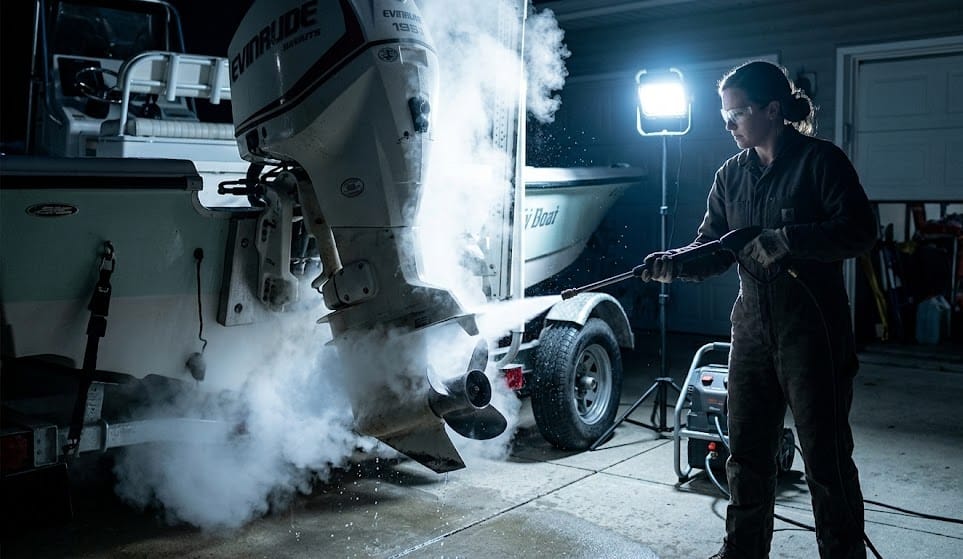
The modern biosecurity standard requires a rigorous, three-step tactical approach before transitioning between any inland water body and a coastal launch site:
- Clean: Visually and physically inspect the entire hull, trailer, transducer brackets, and trim tabs. Every fragment of aquatic vegetation, mud, and debris must be manually removed. John Findeisen, TPWD Aquatic Habitat Enhancement Team Lead, emphasizes that golden mussel juveniles can easily hide within the dense root structures of hitchhiking aquatic weeds.
- Drain: Pull the hull plug and completely drain the bilge, livewells, bait buckets, and sea strainers at the boat ramp before departure. Outboard motors must be trimmed fully down to ensure all residual raw water drains out of the lower unit cooling passages.
- Dry: Allow the boat, trailer, and all internal compartments to dry completely in the sun for at least one full week. If a seven-day drying window is impossible due to back-to-back tournament schedules, anglers must thoroughly flush all livewells, bilges, and exterior surfaces with high-pressure water reaching at least 140°F to effectively scald and neutralize any hidden organisms.
This level of operational discipline is closely tied to overall shallow water stewardship, as seen in the ongoing enforcement of boating rules in shallow flats, which aims to limit physical damage to fragile grass beds while simultaneously minimizing the accumulation of trapped vegetative fragments that can transport invasive species between distinct ecosystems.
Ultimately, the preservation of the Texas redfish fishery depends on the collective vigilance of the angling community. State monitoring programs and Game Warden saturation patrols can only do so much to police the thousands of boat ramps dotting the coast. By taking direct ownership of watercraft decontamination during high-traffic holiday weekends, Texas sportsmen are acting as the ultimate shield, ensuring that the fragile brackish nurseries that fuel today’s coastal fishing boom remain protected against the looming golden mussel threat.