
Welcome to your guide to the thrilling world of competitive fishing in Texas. If you’re an angler or a fan, there’s something for everyone. The annual schedule is full of chances to participate or watch.
The variety is amazing. You’ll see everything from big pro-am style opens to local team trails and charity events. Events like the Sealy Big Bass Splash on Lake Fork attract lots of people.
Each event caters to different skill levels and gear needs. For example, a weekend team trail is great for local anglers with a basic bass boat. But, a big multi-day open might require advanced electronics and more practice.
We’ll look at real 2026 examples to show you. This includes the Lake Fork Lures Tournament, the Legend Series for saltwater, and freshwater series from Victory Fishing Events.
This guide aims to help you find the right event for you. We want to match you with the perfect event based on your experience and boat.
Finding events: state resources, club pages, shops; how to verify permits/insurance
Finding the right fishing tournaments is key. Look for events through state agencies and bass clubs. This way, you avoid wasting time and ensure you’re part of a well-organized competition. Texas has many resources, from official websites to local bulletin boards.
Start your search with these three main sources:
- State Resources: The Texas Parks and Wildlife Department (TPWD) website is essential. It lists sanctioned events and provides important rules. Many tournaments need permits from TPWD, making it a vital source for schedules.
- Club Pages: Local bass clubs are vital for competitive fishing. Clubs like the Texas Bass Federation host many tournaments. Their websites and social media offer detailed schedules, entry forms, and direct contact with organizers.
- Tackle Shops & Marine Dealers: Local tackle shops are also great resources. For example, the Victory Fishing Events series is sponsored by marinas like Rockwall Marine and Billy’s Mobile Marine. Their shops often have flyers and staff who know about upcoming tournaments.
After finding an event, you need to verify it. Just seeing a flyer or online post isn’t enough. You must confirm the tournament has the right permits and insurance. This step protects your entry fee and ensures a safe, fair experience.
Here’s how to verify a Texas fishing tournament:
- Locate the Official Rules Packet: Every legit event has a detailed rules document. Look for a “RULES (CLICK HERE)” link on the organizer’s page, like on the Victory Fishing Events site. This packet is your main source for verification details.
- Scan for Permit Endorsements: In the rules, look for mentions of Texas Parks and Wildlife permits. Legit tournaments will list a permit number or state they are sanctioned by TPWD. If you can’t find this, it’s a big warning sign.
- Check for Insurance Clauses: The rules should talk about liability coverage. Look for statements about event insurance and what happens if there’s an accident. Good organizers have insurance to protect everyone.
- Contact the Tournament Director: If you’re unsure, call them. Direct contact, like calling Victory Fishing Events director Carl Braucht, gives you clear answers. Ask about their TPWD permits and insurance policy.
Being proactive is essential for serious anglers. It helps you find reputable tournaments and avoid bad ones. The same caution is wise when you prepare for your first Texas hunting. Checking credentials upfront saves you from headaches and lets you focus on fishing.
Remember, finding the event is just the first step. Verifying its legitimacy is key to a good day. Always choose tournaments that are open about their credentials.
Entry steps: registration windows, co‑angler options, marshalling
Entering a fishing tournament is more than just paying a fee. It’s about knowing the rules and options. A smooth day starts with understanding these steps.
Registration happens in the morning. The window is short. You might see “Register From: 4:30AM until the safe light start.” This means you must arrive early. You’ll need to complete paperwork and pay fees before the meeting.
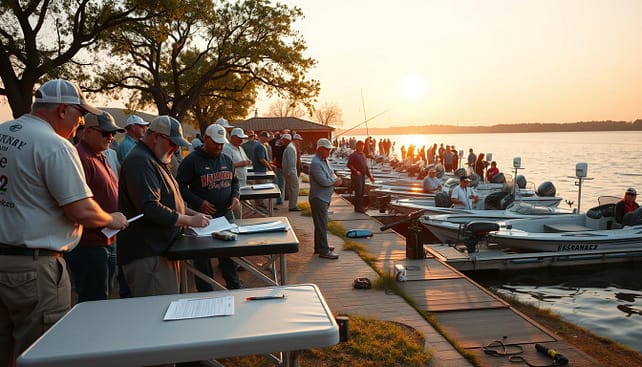
Entry fees have a base cost and optional add-ons. A common fee is $160 per team. There’s often an optional $40 big bass or side pot for extra money. Always check the tournament announcement for exact fees.
The pro-am format is common in Texas opens. It pairs a boater with a non-boater. This lets anglers without a boat compete. Co-anglers pay less and are randomly paired with a boater.
| Participant Type | Typical Entry Fee | Key Requirement | Prize Eligibility |
|---|---|---|---|
| Team (2 anglers) | $160 base + options | Shared boat | Team purse |
| Boater (Pro in Pro-Am) | $200-$250 | Provide the boat | Boater division purse |
| Co-Angler (Non-Boater) | $100-$150 | Bring own tackle | Co-angler division purse |
After registration, the marshalling process starts. This is the organized launch. Boats line up in order before launch.
Tournament directors release boats in groups. Your flight number determines your start and return time. Listening to the director’s instructions is key. Missing your return time can lead to disqualification.
Follow this marshalling checklist:
- Attend the pre-tournament meeting for final instructions.
- Have your boat number clearly displayed.
- Find your position in the numerical lineup.
- Wait for the director to call your flight to the launch area.
- Proceed to the start point and wait for your official start time.
Understanding these steps makes the morning routine. Whether you’re a boater or co-angler in a pro-am, you’ll be ready for the start.
Family‑friendly spectator days and weigh‑ins
The excitement of bass fishing isn’t just on the water. It’s also on the shore during public weigh-ins. These events are great for families. They offer a fun, free day out where you can see the sport up close.
At the heart of the fun is the weigh-in. This is when anglers show off their catch. The atmosphere is buzzing as big bass are weighed. Kids love seeing the huge fish. It’s a live show full of drama and celebration.
Events like the Sealy Big Bass Splash and the Lake Fork Lures Tournament are perfect for families. They have vendor areas, food trucks, and music. Charity tournaments, like “Fish for Education,” focus on fun and helping the community.
To plan your visit, check the tournament calendar. Look for events open to the public. The table below shows some top family-friendly tournaments in Texas.
| Event Name | Event Type | Key Family-Friendly Features | Best Spectator Time |
|---|---|---|---|
| Sealy Big Bass Splash | Major Open Tournament | Kids’ fishing tank, giant screen, prize giveaways, food vendors | Late afternoon for final weigh-in |
| Lake Fork Lures Tournament | Pro-Am Open | Interactive sponsor booths, casting games, meet the pros | All day, peak at weigh-in |
| Fish for Education | Charity Tournament | Educational displays, silent auction, relaxed atmosphere | Weigh-in and awards ceremony |
| Various Local Club Opens | Community Opens | Smaller crowds, easy parking, often lakeside parks | Check club schedule for weigh-in time |
Here are some tips for a great spectator day:
- Arrive Early: Get to the weigh-in site 30-45 minutes before. This ensures good parking and a spot near the stage.
- Pack Smart: Bring folding chairs, sunscreen, hats, and water bottles. Many venues have limited seating.
- Check the Layout: Look for family zones or kids’ activities on the event map or website.
- Talk to the Anglers: Before weigh-in, many competitors are happy to chat with fans near the dock. It’s a great learning moment.
These events are more than just competitions. They are educational opportunities. Children can learn about fish biology, conservation, and sportsmanship. Watching the careful handling of bass during the weigh-in teaches respect for wildlife.
Turning a tournament day into a family adventure is easy. With a little planning, you can enjoy the festival-like energy of major opens. You’ll create lasting memories while introducing a new generation to the passion of bass fishing.
Budget planner: fees, gas, lodging, food, contingency money
Many anglers focus on lures and locations, but overlook their budget. A realistic financial plan is key. It covers all costs, from entry fees to hidden expenses.

Direct Tournament Costs
These are the costs you must pay to fish. Knowing them is essential.
Weekend team series cost about $160 per team. Evening derbies are closer to $70. You also need an annual membership, around $40. Don’t forget optional bonus buy-ins, sometimes $40 per team.
Variable & Travel Expenses
Traveling to premier lakes adds up. This is where budgets often unravel.
Fuel for your tow vehicle is a big expense. Calculate round-trip mileage and gas prices. For multi-day events, consider lodging costs. Campgrounds, hotels, or rental cabins vary in price. Also, plan for food and drinks, as they’re more expensive near the lake.
| Expense Category | Estimated Cost (Low) | Estimated Cost (High) | Notes |
|---|---|---|---|
| Team Entry Fee | $160 | $200 | Base tournament cost; check series specifics. |
| Bonus Buy-in | $0 | $40 | Optional; increases winnings. |
| Annual Membership | $40 | $40 | Often required for circuit participation. |
| Gas (Tow Vehicle) | $50 | $150+ | Varies greatly with distance (e.g., to Lake Fork). |
| Lodging (2 Nights) | $0 (Camping) | $300 | From campgrounds to hotels; book early. |
| Food & Drinks | $75 | $150 | For two people over a tournament weekend. |
| Total Per Event | $325 | $880+ | Your planning should account for this range. |
Use the table as a template. Fill in your numbers for a clear season forecast. Remember, entry fees are just the start.
The Essential Contingency Fund
This is your financial safety net. Even the best plans meet unexpected obstacles.
Set aside 10-15% of your total event budget for surprises. This fund covers critical needs that can’t wait.
- Last-minute tackle: That new lure everyone is catching them on.
- Minor boat repairs: A blown trailer light or trolling motor issue.
- Emergency situations: Sudden weather delays or vehicle trouble.
Having this cash reserve reduces stress. It lets you solve problems quickly and keep your focus on fishing.
Empower your season with smart planning. Itemizing each cost turns guesswork into strategy. You’ll avoid surprises and can invest confidently in your passion.
Safety/regulatory primer: PFD, kill‑switch, length/slot checks, invasive species rules
Before you start your boat, it’s key to know the rules. You must follow state and event safety rules to join any Texas fishing tournament. This keeps everyone safe and protects the fish.
Everyone on the boat must wear a Personal Flotation Device (PFD) when the engine is on. Make sure the engine kill-switch is around your neck. It stops the motor if you fall off, keeping the boat safe.
Be gentle when checking fish sizes. Use a wet, rubber board to protect their slime. Always check the local fishing rules, as they can change.
Texas is strict about stopping invasive species. You must drain all water from your boat and gear before leaving. This rule is for all anglers, including those in team trails.
Each team trail, like Victory Fishing Events, has its own rules. But these basic rules are the same everywhere. Learning them helps make sure the tournament is safe and fair for everyone.