
Toledo Bend Reservoir is already back on the Texas tournament calendar in a major way. Major League Fishing announced on July 7, 2026, that Toledo Bend will host Stage 4 of the 2027 Bass Pro Tour from April 1–4, with the event launching from Sabinetown Recreation Area and hosted by Visit Sabine County and the Sabine River Authority of Texas. For Texas tournament anglers, the date matters even now because a Bass Pro Tour stop does more than bring 50 elite pros to East Texas. It turns a border reservoir into a national measuring stick for local fishing culture, tourism, youth development, lake management, and the competitive pathway that runs from school teams to professional stages.
Why Toledo Bend’s 2027 Stop Is Bigger Than A Schedule Line
Major League Fishing’s official 2027 Bass Pro Tour schedule lists Toledo Bend Reservoir as Stage 4 from April 1–4, with Sabinetown Recreation Area as the ramp and Hemphill, Texas, as the host community. That detail matters because Toledo Bend is not being used as a filler stop. It is part of a seven-event regular season built around high-profile fisheries, host communities, and national streaming coverage.
MLF says the 2027 Bass Pro Tour season will feature 50 of the top anglers in professional bass fishing competing for major payouts, Fishing Clash Angler of the Year honors, and qualification into REDCREST 2028. The Toledo Bend stop comes after events on the St. Johns River, the Caddo Lake/Cross Lake dual-lake event, and Norris Lake, then precedes REDCREST 2027 at Logan Martin Lake.
That sequence gives Toledo Bend a strategic position. It is not at the edge of the schedule when storylines have faded. It lands early enough to shape points, momentum, and championship pressure. Anglers who succeed there can carry a major advantage into the rest of the year.
For local Texas anglers, that creates immediate relevance. The best pros in the country will have to solve the same reservoir that high school teams, regional tournament anglers, guides, and weekend competitors already study. That overlap is why the event matters before the first official practice day.
How Sabine County Turns The Event Into A Local Sports Moment
The Beaumont Enterprise reported that Hemphill and Sabine County will help host the 2027 event, with preparations already underway. Sabine County Judge Daryl Melton said hosting an event of that caliber gives the area a chance to showcase one of the nation’s premier fisheries, the natural beauty of East Texas, and the facilities at Sabine River Authority of Texas’ Sabinetown Recreation Area.
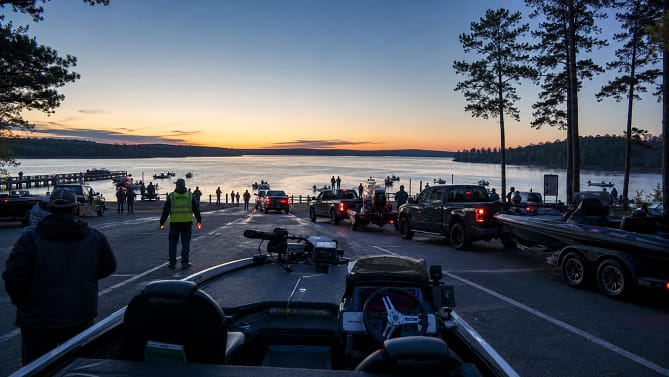
That local framing is important. A professional bass tournament is not only a competition on the water. It is a sports tourism event that affects hotels, restaurants, fuel stops, tackle shops, marinas, volunteers, spectators, media coverage, and local civic identity.
The official MLF listing names Visit Sabine County and the Sabine River Authority of Texas as host partners for Stage 4. That pairing tells readers the event is being positioned as both a tourism showcase and a lake-infrastructure showcase. Sabinetown Recreation Area becomes more than a ramp. It becomes the front door for national attention.
That matters to Texas tournament anglers because infrastructure shapes competition. Parking, launch flow, weigh-in logistics, spectator access, boat traffic, safety planning, and community support all influence how a major event feels. A strong host site can turn a good lake into a better tournament destination.
Why Toledo Bend Remains A Serious Bass Test
Toledo Bend’s reputation comes from more than its size. Texas Parks and Wildlife’s Toledo Bend fishing information identifies largemouth bass as the reservoir’s most popular game fish and describes it as an excellent year-round fishery. TPWD also notes good year-round crappie and catfish fisheries, along with stocked striped bass maintained by annual stockings.
For Bass Pro Tour anglers, the largemouth bass identity is the central story. Toledo Bend can test shallow anglers, offshore structure anglers, electronics-heavy decision makers, power fishermen, and patient pattern builders. It is a lake where one productive zone can change a period, but where a wrong decision can quickly bury a competitor in the standings.
The timing adds another layer. An April 1–4 event puts pros on Toledo Bend during a period when East Texas bass fishing can be dynamic. Spring conditions can produce shallow movement, transition patterns, weather swings, and changing pressure. The winner may not simply be the angler who knows one area. It may be the angler who adapts fastest.
That is why local anglers should pay attention. A national event becomes a live case study in how elite competitors break down a familiar fishery under pressure.
How MLF’s Format Changes What Fans Can Learn
The Bass Pro Tour does not operate like every traditional five-fish tournament. MLF’s official schedule announcement says each regular-season Bass Pro Tour event includes qualifying rounds on Days 1 and 2, followed by a Knockout Round on Day 3 and a Championship Round on Day 4. MLF also highlights its catch-weigh-release format, real-time SCORETRACKER leaderboard, and live coverage through MLFNOW!, the MLF app, MyOutdoorTV, Rumble, and MajorLeagueFishing.com.
That format matters because fans can learn in real time. Instead of waiting for a weigh-in bag, viewers can see momentum shifts, period decisions, pattern changes, and fish catches as they happen. For young Texas anglers, that can be more educational than simply seeing final results.
| Bass Pro Tour Element | Why It Matters At Toledo Bend | What Texas Anglers Can Learn |
|---|---|---|
| Qualifying Rounds | Forces pros to establish a pattern quickly | How elite anglers start on a large reservoir |
| Knockout Round | Raises pressure after early adjustments | How decisions change when cuts get tight |
| Championship Round | Rewards fast adaptation and execution | How winners manage final-day risk |
| Catch-Weigh-Release | Keeps fish in the resource immediately | Why conservation can fit competitive formats |
| SCORETRACKER | Shows real-time momentum | How every decision affects standings |
That last point is critical. Tournament education improves when anglers can connect choices to outcomes. MLF’s format gives viewers a clearer look at that connection.
Why The 2024 Toledo Bend History Still Matters
The 2027 stop will mark the second Bass Pro Tour visit to Toledo Bend. Beaumont Enterprise reported that Alabama professional angler Dustin Connell won the previous Toledo Bend Bass Pro Tour event in 2024. That history gives the 2027 event a reference point.
Returning events carry more intrigue than first-time stops because the field has a memory. Pros can review what worked, what failed, how pressure affected the lake, how local patterns held up, and whether the winning approach from 2024 still applies. At the same time, 2027 will not be a replay. Weather, water level, spawning stage, boat pressure, and fish positioning can change the entire tournament.
That is what makes Toledo Bend a strong professional venue. It is familiar enough to have history, but complex enough to avoid easy predictions. A lake that large and varied can reward preparation while still punishing assumptions.
For Texas anglers, the lesson is direct. History helps, but it does not replace current conditions. That is true whether the angler is fishing a local jackpot, a high school event, a regional circuit, or a Bass Pro Tour stage.
How The Event Connects To The Southeast Texas Angler Pipeline
Toledo Bend already matters to young anglers in Southeast Texas. Texas Sportsmen recently covered the Southeast Texas high school fishing pathway, including the 2026–27 SETX High School Fishing Association schedule with multiple events at Sam Rayburn and Toledo Bend. That matters because the Bass Pro Tour stop gives young anglers a professional example on waters they recognize.
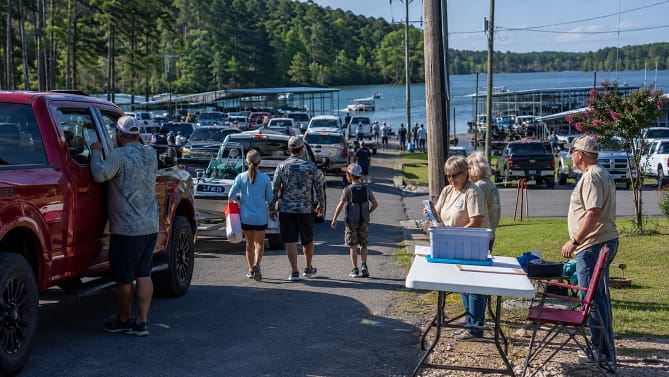
A high school angler who fishes Toledo Bend in a local schedule can watch the Bass Pro Tour and see how professionals read the same type of water. They can study boat positioning, lure changes, pace, electronics use, seasonal movement, and decision-making under pressure.
That connection is powerful. Professional tournaments can feel distant when they happen on unfamiliar lakes. When they come to a regional fishery, they become more useful to local development. Students and weekend anglers can compare their own experiences with what the best in the sport do differently.
The event can also motivate volunteers, school programs, captains, and families. Major tournaments often bring young anglers near the stage, boat ramp, or media environment. That exposure helps turn competitive fishing from an abstract dream into a visible pathway.
Why Tournament Growth Depends On Lake Stewardship
A Bass Pro Tour stop brings attention, but attention also brings responsibility. Toledo Bend is a shared public resource, not only a tournament venue. Anglers, boaters, local residents, visiting fans, and event organizers all have a stake in keeping the lake healthy and usable.
TPWD’s Toledo Bend fishing regulations remind anglers that Texas law requires draining water from boats and onboard receptacles when leaving or approaching public fresh waters to help combat invasive zebra mussels. The same page notes a fish consumption advisory and lists black bass regulations for the reservoir.
Those rule details matter around major events because boat movement increases. Competitors, practice boats, spectators, and regional anglers may move between lakes during the same season. That makes clean-drain-dry habits more important, not less.
Previous Texas Sportsmen coverage of Lake Meredith’s zebra mussel infestation made the same point from a different Texas water body. Tournament growth is valuable only if it comes with stronger resource awareness. The best competitive anglers understand that stewardship is not separate from competition. It protects the stage the sport depends on.
How Toledo Bend Can Benefit From National Visibility
A Bass Pro Tour stop can reshape how casual fans and serious anglers see a lake. Toledo Bend already has a strong reputation, but national coverage can reinforce its place among America’s top bass destinations. That helps local tourism, but it also strengthens regional pride.
The MLF schedule announcement said every minute of Bass Pro Tour competition will be streamed live through MLFNOW! and other platforms. That means Toledo Bend will not only be mentioned in results. It will be watched, analyzed, discussed, clipped, and shared while the event is happening.
For Hemphill and Sabine County, that kind of visibility can matter long after the final day. Viewers may decide to plan fishing trips. Families may discover the area. Local businesses may get attention. Young anglers may see East Texas water treated as a national sports venue.
That is the strongest version of tournament tourism. It does not just fill rooms for one week. It builds long-term recognition around a fishery, a community, and a culture.
What Texas Tournament Anglers Should Watch Before April 2027
The 2027 Bass Pro Tour stop is still months away, but Texas anglers can already watch several storylines. The first is the field. MLF’s 2027 Bass Pro Tour will feature 50 top anglers, and the points race will already be active when Toledo Bend arrives as Stage 4.
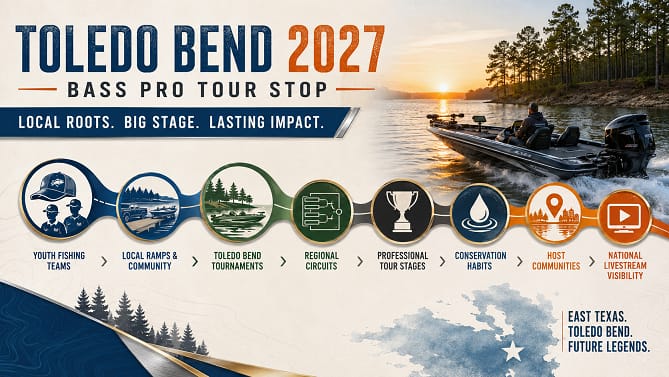
The second is lake timing. April conditions can shift quickly, and Toledo Bend’s size makes pattern decisions more complex. Anglers should watch how practice reports, weather, and water conditions develop closer to the event.
The third is local infrastructure. Sabinetown Recreation Area will be the central launch point, and host-community execution will affect both competitor flow and fan experience.
The fourth is youth engagement. If local fishing teams, school programs, and junior anglers can connect with the event, the stop becomes more than a pro tournament. It becomes a development tool.
That is why Toledo Bend’s 2027 Bass Pro Tour stop already matters. It gives Texas tournament anglers a future date to circle, but it also gives them a reason to think about the larger ecosystem behind competitive fishing: lakes, hosts, youth programs, rules, conservation, spectators, and national storytelling.
Toledo Bend is not waiting until April 2027 to matter. The announcement itself has already put East Texas tournament fishing back in the national conversation.