
Southeast Texas high school fishing is becoming a serious development pathway for young anglers, not just a weekend activity with rods and boat ramps. The Southeast Texas High School Fishing Association has announced its 2026-27 season schedule after finishing the 2025-26 campaign in May, with seven total events beginning November 21 at Toledo Bend and ending with a two-day championship May 1-2 at Sam Rayburn. For Texas Sportsmen readers, the story is bigger than dates on a calendar. It shows how lakes, schools, volunteer captains, families, and tournament structure are helping turn youth fishing into organized competitive development.
Why Southeast Texas Gives Young Anglers A Real Tournament Classroom
Southeast Texas gives high school fishing a natural base because its major tournament lakes are already part of the state’s competitive fishing identity. Sam Rayburn Reservoir and Toledo Bend are not practice ponds. They are serious bass waters with pressure, weather shifts, boat traffic, changing seasonal patterns, and enough tournament history to make young anglers learn quickly.
The SETX schedule gives students repeated exposure to those environments. According to the Beaumont Enterprise, the 2026-27 season starts November 21 at Toledo Bend’s Sabinetown launch area, then moves through a mix of Sam Rayburn and Toledo Bend events before the championship at Sam Rayburn’s Umphrey Family Pavilion on May 1-2. The association has been operating for 15 years and awards prizes and scholarships to student anglers across Southeast Texas.
That kind of structure matters because competitive fishing is learned through repetition. A student can read about seasonal patterns, but the lesson lands differently when a cold front changes the bite at Sam Rayburn or wind makes a Toledo Bend run harder than expected. High school anglers have to learn boat positioning, lure selection, time management, fish care, weigh-in procedure, and decision-making under pressure.
The value is not limited to the students who win. A young angler who finishes in the middle of the standings still gains experience that casual weekend fishing rarely provides. They learn to prepare before daylight, communicate with a captain, manage nerves, and make adjustments when the first plan fails.
How The 2026-27 Schedule Builds Competitive Rhythm
The 2026-27 SETX schedule is built like a real season, not a loose set of fishing dates. It starts on November 21 at Toledo Bend, moves to Sam Rayburn on December 12, returns to Sam Rayburn on February 6, stays at Sam Rayburn for a March 6 regular event, adds a March 7 captains tournament, returns to Toledo Bend on April 10, then finishes with the May 1-2 championship at Sam Rayburn.
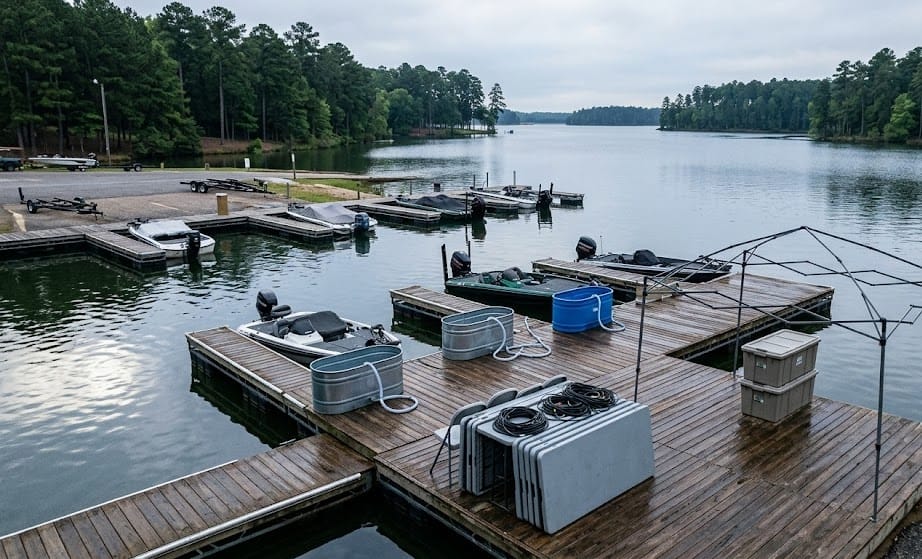
That calendar gives young anglers different seasonal windows. November fishing at Toledo Bend can demand a different approach than February fishing at Sam Rayburn. April at Toledo Bend may push anglers to think about spawning or post-spawn transitions depending on conditions. A two-day championship at Sam Rayburn then rewards consistency rather than one lucky bite.
The official SETX High School Fishing site already shows how the organization frames competition through school awards, Anglers of the Year recognition, championship winners, and season-long standings. That structure gives students a reason to think beyond one event. Every finish can matter. Every decision can affect school points or an angler’s season.
| 2026-27 SETX Event | Lake | Launch / Venue | Why It Matters |
|---|---|---|---|
| November 21 | Toledo Bend | Sabinetown | Early-season test on a major border reservoir |
| December 12 | Sam Rayburn | Umphrey Family Pavilion | Pre-winter tournament experience |
| February 6 | Sam Rayburn | Umphrey Family Pavilion | Cold-season decision-making |
| March 6 | Sam Rayburn | Umphrey Family Pavilion | Spring pattern adjustment |
| March 7 | Sam Rayburn | Umphrey Family Pavilion | Captains tournament adds adult support layer |
| April 10 | Toledo Bend | Sabinetown | Late-season positioning before championship |
| May 1-2 | Sam Rayburn | Umphrey Family Pavilion | Two-day championship pressure |
The calendar matters for families as much as anglers. Parents and captains can plan travel, lodging, fuel, maintenance, practice time, and school commitments around a clear season. That is part of what makes the program feel like a school sport rather than a scattered club activity.
Why Sam Rayburn And Toledo Bend Raise The Standard
Sam Rayburn and Toledo Bend give Southeast Texas high school anglers a demanding education. Texas Parks and Wildlife describes Sam Rayburn as a reservoir where largemouth bass is the most popular game fish, with an excellent year-round fishery. TPWD says Toledo Bend also has largemouth bass as its most popular game fish and offers excellent year-round largemouth bass fishing.
Those official descriptions matter because they explain why these lakes are natural classrooms for young tournament anglers. They hold fish, but they do not hand out success. Students have to learn structure, grass, points, drains, creeks, offshore areas, shallow cover, and how pressure changes fish behavior across a tournament day.
Toledo Bend adds another layer because it sits on the Texas-Louisiana border. Anglers fishing that lake need to understand access, water size, navigation, and the practical reality of competing on a reservoir that can feel different from one end to the other. Sam Rayburn offers its own challenge through heavy tournament traffic, changing water levels, and the pressure that comes with being one of the best-known bass fisheries in Texas.
That is why the connection between high school fishing and broader Texas fishing tournament growth is so important. A larger tournament culture needs young anglers who know how to compete responsibly. SETX helps create that base by putting students on serious tournament water early.
The result is a stronger learning curve. Young anglers are not waiting until adulthood to understand competitive fishing. They are learning tournament discipline while still representing their schools.
How School Awards Turn Fishing Into Team Identity
Fishing is often seen as an individual or two-person sport, but high school competition gives it a team structure. The 2025-26 SETX season showed that clearly. The Beaumont Enterprise reported that Shelbyville won School of the Year with 6,605.57 points, ahead of Brookeland with 6,511.92 and Little Cypress-Mauriceville with 6,453.24. Kirbyville’s Lane Clark and Cooper Kent were named Anglers of the Year with 1,544.57 points.
Those numbers matter because they show how close the competition can be. School of the Year was not a symbolic title. It was a season-long race where multiple programs stayed within striking distance. That kind of scoring turns individual fishing days into school pride.
For a student angler, representing Shelbyville, Brookeland, Little Cypress-Mauriceville, Kirbyville, or another Southeast Texas school adds a different weight to the day. They are not just fishing for a photo. They are helping build standings, reputation, and program momentum. That can pull more students into the sport and give schools a reason to support fishing with the same seriousness they give other extracurricular competition.
It also gives communities a point of connection. A school that wins a fishing title can celebrate students who may not fit the traditional football, basketball, or baseball pathway. That matters in rural and lake-adjacent parts of Texas where outdoor skills are part of local identity.
High school fishing gives those students a stage.
Why Captains And Families Are Central To The Development Model
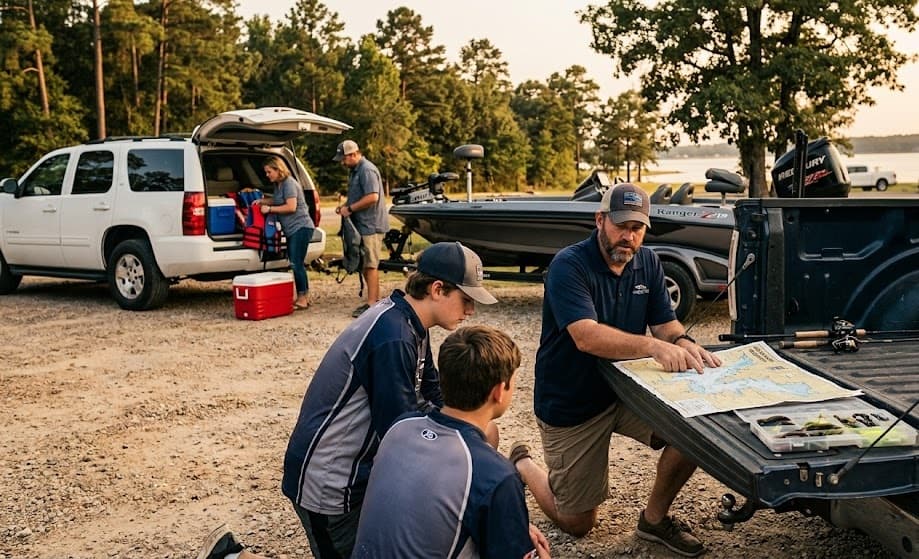
Youth fishing cannot operate without adult support. Boats, transportation, fuel, safety, launch logistics, and on-water supervision require captains and families who understand the responsibility. That makes high school fishing different from many school sports. The playing field is a lake, and the competition day depends heavily on adults who can support students without taking over the event.
The SETX schedule includes a captains tournament on March 7 at Sam Rayburn’s Umphrey Family Pavilion. That detail says a lot about the ecosystem around youth fishing. Captains are not background figures. They are part of the structure that makes the season possible.
A good captain teaches without controlling. They help with safety, navigation, time management, and boat operation, but student anglers still need to make fishing decisions. That balance can be hard. It is one of the reasons organized high school fishing teaches more than casting and bait selection.
Families face their own development curve. They learn tournament calendars, early check-ins, equipment needs, lake conditions, scholarship opportunities, and the emotional side of competition. A student may have a tough day on the water, lose fish, miss a pattern, or watch another team weigh a better bag. Parents and captains help turn those moments into learning instead of frustration.
That support system is one reason Southeast Texas can keep producing competitive youth anglers. The students fish, but the community makes the season work.
How High School Fishing Teaches Responsibility Beyond The Weigh-In
Competitive fishing can create pressure, but organized youth fishing can channel that pressure into better habits. Students have to understand rules, legal fish, boat safety, equipment care, fish handling, weather awareness, and respectful behavior at ramps and weigh-ins.
Texas Parks and Wildlife’s freshwater fishing regulations list statewide black bass rules, including a five-fish daily bag for combinations of largemouth, smallmouth, Alabama, Guadalupe, and spotted bass, with a 14-inch minimum length for largemouth bass unless a waterbody exception applies. For young anglers, rules like that are not abstract. They are part of tournament preparation.
That rule awareness helps young anglers mature. Measuring a fish correctly, protecting a livewell, respecting a weigh-in line, and knowing when a fish should be released are competitive skills. They are also conservation habits.
The best version of high school fishing does not train students to chase trophies at all costs. It teaches them that access, fisheries health, sportsmanship, and clean competition are connected. A young angler who learns that at 15 or 16 is more likely to carry it into adult tournament fishing.
That is why programs like SETX matter to the future of Texas freshwater fishing. They give students a place to compete while learning that responsibility is part of the sport.
Why Scholarships Make The Pathway More Meaningful
The Beaumont Enterprise reported that SETX awards thousands of dollars in prizes and scholarships annually to anglers across Southeast Texas. That scholarship angle gives high school fishing a more serious development purpose. Students are not only building tournament experience. They may be creating opportunities tied to education and future goals.
Scholarships change how families view the sport. Fishing can be expensive, especially when boats, fuel, travel, gear, and tournament fees are involved. When an association connects competition with scholarship recognition, it gives families another reason to see the season as an investment in development.
Scholarship opportunities also help validate student anglers inside their schools. A fishing team can sometimes fight for attention compared with more traditional programs. Awards and scholarships make the achievement easier for administrators, classmates, and communities to understand.
The pathway is not about promising that every student will become a professional angler. That would be unrealistic. The better point is that students learn discipline, preparation, teamwork, and outdoor responsibility through a sport they can carry into adulthood. Scholarships recognize that growth.
What The Next SETX Season Could Reveal
The 2026-27 Southeast Texas High School Fishing Association season will show whether the region can keep building a deeper youth angling pipeline. The schedule has the right ingredients: major lakes, repeated competition windows, school identity, a captains event, and a two-day championship at Sam Rayburn.
The names from last season give the next campaign a clear benchmark. Shelbyville enters the conversation as the reigning School of the Year. Brookeland and Little Cypress-Mauriceville showed how tight the school race can become. Lane Clark and Cooper Kent of Kirbyville set the Anglers of the Year standard that other teams will chase.
For Texas coastal and freshwater sports readers, the lesson is clear. High school fishing is no longer a side note. In Southeast Texas, it is organized competition with schedules, standings, scholarships, community support, and serious lakes that force young anglers to learn quickly.
That is how the next generation of competitive anglers is being built: one launch, one weigh-in, one school race, and one hard tournament decision at a time.