
The Ultimate Angler Championship is scheduled for September 27 through October 3, 2026, at Goose Pond Colony in Scottsboro, Alabama, on Lake Guntersville. For Texas competitors and bass anglers across the region, the event offers a clear national-stage test: a large field, a major payout, a defined format, and a fishery known in tournament circles for grass, shell, rock, and largemouth potential. The official event site lists Lake Guntersville and Goose Pond Colony as the host setting for the 2026 championship, with the competition week built around practice, tournament days, and public-facing community programming through the final weekend official event details.
Ultimate Angler Championship Schedule And Site
The tournament week runs from September 27 through October 3, 2026. The research provided identifies Goose Pond Colony as the launch and weigh-in location, placing competitors on a well-known Tennessee River impoundment at a venue built to handle fishing traffic, spectators, and event operations. That matters for the field because a championship of this size is not only about catching five bass each day. It is also about managing practice time, boat preparation, check-in routines, and daily execution around a central host site.
What The Dates Mean For Competitors
The format includes two practice days followed by three competition days. That puts a premium on fast decision-making. Anglers have enough time to inspect multiple sections of the lake, but not enough time to treat practice as an open-ended search. Competitors will need to identify how fish are using grass, shell-rock structure, and hard cover near vegetation without relying on tournament-day adjustments that require too much running.
From a Texas viewpoint, the timing also creates a familiar late-season tournament problem. Anglers who have spent summer and early fall working Texas grass fisheries, reservoirs with offshore structure, or team-trail events can apply some of that decision-making, but Lake Guntersville has its own identity. The supported facts point to strong grass presence, shell-rock structure, and hard cover next to vegetation. That gives competitors a starting framework without promising any specific bite window or winning pattern.
Goose Pond Colony As The Event Base
Goose Pond Colony gives the championship a fixed operational center for launch, weigh-in, and public activity. For competitors, that reduces uncertainty about where the week is anchored. For families, media, and community visitors, it also gives the event a defined gathering point. In practical terms, a known base can shape lodging choices, drive times, fueling plans, and how anglers organize each morning before takeoff.
Texas anglers who are used to large community-based fishing weekends will recognize the model. The tournament is built as a sport event first, but it also carries a local gathering element through the Outdoor Expo and youth conservation programming. Those interested in broader community sports coverage can explore related events and stories found here at AP Levante.
Field, Qualification Paths, And Payout Stakes
About 200 anglers are expected, with the field drawn from professional, collegiate, regional, and amateur circuits nationwide. Anglers Channel reported the expanded sanctioned-tour structure and listed feeder pathways tied to circuits such as US Anglers Choice, Alabama Bass Trail, WON BASS, BAM Trail, iKon Tailgate, Fishers of Men, Big Bucks Bass Trail, and independent ProAm and team circuits sanctioned tour report.
The stated prize structure raises the competitive weight of every decision. The research provided lists a $500,000 first-place prize and more than $1 million in total payout. That does not change the fishery, but it does change the pressure around risk management. A five-fish daily limit rewards consistency, yet a championship prize of that scale can tempt anglers into decisions that separate a top finish from a missed opportunity. The competitors who handle that balance best are usually the ones who know when to protect a limit and when to swing for a heavier bag.
Ultimate Angler Championship Format Notes
The Ultimate Angler Championship format includes a daily five-fish limit. The rules snapshot in the research also states that forward-facing sonar is not allowed during competition. That is one of the defining competitive notes for this event. Without forward-facing sonar in play, the field is pushed toward traditional fish-finding, visual reading of habitat, casting accuracy, current and cover decisions, and confidence in pre-practice observations.
That rule can affect how anglers divide practice. Instead of building an entire plan around individual fish seen in real time, competitors must lean harder on areas, patterns, and repeatable habitat. On a grass-and-shell fishery, that could place more value on understanding lanes through vegetation, grass edges, subtle hard-bottom changes, and transitions where rock and grass meet. The research points to those categories as relevant at Lake Guntersville, but it does not confirm which one will dominate during the event.
How Qualification Adds Competitive Variety
The qualification structure brings different tournament backgrounds into one field. A competitor from a team circuit may approach water management differently than a collegiate angler or an established professional. A regional hammer may know how to milk one area for three days, while a ProAm-style qualifier may be more comfortable adapting on the move. That variety should make practice reports and early weigh-ins meaningful, because the event is not built around one closed tour culture.
For Texas competitors, this is where recent experience in structured championship events can matter. A Texas team preparing for travel logistics, rules review, and venue timing may find useful comparisons in a separate state-level event breakdown such as the Lake Athens championship guide, though the Guntersville format and rules must be judged on their own posted information.
Rules And Fishing Approach Before Launch
The first preparation step is simple: competitors need to know the rules before they build a plan. The daily five-fish limit shapes weigh-in strategy. The two practice days shape time management. The three competition days reward patterns that can survive pressure. The forward-facing sonar restriction changes both scouting and execution. None of those details are side notes; they define how anglers should think before the first official cast.
- Event dates: September 27 through October 3, 2026.
- Host site: Goose Pond Colony in Scottsboro, Alabama, on Lake Guntersville.
- Format: two practice days followed by three competition days.
- Daily limit: five fish per day.
- Electronics rule: no forward-facing sonar during competition.
- Public programming: Outdoor Expo on October 2-3, 2026, with community and youth conservation days during early competition days.
Those points give competitors a planning checklist. They also frame how the event may be watched by local visitors and traveling fishing families. The Outdoor Expo is scheduled for October 2-3, 2026, alongside the competition, and the research notes themed community and youth conservation days during early competition days. That brings a community event layer to the championship without changing the central sports question: who can catch the right five bass each tournament day under the posted format?
Lake Guntersville Factors Competitors Should Respect
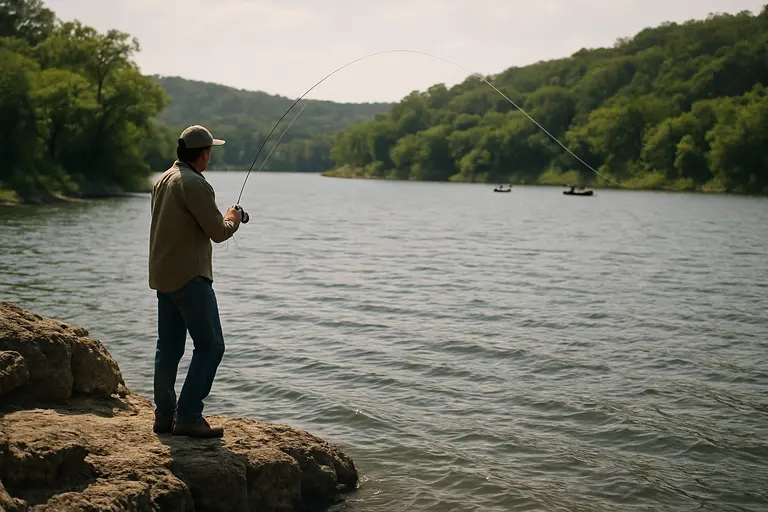
Lake Guntersville is identified in the research as a trophy largemouth fishery with historic tournament weights and high-pressure fishing. Competitors should treat both parts of that description seriously. Trophy potential can create aggressive expectations, but pressure can make obvious water less dependable. A championship field near 200 anglers means community holes, visible grass lines, and well-known shell areas may receive attention quickly.
Grass, Shell, And Hard Cover Decisions
The supported venue notes point to strong grass presence, shell-rock structure, and opportunities near hard cover adjacent to vegetation. That combination makes decision-making more layered than simply choosing shallow or offshore. Anglers may need to decide whether bass are using vegetation as the primary holding cover, hard bottom as a feeding feature, or the transition between the two as the key zone.
The 2025 event result gives one confirmed historical marker. Tucker Smith won the 2025 championship with a total of 71 pounds, 6 ounces, including a final-round limit of 18-9, while fishing shellbanks and rock-grass transitions. That does not make the same pattern the 2026 answer, and it should not be treated as a forecast. It does show that the fishery can reward anglers who understand how hard structure and vegetation connect.
The no-forward-facing-sonar rule also makes physical reading of those areas more important. Boat positioning, cast angles, contact with cover, lure control, and timing may decide whether a competitor turns a good area into a weighable limit. In a five-fish format, one missed quality bite can carry real cost.
Pressure Management Across Three Days
A three-day competition is long enough for obvious water to change. If a productive grass edge draws boats on Day 1, it may not behave the same way on Day 2. If shell or rock produces early, the question becomes whether the area reloads, fades, or needs rest. Competitors should be ready for that kind of pressure management, especially with a large field expected.
There is no supported water-temperature trend or late-September catch average in the provided research, so it would be wrong to present one here. The stronger, fact-based point is that Lake Guntersville offers multiple structural options and will host a large, qualified field under rules that limit one major modern electronics tool. That combination makes preparation, pattern discipline, and clean execution central to the event.
Community Programming And Event Support
The championship is also set up as a community gathering at Goose Pond Colony. The free Outdoor Expo is scheduled for October 2-3, 2026, and the research notes themed community and youth conservation days during early competition days. For the host area, that means the event is not limited to weigh-in crowds. It is positioned to bring fishing families, outdoor businesses, youth participants, and conservation messaging into the same week as the tournament.
The research also states that the State of Alabama provided $1.6 million in state legislative appropriation toward the event through its Department of Conservation and Natural Resources. That funding detail signals official public support for the championship and the expected local event impact. From a sports-event standpoint, that type of backing matters because large fishing tournaments rely on ramps, host facilities, visitor traffic, public safety coordination, and local capacity.
For Texas Sportsmen readers, the community side should feel familiar. Fishing tournaments often operate as both competition and gathering. Anglers focus on limits, rules, and execution, while host communities focus on visitors, youth engagement, and local businesses. The Guntersville event appears to carry both roles during the September 27 through October 3, 2026, window.
Ultimate Angler Championship At Lake Guntersville
The Ultimate Angler Championship gives competitors a clear assignment before arriving at Lake Guntersville: understand the rules, use practice with purpose, respect the grass-and-shell setting, and prepare for a deep field. The confirmed details point to a major championship week at Goose Pond Colony, with about 200 anglers expected, a five-fish daily limit, no forward-facing sonar in competition, two practice days, three competition days, and public programming on the final weekend.
The Ultimate Angler Championship should be judged first as a bass tournament, not only as a payout headline or community festival. The money is significant, the venue is proven, and the field is broad. Still, the winner will have to solve Lake Guntersville under the same limits as everyone else: five bass per day, changing pressure, and a format that rewards anglers who can turn practice clues into tournament decisions.