
The Bass Champs Championship is set for Saturday and Sunday, October 10-11, 2026, at Lake Fork, with Lake Fork Marina & Hotel listed as the staging point on the official Bass Champs schedule. For anglers, this is not just another date on the Texas tournament calendar. It is a two-day team event built around practice discipline, off-limits compliance, live-fish care, slot-limit management and clean execution at the scales.
As of October 5, 2026, the event is still ahead. That timing matters because competitors are inside the final stretch before official practice opens. The published details confirm the dates, site, practice window and core structure, but they do not confirm field size, prize payout totals or historical winning weights in the research provided here. This preview sticks to the confirmed structure and what those rules mean for teams preparing for Lake Fork.
Bass Champs Championship Schedule At Lake Fork
Why The Bass Champs Championship Timing Matters
The event week is tightly defined. Official practice days are Wednesday, October 7; Thursday, October 8; and Friday, October 9, 2026. The tournament days follow on October 10-11. That gives teams three official days to check areas, study boat lanes, build a fishable plan and decide which patterns can survive tournament pressure.
For the Bass Champs Championship, the off-limits period is just as significant as practice. Competitors may not fish Bass Champs tournament waters from September 21 through October 6, 2026. A violation makes the team partner ineligible for the Championship. That rule puts a premium on preparation before the off-limits window and careful restraint during it. On October 5, teams are still in that closed period, so any serious planning should be map work, tackle prep, boat checks and rule review rather than time on tournament waters.
How Practice Shapes The Two-Day Plan
Three practice days sound generous, but Lake Fork can punish unfocused time. Teams have to decide how much of practice should be spent searching new water and how much should be spent confirming a narrower pattern. The event format rewards weight across two days, not a single lucky bite. That means practice should answer specific questions: which depth ranges are holding legal fish, which areas can produce without burning fish, and how much run time is worth the risk during tournament hours.
Because staging is tied to Lake Fork Marina & Hotel, teams also have a clear hub for event operations. Boat readiness, launch timing and return planning all become part of competition, especially when two anglers are trying to protect five fish and avoid late-day mistakes.
Competition Format And Eligibility
Team Structure And Junior Participation
The Bass Champs Championship is a team event, with two anglers per team. A junior team may include one adult who is at least 18 years old and one angler under 18. A contestant may also fish alone as a single-person team, and Bass Champs may assign an observer in that boat. That single-angler option changes the rhythm of the day. One angler has full control over decisions, but also carries every cast, net job, cull decision and fish-care task alone.
All contestants must be 18 or older unless they are under 18 and have parental or legal guardian consent. The event is open to non-professional anglers only. The rules exclude professionals if they have competed in the Bassmaster Elite Series or Bass Pro Tour within the past six months, or if they have guided on the tournament waters for compensation in the prior 30 days.
Those eligibility lines matter because they help define the competitive field as a team-trail championship for non-professional anglers. It still demands serious tournament skill. Lake Fork is not a forgiving place for vague plans, and a two-day format tends to expose weak decision-making.
Why Team Communication Is A Competitive Edge
Team events are won through shared decisions as much as casting skill. Partners need to agree on how long to stay with a slow area, when to change techniques, who handles culling, and how to manage boat position. The rules create the frame, but the best teams often separate themselves by reducing friction. A missed net, a rushed measurement or a late cull can cost as much as a bad cast.
Texas anglers who follow other team-format events can see similar planning themes in the Lake Athens team championship notes, especially around registration discipline, ramp logistics and competition-day timing. The water changes from event to event, but the need for organized team execution does not.
Scoring Rules And Lake Fork Slot Limits
Five Fish, Weight And Legal Bass
Scoring is based on total weight in pounds and ounces. Each team may weigh a limit of five bass per day. That format keeps the math clear: five legal bass, protected in good condition, weighed as efficiently as possible. It also means teams cannot rely only on finding bites. They must find the right bites under the Lake Fork rule structure.
For this event, no bass under 16 inches or over 24 inches may be weighed. Any bass outside that slot is disallowed at the scales. That creates a specific competitive problem. Lake Fork has the reputation to produce memorable fish, but tournament success here depends on finding fish that fit the event’s legal measurement window. A large bass outside the allowed range may be a great catch, but it cannot help the team’s weight if it is not legal for the scales.
How Slot Limits Change Decisions
Slot-limit events ask anglers to think differently. A team may choose an area with fewer giant-fish chances if it offers better odds at weighable bass. Lure size, presentation speed and target cover can all shift when the goal is not simply the biggest fish in the lake, but the best five legal fish. That is a tactical challenge, not a footnote.
Measurement discipline should be part of the plan before the first cast. Teams need a reliable board, clear communication and no guesswork. If a fish is outside the allowed range, keeping it in the livewell for weigh-in creates trouble instead of opportunity.
Fish Care, Timing And Boat Control
Livewell Management And Dead-Fish Penalties
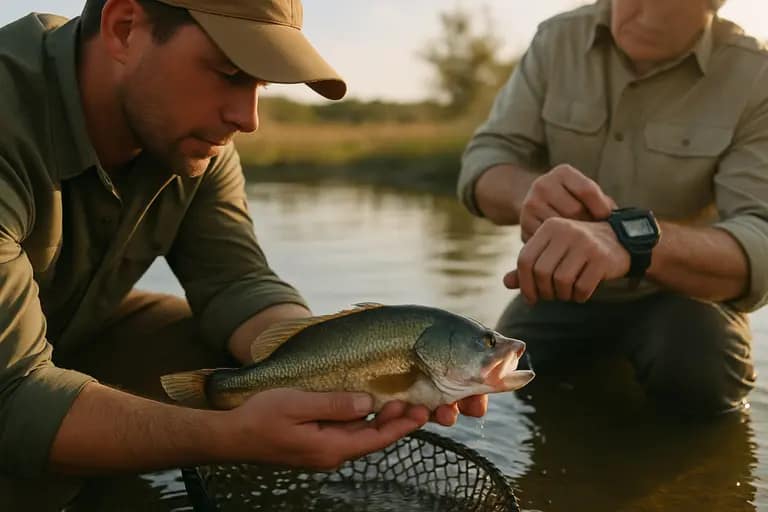
Each team must keep fish alive with a properly aerated livewell. A one-pound penalty applies for each dead bass presented at weigh-in. In a championship setting, one pound can change standings, payouts and team morale. Fish care is a competition skill, especially across two tournament days.
Anglers should treat livewell management as part of the game plan. That includes checking pumps, water circulation and backup systems before launch. The research does not provide weather or water-condition forecasts for October 10-11, so no assumptions should be made about temperature or fish stress. The confirmed point is simple: live fish protect weight, and dead fish cost weight.
Electronics And Start-Time Rules
The timing rules are clear. Before 7:15 AM on tournament days, electronics may be used only for navigational purposes. No casting or fishing may begin before 7:15 AM. Boats may launch before 6:15 AM, but they must remain docked or in the immediate launching area until 6:15 AM.
That structure rewards teams that can stay calm before the start. The early window is for safe positioning and order, not fishing. Once competition begins, every team faces the same challenge: reach chosen water, fish within the rules and return with legal bass ready for the scales.
Community Notes Around Lake Fork Marina
The Event Hub And Local Rhythm
Lake Fork Marina & Hotel being the staging point gives the event a defined community center. For competitors, that means one named site for the tournament’s core operations. For the local fishing community, it concentrates activity around a familiar marina setting during the October 10-11 tournament window.
Major fishing weekends are about more than weigh bags. They bring boat traffic, family support, tackle preparation, lodging decisions and dockside conversations into the same space. Still, confirmed research here does not state attendance numbers, tourism impact or vendor participation, so those points should not be inflated. What can be said is that the event places Lake Fork Marina & Hotel at the center of a two-day championship on one of Texas’ best-known bass fisheries.
Why Sports Structure Matters To Community Coverage
Good event coverage starts with structure: dates, eligibility, rules, scoring and site logistics. That is true in fishing, and it is true across sports. Readers who enjoy that wider sports angle can find more from our network at Books on Baseball, where the same respect for competition details carries into baseball storytelling.
For Lake Fork anglers, structure is not paperwork. It is the difference between a clean championship week and a preventable mistake. The off-limits period, official practice dates and start-time rules all shape how competitors interact with the lake before the first fish is weighed.
What The Bass Champs Championship Means For Lake Fork
A Rules-Driven Test On A Texas Bass Stage
The Bass Champs Championship gives Lake Fork a compact, rules-driven team test on October 10-11, 2026. The lake will not be judged by rumor or reputation during those two days. It will be judged by legal five-fish limits, slot compliance, live fish, time management and how well partners adjust from practice to competition.
The strongest teams will likely be the ones that treat every confirmed rule as part of their pattern. They will respect the off-limits period through October 6, use October 7-9 practice with purpose, begin fishing no earlier than 7:15 AM on tournament days, weigh only bass from 16 to 24 inches, and protect every fish in the livewell.
That is what makes the Bass Champs Championship compelling for anglers and the Lake Fork community. It blends the skill of locating bass with the discipline of tournament execution. For a championship event, that balance is the real measure of who is ready.